Studying Human Development
You have already lived through more change than any textbook could hold. The infant who could not lift her head becomes the toddler who runs, the child who reasons, the teenager who argues, the adult who reflects, and the elder who remembers — and every one of those transformations is the subject of this book. Human development is the scientific study of how and why people change, and stay the same, across the entire lifespan, from conception to the final breath. This first chapter lays the foundation: what we mean by “development,” the endless conversation between our genes and our surroundings, the great questions that organize the field, and the careful methods that let us study a moving target — a whole human life — without doing harm. Everything that follows grows out of these first ideas.
By the end of this chapter you can
- Define human development and describe its three domains — physical, cognitive, and psychosocial.
- List the major periods of life, from the prenatal period through late adulthood, and explain why their boundaries are approximate.
- Explain how nature and nurture interact, and describe what epigenetics adds to that picture.
- Contrast the field’s three central debates: continuity versus stages, stability versus change, and universal versus contextual development.
- Name the major developmental theorists — Piaget, Erikson, Vygotsky, Bronfenbrenner, Ainsworth, Kohlberg — and what each contributed.
- Compare cross-sectional, longitudinal, and sequential research designs, and state a strength and a weakness of each.
- Distinguish a cohort effect from a true change caused by age.
- Describe the special ethical duties owed to people — especially children — who are studied over time.
Section 1What development is
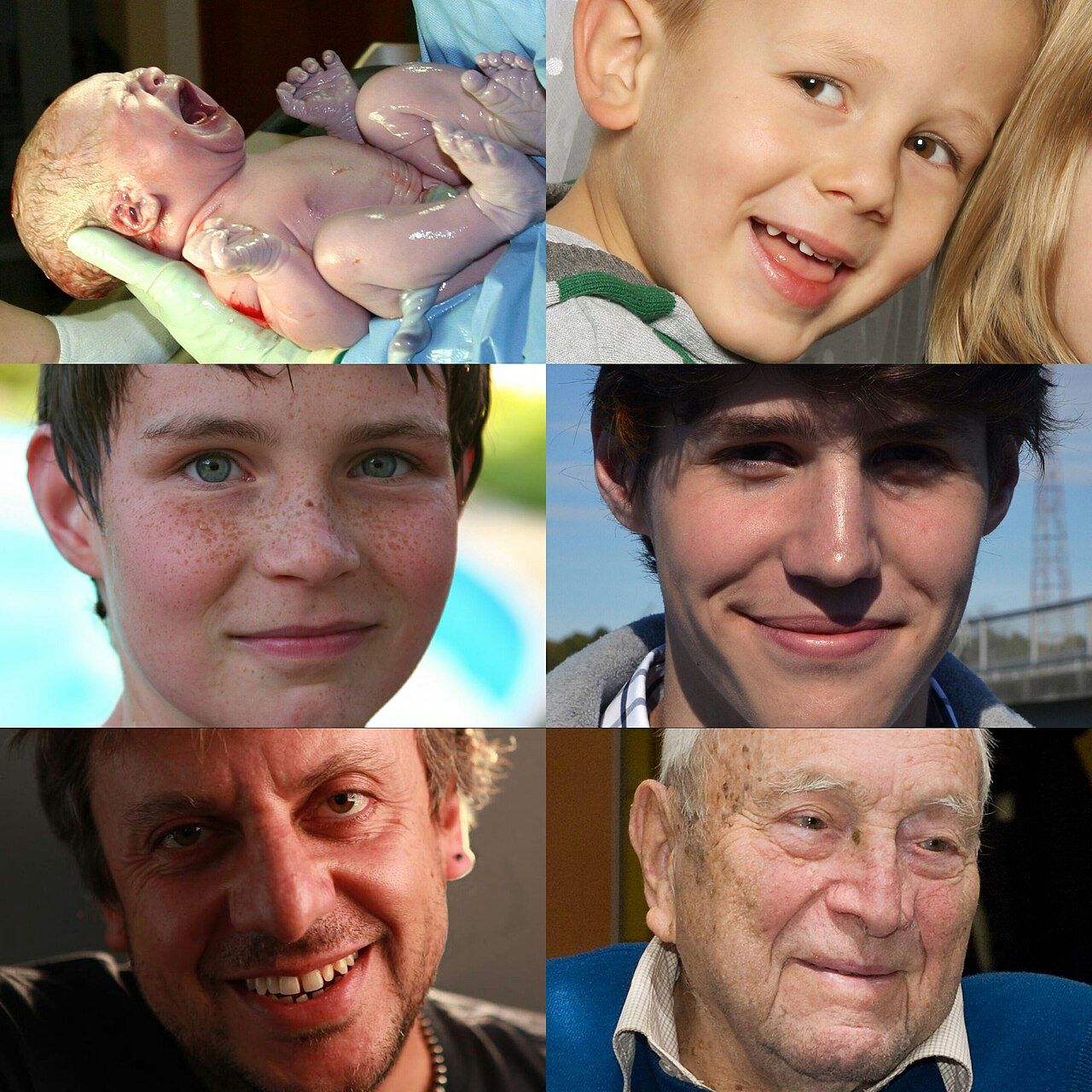
More than getting bigger
It is tempting to picture development as simple growth — a child getting taller, a vocabulary getting larger. But developmental scientists mean something wider. Development is any orderly, relatively enduring change in a person across time: not only the additions (a first word, a first friendship) but also the losses (the fading of a newborn’s grasp reflex, the slowing of memory in old age) and the reorganizations, where the whole way a person thinks or feels shifts into a new form. Crucially, development runs lifelong. The field once studied mainly children, but we now know that a forty-year-old and a ninety-year-old are developing too — change never stops.
The three domains
To keep a whole human life manageable, scientists sort development into three broad domains. The physical domain covers the body and brain: growth, motor skills, the senses, hormones, and health. The cognitive domain covers the mind: thinking, language, memory, problem-solving, and intelligence. The psychosocial domain covers emotion and relationships: personality, feelings, identity, moral sense, and the bonds we form with others. These are labels of convenience, not separate compartments — a change in one almost always ripples into the others.
| Domain | What changes | A sample question it asks |
|---|---|---|
| Physical | Body size, brain, motor skills, senses, puberty, health, aging | When and why do children learn to walk? |
| Cognitive | Thinking, language, memory, reasoning, intelligence, learning | How does a child come to understand that others have their own minds? |
| Psychosocial | Emotions, personality, identity, morality, relationships, attachment | Why does a toddler protest when a parent leaves the room? |
The periods of life
Scientists also divide the lifespan into named periods. A common map runs: the prenatal period (conception to birth), infancy and toddlerhood (birth to about 2), early childhood (about 2 to 6), middle childhood (about 6 to 11), adolescence (about 11 to 18), early adulthood (about 18 to 40), middle adulthood (about 40 to 65), and late adulthood (65 and beyond). Notice the hedging words — “about,” “beyond.” These boundaries are conveniences, not biological facts. When adolescence ends or when someone counts as “old” depends heavily on culture, era, and circumstance, which is a first hint of a theme this book returns to again and again: context shapes the very shape of a life.
- Human development is the study of orderly change — gains, losses, and reorganizations — across the whole lifespan.
- Development spans three domains: physical, cognitive, and psychosocial.
- The lifespan is mapped into periods from the prenatal stage through late adulthood, but their boundaries are approximate and shaped by culture.
- The domains are deeply intertwined — a change in one reshapes the others.
Section 2Nature and nurture
The oldest question in the field
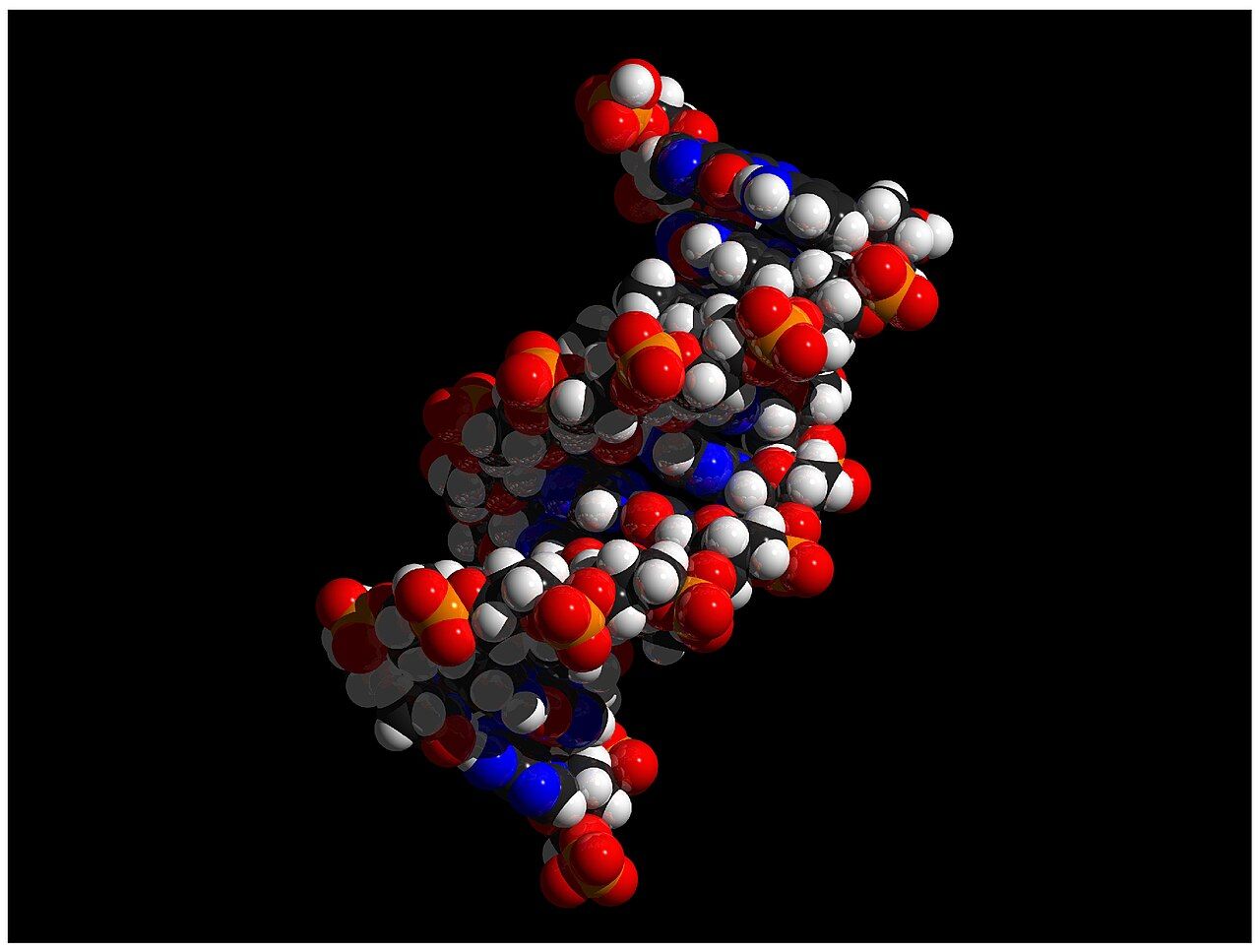
Are we born who we are, or made who we are? This is the nature–nurture debate, and it is the oldest question in the study of development. Nature refers to what heredity supplies: our genes, and the genetically timed unfolding of the body called maturation — the reason children the world over sit before they crawl, and crawl before they walk, on a roughly shared schedule. Nurture refers to everything experience supplies: nutrition, learning, relationships, culture, wealth or poverty, stress or safety. For centuries thinkers lined up on one side or the other — the empiricist John Locke imagined the newborn mind as a tabula rasa, a blank slate written on entirely by experience, while nativists insisted the essential design is set in advance.
It was never either/or
Modern developmental science has retired that contest. The verdict is not “mostly nature” or “mostly nurture” but interaction: every trait a person has emerges from genes and environment working together, continuously, from the first cell onward. Your genotype is the set of genes you inherit; your phenotype is what you actually become — and the phenotype is always the product of a genotype meeting an environment. Genes set a range of reaction, an upper and lower limit for a trait, and the environment decides where within that range you land. Height is the classic case: your genes cap how tall you might grow, but nutrition, health, and even affection determine whether you reach that ceiling.
| Concept | What it means | Example |
|---|---|---|
| Range of reaction | Genes set the limits; the environment decides where in that range a trait lands | Genetic height potential reached only with good nutrition |
| Canalization | Some traits are so strongly buffered by genes that they follow a set path across almost any environment | Babbling and basic motor milestones appear in nearly all infants |
| Gene–environment correlation | Genes and environments tend to travel together — inherited tendencies also shape the settings a person meets | Musical parents pass on both genes and a house full of instruments |
| Epigenetics | Experience switches genes on or off without changing the DNA code itself | Nurturing early care can dial down the activity of stress-reactivity genes |
Epigenetics: nurture writing on nature
The most striking modern discovery is epigenetics — the study of how experience changes gene expression without altering the underlying DNA sequence. Think of the genome as a piano: epigenetic marks (chemical tags such as methyl groups) decide which keys get played and which stay silent. Diet, stress, toxins, and the quality of early caregiving can all lay down these marks, turning genes up or down — and some marks can even be passed to the next generation. Epigenetics dissolves the last of the old debate: here is nurture literally reaching in and rewriting how nature is read.
- Nature (genes, maturation) and nurture (experience, environment) do not compete — they interact to build every trait.
- Your genotype is inherited; your phenotype is the genotype expressed within an environment.
- Genes set a range of reaction; the environment determines where within it a person lands.
- Epigenetics shows experience switching genes on and off without changing the DNA code — and heritability describes populations, not personal destiny.
Section 3The big questions
Continuity or stages?
Beneath the field’s many theories lie three enduring debates, and knowing them lets you place any theory you meet. The first asks how change happens. In the continuity view, development is gradual and cumulative — more of the same, added smoothly, like a vocabulary that grows word by word. In the discontinuity or stage view, development leaps through distinct, qualitatively different steps, each a genuine reorganization, arrived at in a fixed order. The great stage theorists are worth knowing by name. Jean Piaget proposed four stages of cognitive development — sensorimotor (birth to 2), preoperational (2 to 7), concrete operational (7 to 11), and formal operational (11 and up). Erik Erikson mapped eight psychosocial stages, each a lifelong crisis to resolve, from trust versus mistrust in infancy to integrity versus despair in old age. Even Elisabeth Kübler-Ross’s well-known five stages of grief — denial, anger, bargaining, depression, acceptance — belong to this family, though she later cautioned they are not a rigid ladder everyone climbs in order.
Stability or change?
The second debate asks whether we stay the same. Do the traits we show early — a shy temperament, a secure or anxious bond with a caregiver — persist across life, or can people genuinely change? Researchers who study temperament find real stability, and Mary Ainsworth’s classic work identified early attachment styles — secure, insecure-avoidant, and insecure-resistant (with a disorganized pattern added by later researchers) — that can echo for years. Yet the lifespan view stresses plasticity: the capacity to change is never fully lost, and warm relationships, new opportunities, or therapy can redirect a life. Most scientists now hold both truths at once — there is meaningful continuity and real room for change.
Universal or contextual?
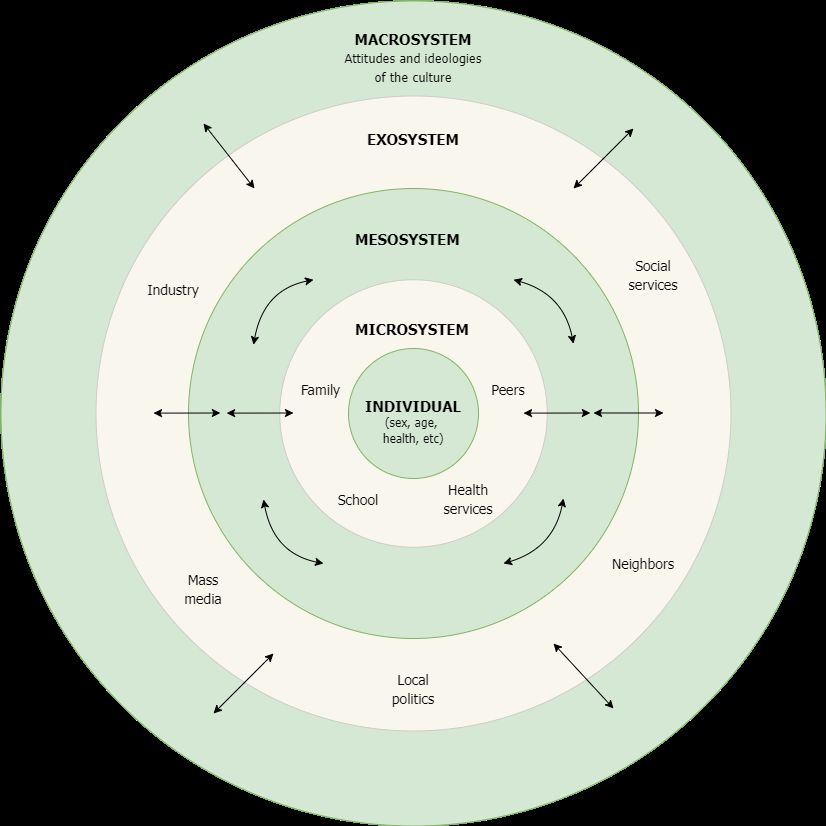
The third debate asks whether there is one path of development or many. Piaget believed his stages were universal — the same sequence unfolding in every child on Earth. Others emphasize that development is contextual, profoundly shaped by culture and circumstance. Lev Vygotsky’s sociocultural theory placed learning inside relationships, introducing the zone of proximal development — the gap between what a child can do alone and what she can do with a skilled partner’s help. Urie Bronfenbrenner’s ecological systems model pictured the child at the center of nested layers — family and school (the microsystem), the community, the wider economy and culture, and even the changing historical moment. And Lawrence Kohlberg’s stages of moral reasoning, though framed as universal, have themselves been questioned for reflecting one cultural viewpoint — a reminder that even our theories are grown in a context.
| The question | One answer | The other answer | A voice for each |
|---|---|---|---|
| How does change happen? | Continuity — gradual, cumulative | Stages — distinct, reorganizing steps | Learning theorists / Piaget, Erikson |
| Do we stay the same? | Stability — early traits endure | Change — plasticity across life | Temperament & attachment work / lifespan theorists |
| Is there one path? | Universal — the same sequence for all | Contextual — culture shapes the path | Piaget / Vygotsky, Bronfenbrenner |
- Continuity vs stages: is change gradual and cumulative, or a series of qualitative reorganizations? Piaget (4 stages) and Erikson (8 stages) are the great stage theorists.
- Stability vs change: do early traits like temperament and attachment (Ainsworth) persist, or does plasticity allow lifelong change?
- Universal vs contextual: one path for all (Piaget) or many paths shaped by culture (Vygotsky’s ZPD, Bronfenbrenner’s nested systems)?
- The current consensus answers most of these debates with both — a matter of degree, not of sides.
Section 4Research designs
Cross-sectional: a snapshot
Studying change over a lifetime poses a practical puzzle: how do you observe seventy years of development without waiting seventy years? The field’s three main developmental designs are three answers to that puzzle. A cross-sectional study takes a snapshot — it compares different age groups all at the same time, testing, say, groups of 20-, 40-, and 60-year-olds this month. It is fast, inexpensive, and free of dropout. But it hides a trap. Because the age groups grew up in different eras, a difference between them may be a cohort effect — a product of the generation they belong to — rather than a true effect of aging. And because no one is followed, a cross-sectional study can never show how an individual actually changes.
Longitudinal: a filmstrip
A longitudinal study follows the same people over months, years, or decades, testing them again and again. This is the only way to watch an individual life unfold — to see whether the shy toddler becomes the reserved adult, to measure genuine stability and genuine change. The price is steep: longitudinal studies are slow and costly; participants drop out over time (a problem called attrition, and worse when the dropouts differ systematically from those who stay); repeated testing can produce practice effects; and because one cohort is followed through one slice of history, the findings may not generalize to people who grew up in another era.
Sequential: the best of both
A sequential design marries the two. The researcher starts with several age groups at once — the cross-sectional part — and then follows all of them forward in time — the longitudinal part. By comparing people of the same age who were born in different years, a sequential study can finally separate the effects of age from the effects of cohort, the single most powerful thing these designs can do. The cost is complexity: sequential studies are the most demanding and expensive of all, which is why the great ones, such as Schaie’s Seattle Longitudinal Study of adult intelligence, are landmarks.
| Design | How it works | Strength | Weakness |
|---|---|---|---|
| Cross-sectional | Different age groups compared at one point in time | Fast, cheap, no dropout | Confounds age with cohort; shows no individual change |
| Longitudinal | The same people followed over time | Reveals individual change & stability | Slow, costly; attrition; practice effects; tied to one cohort |
| Sequential | Several cohorts, each followed over time | Separates age effects from cohort effects | Most complex, expensive, and demanding |
- Cross-sectional designs compare age groups at once: fast and cheap, but they confound age with cohort and reveal no individual change.
- Longitudinal designs follow the same people over time: they show real change, but are slow, costly, and vulnerable to attrition.
- Sequential designs combine both and can separate age effects from cohort effects — at the cost of great complexity.
- A cohort effect — a generational difference — can easily be mistaken for a true effect of aging.
Section 5Studying people over time

The special duties of developmental research
Developmental science studies the most vulnerable people there are — infants, young children, and frail elders — and often studies them for years. That raises the ethical stakes. Every reputable study today must clear an ethics review board (in the United States, an Institutional Review Board) before it begins, and must honor a set of protections that grew out of hard historical lessons. Chief among them is informed consent: participation must be voluntary and based on a clear understanding of what the study involves. But a two-year-old cannot read a consent form. In developmental research, a guardian gives legal consent while the child, whenever old enough, gives assent — agreement expressed in words the child can actually understand, with the freedom to say no.
Consent, protection, and the right to stop
Consent is only the first safeguard. Researchers owe participants protection from harm — no undue physical or psychological risk, a duty that weighs especially heavily with children who cannot always speak up for themselves. They owe confidentiality, keeping identities and data private, which becomes a decades-long obligation in a longitudinal study. Participants keep the right to withdraw at any moment, without penalty and without needing a reason. And because some studies involve mild deception (you cannot always tell a child exactly what you are watching for), researchers must debrief afterward, explaining the study honestly and undoing any misunderstanding.
| Safeguard | What it requires | In developmental research |
|---|---|---|
| Informed consent | Voluntary, informed agreement to take part | Guardian consents; the child gives assent in understandable terms |
| Protection from harm | No undue physical or psychological risk | Extra vigilance for vulnerable infants, children, and elders |
| Confidentiality | Identities and data kept private | Records may need safeguarding for decades |
| Right to withdraw | Freedom to quit anytime, without penalty | Honored at any age, at any point in a long study |
| Debriefing | Explain the study and correct any deception afterward | An age-appropriate explanation for child and family |
The challenges of a moving target
Beyond ethics, developmental researchers wrestle with problems unique to studying a changing person. There is the measurement puzzle: how do you assess “intelligence” or “fear” in a way that means the same thing in a 2-year-old and a 20-year-old, so that a change in scores reflects the person and not the ruler? There is attrition, quietly eroding a long study’s sample and possibly biasing it. There is the sheer cost in time and money, and the tangle of separating age, cohort, and the historical moment. Good developmental science is patient, careful work — and its findings, hard-won, are the foundation for everything a caring professional does to support people across the whole arc of a life.
- Developmental studies must clear an ethics review board and honor informed consent, protection from harm, confidentiality, the right to withdraw, and debriefing.
- Because participants may be children, guardians give consent while the child gives assent.
- Long-term research faces distinctive challenges: attrition, high cost, and measuring the same construct fairly across very different ages.
- These careful methods are what make developmental knowledge trustworthy.
The chapter in one breath
- Human development is the lifelong study of orderly change — gains, losses, and reorganizations — across three domains: physical, cognitive, and psychosocial.
- The lifespan is mapped into periods from the prenatal stage to late adulthood, with boundaries that are approximate and shaped by culture.
- Nature and nurture do not compete but interact; the genotype becomes a phenotype only within an environment, along a genetic range of reaction.
- Epigenetics shows experience switching genes on and off without changing the DNA code, and heritability describes populations, not personal destiny.
- Three great debates organize the field — continuity vs stages (Piaget, Erikson), stability vs change (temperament, Ainsworth’s attachment), and universal vs contextual (Vygotsky, Bronfenbrenner) — and the modern answer to each is usually “both.”
- Cross-sectional, longitudinal, and sequential designs each trade off speed, individual change, and the ability to separate a true age effect from a cohort effect.
- Studying people — especially children — over time carries special ethical duties (consent and assent, protection, confidentiality, withdrawal, debriefing) and practical challenges (attrition, cost, fair measurement).
ReferenceWords worth knowing
A quick reference for the terms in this chapter — skim it now, or circle back whenever a word trips you up.
- Assent
- A child’s own agreement to take part in research, expressed in understandable terms, alongside a guardian’s legal consent.
- Attachment
- The enduring emotional bond between a child and caregiver; Ainsworth described secure, avoidant, and resistant styles (disorganized was added later).
- Attrition
- The loss of participants from a study over time, which can bias a longitudinal sample.
- Cognitive domain
- The area of development covering thinking, language, memory, reasoning, and intelligence.
- Cohort effect
- A difference between age groups caused by the generation (era) they were born into rather than by age itself.
- Continuity vs discontinuity
- The debate over whether development is gradual and cumulative (continuous) or proceeds through distinct stages (discontinuous).
- Cross-sectional design
- A study comparing different age groups at a single point in time.
- Epigenetics
- The study of how experience changes gene expression without altering the DNA sequence.
- Genotype
- The set of genes an individual inherits.
- Heritability
- A population statistic estimating how much of the variation in a trait is linked to genetic differences; not a fixed limit on any one person.
- Human development
- The scientific study of how and why people change, and stay the same, across the lifespan.
- Informed consent
- Voluntary agreement to participate in research based on a clear understanding of what it involves.
- Longitudinal design
- A study that follows the same people over an extended period.
- Maturation
- The genetically timed, orderly unfolding of the body and its capacities.
- Nature
- The contribution of heredity — genes and maturation — to development.
- Nurture
- The contribution of experience — environment, learning, relationships, and culture — to development.
- Phenotype
- The observable traits a person actually develops, produced by a genotype expressed within an environment.
- Physical domain
- The area of development covering the body, brain, motor skills, senses, and health.
- Psychosocial domain
- The area of development covering emotion, personality, identity, morality, and relationships.
- Range of reaction
- The genetically set upper and lower limits for a trait, within which the environment determines the outcome.
- Sequential design
- A study that combines cross-sectional and longitudinal methods, following several cohorts over time to separate age from cohort effects.
- Zone of proximal development
- Vygotsky’s term for the gap between what a child can do alone and what she can do with a skilled partner’s help.