Mental Health, Antiepileptic & Anesthetic Drugs
Every drug in this chapter works in the same place: the tiny gap between two nerve cells. Speed a chemical signal up, slow it down, or silence it entirely, and you change mood, thought, movement, awareness, and pain. That is enormous power, and it comes with enormous responsibility — these are the drugs that cause serotonin syndrome, that stop a seizure, that stop breathing. This chapter walks you from the synapse outward: what the neurotransmitters do, what each drug class does to them, and what you — the nurse holding the syringe and watching the monitor — do about it.
By the end of this chapter you can
- Describe how a chemical synapse works and name the four neurotransmitters most psychotropic drugs target.
- Compare SSRIs, SNRIs, TCAs, and MAOIs by mechanism, adverse effects, and teaching priorities.
- Recognize serotonin syndrome early and describe the nursing response.
- Explain why lithium is a high-alert drug and state its therapeutic range, toxicity signs, and monitoring plan.
- Distinguish typical from atypical antipsychotics, and identify EPS, tardive dyskinesia, and neuroleptic malignant syndrome.
- Describe how benzodiazepines work, why they are habit-forming, and what to do in an overdose.
- Explain the main mechanisms by which antiepileptic drugs stop seizures — including the SV2A route used by levetiracetam — and monitor the major agents safely.
- Compare general and local anesthesia and describe nursing priorities in each stage of anesthesia.
Section 1Neurotransmitters & drug targets
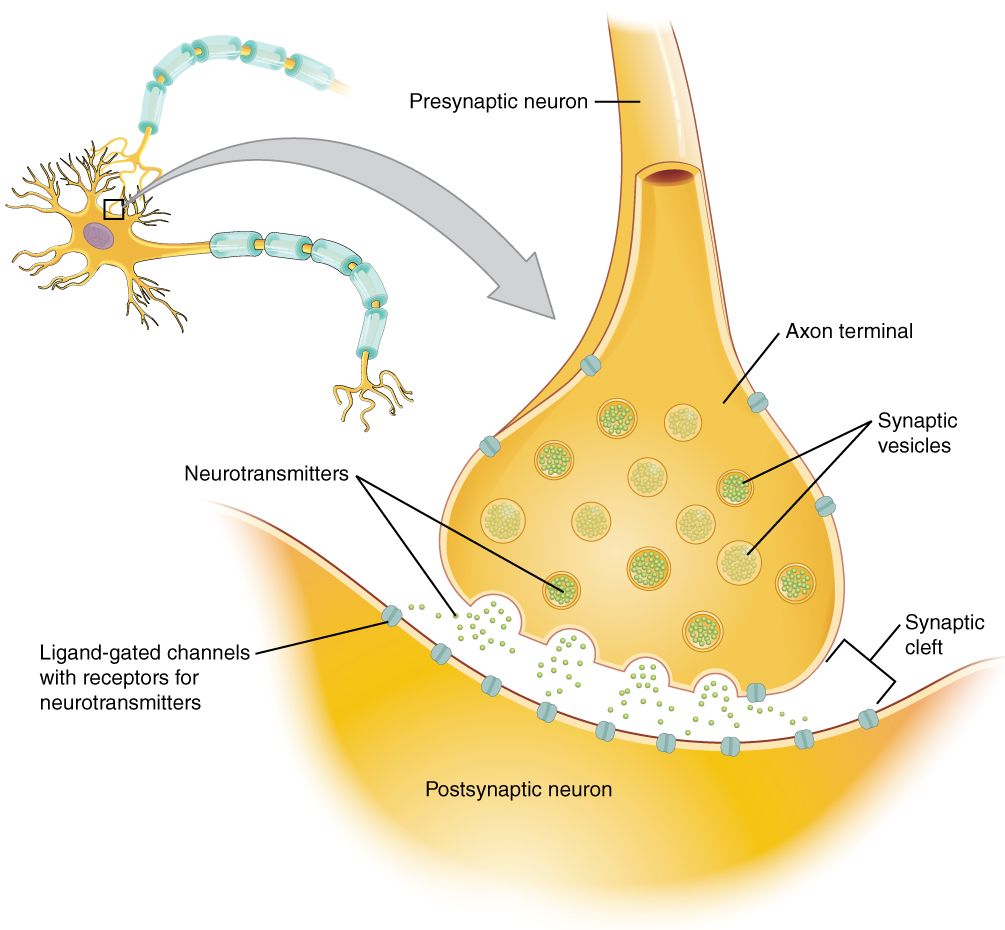
The synapse is the whole story
Neurons do not touch. Where one ends and the next begins there is a microscopic gap — the synaptic cleft — and the message crosses it as a puff of chemical called a neurotransmitter. The sending (presynaptic) neuron packages the transmitter into vesicles, dumps them into the cleft when an electrical impulse arrives, and the transmitter drifts across and binds receptors on the receiving (postsynaptic) neuron. Then it must be cleared, or the signal never turns off. Clearance happens two ways: the transmitter is vacuumed back into the sending neuron by a reuptake pump, or it is chopped up by an enzyme.
That handful of steps is your entire map of psychiatric pharmacology. There is no drug that "fixes depression." There are drugs that block a reuptake pump, drugs that inhibit a degrading enzyme, drugs that occupy a receptor so the real transmitter cannot, and drugs that make a receptor more responsive than it would otherwise be. Once you know which step a drug touches, its effects — wanted and unwanted — stop being a list to memorize and start being something you can reason out.
Two vocabulary words earn their keep here. An agonist binds a receptor and turns it on, imitating the natural transmitter. An antagonist binds the receptor and turns nothing on — it just sits there, blocking the real transmitter from docking. Most antipsychotics are antagonists. Most antidepressants are neither: they leave more transmitter in the cleft by blocking its removal.
The four transmitters that matter most
Serotonin (5-HT) is the mood, sleep, appetite, and anxiety transmitter — and, importantly, it is not confined to the brain. Most of the body's serotonin lives in the gut, which is exactly why serotonergic drugs cause nausea and diarrhea, and why too much serotonin produces the gastrointestinal storm you will read about shortly. Dopamine runs four different circuits: reward and motivation, fine motor control (the basal nuclei), hormone regulation (it suppresses prolactin), and a brainstem trigger zone for vomiting. Block dopamine and you will hit all four, which is why antipsychotics cause both the effect you want and the movement disorders you do not.
Norepinephrine (NE) is alertness, drive, energy, and blood pressure — the internal accelerator. Boost it and depressed patients gain energy; boost it too much and they get tachycardic, tremulous, and hypertensive. GABA (gamma-aminobutyric acid) is the brain's brake pedal, the main inhibitory transmitter. When GABA binds its receptor, chloride flows into the neuron and makes it harder to fire. Nearly every sedative, anxiolytic, many antiepileptics, and most general anesthetics work by pushing on that brake — which is also why they all stack on top of one another and why combining them can stop a patient's breathing.
| Transmitter | What it does | Too little looks like | Too much looks like |
|---|---|---|---|
| Serotonin | Mood, sleep, appetite, anxiety, GI motility | Depression, anxiety, poor sleep | Serotonin syndrome — agitation, clonus, hyperthermia, diarrhea |
| Dopamine | Reward, movement, prolactin suppression, vomiting trigger | Parkinsonism, flat affect, high prolactin (blockade) | Psychosis, hallucinations, dyskinesia |
| Norepinephrine | Alertness, drive, blood pressure | Fatigue, low motivation | Tachycardia, tremor, hypertension, insomnia |
| GABA | Main inhibitory brake; raises seizure threshold | Anxiety, seizures, withdrawal states | Sedation, ataxia, respiratory depression |
| Acetylcholine | Memory, GI motility, secretions, bladder emptying | Dry mouth, constipation, urinary retention, blurred vision, confusion | SLUDGE — salivation, lacrimation, urination, defecation, GI upset, emesis |
Notice that last row. Acetylcholine is not usually the target of these drugs — it is the innocent bystander. Older antidepressants and older antipsychotics block acetylcholine receptors by accident, and that accident produces the anticholinergic effects your patient will actually complain about: the cotton mouth, the constipation, the inability to urinate, and in an older adult, the confusion that gets mistaken for dementia.
- Transmitters cross the synaptic cleft, bind receptors, and are cleared by a reuptake pump or an enzyme — every psychotropic drug touches one of those steps.
- Agonists turn a receptor on; antagonists block it. Antidepressants mostly do neither — they block clearance.
- Serotonin = mood & gut; dopamine = reward, movement, prolactin, vomiting; norepinephrine = drive & blood pressure; GABA = the brake.
- Anticholinergic effects (dry mouth, constipation, retention, blurred vision, confusion) are usually an accident of older drugs, not their purpose.
Section 2Antidepressants & mood stabilizers
Four generations of the same idea
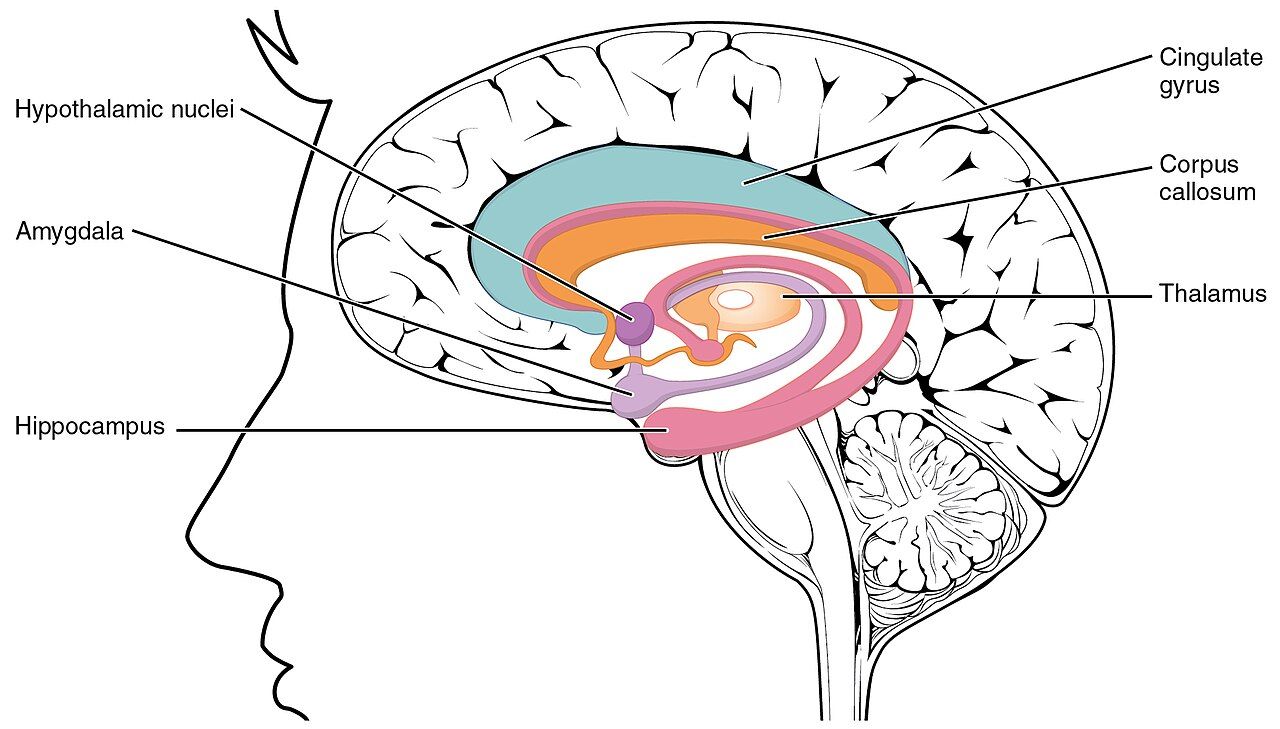
All four antidepressant classes raise the amount of serotonin and/or norepinephrine hanging around in the synapse. They differ almost entirely in how selectively they do it — and selectivity is safety. The classes came in the order they did because each generation learned to hit the target and miss the bystanders.
SSRIs (selective serotonin reuptake inhibitors) — fluoxetine, sertraline, escitalopram, paroxetine, citalopram — block only the serotonin pump. They are first-line because they are hard to die from, not because they work better than the old drugs. Expect nausea and headache in the first week (the gut is full of serotonin receptors), insomnia or drowsiness, and, in the long run, sexual dysfunction — the single most common reason patients quietly stop taking them. Ask about it directly and without embarrassment; a patient who feels able to say "this is ruining my sex life" is a patient who can be switched to something else instead of relapsing in silence.
SNRIs (venlafaxine, duloxetine) block the serotonin pump and the norepinephrine pump. That second target adds energy and blunts neuropathic pain — duloxetine is genuinely useful in diabetic neuropathy and fibromyalgia — but it also adds hypertension. Check a blood pressure at every visit on venlafaxine.
TCAs (amitriptyline, nortriptyline, imipramine) block both pumps too, but they also blunder into histamine, acetylcholine, and alpha-1 receptors. So: sedation, anticholinergic misery, and orthostatic hypotension. Their real danger is cardiac — in overdose they block sodium channels in the heart, widen the QRS, and cause fatal dysrhythmias. A widening QRS is the signal to act, and the treatment is IV sodium bicarbonate, which overcomes the sodium-channel blockade. A one-week supply can kill, which makes them a poor choice for a patient at risk of suicide. MAOIs (phenelzine, tranylcypromine, selegiline) take the enzyme route: they disable monoamine oxidase, the enzyme that destroys serotonin, norepinephrine, and dopamine. Effective, and hemmed in by a diet.
The MAOI diet, and why it is not optional
Monoamine oxidase in your gut wall exists to destroy tyramine, an amine in aged and fermented food. Disable that enzyme and tyramine walks into the bloodstream, floods nerve terminals, and dumps stored norepinephrine all at once. The result is a hypertensive crisis: a pounding occipital headache, blood pressure that can exceed 180/120, stiff neck, sweating, and the real possibility of a stroke. Teach the list — aged cheeses, cured and smoked meats, tap and craft beer, red wine, soy sauce, sauerkraut, fava beans, overripe fruit, yeast extracts — and teach it as though it were an allergy list, because functionally it is.
| Class | Prototype | Key effect | Nursing alert |
|---|---|---|---|
| SSRI | Fluoxetine, sertraline | Blocks serotonin reuptake only | Nausea & headache early; sexual dysfunction long-term; taper — do not stop abruptly |
| SNRI | Venlafaxine, duloxetine | Blocks serotonin and norepinephrine reuptake; helps neuropathic pain | Monitor blood pressure — venlafaxine raises it dose-dependently |
| TCA | Amitriptyline, nortriptyline | Blocks both pumps; also blocks histamine, ACh, alpha-1 | Lethal in overdose — widened QRS, dysrhythmias; treat with IV sodium bicarbonate. Sedation, anticholinergic effects, orthostasis |
| MAOI | Phenelzine | Inhibits the enzyme that destroys all three monoamines | Tyramine-free diet or hypertensive crisis; 2-week washout to/from serotonergic drugs — but 5 weeks after fluoxetine (long half-life) |
| Atypical | Bupropion | NE/dopamine reuptake; no sexual dysfunction; aids smoking cessation | Lowers seizure threshold — avoid in seizure disorder, bulimia, anorexia |
| Atypical | Mirtazapine | Sedating; increases appetite | Useful when depression comes with insomnia and weight loss; give at bedtime |
| Mood stabilizer | Lithium | Damps the highs and lows of bipolar disorder | High-alert: narrow therapeutic range 0.6–1.2 mEq/L; steady salt & fluid intake |
The two-week lie, and the black box
Every antidepressant raises transmitter levels within hours, yet mood does not lift for two to six weeks — the therapeutic effect requires slow receptor adaptation downstream. Patients do not know this. They take a pill for eight days, feel nothing but nausea, and quit. Telling them up front — "the side effects come first and fade, the benefit comes later and lasts" — is one of the highest-yield things a nurse says all shift.
The gap is also dangerous. Antidepressants carry a boxed warning for increased suicidal thinking in patients under 25, and there is a mechanical reason the risk is front-loaded: energy returns before mood does. A profoundly depressed patient may lack the drive to act on suicidal thoughts; two weeks in, the drive is back and the hopelessness is not. Assess suicidality at every contact during that window, not just at intake.
Two more habits. Do not stop an SSRI or SNRI abruptly — discontinuation syndrome (dizziness, flu-like aches, electric-shock "brain zaps," irritability) is miserable and easily avoided by tapering; paroxetine and venlafaxine are the worst offenders because of short half-lives. And screen for bipolar disorder before starting: an antidepressant given alone to a patient with undiagnosed bipolar disorder can flip them into mania.
Serotonin syndrome
Serotonin syndrome is too much serotonergic activity, usually from combining agents — an SSRI plus tramadol, plus triptans for migraine, plus linezolid, plus St. John's wort, plus an MAOI. It arrives fast, typically within hours of the new drug or dose increase, and it is recognized by a triad: mental status change (agitation, confusion), autonomic instability (fever, tachycardia, diaphoresis, diarrhea), and neuromuscular hyperactivity (tremor, hyperreflexia, and clonus — the most specific sign, often worst in the legs). Stop the serotonergic drugs, call the provider, support with cooling and IV fluids, benzodiazepines for agitation and rigidity, and cyproheptadine as the serotonin-blocking antidote in severe cases.
Lithium levels track a narrow road: 0.6–1.2 mEq/L for maintenance, with anything over 1.5 mEq/L counting as toxic and over 2.0 mEq/L a medical emergency. Draw levels as troughs, 12 hours after the evening dose. Expected effects at therapeutic levels are a fine hand tremor, mild thirst, and increased urination. Early toxicity is GI — nausea, vomiting, diarrhea — plus a coarse tremor and slurred speech; later comes ataxia, confusion, seizures, and cardiovascular collapse. There is no antidote; treatment is fluids and, at high levels, hemodialysis. Because lithium is cleared renally and affects the thyroid, baseline and periodic renal function, TSH, and pregnancy status belong in every monitoring plan. Valproate and lamotrigine also serve as mood stabilizers — both carry their own warnings, covered next section over.
- All antidepressants raise synaptic serotonin and/or norepinephrine; selectivity equals safety, which is why SSRIs are first-line.
- Mood lifts in 2–6 weeks while side effects come first — and the boxed warning for suicidality in patients under 25 exists because energy returns before mood.
- Serotonin syndrome = mental status change + autonomic instability + neuromuscular hyperactivity (clonus); stop the drug, cool, hydrate, benzodiazepines, cyproheptadine.
- Lithium is high-alert: range 0.6–1.2 mEq/L, trough draws, steady salt and fluid, watch NSAIDs, thiazides, and dehydration; monitor renal function and TSH.
Section 3Antipsychotics & anxiolytics
Typical antipsychotics: dopamine blockade, and the price of it
Typical (first-generation) antipsychotics — haloperidol, fluphenazine, chlorpromazine — are dopamine D2 antagonists, and they are good at exactly one thing: the positive symptoms of psychosis. Hallucinations, delusions, and disorganized thought are the "added" symptoms, and blocking dopamine strips them away. What these drugs barely touch are the negative symptoms — the flat affect, poverty of speech, social withdrawal, and lost motivation. That distinction matters at the bedside, because a patient whose voices are gone but who still cannot get out of bed is not treatment-resistant; they are inadequately treated.
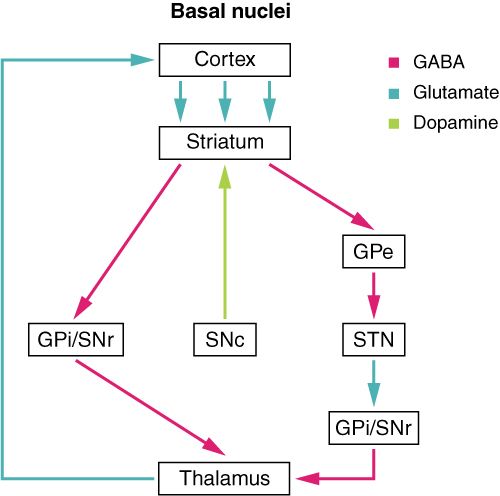
The price is movement. Dopamine blockade in the basal nuclei — the circuit in the reference figure above — produces extrapyramidal symptoms (EPS), and they arrive in a predictable order that is worth knowing because the timing tells you what you are looking at.
| EPS type | When | What you see | Nursing action |
|---|---|---|---|
| Acute dystonia | Hours to days | Sudden muscle spasm — neck twisting, eyes rolled up (oculogyric crisis), laryngospasm | Emergency. Airway first; give IM/IV diphenhydramine or benztropine |
| Akathisia | Days to weeks | Unbearable inner restlessness; pacing, cannot sit still | Often mistaken for worsening psychosis — do not raise the dose. Beta blocker or benzodiazepine; consider switching |
| Parkinsonism | Weeks | Tremor, rigidity, bradykinesia, mask-like face, shuffling gait | Fall risk. Anticholinergic (benztropine) or amantadine; dose reduction |
| Tardive dyskinesia | Months to years | Involuntary lip-smacking, tongue-thrusting, facial grimacing, writhing | Often irreversible. Screen with AIMS — early detection is what preserves the chance of reversal. A VMAT2 inhibitor (valbenazine, deutetrabenazine) can treat it; anticholinergics make it worse |
Two other consequences follow straight from the dopamine map. Dopamine normally suppresses prolactin, so blocking it raises prolactin: expect galactorrhea, amenorrhea, gynecomastia, and sexual dysfunction — embarrassing effects that patients hide and then stop the drug over. And neuroleptic malignant syndrome (NMS) is the rare, life-threatening reaction: fever (often above 40 °C), lead-pipe rigidity, altered consciousness, autonomic instability, and a sky-high creatine kinase from muscle breakdown. Stop the antipsychotic, cool aggressively, hydrate, and expect dantrolene or bromocriptine. NMS and serotonin syndrome look alike; the tell is that NMS is rigid and slow (days, lead-pipe rigidity, hyporeflexia), while serotonin syndrome is fast and jumpy (hours, clonus, hyperreflexia, diarrhea).
Atypicals: fewer movements, more metabolism
Atypical (second-generation) antipsychotics — risperidone, olanzapine, quetiapine, aripiprazole, ziprasidone, clozapine — block dopamine D2 and serotonin 5-HT2A receptors (aripiprazole is the exception: it is a D2 partial agonist, which is why it is less sedating and rarely raises prolactin), and that second action buys them two advantages: less EPS and some genuine effect on negative symptoms. They did not, however, come free. They traded movement problems for metabolic syndrome: weight gain, new-onset type 2 diabetes, and dyslipidemia. Olanzapine and clozapine are the worst; ziprasidone and aripiprazole are gentler. That means metabolic monitoring is nursing work — baseline and periodic weight, waist circumference, blood pressure, fasting glucose or A1C, and a lipid panel.
Clozapine is the one to know cold. It is the most effective antipsychotic that exists, reserved for treatment-resistant schizophrenia, and it can cause severe neutropenia (agranulocytosis) — which is why it is dispensed only through a REMS program with mandatory absolute neutrophil count monitoring. A fever or a sore throat in a patient on clozapine is not a cold until an ANC proves it. It also causes myocarditis, seizures at higher doses, severe constipation that can progress to ileus, and, oddly, drooling. All antipsychotics carry a boxed warning against use in elderly patients with dementia-related psychosis because of increased mortality.
Benzodiazepines and the GABA brake
Benzodiazepines — lorazepam, diazepam, alprazolam, midazolam, clonazepam — do not open the chloride channel themselves. They are positive allosteric modulators: they sit alongside the GABA receptor and make GABA's own effect stronger, increasing how frequently the chloride channel opens when GABA binds. That mechanism has a built-in ceiling, and it is the reason a benzodiazepine alone is fairly hard to die from — without GABA present, the drug does nothing. Add an opioid or alcohol, which push on the same brake by other routes, and the ceiling disappears. Most benzodiazepine deaths are combination deaths.
They are excellent short-term drugs: rapid anxiety relief, sedation, muscle relaxation, seizure termination, and alcohol-withdrawal management. They are poor long-term drugs: tolerance develops, dependence follows, and abrupt withdrawal after chronic use can cause seizures and death — a benzodiazepine taper is not a courtesy, it is a safety measure. In older adults they are on the Beers list for a reason: falls, hip fractures, and confusion. Flumazenil reverses them, but use it cautiously — in a chronic user or a mixed overdose it can precipitate intractable seizures. The safer non-benzodiazepine option for chronic anxiety is buspirone: no sedation, no dependence, no reversal needed — but it takes weeks to work and is useless as a rescue.
- Typicals block dopamine — good for positive symptoms, heavy on EPS: dystonia (hours) → akathisia (days) → parkinsonism (weeks) → tardive dyskinesia (months, often irreversible).
- Atypicals block dopamine and serotonin — less EPS, more metabolic syndrome; monitor weight, glucose, and lipids.
- Clozapine is the most effective and the most dangerous — REMS-mandated ANC monitoring for agranulocytosis; treat fever or sore throat as an emergency.
- NMS = fever + lead-pipe rigidity + altered mental status; it is slow and stiff, while serotonin syndrome is fast and jumpy with clonus.
- Benzodiazepines amplify GABA (frequency of channel opening); dangerous with opioids/alcohol, never stop abruptly, reversal is flumazenil with caution.
Section 4Antiepileptic drugs
Three ways to stop a seizure — and one more
A seizure is a neuronal riot: a population of neurons firing too fast, too synchronously, and spreading that firing to their neighbors. There are three fundamental ways a drug can quiet it, and most antiepileptic drugs (AEDs) — the word anticonvulsant is used interchangeably — use at least one of them. A smaller group, led by the drug you will see ordered most often, works by a fourth route entirely.
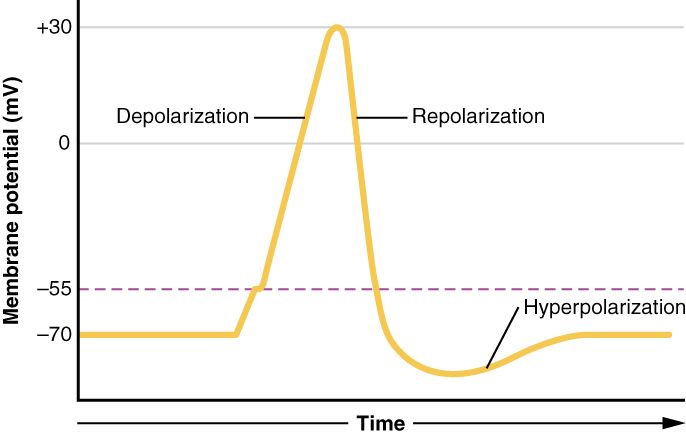
Slow the sodium channels. A neuron cannot fire without opening voltage-gated sodium channels, and after each firing those channels need a moment to reset. Phenytoin, carbamazepine, lamotrigine, and others prolong that inactive state, so a neuron can still fire at a normal rate but cannot fire at a runaway rate. That is elegant: normal traffic passes, the riot does not. Slow the calcium channels. The T-type calcium channels in the thalamus drive the rhythmic 3-per-second discharge of absence seizures; ethosuximide blocks them, which is why it works for absence seizures and nothing else. Boost GABA. More inhibition raises the seizure threshold for the whole brain — the mechanism of benzodiazepines, phenobarbital, and part of what valproate does.
And then the fourth route, which does not fit the channel-and-brake framework at all: quiet the release itself. Levetiracetam and its relative brivaracetam bind synaptic vesicle protein 2A (SV2A) on the presynaptic vesicle and blunt how much transmitter is dumped into the cleft in the first place. Do not file this away as an oddity — levetiracetam is one of the most commonly ordered broad-spectrum AEDs on the unit, so the framework you carry has to have a place for it. Say it as "three channel-and-GABA mechanisms, plus SV2A," and every drug in the table below has a home.
Two nursing consequences fall out of this. First, most AEDs are broad brakes on brain excitability, so sedation, dizziness, and ataxia are class effects, and fall precautions and a no-driving-until-stable conversation belong in the plan. Second, AEDs are prevention, not rescue — missed doses are the single most common reason a controlled patient seizes. Never abruptly discontinue an AED; abrupt withdrawal can trigger status epilepticus in a patient with epilepsy, and withdrawal seizures even in a patient taking the drug for pain or mood who has never had a seizure in their life.
| Drug | Mechanism | Key effect / use | Nursing alert |
|---|---|---|---|
| Phenytoin | Na channel | Tonic-clonic & focal seizures | Level 10–20 mcg/mL; gingival hyperplasia (teach flossing), hirsutism, ataxia/nystagmus = toxicity; IV only in normal saline (precipitates in dextrose), push slowly — hypotension & dysrhythmia; many interactions |
| Fosphenytoin | Na channel | IV/IM prodrug of phenytoin | Safer IV option; dosed in PE (phenytoin equivalents) — a classic dosing error |
| Carbamazepine | Na channel | Focal seizures; trigeminal neuralgia; bipolar | Stevens–Johnson syndrome (screen HLA-B*1502 in patients of Asian descent); agranulocytosis, aplastic anemia; hyponatremia (SIADH); autoinduces its own metabolism |
| Valproic acid | Na, Ca, & GABA | Broad spectrum; bipolar; migraine prophylaxis | Level 50–100 mcg/mL; hepatotoxicity and pancreatitis; highly teratogenic — neural tube defects; monitor LFTs and ammonia |
| Lamotrigine | Na channel | Broad spectrum; bipolar maintenance | Titrate slowly — rapid escalation causes SJS/TEN; any rash stops the drug and gets reported same day |
| Levetiracetam | SV2A vesicle protein — cuts transmitter release | Broad spectrum; few interactions; a workhorse | Behavioral effects — irritability, agitation, mood change; ask the family, not just the chart |
| Ethosuximide | T-type Ca channel | Absence seizures only | GI upset, drowsiness; ineffective for tonic-clonic |
| Phenobarbital | GABA (duration) | Refractory seizures; neonatal seizures | Heavy sedation; strong enzyme inducer; respiratory depression |
| Lorazepam / diazepam | GABA (frequency) | Acute seizure & status epilepticus — the rescue drugs | Watch respirations; have airway support ready; not for maintenance |
Monitoring, teaching, and the seizure itself
Phenytoin and valproic acid have narrow therapeutic ranges and get serum levels; lamotrigine and levetiracetam generally do not. Draw levels as troughs, just before the next dose, and remember that phenytoin is heavily protein-bound — in a patient with low albumin, the total level can look normal while the free (active) drug is toxic. If the number says fine and the patient has nystagmus, ataxia, and slurred speech, believe the patient.
Teaching carries real weight here. Take doses at the same times every day. Do not stop, even if seizure-free for years, without a supervised taper. Carry medical identification. Know your state's driving restrictions. Alcohol lowers the seizure threshold and stacks sedation. Many AEDs — carbamazepine, phenytoin, phenobarbital — are enzyme inducers that can render oral contraceptives ineffective, and valproate and carbamazepine are teratogenic, so contraception counseling is not optional for anyone of childbearing potential. AEDs also carry a class warning for suicidal thoughts; screen for mood changes at follow-up.
And when a seizure happens: your job is not to stop it with your hands. Stay, protect the head, turn the patient to the side, loosen tight clothing, clear the area, time it, and never force anything into the mouth. A generalized seizure lasting more than five minutes, or repeated seizures without a return to baseline, is status epilepticus — a true emergency treated with IV benzodiazepines first, then a loading agent such as fosphenytoin, valproate, or levetiracetam.
- Most AEDs stop seizures three ways: prolong sodium channel inactivation, block T-type calcium channels (absence), or boost GABA — plus a fourth route: levetiracetam and brivaracetam bind SV2A to cut transmitter release.
- Sedation, dizziness, and ataxia are class effects; never stop an AED abruptly — it can trigger status epilepticus.
- Phenytoin 10–20 mcg/mL, valproate 50–100 mcg/mL, drawn as troughs; check albumin before trusting a phenytoin level.
- Signature toxicities: phenytoin → gingival hyperplasia; carbamazepine → SJS, blood dyscrasias, hyponatremia; valproate → hepatotoxicity, pancreatitis, teratogenicity; lamotrigine → SJS if titrated fast; levetiracetam → behavior change.
- Status epilepticus = >5 minutes or no return to baseline — IV benzodiazepine first.
Section 5Anesthetics
Two entirely different jobs
The words sound related, but general and local anesthesia are opposites in strategy. General anesthesia takes away the brain: unconsciousness, amnesia, analgesia, and immobility, delivered systemically, with the patient's protective reflexes — including breathing — deliberately abolished. Local anesthesia leaves the brain entirely alone and cuts the wire instead: the drug blocks sodium channels in a specific nerve so the pain signal never leaves the tissue. The patient is awake and knows exactly what is happening. One takes the receiver offline; the other cuts the phone line.
Modern general anesthesia is almost never one drug — it is balanced anesthesia, a deliberate combination: an IV induction agent to go to sleep fast, an inhaled agent to stay asleep, an opioid for pain, and a neuromuscular blocker for immobility. Combining lets each drug be given at a lower, safer dose. Inhaled agents (sevoflurane, desflurane, isoflurane, nitrous oxide) are titrated breath by breath and eliminated by the lungs. IV agents include propofol — fast, smooth, antiemetic, and a potent respiratory depressant and vasodilator; ketamine — a dissociative that preserves airway reflexes and respiratory drive, valuable in trauma, with emergence delirium as its signature; etomidate — hemodynamically kind, so favored in unstable patients, but it suppresses adrenal function; and midazolam — for anxiolysis and amnesia.
Neuromuscular blockers deserve special fear. Succinylcholine (depolarizing, ultra-short, with fasciculations, hyperkalemia risk, and a link to malignant hyperthermia) and rocuronium or vecuronium (non-depolarizing, reversed with neostigmine or sugammadex) cause paralysis without any sedation or analgesia whatsoever. A paralyzed patient who is not adequately sedated is fully awake, in pain, and unable to signal it. These are high-alert drugs, stored separately, and given only where an airway can be secured immediately.
The stages of anesthesia
Guedel's four stages were described in the era of ether, when induction was slow enough to watch. Modern agents blow through the first three in under a minute — but the stages are still taught because they name what you are watching for, and because Stage II is where a patient can be hurt.
| Stage | Name | What you see | Nursing priority |
|---|---|---|---|
| I | Analgesia / induction | Awake but drowsy; pain sense dulled; can still follow commands | Quiet room, reassurance; the patient can still hear you |
| II | Excitement / delirium | Loss of consciousness with excitation — irregular breathing, struggling, dilated pupils; vomiting & laryngospasm risk | The dangerous stage. No noise, no stimulation. Suction ready, restrain gently for safety, get through it fast |
| III | Surgical anesthesia | Regular breathing, relaxed muscles, reflexes lost, pupils constricted | The target plane; positioning, warming, continuous monitoring |
| IV | Medullary depression / overdose | Respiratory arrest, circulatory collapse, fixed dilated pupils | Never intended. Stop the agent; ventilate and support circulation |
Emergence reverses the sequence, so the patient passes back through Stage II on the way out — which is why the PACU is quiet, why side-lying with suction at hand is standard, and why an emerging patient who thrashes is not "being difficult." Two emergencies live in this territory. Malignant hyperthermia is a genetic reaction to volatile agents and succinylcholine: uncontrolled calcium release in muscle produces masseter rigidity, a fast-rising end-tidal CO₂ (the earliest sign), rigidity, tachycardia, and a temperature that climbs alarmingly — treated with dantrolene, immediate cessation of the trigger, cooling, and treatment of hyperkalemia. Ask about family history of anesthesia problems before surgery; it is a question that saves lives. And aspiration is why NPO status exists — anesthesia strips the gag reflex.
Local anesthetics: the wire cut
Locals come in two chemical families and the difference is clinical. Esters (procaine, benzocaine, tetracaine) are broken down in plasma and cause more allergic reactions; benzocaine sprays also cause methemoglobinemia — suspect it when a patient is cyanotic with a normal PaO₂ and chocolate-brown blood, and treat with methylene blue. Amides (lidocaine, bupivacaine, ropivacaine — note the tell-tale second "i" in the name) are metabolized by the liver and rarely cause true allergy. They are given topically, by local infiltration, as a nerve block, epidurally, or spinally.
Epinephrine is often added to a local. It constricts vessels, which keeps the drug where you put it: longer block, less bleeding, less systemic absorption. The old teaching to avoid epinephrine-containing locals in fingers, toes, nose, ears, and penis has been substantially revised for the digits by modern evidence, but it remains a caution worth knowing and honoring wherever facility policy says so.
The danger of locals is systemic absorption — too much drug, or an accidental intravascular injection. Local anesthetic systemic toxicity (LAST) announces itself in the brain first: circumoral (around-the-mouth) numbness, a metallic taste, tinnitus, dizziness, and agitation, then seizures, then cardiac arrest. Bupivacaine is the most cardiotoxic and can go straight to arrest. Treatment is airway support, benzodiazepines for seizures, and IV lipid emulsion — which every unit doing blocks keeps at hand. After a spinal or epidural, watch for hypotension from sympathetic blockade, monitor the level of the block, keep the patient flat per protocol, and remember that the block recedes in the reverse of how it came on: the level drops from the top down, so the highest dermatomes wake up first and the toes come back last. A patient with moving toes and a wearing-off block is exactly the patient who tries to stand and falls — sensation and motor strength in the feet are the last things to return, and the fall risk lasts until they are fully back.
- General anesthesia abolishes consciousness and reflexes systemically; local anesthesia blocks sodium channels in one nerve and leaves the patient awake.
- Balanced anesthesia combines induction agent + inhaled agent + opioid + neuromuscular blocker so each can be dosed lower and safer.
- Neuromuscular blockers paralyze without sedating — high-alert, airway-ready use only.
- Stage II (excitement) is the dangerous stage — vomiting and laryngospasm; the patient passes back through it on emergence.
- Malignant hyperthermia (volatiles, succinylcholine) → dantrolene; LAST (circumoral numbness, metallic taste, tinnitus → seizures → arrest) → IV lipid emulsion.
The chapter in one breath
- Every drug here acts at the synapse — blocking a reuptake pump, an enzyme, a receptor, or an ion channel. Name the step and you can predict the effects.
- Serotonin drives mood and the gut; dopamine drives reward, movement, prolactin, and vomiting; norepinephrine is drive and blood pressure; GABA is the brake.
- Antidepressants take 2–6 weeks to lift mood while side effects come first — and suicide risk rises early because energy returns before mood does.
- Serotonin syndrome is fast, jumpy, and clonic; NMS is slow, rigid, and febrile. Telling them apart is a bedside skill.
- Lithium is high-alert: 0.6–1.2 mEq/L, steady salt and fluid, beware NSAIDs, thiazides, and dehydration; monitor renal function and TSH.
- Typicals cause EPS in a predictable timeline ending in irreversible tardive dyskinesia; atypicals trade that for metabolic syndrome; clozapine demands ANC monitoring.
- AEDs slow sodium or calcium channels, boost GABA, or — as levetiracetam does — bind SV2A to cut transmitter release; they are never stopped abruptly, and carry signature toxicities — and any rash on lamotrigine or carbamazepine is reported today.
- General anesthesia removes the brain, local anesthesia cuts the wire; the emergencies to know are malignant hyperthermia (dantrolene) and LAST (lipid emulsion).
ReferenceWords worth knowing
The vocabulary of this chapter is the vocabulary of the report you will give and the order you will question — skim it now, and come back whenever a term stops you.
- Agonist
- A drug that binds a receptor and activates it, imitating the body's own transmitter.
- Akathisia
- An extrapyramidal effect of intolerable inner restlessness and an inability to sit still; commonly mistaken for worsening psychosis.
- Antagonist
- A drug that binds a receptor without activating it, blocking the natural transmitter from acting.
- Antiepileptic drug (AED)
- A drug that raises the seizure threshold — most by slowing sodium or calcium channels or enhancing GABA, and some (levetiracetam, brivaracetam) by binding synaptic vesicle protein 2A to reduce transmitter release; also called an anticonvulsant.
- Balanced anesthesia
- Combining an induction agent, an inhaled agent, an opioid, and a neuromuscular blocker so each can be given at a lower, safer dose.
- Discontinuation syndrome
- Dizziness, flu-like aches, irritability, and "brain zaps" after abruptly stopping an SSRI or SNRI; prevented by tapering.
- Dystonia
- Sudden sustained muscle spasm — neck twisting, oculogyric crisis, or laryngospasm — occurring within hours to days of an antipsychotic; an emergency.
- Extrapyramidal symptoms (EPS)
- Movement disorders caused by dopamine blockade in the basal nuclei: dystonia, akathisia, parkinsonism, and tardive dyskinesia.
- Flumazenil
- The benzodiazepine reversal agent; used cautiously, as it can precipitate seizures in chronic users or mixed overdoses.
- GABA
- Gamma-aminobutyric acid, the brain's main inhibitory neurotransmitter; opening its chloride channel makes neurons harder to fire.
- Local anesthetic systemic toxicity (LAST)
- Toxicity from systemic absorption of a local anesthetic: circumoral numbness, metallic taste, and tinnitus progressing to seizures and cardiac arrest; treated with IV lipid emulsion.
- Malignant hyperthermia
- A genetic, life-threatening reaction to volatile anesthetics or succinylcholine causing rigidity, rising end-tidal CO₂, and hyperthermia; treated with dantrolene.
- Monoamine oxidase (MAO)
- The enzyme that degrades serotonin, norepinephrine, and dopamine — and dietary tyramine in the gut wall.
- Negative symptoms
- The "subtracted" symptoms of psychosis — flat affect, poverty of speech, withdrawal, lost motivation — poorly treated by typical antipsychotics.
- Neuroleptic malignant syndrome (NMS)
- A rare antipsychotic reaction of high fever, lead-pipe rigidity, altered consciousness, autonomic instability, and elevated creatine kinase.
- Neuromuscular blocker
- A high-alert drug that paralyzes skeletal muscle without producing any sedation or analgesia; requires a secured airway.
- Positive symptoms
- The "added" symptoms of psychosis — hallucinations, delusions, disorganized thought — that respond best to dopamine blockade.
- Reuptake pump
- The transporter that vacuums a neurotransmitter back into the presynaptic neuron; the target of SSRIs, SNRIs, and TCAs.
- Serotonin syndrome
- Excess serotonergic activity producing mental status change, autonomic instability, and neuromuscular hyperactivity with clonus; treated by stopping the agents, supportive care, and cyproheptadine.
- Status epilepticus
- A seizure lasting more than five minutes, or repeated seizures without a return to baseline; treated first with an IV benzodiazepine.
- Tardive dyskinesia
- Late-onset involuntary lip-smacking, tongue-thrusting, and grimacing after months to years of dopamine blockade; often irreversible.
- Tyramine
- An amine in aged, fermented, and cured foods that triggers a hypertensive crisis in a patient taking an MAOI.