Cultural Anthropology
What Is Anthropology?
Anthropology is the study of humankind — all of it, everywhere, across all of time. It asks a single stubborn question in a thousand forms: what does it mean to be human? To answer it, anthropologists dig up ancient hearths, measure fossil skulls, map the grammar of unwritten languages, and live for years inside communities not their own, learning to see the world as insiders do. This chapter introduces the discipline's distinctive habits of mind — its holism, its comparative reach, its insistence on firsthand fieldwork — and the master concept that ties the whole enterprise together: culture. Everything that follows in this book grows out of these first ideas.
By the end of this chapter you can
- Define anthropology and explain its holistic and comparative perspective.
- Name and distinguish the discipline's four fields and say what each studies.
- Explain how anthropologists define culture and list its key features.
- Contrast the emic (insider) and etic (outsider) points of view.
- Explain cultural relativism and distinguish it from ethnocentrism.
- Describe fieldwork and participant observation as the method that defines the discipline.
- Trace the shift from armchair anthropology to modern fieldwork through Boas, Malinowski, and Mead.
- Distinguish linguistic determinism from linguistic relativity in the Sapir–Whorf question.
- Explain why anthropologists treat race as a social construction rather than a biological fact.
- Use core comparative categories — subsistence strategies, band / tribe / chiefdom / state, reciprocity / redistribution / market, descent and marriage systems, shaman and priest, and rites of passage.
Section 1The study of humankind
A very large question
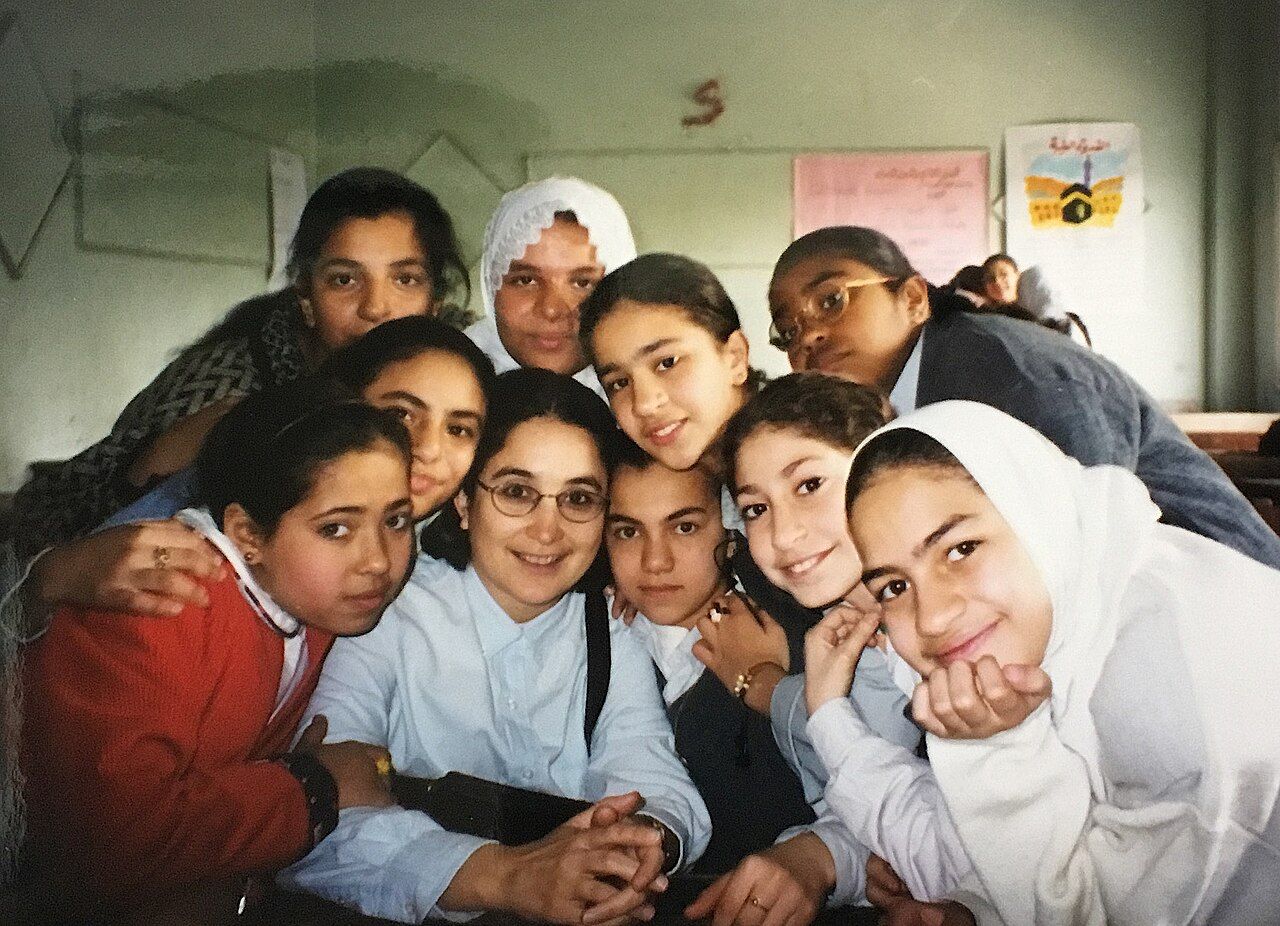
Every discipline stakes out a corner of reality. Economists take the market, historians take the documented past, biologists take the living cell. Anthropology — from the Greek anthropos (human being) and logos (study) — takes something far larger and more slippery: the entire human species, in every place it has ever lived and every era it has ever occupied. That is an impossibly broad brief, and anthropologists know it. What makes the field coherent is not a narrow subject but a distinctive way of looking, a set of intellectual habits that anthropologists carry into any topic they touch.
The holistic perspective
The first habit is holism — the conviction that no piece of human life can be understood in isolation from the rest. A wedding is never only a ceremony; it is also an economic transaction, a religious act, a political alliance, a statement about gender, and an expression of a people's deepest values, all at once. When the anthropologist E. E. Evans-Pritchard studied the Nuer of South Sudan in the 1930s, he could not explain their politics, their religion, or their poetry without first understanding their cattle, because cattle sat at the center of Nuer economics, kinship, ritual, and identity simultaneously. Holism also runs vertically, through time and biology: to grasp a human community fully you may need its ecology, its evolutionary past, its language, and its history braided together. This is what anthropologists mean when they call their approach biocultural — humans are at once biological organisms and cultural creatures, and neither half explains us alone.
The comparative perspective
The second habit is comparison. Anthropology is relentlessly cross-cultural: it refuses to treat any one society — least of all the anthropologist's own — as the natural or default way of being human. By setting practices side by side across the whole human record, the field turns the familiar strange and the strange familiar. Marriage payments flow from the groom's family in one society and the bride's in another; some peoples reckon descent through mothers, others through fathers; a gesture that means "yes" in one place means "no" a border away. Only by comparing can we separate what is genuinely universal about human beings from what is merely local custom mistaken for human nature. Comparison is anthropology's laboratory, and the diversity of the world's cultures is its evidence.
| Hallmark | What it means | Why it matters |
|---|---|---|
| Holism | Study the whole — economy, kinship, religion, biology, history — together | Human practices interlock; pulling one thread moves the rest |
| Comparison | Set societies side by side across space and time | Separates true universals from local custom |
| Fieldwork | Learn firsthand by living among the people studied | Grounds claims in lived reality, not armchair guesswork |
| Relativism | Understand a practice on its own cultural terms first | Guards against judging others by one's own yardstick |
The comparative toolkit
Comparison needs categories. Over a century of fieldwork, anthropologists have built a shared vocabulary for sorting the world's societies — not to rank them, but to make them commensurable enough to think about side by side. A handful of these categories do most of the work, and the rest of this book unfolds them.
Making a living. Societies differ first in subsistence strategy, the way they get food. Foraging — hunting, fishing, and gathering wild foods — supported every human community until roughly twelve thousand years ago and still shapes the lives of peoples such as the Ju/'hoansi of the Kalahari and the Hadza of Tanzania. Horticulture cultivates gardens with hand tools, often clearing a plot and later letting it rest; the yam gardens of the Trobriand Islands are the classic case. Pastoralism builds life around herds of domesticated animals, as with Nuer and Maasai cattle or Mongolian horses and sheep. Intensive agriculture adds plows, irrigation, terracing, and draft animals to work the same land permanently, feeding the dense populations that make cities possible. Industrial and post-industrial economies run on mechanized production, wage labor, and markets. These are strategies, not stages: no society is obliged to pass through them in order, and foragers today are our contemporaries, not living fossils or relics of an earlier age.
Organizing power and goods. A widely used typology associated with Elman Service sorts political organization into band, tribe, chiefdom, and state. A band is a small, mobile, kin-based group, typically of foragers, with informal and situational leadership and no formal office. A tribe is larger and usually food-producing, knit together by kinship, age grades, or other associations, and led by figures — village heads, “big men” — who have influence but no power to command. A chiefdom has a permanent, usually hereditary office of chief and ranks descent lines by their closeness to it. A state is centralized and socially stratified, with a bureaucracy, formal law, taxation, and a claimed monopoly on the legitimate use of force. The typology is a rough sorting device rather than a staircase; used carelessly it slides back toward the discredited ladder-of-progress thinking that Section 5 describes. Goods, meanwhile, move by three broad routes, a scheme owed to the economic historian Karl Polanyi: reciprocity (direct give-and-take between parties, which Marshall Sahlins graded from open-handed giving among close kin to hard bargaining with strangers), redistribution (goods flow inward to a center — a chief, a temple, a treasury — and back out again), and market exchange (goods traded at prices set by supply and demand, usually through money). Most societies use all three; what differs is which one dominates.
Reckoning kin, and marrying. Every society traces descent, but not in the same way. Unilineal systems follow a single line: patrilineal descent runs through fathers, as among the Nuer, and matrilineal descent through mothers, as among the Trobrianders and the Hopi. Matrilineal is not the same as matriarchal — tracing descent through women says nothing on its own about who holds authority, which in many matrilineal societies rests substantially with a woman's brother. Bilateral reckoning counts both sides more or less equally, the common pattern across Europe and North America. Marriage varies just as widely. Monogamy (one spouse at a time) sits alongside polygamy, whose two forms are polygyny (a man with more than one wife, by far the more common of the two) and the much rarer polyandry (a woman with more than one husband, documented most often as fraternal polyandry in Tibet and Nepal). Rules of exogamy require marrying outside a defined group; rules of endogamy require marrying inside one. Some form of incest taboo appears in every known society, though which relatives it covers changes dramatically from place to place. Marriage also moves wealth: bridewealth passes from the groom's kin to the bride's, as in Nuer cattle transfers, while a dowry travels with the bride.
Ritual and religious specialists. Anthropologists distinguish two ideal types of religious practitioner. A shaman is characteristically a part-time specialist called to the role by personal experience — a vision, an illness, a dream — who works on behalf of individual clients and often enters a trance to deal with the spirit world; the word itself comes from the Evenki of Siberia. A priest is characteristically a full-time specialist, formally trained and installed in an office within an organized institution, who performs prescribed rites on behalf of a whole congregation. The sharpest contrast is the source of authority: a priest's comes from the office, a shaman's from personal power and direct experience. Shamanic practice is most common in foraging and horticultural societies and priesthoods in societies with states and formal hierarchies, but the two are ideal types, not a partition — many societies have both. Ritual itself has a recurring shape as well, the three-stage rite of passage that Section 5 takes up.
| Comparative category | The range it covers | An example |
|---|---|---|
| Subsistence strategy | Foraging, horticulture, pastoralism, intensive agriculture, industrialism | Ju/'hoansi foraging; Maasai herding |
| Political organization | Band, tribe, chiefdom, state | A mobile forager band; a bureaucratic state |
| Exchange | Reciprocity, redistribution, market | Kula reciprocity; taxation as redistribution |
| Descent | Patrilineal, matrilineal, bilateral | Nuer patrilineal; Trobriand matrilineal |
| Marriage | Monogamy, polygyny, polyandry; exogamy, endogamy | Fraternal polyandry in Tibet and Nepal |
| Religious specialist | Shaman (part-time, called) vs priest (full-time, ordained) | A Siberian shaman; a temple priesthood |
- Anthropology is the study of humankind across all places and all of time.
- Holism studies human life as an interconnected whole — biological and cultural together.
- The comparative, cross-cultural method sorts human universals from local custom.
- What unites the field is a shared perspective, not a single narrow subject.
- Comparison runs on shared categories: subsistence strategies (foraging, horticulture, pastoralism, intensive agriculture, industrialism), band / tribe / chiefdom / state, reciprocity / redistribution / market, descent and marriage systems, and shaman versus priest.
- These categories are sorting tools, not a ladder of progress — foragers are contemporaries, not survivals.
Section 2The four fields
One discipline, four lenses
In North America, anthropology is traditionally organized into a four-field approach, a structure championed by Franz Boas a century ago precisely so that no single lens would be allowed to answer the human question alone. The four fields are cultural anthropology, archaeology, biological (physical) anthropology, and linguistic anthropology. Together they cover human beings as living societies, as a deep material past, as an evolving biological species, and as speaking animals whose languages shape thought.
What each field does
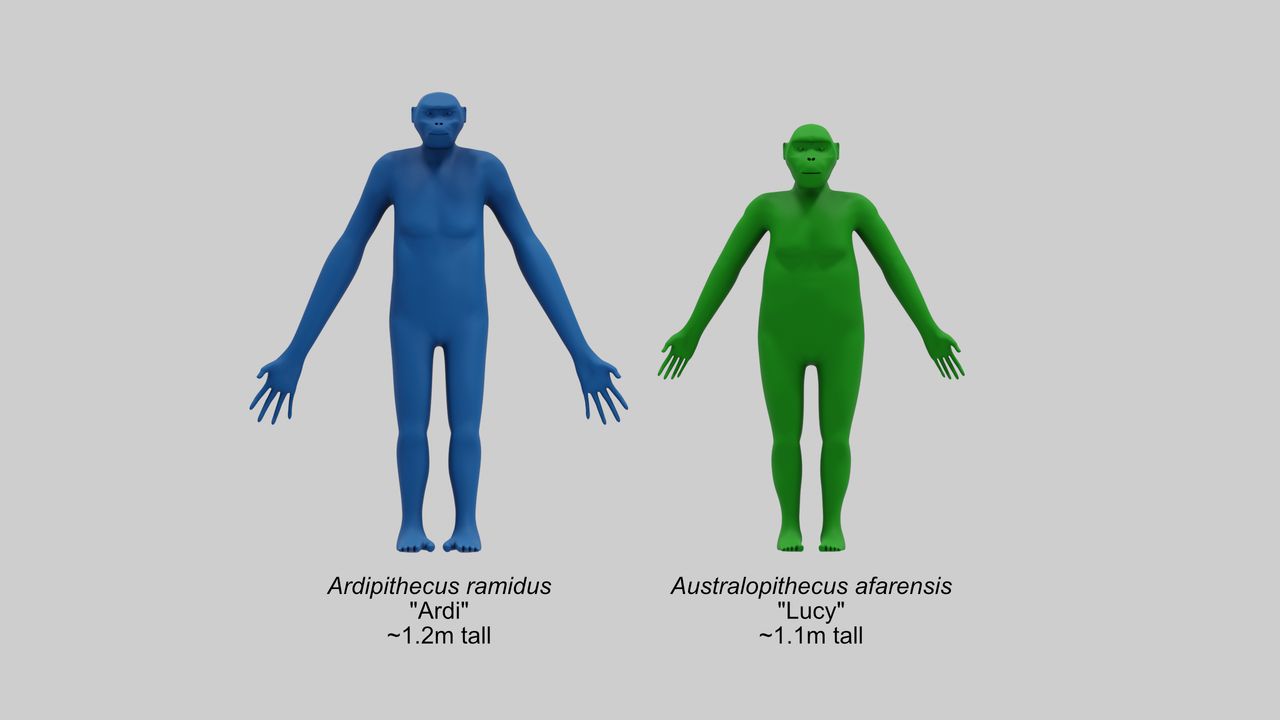
Cultural anthropology (also called sociocultural anthropology) studies living human societies — their beliefs, institutions, kinship, politics, and daily practice — chiefly through long-term fieldwork. Its central product is the ethnography, a book-length written account of one people's way of life. Archaeology reconstructs past human cultures from what they left behind: tools, hearths, garbage, buildings, and bones. It is anthropology's time machine, the only field that can reach societies with no living members and no written records. Biological anthropology studies humans as biological organisms — human evolution and the fossil record, primatology, human genetics and variation, and forensic identification. It is the field that reads a 3.2-million-year-old skeleton like “Lucy” for clues to how we came to walk upright. Linguistic anthropology studies language as a human and cultural phenomenon: how languages are structured, how they change, and how the way people talk both reflects and shapes their social world — an idea associated with the Sapir–Whorf hypothesis of linguistic relativity.
Language and thought: the Sapir–Whorf question
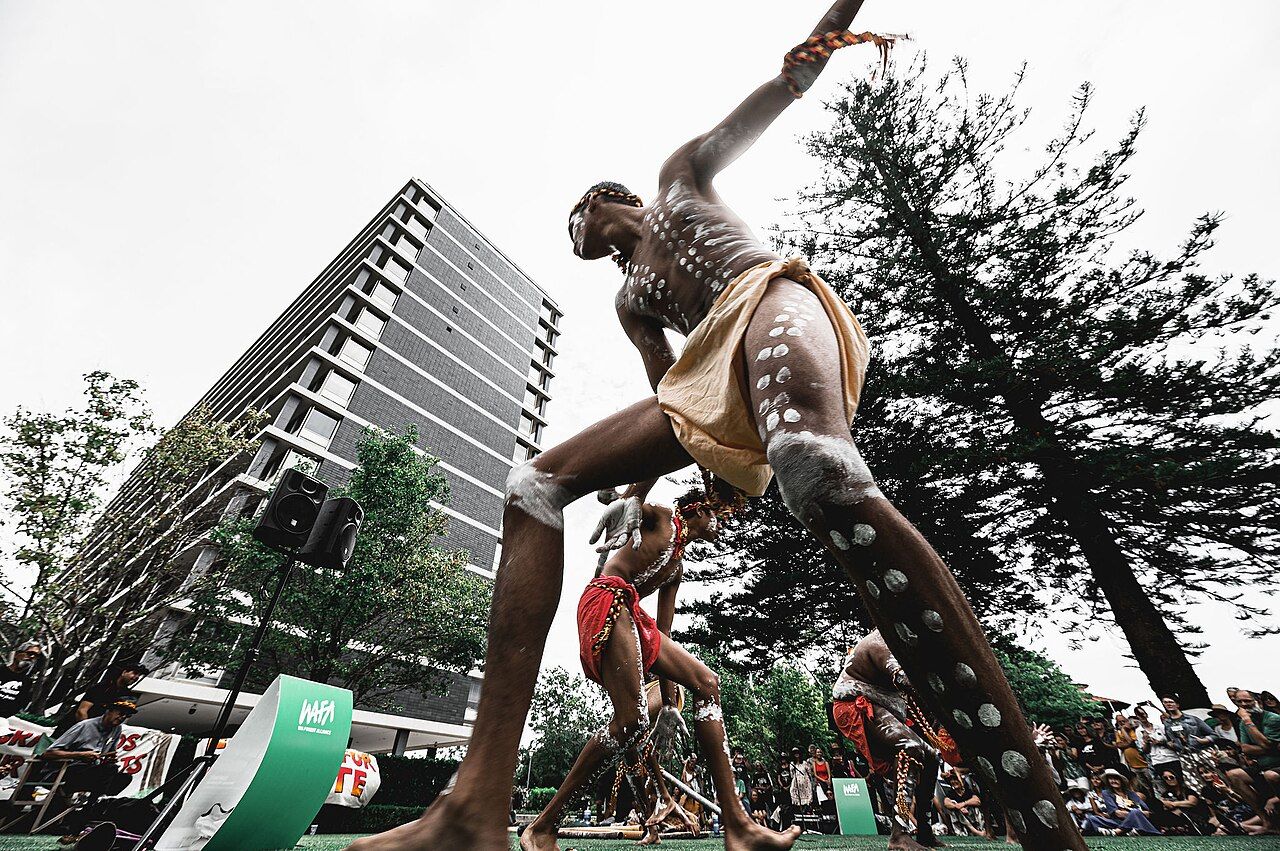
Linguistic anthropology's most argued-over idea runs from Boas to his student Edward Sapir and Sapir's student Benjamin Lee Whorf. The two never published it jointly as a formal proposition — later scholars gathered their scattered claims under the name Sapir–Whorf hypothesis — and it is essential to separate its two versions. The strong version, linguistic determinism, holds that language determines thought: what your language cannot express, you cannot think. Almost no one accepts it, because people plainly think thoughts their language has no single word for, and readily borrow or coin words when they need them. The weak version, linguistic relativity, holds that the habitual patterns of a language nudge the habitual patterns of its speakers' attention and thought. This version has real evidence behind it. Speakers of languages such as Guugu Yimithirr in northern Australia, which locates things by compass direction rather than by “left” and “right,” keep a remarkable running sense of orientation, and where a language draws its color boundaries measurably affects how quickly speakers tell two neighboring shades apart. (A third, widely repeated example — that grammatical gender colors how speakers describe objects — should be treated with caution: the original demonstration was never published as a peer-reviewed study and later attempts to replicate it have failed.)
Two cautionary tales come with the topic. The claim that “Eskimo” languages have dozens or hundreds of words for snow is a much-repeated exaggeration, inflated through retelling from a modest original observation; Inuit and Yupik languages build long words by stacking suffixes onto roots, which makes counting “words” the wrong exercise entirely. And Whorf's assertion that Hopi has no grammar of time was later shown to be mistaken — Hopi has a rich vocabulary and grammar for temporal relations. Linguistic anthropologists today mostly pursue something more modest and better documented: how ways of speaking mark identity, status, gender, and power. Which language a family keeps at home, who may interrupt whom, what counts as a polite request — these turn out to be where language and social life visibly grip each other.
The fifth field and applied work
Many programs add applied anthropology as a fifth field — the use of anthropological knowledge to solve practical problems in health, development, business, forensics, and public policy. Applied work is less a separate subject than a stance that cuts across all four fields: it asks not only what humans are, but how understanding them can be put to use.
| Field | What it studies | Signature method | Example question |
|---|---|---|---|
| Cultural anthropology | Living societies — belief, kinship, politics, ritual | Long-term fieldwork; ethnography | How do the Trobrianders organize exchange? |
| Archaeology | Past cultures via material remains | Excavation; artifact & dating analysis | Why did people first settle in villages? |
| Biological anthropology | Humans as an evolving biological species | Fossils, primatology, genetics, osteology | When and why did bipedalism evolve? |
| Linguistic anthropology | Language in social and cultural life | Recording, grammar, discourse analysis | Does the language you speak shape thought? |
| Applied anthropology | Anthropology put to practical use | Any of the above, aimed at a problem | How can a clinic fit local health beliefs? |
- The four-field approach: cultural, archaeological, biological, and linguistic anthropology.
- Cultural studies living societies (ethnography); archaeology reads the material past; biological studies humans as an evolving species; linguistic studies language in social life.
- Applied anthropology is a fifth, cross-cutting field that puts the knowledge to use.
- Boas built the four-field structure to keep the human question whole.
- The Sapir–Whorf question has two versions: linguistic determinism (language determines thought — rejected) and linguistic relativity (language influences habitual thought — supported).
Section 3The culture concept
Anthropology's master concept
If anthropology has one great idea, it is culture. The classic definition comes from the Victorian anthropologist Edward Burnett Tylor, who in 1871 called culture “that complex whole which includes knowledge, belief, art, morals, law, custom, and any other capabilities and habits acquired by man as a member of society.” Notice the key word: acquired. Culture is not carried in the genes and not invented afresh by each person; it is learned from others and handed down. This is why an infant raised in Tokyo grows up speaking Japanese and bowing in greeting while a genetically similar infant raised in Lagos grows up speaking Yoruba with an entirely different set of manners. The capacity for culture is biological and universal; its content is learned and local.
The features of culture
Anthropologists find it useful to break the concept into a handful of features. Culture is learned (through enculturation, the lifelong process of absorbing one's culture). It is shared — held in common by a group, which is what lets its members cooperate and understand one another. It is symbolic: it works through symbols, things that stand for other things by agreement rather than by nature, of which language is the supreme example. It is integrated — its parts hang together as a system, so that a change in the economy ripples into family life and religion. And it is often adaptive (and sometimes maladaptive), a toolkit for making a living in a particular environment. Above all, culture is not the same as human biology and not the same as an individual's idiosyncrasies; it is the shared, learned design for living that a group passes on.
Symbols and shared meaning
The interpretive anthropologist Clifford Geertz pushed the symbolic side hardest, defining culture as the “webs of significance” humans themselves have spun — the shared meanings through which people make sense of their lives. In his famous essay on the Balinese cockfight, Geertz argued that the fight was not really about birds or even gambling; it was a story the Balinese told themselves about themselves, a dramatization of status, rivalry, and masculinity. To describe it adequately you had to interpret its meaning, not just record its motions — the practice he called thick description.
Culture, not race
The insistence that culture is learned rather than inherited carried a consequence that reshaped the twentieth century. If what separates peoples is learned, then it is not written in the body — and the nineteenth-century conviction that humanity divides into a few fixed biological races, ranked by ability, loses its foundation. Franz Boas attacked that conviction with data. Measuring thousands of immigrants and their American-born children in the years around 1910, he found that head shape — then treated as the very signature of a fixed racial type — shifted measurably in the children, which no fixed type should do. What scholars had been reading as race, he argued, was largely the imprint of environment and history.
Modern biology has confirmed and extended the point. Human physical variation is entirely real, but it is clinal: traits shade gradually across geography instead of clustering into bounded groups, and they vary independently of one another, so that skin pigmentation, blood type, and lactose tolerance each map onto the world differently and refuse to bundle into “races.” Most human genetic variation is found within any conventionally named population rather than between populations. And the categories themselves shift across borders: the way one society sorts people by color does not match the way its neighbor does, which is exactly what one expects of a cultural classification and not of a natural kind. Anthropologists therefore describe race as a social construction — a set of categories a society invents, teaches, and enforces. That is emphatically not the same as calling it unimportant. Race is not a biological fact, but racism is a social fact with measurable consequences in housing, health, wealth, and life expectancy. A thing can be invented and still be one of the most powerful forces in a person's life, and tracing exactly that difference is one of the discipline's steadiest commitments.
| Feature | Meaning | Everyday illustration |
|---|---|---|
| Learned | Acquired through enculturation, not inherited biologically | Children learn the language and manners around them |
| Shared | Held in common by a group | A red light means “stop” to everyone at the intersection |
| Symbolic | Works through symbols — meaning by agreement | Words, flags, wedding rings, gestures |
| Integrated | Parts form an interlocking system | A shift to wage work reshapes family and religion |
| Adaptive | A toolkit for living in an environment | Inuit clothing and hunting knowledge for the Arctic |
- Tylor's 1871 definition frames culture as the “complex whole” that is acquired — learned, not inherited.
- Culture is learned, shared, symbolic, integrated, and often adaptive.
- Enculturation is how each generation absorbs its culture; symbols (especially language) carry it.
- Geertz defined culture as shared webs of meaning, read through thick description.
- Race is a social construction, not a biological division: human variation is clinal and traits vary independently, and Boas showed even “fixed” racial traits respond to environment. Racism, however, has real and measurable effects.
Section 4Emic and etic
Two points of view
To study another way of life is to stand in two places at once. The linguist Kenneth Pike coined the pair of terms anthropologists now use for this, borrowing them from phonemic and phonetic. The emic perspective is the insider's view: the categories, meanings, and explanations that the people themselves use and recognize. The etic perspective is the outsider's, analytic view: the concepts an observer brings to describe and compare across cultures, whether or not the locals would phrase things that way. A good ethnographer needs both — the emic to grasp what a practice means to those who live it, the etic to set that practice in a framework that can be compared with practices elsewhere.
Ethnocentrism and its cure
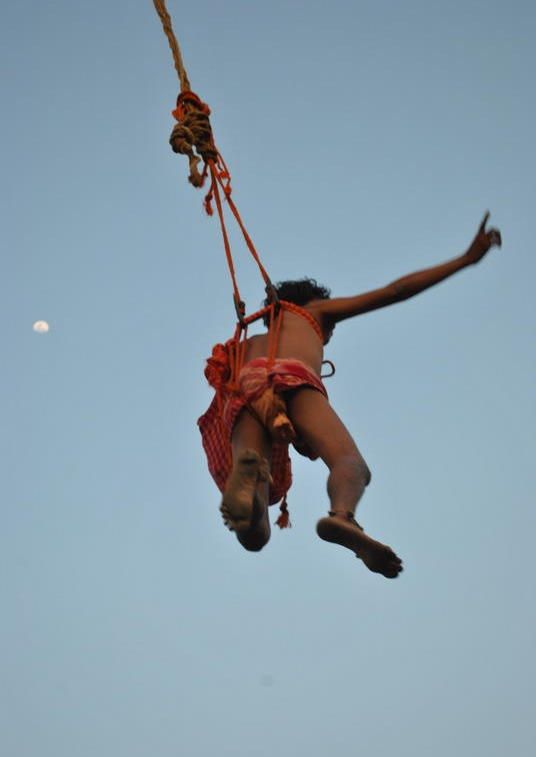
The natural human tendency is ethnocentrism — judging other cultures by the standards of one's own and finding them wanting. Ethnocentrism is comfortable and nearly universal, and it is also the great obstacle to understanding, because it hears “different” and translates it as “wrong.” Anthropology's discipline against it is cultural relativism: the methodological principle, developed by Franz Boas and his students, that a practice must first be understood on its own terms, within the logic of the culture that holds it, before it can be judged. What looks bizarre from outside — a food taboo, a mourning custom, an initiation ordeal — almost always makes sense once you understand the web of meaning it sits inside. A classic teaching device is Horace Miner's tongue-in-cheek essay on the “Nacirema” (“American” spelled backward), which describes ordinary American bathroom hygiene in the solemn language of exotic ritual — a reminder that every culture looks strange when viewed coldly from outside.
The limits of relativism
Cultural relativism is a tool for understanding, not a moral surrender. Taken to an extreme, it would forbid all cross-cultural judgment, which few anthropologists accept — most distinguish between relativism as a method (suspend judgment long enough to understand) and relativism as an ethics (anything goes). The working compromise is to insist on understanding first and to reserve evaluation for afterward, made carefully and with humility. Cultural relativism is the opposite of ethnocentrism, not the opposite of ethics.
| Emic / relativist | Etic / outsider | |
|---|---|---|
| Point of view | The insider's own categories and meanings | The analyst's comparative concepts |
| Guiding question | What does this mean to the people who do it? | How does this compare across cultures? |
| Danger to avoid | Going “native” — losing analytic distance | Ethnocentrism — judging by one's own yardstick |
| Discipline it needs | Empathy and immersion | Cultural relativism — understand before judging |
- Emic = the insider's view; etic = the outsider's analytic view; good ethnography uses both.
- Ethnocentrism judges others by one's own standards; cultural relativism understands them on their own.
- Cultural relativism (from Boas) is a method for understanding, not a licence to abandon ethics.
- Miner's Nacirema shows that any culture, including one's own, looks strange viewed from outside.
Section 5A short history
The armchair era
Anthropology began, in the nineteenth century, as a science conducted from a distance. Early theorists such as Edward Tylor, Lewis Henry Morgan, and Sir James Frazer — author of the vast comparative study of myth and religion, The Golden Bough (1890) — built sweeping theories of human progress out of reports mailed home by missionaries, traders, and colonial officers. They rarely met the peoples they wrote about. This is the age of armchair anthropology, and its favorite framework was unilineal evolution — the now-discredited idea that all societies climb the same ladder from “savagery” through “barbarism” to “civilization,” with the theorist's own nation conveniently at the top. The scheme was ethnocentric to its core, and its downfall would define the modern discipline.
Boas and the fieldwork revolution
Franz Boas (1858–1942), often called the father of American anthropology, demolished the armchair. Trained in physics, he insisted that culture had to be studied firsthand and in its own historical context — a stance called historical particularism — rather than slotted into a universal ladder. From his long engagement with the Kwakwaka'wakw (Kwakiutl) of the Pacific Northwest and their potlatch feasts, he argued that each culture is the product of its own particular history and must be judged on its own terms. Boas gave anthropology four enduring gifts: the four-field approach, cultural relativism, a sustained scientific assault on the racial thinking of his day, and the training of a generation of students who would carry all three across the discipline. In Britain, at almost the same moment, Bronislaw Malinowski (1884–1942) turned firsthand study into a rigorous method. An Austro-Hungarian subject caught in Australian-administered Papua when the First World War broke out, he was permitted to sit out the war doing research and spent it in the Trobriand Islands, living among the islanders for years, learned their language, and pioneered participant observation — taking part in daily life while systematically recording it. His account of the kula ring — a vast circuit of ceremonial exchange in which shell armbands travel between island partners in one direction around the ring and shell necklaces travel in the other, building lifelong obligations rather than profit — appeared in Argonauts of the Western Pacific (1922) and became the template for modern ethnography.
Mead, and anthropology's public voice
Boas's most famous student, Margaret Mead (1901–1978), carried the new fieldwork method — and its relativist message — to a mass audience. In Coming of Age in Samoa (1928), she argued that the storm and stress of adolescence was not a biological inevitability but varied with culture, a direct challenge to the assumption that Western patterns were universal human nature. Whatever later debates her Samoan work provoked, Mead established anthropology as a public conscience, using the comparative study of other societies to question the settled certainties of her own. Around the same period, students of ritual gave the field lasting tools: Arnold van Gennep, in The Rites of Passage (1909), showed that ceremonies marking life's transitions share a three-part structure — separation, liminality (a betwixt-and-between threshold), and reincorporation — and Victor Turner later deepened the middle phase, showing how the liminal stage dissolves ordinary status and forges an intense fellowship he called communitas.
| Figure | Era | Contribution |
|---|---|---|
| Tylor, Morgan, Frazer | 19th c. | Armchair theory; culture concept; unilineal evolution (later rejected) |
| Franz Boas | c. 1900–1940 | Historical particularism, cultural relativism, the four-field approach |
| Bronislaw Malinowski | 1915–1920s | Participant observation; the Trobriand kula; functionalism |
| Arnold van Gennep | 1909 | The three-stage structure of rites of passage |
| Margaret Mead | 1920s onward | Culture-and-personality; anthropology's public voice |
| Victor Turner | mid-20th c. | Liminality and communitas in ritual |
- Armchair anthropology (Tylor, Morgan, Frazer) theorized human progress from secondhand reports and favored discredited unilineal evolution.
- Boas established firsthand study, historical particularism, cultural relativism, and the four-field approach.
- Malinowski pioneered participant observation among the Trobrianders, documenting the kula in Argonauts of the Western Pacific.
- Mead gave anthropology a public voice; van Gennep and Turner mapped the structure of rites of passage and liminality.
The chapter in one breath
- Anthropology is the study of humankind everywhere and across all time, held together by a shared perspective rather than a narrow subject.
- That perspective is holistic (study the whole, biological and cultural together) and comparative (cross-cultural), which separates human universals from local custom.
- The four fields — cultural, archaeological, biological, and linguistic anthropology (plus applied) — study humans as societies, a material past, an evolving species, and speaking animals.
- Culture, the field's master concept, is the learned, shared, symbolic, integrated, and adaptive design for living; Tylor defined it and Geertz read it as webs of meaning.
- The emic (insider) and etic (outsider) views are both needed; cultural relativism is the cure for ethnocentrism, a method for understanding rather than a moral verdict.
- Anthropology moved from armchair theorizing (Frazer, Tylor, Morgan) to firsthand fieldwork through Boas, Malinowski, and Mead.
- On language and thought, linguistic determinism (the strong Sapir–Whorf claim) is rejected, while linguistic relativity — language influences habitual thought — is supported.
- Race is a social construction rather than a biological division: human variation is clinal and its traits vary independently. Racism nonetheless has real, measurable consequences.
- Its comparative toolkit includes subsistence strategies (foraging, horticulture, pastoralism, intensive agriculture, industrialism), band / tribe / chiefdom / state, forms of exchange (reciprocity / redistribution / market), descent (patrilineal, matrilineal, bilateral) and marriage (monogamy, polygyny, polyandry; exogamy, endogamy), the contrast between shaman and priest, and the three-stage rite of passage.
ReferenceWords worth knowing
A quick reference for the terms in this chapter — skim it now, or circle back whenever a word trips you up.
- Agriculture (intensive)
- A subsistence strategy that farms permanent fields using plows, irrigation, terracing, or draft animals, supporting dense populations and cities.
- Applied anthropology
- The use of anthropological knowledge and methods to address practical problems in health, development, business, forensics, and policy; often counted as a fifth field.
- Archaeology
- The field that reconstructs past human cultures from their material remains — tools, structures, refuse, and bones.
- Band
- The smallest and most egalitarian form of political organization: a small, kin-based, mobile group typical of foragers, with informal and situational leadership.
- Bilateral descent
- Reckoning kinship through both the mother's and the father's lines more or less equally.
- Biological (physical) anthropology
- The field that studies humans as an evolving biological species — human evolution, primatology, genetics, variation, and osteology.
- Bridewealth
- Wealth transferred from the groom's kin to the bride's kin at marriage, as in Nuer cattle transfers; contrast dowry, which travels with the bride.
- Chiefdom
- A political form with a permanent, usually hereditary office of chief and descent lines ranked by closeness to that office; goods commonly move by redistribution.
- Clinal variation
- The gradual shading of a physical trait across geography rather than its clustering into bounded groups; a central reason race fails as a biological division.
- Comparative (cross-cultural) method
- Anthropology's practice of setting societies side by side across space and time to distinguish universals from local custom.
- Cultural anthropology
- The field that studies living human societies — belief, kinship, politics, and practice — chiefly through fieldwork and ethnography.
- Cultural relativism
- The principle that a practice should first be understood on its own cultural terms before being judged; the methodological opposite of ethnocentrism.
- Culture
- The learned, shared, symbolic, integrated, and largely adaptive design for living that a group transmits across generations.
- Descent
- The culturally recognized reckoning of ancestry that assigns people to kin groups; may be unilineal (patrilineal or matrilineal) or bilateral.
- Emic
- The insider's perspective — the categories and meanings the people themselves use and recognize.
- Enculturation
- The lifelong process by which a person absorbs the culture of the group they grow up in.
- Endogamy
- A rule requiring marriage within a defined social group; the counterpart of exogamy.
- Ethnocentrism
- Judging another culture by the standards of one's own and finding it inferior.
- Ethnography
- The firsthand, in-depth written account of a particular people's way of life; also the fieldwork that produces it.
- Ethnology
- The comparative analysis of ethnographic data across many societies to reach broader conclusions about culture.
- Etic
- The outsider's analytic perspective — the concepts an observer brings for description and cross-cultural comparison.
- Exogamy
- A rule requiring marriage outside a defined social group; the counterpart of endogamy.
- Fieldwork
- Extended firsthand research carried out where people live; the method that defines modern anthropology.
- Foraging
- A subsistence strategy based on hunting, fishing, and gathering wild foods; the human pattern until roughly twelve thousand years ago.
- Four-field approach
- The organization of anthropology into cultural, archaeological, biological, and linguistic fields, championed by Franz Boas.
- Historical particularism
- Boas's insistence that each culture be explained by its own particular history rather than slotted into a universal sequence of stages.
- Holism
- The perspective that human life must be studied as an interconnected whole — biological, cultural, historical, and ecological together.
- Horticulture
- A subsistence strategy of small-scale garden cultivation with hand tools, often clearing a plot and later letting it rest.
- Incest taboo
- A prohibition on sexual relations or marriage between specified relatives; universal in form, but strikingly variable in which relatives it covers.
- Liminality
- The betwixt-and-between middle phase of a rite of passage, in which ordinary status is suspended (van Gennep; Turner).
- Linguistic anthropology
- The field that studies language as a human and cultural phenomenon — its structure, change, and social life.
- Linguistic determinism
- The strong form of the Sapir–Whorf hypothesis, holding that language determines what its speakers can think; rejected by nearly all researchers.
- Linguistic relativity
- The weak and well-supported form of the Sapir–Whorf hypothesis, holding that habitual patterns of language influence habitual patterns of thought and attention.
- Market exchange
- The movement of goods at prices set by supply and demand, usually mediated by money.
- Matrilineal descent
- Unilineal descent traced through the mother's line. It is not the same as matriarchy, and says nothing on its own about who holds authority.
- Participant observation
- The signature ethnographic method of taking part in daily life while systematically recording it, pioneered by Malinowski.
- Pastoralism
- A subsistence strategy built around herds of domesticated animals, often involving seasonal movement.
- Patrilineal descent
- Unilineal descent traced through the father's line, as among the Nuer.
- Polyandry
- A form of polygamy in which a woman has more than one husband at a time; rare, and documented most often as fraternal polyandry in Tibet and Nepal.
- Polygyny
- A form of polygamy in which a man has more than one wife at a time; the more common form of polygamy worldwide. Contrast monogamy, one spouse at a time.
- Priest
- A full-time religious specialist, formally trained and installed in an office within an organized institution, who performs prescribed rites for a congregation.
- Race
- A set of socially constructed categories that sort people by perceived physical difference. Not a valid biological division of humanity, but consequential as a social fact.
- Reciprocity
- The direct exchange of goods and services between parties; a basic mode of economic integration alongside redistribution and market exchange.
- Redistribution
- The flow of goods inward to a center — a chief, a temple, a treasury — and back outward again.
- Rite of passage
- A ceremony marking a change of social status, structured in three stages — separation, liminality, and reincorporation (van Gennep).
- Shaman
- A typically part-time religious specialist called to the role by personal experience, who works for individual clients and often enters trance to engage the spirit world.
- State
- A centralized, socially stratified political form with a bureaucracy, formal law, taxation, and a claimed monopoly on the legitimate use of force.
- Subsistence strategy
- The way a society gets its food — foraging, horticulture, pastoralism, intensive agriculture, or industrial production. These are strategies, not evolutionary stages.
- Symbol
- Something that stands for something else by social agreement rather than by natural resemblance; language is the supreme example.
- Thick description
- Geertz's practice of interpreting the meaning of a practice to those who perform it, not merely recording its outward motions.
- Tribe
- A political form larger than a band and usually food-producing, integrated by kinship and associations, whose leaders hold influence rather than coercive power.
- Unilineal evolution
- The discredited nineteenth-century idea that all societies ascend one ladder from savagery through barbarism to civilization.
Check yourself
Doing Fieldwork
Anthropology's signature method is easy to state and enormously hard to do: go and live with people, for a long time, and try to understand their world from the inside. That practice is fieldwork, and the written account it produces is an ethnography. This chapter follows the anthropologist out of the library and into the field — through participant observation, the interviews and genealogies and maps that fill a notebook, the uneasy work of watching oneself watch, the duties owed to the people who open their lives to us, and the culture shock that greets almost everyone who tries. Master these ideas and you understand not only what anthropologists know, but how they came to know it.
By the end of this chapter you can
- Define ethnography and explain participant observation as the core of the ethnographic method.
- Trace the shift from armchair anthropology (Frazer) to intensive fieldwork (Boas, Malinowski, Mead).
- Describe the main fieldwork methods: interviews, the genealogical method, mapping, and life histories.
- Explain reflexivity and distinguish the emic and etic perspectives.
- State the core principles of fieldwork ethics: informed consent and the duty to do no harm.
- Summarize how a professional code of ethics governs anthropological research today.
- Recognize culture shock and the practical realities that shape what fieldwork can achieve.
Section 1Ethnography
From the armchair to the veranda
The first generation of anthropologists rarely met the people they wrote about. Sir James Frazer, author of the vast comparative work The Golden Bough (1890), assembled his sweeping theories of magic and religion from the reports of missionaries, colonial officers, and travelers, without leaving Britain. This is armchair anthropology: grand generalization built on secondhand scraps. When Frazer was reportedly asked whether he had ever seen one of the peoples he described, he is said to have answered, "God forbid." The comparative method could arrange the world's customs into tidy evolutionary ladders, but it could not say what any single custom actually meant to the people who practiced it.
Two figures broke that habit. Franz Boas, the German-American often called the father of American anthropology, insisted that cultures be studied firsthand and on their own terms — the stance later named cultural relativism. He lived among the Inuit on Baffin Island in 1883–84 and worked for decades with the Kwakwaka'wakw of the Pacific Northwest, gathering texts in the people's own language. Then Bronisław Malinowski — an Austrian subject who spent World War I in Australian-administered territory and was permitted to keep working there — passed the years 1915–18 in the Trobriand Islands off New Guinea and turned prolonged immersion into a formal method. His Argonauts of the Western Pacific (1922) opens by instructing the ethnographer to leave the company of other outsiders, pitch a tent in the village, and learn the texture of ordinary life — advice the discipline later condensed into the slogan "get off the veranda."
Participant observation
The method Malinowski modeled is a productive paradox: participant observation, in which the anthropologist simultaneously takes part in daily life and observes it with an analyst's eye. You attend the harvest, the funeral, the market and the quarrel; you also step aside to write it all down. Doing both at once is the craft. Malinowski wanted what he called the imponderabilia of actual life — the routines, gestures, and moods too small for anyone to think worth reporting, yet exactly what a culture is made of.
Two features make the method distinctive. First, duration: classic fieldwork runs a year or more, long enough to witness a full seasonal and ritual cycle and to move past what people say for visitors toward what they actually do. Second, language: the fieldworker learns to converse in the local tongue rather than depend on interpreters, because meaning lives in words that rarely translate cleanly. Margaret Mead, Boas's student, spent about nine months in Samoa in 1925–26 for Coming of Age in Samoa (1928); her later work in the Pacific helped make long-term immersion the expected apprenticeship of every anthropologist.
Thick description and the ethnography as text
Fieldwork ends at a desk. The anthropologist must turn a shelf of notebooks into an ethnography — a written portrait of a way of life. Clifford Geertz, borrowing a phrase from the philosopher Gilbert Ryle, argued that good ethnography offers not thin behavior-logging but thick description: an account that records not just the act but its layered meaning. His famous example is the difference between a twitch and a wink — physically identical eye movements that mean utterly different things, one a nervous tic and the other a coded message. In his essay on the Balinese cockfight, Geertz read a single event as a text expressing status, kinship, and masculine rivalry. The word ethnography thus names both the doing and the writing: the method in the field and the book on the shelf. Writing carries its own conventions and its own traps — the ethnographic present, the habit of describing a culture in the present tense as it appeared during fieldwork, can freeze a living, changing society into a timeless snapshot.
| Dimension | Armchair anthropology | Participant observation |
|---|---|---|
| Source of data | Others' reports — travelers, missionaries, officials | Firsthand, lived experience in the community |
| Time in the field | None | A year or more on site |
| Language | Reads translations | Learns the local language |
| Stance | Detached comparison from a distance | Immersion, participation, and dialogue |
| Exemplar | Frazer, The Golden Bough | Malinowski, Argonauts of the Western Pacific |
- Ethnography is both the fieldwork method and the written account it produces.
- Anthropology shifted from armchair generalization (Frazer) to firsthand fieldwork (Boas, Malinowski, Mead).
- Participant observation means taking part in daily life while systematically observing it — usually for a year or more, in the local language.
- Geertz's thick description records not just behavior but its meaning — the wink, not just the twitch.
Section 2Fieldwork methods
Interviews, from a chat to a schedule
Participant observation shows what people do; interviews reach for what they think, believe, and can explain. Fieldworkers use a range of formats. An unstructured interview is an open, wandering conversation that lets a topic surface on its own terms. A semi-structured interview follows a loose guide of themes while leaving room to follow the unexpected. A structured interview asks every participant the same fixed questions, so answers can be compared across a sample. Much of what an anthropologist learns comes from a few key informants — also called cultural consultants — especially knowledgeable people who become guides, teachers, and interpreters of their own society.
Because people do not always do what they say, or say what they do, anthropologists lean on triangulation: checking a claim from an interview against direct observation and against a third source, such as a document or a second informant. When the three converge, confidence rises; when they diverge, the gap itself is often the most interesting finding.
The genealogical method and mapping
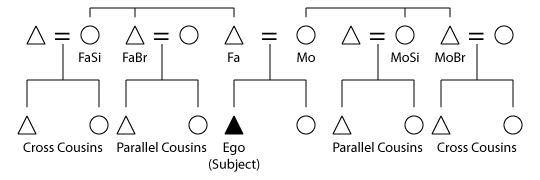
Kinship organizes an enormous amount of life in small-scale societies, so anthropologists developed a formal way to record it. The genealogical method, systematized by W. H. R. Rivers during the Cambridge Torres Strait Expedition of 1898, uses a standardized notation to chart family ties: a triangle for a male, a circle for a female, an equals sign for marriage, and vertical lines for descent, all radiating from a reference individual the anthropologist labels Ego. From these charts of actual pedigrees one can read a society's descent system and marriage rules at a glance. The method was a refinement of an earlier approach: Lewis Henry Morgan had compared kinship terminologies gathered on printed schedules — questionnaires asking what term a speaker uses for each relative — first among the Iroquois (Haudenosaunee) in League of the Ho-de-no-sau-nee, or Iroquois (1851) and then worldwide in Systems of Consanguinity and Affinity of the Human Family (1871). Rivers’s contribution was to chart the pedigree itself, from which terminology and marriage rules could then be derived. Alongside genealogy, fieldworkers draw maps: a spatial map of houses, gardens, and paths, and a social map of who lives with whom, often paired with a household census counting people, animals, and resources.
Life histories
Sometimes a whole culture is best seen through a single life. A life history is an extended, first-person account of one person's biography, collected over many sessions, that reveals how large cultural patterns are lived from the inside. Marjorie Shostak's Nisa: The Life and Words of a !Kung Woman let a Ju/'hoansi woman of the Kalahari narrate marriage, motherhood, and loss in her own voice; Leo Simmons's Sun Chief did the same for the Hopi elder Don Talayesva. A life history cannot stand for everyone, but it captures the emotional grain of a culture that a survey never will.
| Method | What it captures | Classic use |
|---|---|---|
| Participant observation | Everyday behavior — the "imponderabilia" of daily life | Malinowski, Trobriand Islands |
| Interviews | What people say, believe, and can explain | Key informants in every field site |
| Genealogical method | Kinship, descent, and marriage ties | Rivers, Torres Strait Expedition |
| Mapping & census | Space, households, and resources | Village site and social maps |
| Life history | One life as a window on a whole culture | Shostak, Nisa |
- Interviews range from unstructured to semi-structured to structured; a few key informants do much of the teaching.
- The genealogical method (Rivers) records kinship in a standardized chart centered on Ego.
- Mapping and a household census fix people, space, and resources on paper.
- A life history reveals a culture through one person's remembered life; triangulation cross-checks every claim.
Section 3The observer's role
Emic and etic
Anthropologists describe cultures from two angles, and the difference matters. The emic perspective is the insider's view: the categories, meanings, and explanations that members of a culture use themselves. The etic perspective is the outside analyst's view: the comparative, often scientific frame the anthropologist brings from outside. The linguist Kenneth Pike coined both words in the 1950s, clipping them from phonemic (sounds as speakers distinguish them) and phonetic (sounds as an outside instrument measures them). An emic account asks, "What does this practice mean to them?" An etic account asks, "How does this practice compare across societies, and what function might it serve?"
Neither view alone is enough, and the two live in tension. Lean too far emic and you risk "going native," losing the distance analysis requires; lean too far etic and you risk crushing local meaning under alien categories. Marvin Harris and his cultural materialism prized etic explanation — his account of India's sacred cattle rested on ecological economics the Hindu farmer might never cite — while Clifford Geertz and interpretive anthropology chased the emic meanings people actually hold. Good ethnography moves deliberately between the two.
Reflexivity
Unlike a chemist's thermometer, the anthropologist is a human instrument who changes what she measures simply by being present. Reflexivity is the discipline of accounting for that fact — examining how the fieldworker's own positionality (age, gender, race, nationality, wealth, and history) shapes what people reveal, what they conceal, and what the anthropologist is able to see. A young unmarried woman and a middle-aged man will be admitted to different rooms, told different secrets, and trusted in different ways.
Renato Rosaldo gave the classic demonstration. For years he could not grasp why Ilongot (Bugkalot) men of the northern Philippines spoke of headhunting as an outlet for grief — until his wife, the anthropologist Michelle Rosaldo, died in an accident in the field and the rage of bereavement made their words newly legible. His essay "Grief and a Headhunter's Rage" argues that the ethnographer's emotions and life circumstances are not contaminants to be scrubbed away but part of how understanding is reached. Ruth Behar pressed the point in The Vulnerable Observer (1996), and the 1980s "reflexive turn," announced in the 1986 collection Writing Culture (edited by James Clifford and George Marcus), forced the discipline to ask who holds the authority to represent whom.
| Dimension | Emic (insider) | Etic (outsider) |
|---|---|---|
| Viewpoint | The participant's own categories and meanings | The analyst's comparative, external frame |
| Question asked | "What does this mean to them?" | "How does this compare and what does it do?" |
| Origin of the term | Pike, from phonemic | Pike, from phonetic |
| Main risk | Going native; losing analytic distance | Imposing alien categories on local life |
| Champion | Interpretive anthropology (Geertz) | Cultural materialism (Harris) |
- The emic view is the insider's meanings; the etic view is the outside analyst's frame — both coined by Pike.
- Harris's cultural materialism favors etic explanation; Geertz's interpretive anthropology pursues emic meaning.
- Reflexivity examines how the anthropologist's own positionality shapes the findings.
- Rosaldo's "Grief and a Headhunter's Rage" shows the observer's own life as part of how understanding is reached.
Section 4Fieldwork ethics
Informed consent
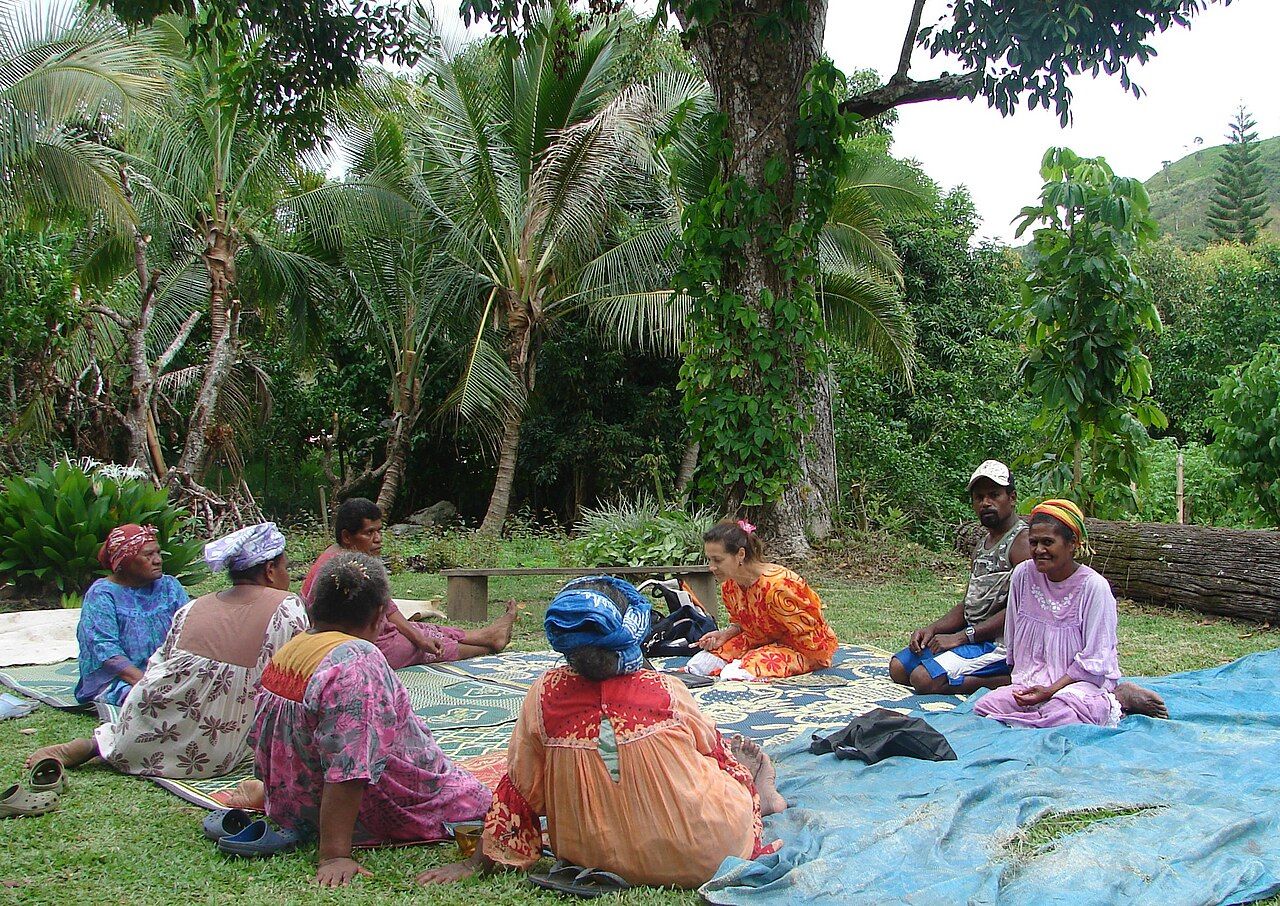
Because fieldwork enters people's homes and confidences, it carries heavy ethical obligations. The bedrock is informed consent: participants must understand what the research is, what taking part involves, and how the results may be used, and they must agree freely, with the right to refuse or withdraw at any time. In anthropology this is rarely a one-time signature. Consent is ongoing and often verbal, renegotiated as the fieldworker's questions change and as trust deepens or frays. In settings without a literacy tradition, or where authority is communal rather than individual, a Western consent form can be meaningless or even coercive, and the anthropologist must find culturally appropriate ways to secure genuine agreement, protect confidentiality, and anonymize identities.
Do no harm
The first duty of the fieldworker is to do no harm to the people, animals, communities, and materials studied. That principle has been learned partly through failure. Project Camelot (1964) was a U.S. Army-funded scheme to use social science to predict and counter insurgency in Chile and elsewhere; its exposure caused an international scandal and taught anthropologists to ask who ultimately benefits from their data. Decades later, Patrick Tierney's Darkness in El Dorado (2000) ignited a bitter controversy over Napoleon Chagnon's long research among the Yanomami of Amazonia; the book's gravest accusations were subsequently investigated and largely discredited, but the affair still forced a hard public reckoning with how fieldwork affects the communities it studies and how it portrays them. And the military's Human Terrain System, which embedded social scientists with combat units in Iraq and Afghanistan, drew formal condemnation from the profession. Each case sharpened a single lesson: knowledge about vulnerable people can be turned against them, so the researcher's responsibility does not end when the notebook closes.
Anthropology's codes
To make these duties explicit, professional bodies publish a code of ethics. The American Anthropological Association (AAA) first issued its Principles of Professional Responsibility in 1971 and has revised them since; parallel codes exist worldwide. The codes do not resolve every dilemma — fieldwork constantly pits competing obligations against one another — but they set non-negotiable commitments: do no harm, be open and honest about your work, obtain informed consent, weigh conflicting responsibilities transparently, protect confidential records, and make results accessible. Above all, the codes state that when obligations collide, the anthropologist's primary responsibility is to the people studied, ahead of any funder, government, or the discipline itself.
| Principle | What it asks of the fieldworker |
|---|---|
| Do no harm | Avoid harm to the people, animals, and materials you study |
| Informed consent | Secure voluntary, ongoing agreement to take part |
| Be open and honest | Disclose the aims, methods, and funding of the research |
| Weigh obligations | Put the people studied first when duties conflict |
| Protect records | Safeguard confidentiality and store field data responsibly |
| Make results accessible | Share findings appropriately with communities and colleagues |
- Informed consent in anthropology is voluntary, ongoing, and adapted to local norms — not just a signed form.
- The primary duty is to do no harm to the people and communities studied.
- Cases like Project Camelot, the Yanomami controversy, and the Human Terrain System show how research can be misused.
- The AAA code of ethics makes these duties explicit and places the people studied first.
Section 5Challenges of fieldwork
Culture shock
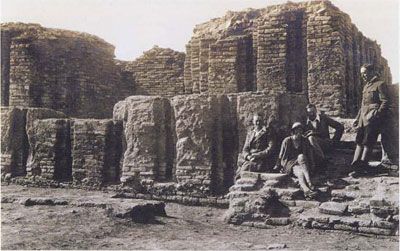
Almost every fieldworker meets culture shock: the disorientation, anxiety, and fatigue that come from losing the familiar cues that once made daily life effortless. The anthropologist Kalervo Oberg coined the term in a 1954 talk and set it out in a 1960 article, describing it as unfolding in phases. A honeymoon of fascination gives way to a crisis in which small frustrations — not knowing how to greet, shop, or apologize — pile into homesickness and self-doubt; then comes gradual adjustment as language and routine take hold; and finally a rough mastery in which the strange has become ordinary. Laura Bohannan's classic essay "Shakespeare in the Bush" (1966) captures the vertigo perfectly: retelling Hamlet to Tiv elders in Nigeria, she watched them confidently correct the plot to fit their own moral world, and realized how little of her own culture's "obvious" meanings survived translation. Many anthropologists report a second jolt — reverse culture shock — when their own home feels alien on return.
The realities of the field
Beyond the emotional adjustment lie stubborn practical hurdles. A fieldworker must first get past gatekeepers — the officials, elders, or family heads who grant or deny access — and then build rapport, the slow accumulation of trust that turns a suspicious outsider into a tolerated guest. Language must be learned, often from scratch. There is loneliness, illness, and physical hardship; there are ethical dilemmas that arrive without warning and must be resolved on the spot; and there is the sheer length of the commitment, since the discipline expects a stay long enough to see a full cycle of life. Funding is scarce and, increasingly, some field sites carry real danger.
Fieldwork as a rite of passage
It is telling that anthropologists describe their own first fieldwork in the language of ritual. Arnold van Gennep, in The Rites of Passage (1909), showed that such rites move through three phases — separation, a liminal in-between, and reincorporation — and Victor Turner deepened the ideas of liminality and communitas through his study of Ndembu ritual in what is now Zambia. Fieldwork fits the pattern almost exactly: the novice separates from home, endures a long and disorienting liminal passage in the field, and returns transformed, now a full member of the discipline. The hardship is not incidental. It is, in a real sense, the anthropologist's own rite of passage.
| Stage | What it feels like |
|---|---|
| Honeymoon | Fascination and excitement with everything new |
| Crisis (culture shock) | Frustration, anxiety, and homesickness as differences bite |
| Adjustment | Learning the language, routines, and local logic |
| Mastery / adaptation | Functioning with ease; the strange becomes ordinary |
| Reverse culture shock | Fresh disorientation on returning home |
- Culture shock (named by Oberg) moves through honeymoon, crisis, adjustment, and mastery — often with reverse shock on return.
- Bohannan's "Shakespeare in the Bush" shows how meanings we think obvious fail to translate.
- Real fieldwork means gatekeepers, building rapport, language learning, isolation, and long duration.
- Framed through van Gennep and Turner, fieldwork is itself a rite of passage with a liminal middle.
The chapter in one breath
- Ethnography is anthropology's core method and its written product; it replaced armchair generalization (Frazer) with firsthand fieldwork (Boas, Malinowski, Mead).
- Participant observation means living among people for a year or more, in their language, taking part while observing — reaching for Geertz's thick description.
- Fieldwork methods include interviews (unstructured to structured, with key informants), the genealogical method, mapping, and life histories, all cross-checked by triangulation.
- The emic (insider) and etic (outsider) perspectives, coined by Pike, are held in productive tension.
- Reflexivity and positionality acknowledge that the anthropologist is a human instrument who shapes the findings.
- Fieldwork ethics rest on informed consent and the duty to do no harm, codified by the AAA, with the people studied placed first.
- Culture shock and the hard realities of the field make fieldwork, in van Gennep and Turner's terms, the discipline's own rite of passage.
ReferenceWords worth knowing
A quick reference for the terms in this chapter — skim it now, or circle back whenever a word trips you up.
- Armchair anthropology
- Early anthropology that theorized about cultures from others' reports without doing fieldwork; associated with Frazer.
- Cultural relativism
- The principle that a culture should be understood on its own terms rather than judged by the standards of another; central to Boas's approach.
- Culture shock
- The disorientation and anxiety of losing familiar cultural cues; named by Kalervo Oberg and often unfolding in stages.
- Do no harm
- The first obligation of the fieldworker — to avoid harm to the people, animals, communities, and materials studied.
- Emic
- The insider's perspective — the categories and meanings a culture's own members use; coined by Kenneth Pike from phonemic.
- Ethnographic present
- The convention of writing about a culture in the present tense, as observed at the time of fieldwork.
- Ethnography
- Both the fieldwork method of studying a culture firsthand and the written account that results.
- Etic
- The outside analyst's perspective — a comparative, scientific frame brought from outside the culture; coined by Pike from phonetic.
- Fieldwork
- Extended, firsthand research carried out by living among the people being studied.
- Gatekeeper
- A person — official, elder, or family head — who controls the anthropologist's access to a community.
- Genealogical method
- A standardized way of charting kinship, descent, and marriage using set symbols centered on Ego; systematized by W. H. R. Rivers.
- Informed consent
- The voluntary, ongoing agreement of participants who understand the research and how its results may be used.
- Key informant
- An especially knowledgeable community member (also called a cultural consultant) who guides and teaches the fieldworker.
- Life history
- An extended first-person account of one person's life, used to reveal wider cultural patterns.
- Liminality
- The ambiguous in-between phase of a rite of passage, when a person has left one status but not yet entered the next; developed by Victor Turner.
- Participant observation
- The core ethnographic method of taking part in daily life while systematically observing it.
- Positionality
- The anthropologist's social location — age, gender, race, nationality, and more — that shapes access and understanding.
- Rapport
- The relationship of trust the fieldworker builds with a community over time.
- Reflexivity
- Critical awareness of how the researcher's own presence and background shape the research and its findings.
- Rite of passage
- A ritual marking a change in status, moving through separation, a liminal phase, and reincorporation; theorized by van Gennep and Turner.
- Thick description
- Geertz's term for interpretation that records not just behavior but its layered cultural meaning.
- Triangulation
- Cross-checking a finding against multiple sources — observation, interview, and documents — to test its reliability.
Check yourself
Culture
Ask a hundred anthropologists what they study and the answers scatter across the globe — markets in Marrakech, gift exchange in the Trobriand Islands, teenagers in a Samoan village. Ask what they study in one word, and the answers converge: culture. Culture is the learned, shared, symbolic way of life that every human society builds and passes on, and it is the single idea that turns a pile of curious customs into a science. This chapter takes that idea apart — what culture is, how we acquire it, how we can study cultures other than our own without either sneering at them or losing our footing, how symbols carry meaning, and why no culture ever holds still.
By the end of this chapter you can
- Define culture in the anthropological sense and distinguish it from everyday uses of the word.
- Explain the four defining features of culture — that it is learned, shared, symbolic, and integrated.
- Describe enculturation and identify the agents and mechanisms through which a person learns a culture.
- Analyze a rite of passage using van Gennep's three phases and Turner's idea of liminality.
- Contrast ethnocentrism with cultural relativism, and distinguish the emic from the etic perspective.
- Explain why culture rests on symbols, and relate symbols, values, norms, and worldview.
- Distinguish the mechanisms of cultural change: innovation, diffusion, and acculturation.
- Name key thinkers — Tylor, Boas, Malinowski, Mead, van Gennep, Turner, Geertz — and what each contributed.
Section 1Defining culture
The most important word in anthropology
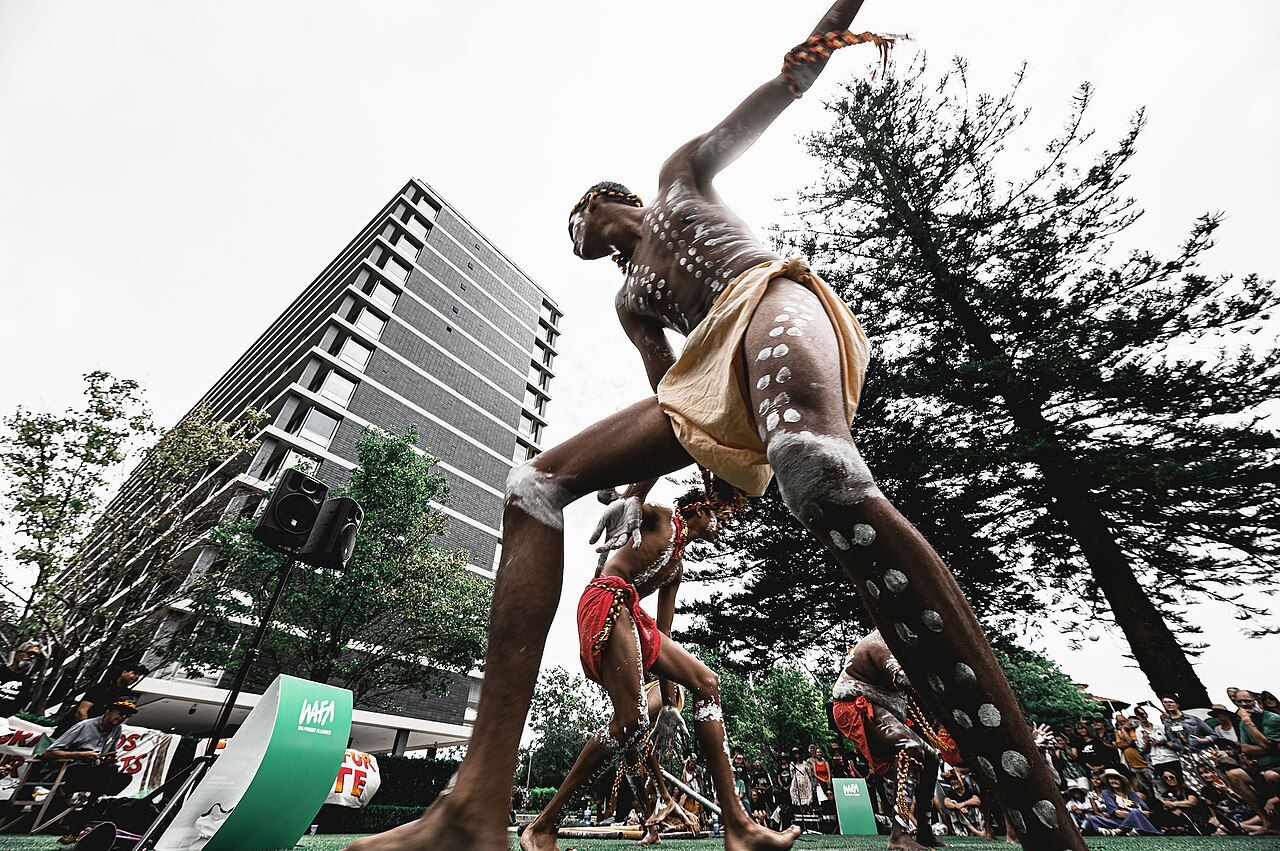
In ordinary speech, "culture" often means the refined things — opera, museums, a taste for good wine. Anthropologists mean something far larger and far more democratic. The classic definition comes from Edward B. Tylor, who opened his 1871 book Primitive Culture by calling culture "that complex whole which includes knowledge, belief, art, morals, law, custom, and any other capabilities and habits acquired by man as a member of society." Notice the reach of that sentence: culture is not just the fine arts but knowledge, morals, law, and habit — the entire learned way of life of a group. Everyone has culture; there is no such thing as a person, or a society, without it.
This is why anthropologists sometimes distinguish "big-C Culture" (the arts, high achievement) from "small-c culture" (the whole learned pattern of living). It is the second that this book means every time the word appears. A commuter's habit of facing forward and avoiding eye contact in an elevator is culture. So is the way you hold a fork, the distance you stand from a stranger, and your conviction about what counts as a decent meal. Culture is the water we swim in — so ordinary that we rarely notice it until we meet someone who does it differently.
Four things culture always is
Across the discipline, four features turn up in nearly every definition. Culture is learned: it is acquired, never inherited in the genes. An infant carries no culture at birth; a baby of any ancestry, raised in any society, grows up fluent in that society's way of life. This is the crucial break from instinct — a spider spins its web without a lesson, but no human is born knowing how to greet an elder, cook a stew, or pray. Culture is also shared: it consists of patterns held in common, which is exactly what makes social life predictable. You can walk into a shop you have never entered and know, roughly, how the exchange will go. Yet "shared" never means uniform — every society contains subcultures and individual variation, and no two members carry identical versions.
Culture is symbolic: it works through symbols, things whose meaning is assigned by agreement rather than given by nature (the next-to-last section returns to this). A wedding ring, a national flag, a five-dollar bill, and the word "dog" all mean what they mean only because a community agrees they do. And culture is integrated: its parts hang together as a system, so that a change in one area ripples into others. Anthropologists call this holism. When the Skolt Sámi of northern Finland adopted the snowmobile in the 1960s — a change the anthropologist Pertti Pelto tracked closely — it did not stay a mere transport upgrade: it reorganized reindeer herding, split the community into the machine-rich and the machine-poor, drew families into a cash economy, and reshaped status itself. One imported machine bent the whole cultural web.
| Feature | What it means | Everyday example |
|---|---|---|
| Learned | Acquired through experience, not carried in the genes | A child speaks whatever language surrounds it, not its parents' native one |
| Shared | Patterns held in common that make social life predictable | Strangers cooperate smoothly at a checkout line |
| Symbolic | Rests on meanings assigned by agreement, not by nature | A red light means "stop"; a ring means "married" |
| Integrated | Parts interconnect, so change in one area ripples into others | A new technology reshapes work, status, and family at once |
Because cultures are integrated wholes, anthropologists can compare their overall shapes. One long-standing scheme, set out by Elman Service in Primitive Social Organization (1962), sorts societies by scale and political integration into bands, tribes, chiefdoms, and states — from small mobile foraging groups to large centralized polities. A parallel scheme sorts them by subsistence, by how they get their food: foraging (hunting and gathering), horticulture (small-scale gardening), pastoralism (herding animals), agriculture (intensive farming with plows or irrigation), and industrialism. The two schemes track each other loosely — foragers tend to live in bands, states rest on intensive agriculture — and later chapters take each up in detail. The labels are rough and much debated, and no society is ever a pure type, but they capture a real point: the size and organization of a society shape almost everything else about how its culture works.
- Tylor's 1871 definition frames culture as the whole learned way of life — "small-c culture," not just the fine arts.
- Culture is learned, shared, symbolic, and integrated.
- Integration (holism) means a change in one part ripples through the whole, as with the Sámi snowmobile.
- Culture is acquired, not inherited — it is never the same thing as race or biology.
Section 2Enculturation
Becoming a member
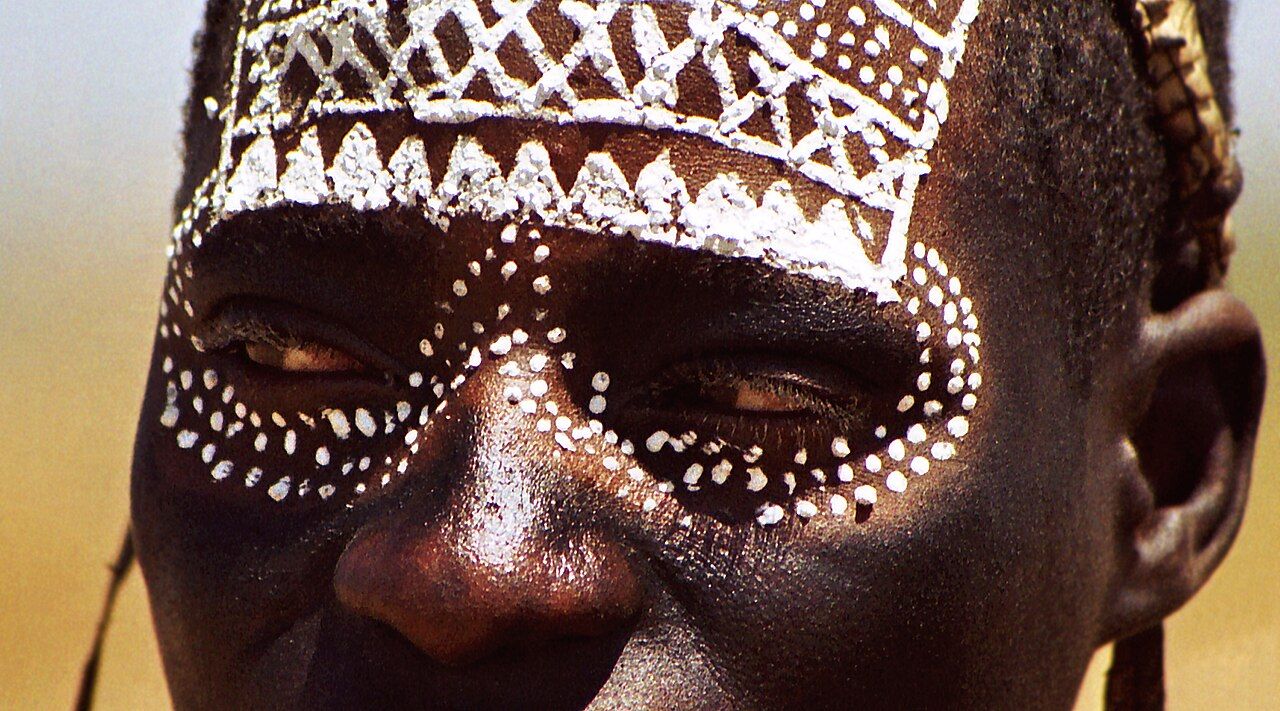
If culture is learned, then the process of learning it deserves a name: enculturation, the lifelong process by which a person absorbs the knowledge, values, and behavior of their culture. It begins in infancy and never fully stops — you were enculturated into how to be a child, and later into how to be a coworker, a parent, a citizen. Much of it is invisible, soaked up by watching and imitating rather than by formal instruction. A toddler learns a language without a single grammar lesson, and learns the far subtler grammar of gesture, timing, and personal space the same way.
How thoroughly enculturation shapes us is easiest to see where it fails or where it differs. The rare, tragic cases of severely isolated children show that without early human contact, even language may never fully develop — culture is not automatic, it must be transmitted. And Margaret Mead's famous fieldwork in Samoa (Coming of Age in Samoa, 1928) argued that even something as seemingly biological as the turbulence of adolescence takes its shape from culture: what looks like "just growing up" is in large part a local script. Mead's specific conclusions were later contested, but her central claim — that human development is powerfully molded by culture, not fixed by nature alone — reshaped how the world thinks about childhood.
Who does the teaching
Enculturation runs through many channels at once. The family is the first and deepest agent, the source of your earliest language, manners, and sense of right and wrong. As you grow, peers, schooling, religious institutions, and media each add their layers — sometimes reinforcing the family's lessons, sometimes contradicting them. Anthropologists distinguish explicit teaching ("say thank you") from the far larger body of implicit or tacit learning that no one states out loud but everyone absorbs: how close to stand, when to look away, whose turn it is to speak. Which relatives do the teaching is itself cultural. In societies organized by descent — tracing kinship and belonging through the father's line (patrilineal) or the mother's (matrilineal) — a child may be raised and instructed above all by a particular set of kin.
Rites of passage
Some of enculturation's most concentrated moments come at life's great transitions — birth, adulthood, marriage, death. The ethnographer Arnold van Gennep, in Les rites de passage (1909), showed that ceremonies marking these transitions share a common three-part structure the world over. First comes separation, in which the person is detached from their old status. Then a liminal phase (from the Latin limen, "threshold"), a betwixt-and-between period in which they are neither what they were nor what they will become. Finally incorporation, in which they re-enter society bearing a new, publicly recognized status.
The anthropologist Victor Turner deepened the middle phase. In the liminal state, he argued, ordinary rules and hierarchies are suspended, and initiates often experience communitas — an intense, leveling bond of equality among people going through the passage together. You can see the template everywhere once you know it: a Maasai boy separated from the village for circumcision and seclusion, then returned as a junior warrior; a soldier at basic training; a student stripped of ordinary life for the strange middle-world of a graduation ceremony, emerging a "graduate." The costumes differ; the deep structure is van Gennep's.
| Phase | What happens | Example (graduation) |
|---|---|---|
| Separation | The person is detached from their former status and role | Students gather apart, robed, removed from ordinary dress and routine |
| Liminality (transition) | A betwixt-and-between state; old rules suspended; communitas among initiates | No longer a student, not yet a graduate; the whole cohort waits together as equals |
| Incorporation | Re-entry into society with a new, recognized status | The diploma is conferred; the person is now publicly a graduate |
- Enculturation is the lifelong process of learning one's own culture, mostly through implicit, everyday learning.
- Agents include family (first and deepest), peers, schooling, religion, and media.
- Van Gennep's rites of passage move through separation → liminality → incorporation.
- Turner emphasized liminality and the leveling bond of communitas among those in transition.
Section 3Ethnocentrism vs relativism
Ethnocentrism: my way is the way
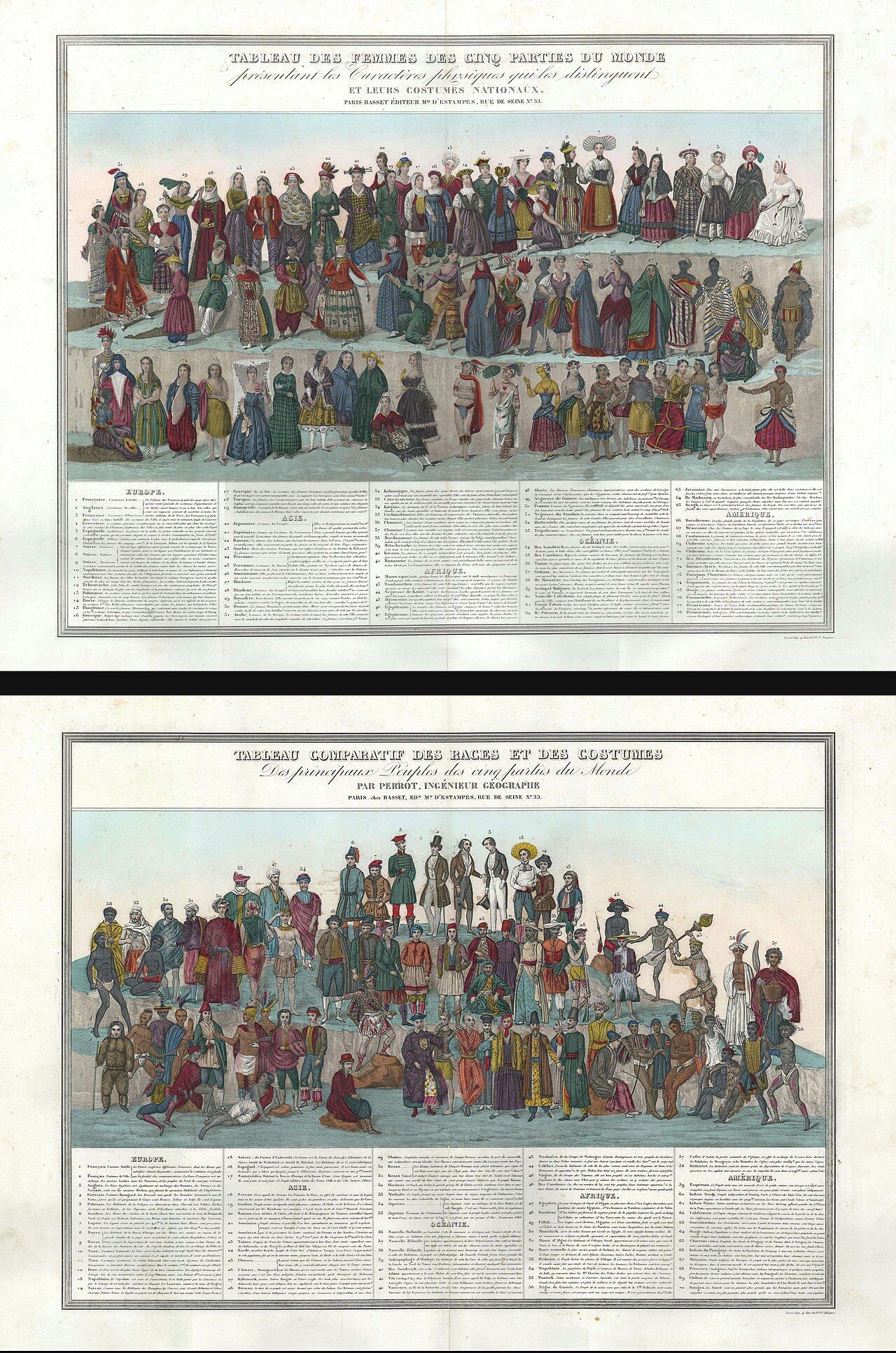
The sociologist William Graham Sumner coined the term ethnocentrism in his 1906 book Folkways: the tendency to judge other cultures by the standards of one's own, taking one's own group as the natural center of the world. Ethnocentrism is nearly universal, because enculturation makes our own customs feel obviously correct. It runs from the trivial to the momentous. To one person, eating insects is disgusting; to another, drinking the milk of another species is the strange act. Some see a dog as family and a cow as dinner; others reverse it exactly. Each side, unreflectively, treats its own practice as normal and the other's as deviant.
Ethnocentrism did real damage inside early anthropology itself. The "armchair" scholars of the nineteenth century arranged the world's societies on a single ladder with their own European society, of course, at the top. The best-known version is Lewis Henry Morgan's: in Ancient Society (1877) he ranked every people on earth along one track climbing from "savagery" through "barbarism" to "civilization." Sir James Frazer, in the vast comparative study The Golden Bough, built a similar staircase for thought itself, from magic to religion to science. Even Tylor, whose definition of culture still serves us, shared this evolutionary frame. This unilineal evolutionism was ethnocentrism dressed as science — it read cultural difference as backwardness — and dismantling it was the founding achievement of modern anthropology.
Cultural relativism: understanding in context
The dismantler was Franz Boas, often called the father of American anthropology. Against the evolutionary ladder, Boas insisted that each culture be understood on its own terms, as the product of its own particular history rather than a rung on a universal staircase — a stance sometimes called historical particularism. From it grew cultural relativism: the principle that a belief or practice should first be understood within its own cultural context, by its own logic, before it is judged. Relativism asks a hard question of the observer — not "how odd" but "what does this do, and what does it mean, for the people who live it?"
An essential caution: cultural relativism as anthropologists use it is a method for understanding, not a blanket moral endorsement. Understanding why a practice makes sense inside a culture is not the same as declaring every practice beyond criticism. This is the difference between methodological relativism — suspend judgment long enough to genuinely understand — and a naive moral relativism that would forbid any evaluation at all. Anthropologists work with the first while taking human dignity seriously; the tension between relativism and universal human rights is real, and honest scholars sit with it rather than pretending it away.
Emic and etic
Cultural relativism has a practical toolkit: the paired perspectives emic and etic. The linguist Kenneth Pike coined the terms (from phonemic and phonetic), and the anthropologist Marvin Harris put them to wide use. The emic perspective describes a culture in terms of its own members' categories and meanings — the insider's account of what they are doing and why. The etic perspective describes it in the outside analyst's terms, using concepts that can be compared across cultures. A good ethnographer needs both: emic understanding to grasp what a rain dance means to those who dance it, etic analysis to compare that ritual with others around the world.
| Concept | Stance | Guiding question |
|---|---|---|
| Ethnocentrism | Judge others by my culture's standards | "Why don't they do it the right (my) way?" |
| Cultural relativism | Understand a practice within its own context first | "What does this mean, and do, for the people who live it?" |
| Emic | The insider's own categories and meanings | "What do they say they are doing?" |
| Etic | The outside analyst's comparative concepts | "How does this compare across cultures?" |
- Ethnocentrism (Sumner, 1906) judges other cultures by one's own standards; Morgan's savagery-barbarism-civilization ladder was ethnocentrism as science.
- Cultural relativism (Boas) understands a practice in its own context before judging it.
- Anthropological relativism is methodological — a tool for understanding, not automatic moral approval.
- Emic = the insider's categories; etic = the outside analyst's comparative terms; fieldwork needs both.
Section 4Symbols and worldview
Symbols: the stuff culture is made of
The anthropologist Leslie White argued that the symbol is the basic unit of all human culture — that culture became possible the moment our ancestors could assign meanings freely. A symbol is anything that stands for something else by agreement rather than by nature. The link is arbitrary (there is nothing dog-like about the sounds in the word "dog") and conventional (it works only because a community shares it). The master symbol system, of course, is language, which lets humans store knowledge, coordinate action, and imagine things that do not exist. The Sapir–Whorf hypothesis of linguistic relativity even proposes that the language we speak shapes how we perceive and think — a strong version is doubted, but the core insight, that symbolic categories organize experience, is widely accepted.
Because symbols are arbitrary, the same thing can mean opposite things in different cultures. White, worn to a Western wedding as a sign of purity and celebration, is in much of East and South Asia the color of mourning and death. The classic anthropological illustration of pure symbolism is the Kula ring, the ceremonial exchange that Bronisław Malinowski described in Argonauts of the Western Pacific (1922). It links a wide circle of islands in the Massim region off eastern Papua New Guinea — the Trobriands among them — and two kinds of valuable travel it in opposite directions: shell armbands (mwali) one way around the ring, shell necklaces (soulava) the other. The valuables are useless as tools and are never kept for good — a man holds one for a time, then passes it on. Their worth is entirely symbolic: to hold a famous armshell, however briefly, is to hold prestige, history, and social ties. The Kula is also a textbook case of reciprocity, the balanced give-and-take that anthropologists contrast with redistribution (goods funneled to a center and shared out) and market exchange (buying and selling for price).
Values, norms, and worldview
Symbols cluster into larger structures of meaning. Values are a culture's shared ideas about what is good, right, and desirable — individual achievement, family honor, harmony with nature. Norms are the rules for behavior that flow from those values, and Sumner gave us a useful split between them. Folkways are everyday conventions of etiquette whose violation brings mild disapproval (chewing with your mouth open); mores are norms charged with moral weight whose violation brings serious sanction (the incest taboo, prohibitions on murder). Above and around all of these sits a culture's worldview — its overarching picture of how reality is put together, where humans fit, and what life is for.
Reading culture as a text
How should we study webs of meaning like these? Clifford Geertz, the leading voice of interpretive anthropology, answered with a memorable image: "man is an animal suspended in webs of significance he himself has spun," and culture is those webs. The anthropologist's job, he argued, is thick description — not just recording that an eyelid contracted, but interpreting whether it was a twitch, a wink, or a parody of a wink, which requires knowing the local code. In his celebrated essay on the Balinese cockfight, Geertz read the fight as a "story the Balinese tell themselves about themselves," a dramatization of status and rivalry. Not everyone agrees this is enough: Marvin Harris and the school of cultural materialism insisted that we also explain culture by hard etic factors — ecology, technology, the material costs of getting a living. Interpretation and material explanation remain anthropology's two great, productive rivals.
| Level | What it is | Example |
|---|---|---|
| Symbol | A thing that stands for something else by agreement | A wedding ring; a national flag; the word "home" |
| Value | A shared idea of what is good and desirable | "Independence is admirable"; "elders deserve deference" |
| Folkway | An everyday norm of etiquette; mild sanction | Facing forward and staying quiet in an elevator |
| More | A morally weighted norm; strong sanction | The incest taboo; prohibitions on theft and murder |
| Worldview | The overarching picture of how reality is ordered | Whether nature is a resource to master or a web to live within |
- Leslie White: the symbol — arbitrary and conventional — is the basic unit of culture; language is the master system.
- The Kula ring (Malinowski) shows pure symbolic value and illustrates reciprocity vs redistribution and market exchange.
- Values underlie norms; Sumner split norms into everyday folkways and moral mores; a worldview frames them all.
- Geertz reads culture as webs of meaning through thick description; Harris's cultural materialism answers with etic, material explanation.
Section 5Cultural change
Innovation: culture's raw material
No culture stands still, and every change begins as an innovation — something new introduced into a culture from within. Innovation comes in two forms. A discovery is the recognition of something that already existed (a new plant's medicinal use); an invention is the combination of existing knowledge into something genuinely new (the wheel, the alphabet). Anthropologists also distinguish primary innovations, brand-new ideas or devices, from secondary innovations, which apply or recombine an existing one for a fresh purpose. The great truth here is that most "new" things are recombinations of old ones — culture builds mostly by rearranging what it already has.
Diffusion: borrowing across borders
Far more of any culture's content arrives by diffusion — the spread of cultural traits from one society to another — than is ever invented locally. Anthropologists name three routes. Direct diffusion passes traits between neighbors through trade, intermarriage, and daily contact. Forced diffusion imposes them through conquest or colonization. Stimulus diffusion borrows an idea while inventing the local details: exposed to the idea that marks on paper could carry speech — though he could not read English himself — the Cherokee silversmith Sequoyah spent years devising an entirely original syllabary for his own language, completing it around 1821. Just how much we borrow was skewered by Ralph Linton in his witty 1937 essay "One Hundred Per-Cent American," which traces a patriotic American's morning — pajamas from India, soap invented by the ancient Gauls, coffee from Ethiopia, a newspaper printed in characters invented by the Semites — and concludes that almost nothing about him is homegrown. The lesson: cultural purity is a myth; borrowing is the human norm.
Acculturation, assimilation, and revitalization
When two cultures come into sustained, first-hand contact, both may change — a process called acculturation. Sometimes the change is mutual and creative, producing syncretism, a blend of elements from both traditions: Mexico's Day of the Dead fuses Indigenous and Catholic practice; Haitian Vodou weaves West African religion with Catholicism. Sometimes it runs one way, as assimilation, in which a smaller or dominated group takes on the culture of a dominant one and its distinctiveness fades — often under real pressure rather than free choice.
When contact is overwhelming and a way of life seems to be collapsing, people may launch a revitalization movement — a conscious, organized effort to build a more satisfying culture, a concept the anthropologist Anthony F. C. Wallace defined in 1956. The Ghost Dance of 1890 was one such movement: taught by the Northern Paiute prophet Wovoka and taken up by many Native nations across the West amid catastrophic land loss and the destruction of the bison herds, it promised the renewal of the earth and reunion with the ancestors. Its suppression ended in the massacre of Lakota people at Wounded Knee. The Melanesian movements long labeled cargo cults are another example — organized responses to colonial rule and to the sudden wealth of goods that arrived with wartime occupation. Many scholars now avoid that old label, which made a reasoned political response look merely irrational, and speak instead of cargo movements. In our own moment, globalization accelerates all of this at once. Some fear it drives cultural homogenization — the whole world converging on the same brands and screens. But ethnographers keep finding the opposite as well: hybridization, or "glocalization," in which communities take global forms and remake them into something distinctly their own. Culture, as ever, absorbs and transforms rather than simply surrendering.
| Mechanism | Source of change | Example |
|---|---|---|
| Innovation | New idea or object arising within a culture | Invention of the printing press; discovery of a new crop's use |
| Diffusion | A trait spreads from another society (direct, forced, or stimulus) | Coffee, paper, and pasta traveling along trade routes |
| Acculturation | Sustained contact changes one or both cultures | Day of the Dead blending Indigenous and Catholic elements (syncretism) |
| Revitalization | Deliberate movement to rebuild a threatened way of life | The Ghost Dance; Melanesian cargo cults |
- All change starts with innovation — discovery (recognizing what exists) or invention (combining the old into the new).
- Diffusion (direct, forced, stimulus) supplies most of any culture's traits; Linton's "100% American" makes the point.
- Acculturation from sustained contact can yield syncretism or one-way assimilation.
- Revitalization movements (Wallace) — the Ghost Dance, the Melanesian cargo movements — answer overwhelming change; globalization drives both homogenization and hybridization.
The chapter in one breath
- Culture is the whole learned way of life of a group (Tylor's "complex whole"), not just the fine arts.
- Culture is always learned, shared, symbolic, and integrated — and is never the same as race or biology.
- Enculturation is how we absorb our culture, mostly implicitly; rites of passage move through van Gennep's separation → liminality → incorporation, with Turner's communitas in the middle.
- Ethnocentrism judges others by one's own standards; cultural relativism (Boas) understands a practice in its own context first — as a method, not a blanket moral approval.
- The emic (insider) and etic (analyst) perspectives are the working tools of that understanding.
- Culture rests on symbols (White) that are arbitrary and conventional; values underlie norms (folkways and mores); Geertz reads the resulting webs of meaning through thick description.
- Culture always changes through innovation, diffusion, and acculturation — there is no pure, static, untouched culture.
ReferenceWords worth knowing
A quick reference for the terms in this chapter — skim it now, or circle back whenever a word trips you up.
- Acculturation
- The cultural change that results when two cultures come into sustained first-hand contact; may affect one or both.
- Assimilation
- A process in which a smaller or dominated group takes on the culture of a dominant one and its distinctiveness fades.
- Communitas
- The intense, leveling bond of equality felt among people passing through a liminal phase together (Turner).
- Cultural relativism
- The principle that a belief or practice should first be understood within its own cultural context before it is judged.
- Culture
- The learned, shared, symbolic, and integrated way of life of a group — Tylor's "complex whole."
- Descent
- The culturally recognized tracing of kinship and belonging through ancestors, e.g., patrilineal (father's line) or matrilineal (mother's line).
- Diffusion
- The spread of cultural traits from one society to another, whether direct, forced, or stimulus.
- Emic
- A description of a culture in terms of its own members' categories and meanings; the insider's view.
- Enculturation
- The lifelong process by which a person learns and absorbs their own culture.
- Ethnocentrism
- Judging other cultures by the standards of one's own, taking one's group as the natural center (Sumner, 1906).
- Etic
- A description of a culture in the outside analyst's comparative terms; the observer's view.
- Folkways
- Everyday norms of etiquette and custom whose violation brings only mild disapproval.
- Holism
- The anthropological principle that a culture's parts are interconnected and must be understood as a whole.
- Innovation
- Something new — a discovery or an invention — introduced into a culture from within.
- Liminality
- The betwixt-and-between middle phase of a rite of passage, when the old status is gone and the new not yet assumed (van Gennep; Turner).
- Mores
- Norms charged with moral weight, whose violation brings serious sanction (e.g., the incest taboo).
- Norm
- A shared rule or expectation for behavior in a given situation.
- Revitalization movement
- A conscious, organized effort by members of a society to build a more satisfying culture when their way of life is under threat (Wallace).
- Rite of passage
- A ceremony marking a change of social status, structured as separation, liminality, and incorporation.
- Subculture
- A group within a larger society that shares distinctive values and practices of its own.
- Symbol
- Anything that stands for something else by arbitrary, conventional agreement; the basic unit of culture (White).
- Syncretism
- A cultural blend in which elements of two traditions fuse into a new form.
- Thick description
- Interpretation that records not just an act but the layers of local meaning that make sense of it (Geertz).
- Value
- A culture's shared idea of what is good, right, and desirable.
- Worldview
- A culture's overarching picture of how reality is ordered and where humans fit within it.
Check yourself
Language & Communication
Every human society runs on talk. We greet, argue, gossip, pray, name our children, curse our enemies, and pass down what we know — almost entirely through language. Yet language is more than a tool for shipping messages from one head to another: it is a cultural artifact, learned like kinship or ritual, and it quietly shapes how a community carves up the world. This chapter asks what language is, how it works, whether it molds thought, how much of communication happens without words at all, and why languages are born, split, mingle, and die.
By the end of this chapter you can
- Define linguistic anthropology and place it among the four fields, naming Boas, Sapir, and the ethnography of communication.
- Distinguish the emic and etic perspectives and apply them to the study of speech.
- List the design features that make human language distinctive, especially arbitrariness, productivity, displacement, and duality of patterning.
- Name the structural levels of language — phoneme, morpheme, syntax, semantics, pragmatics — and give an example of each.
- Explain the Sapir-Whorf hypothesis and contrast strong linguistic determinism with weak linguistic relativity.
- Describe nonverbal communication: kinesics, proxemics, and paralanguage, and why gestures do not translate across cultures.
- Distinguish dialect, register, code-switching, and diglossia, and explain how pidgins become creoles.
- Explain language endangerment and shift, and what revitalization efforts try to recover.
Section 1Language in its cultural home
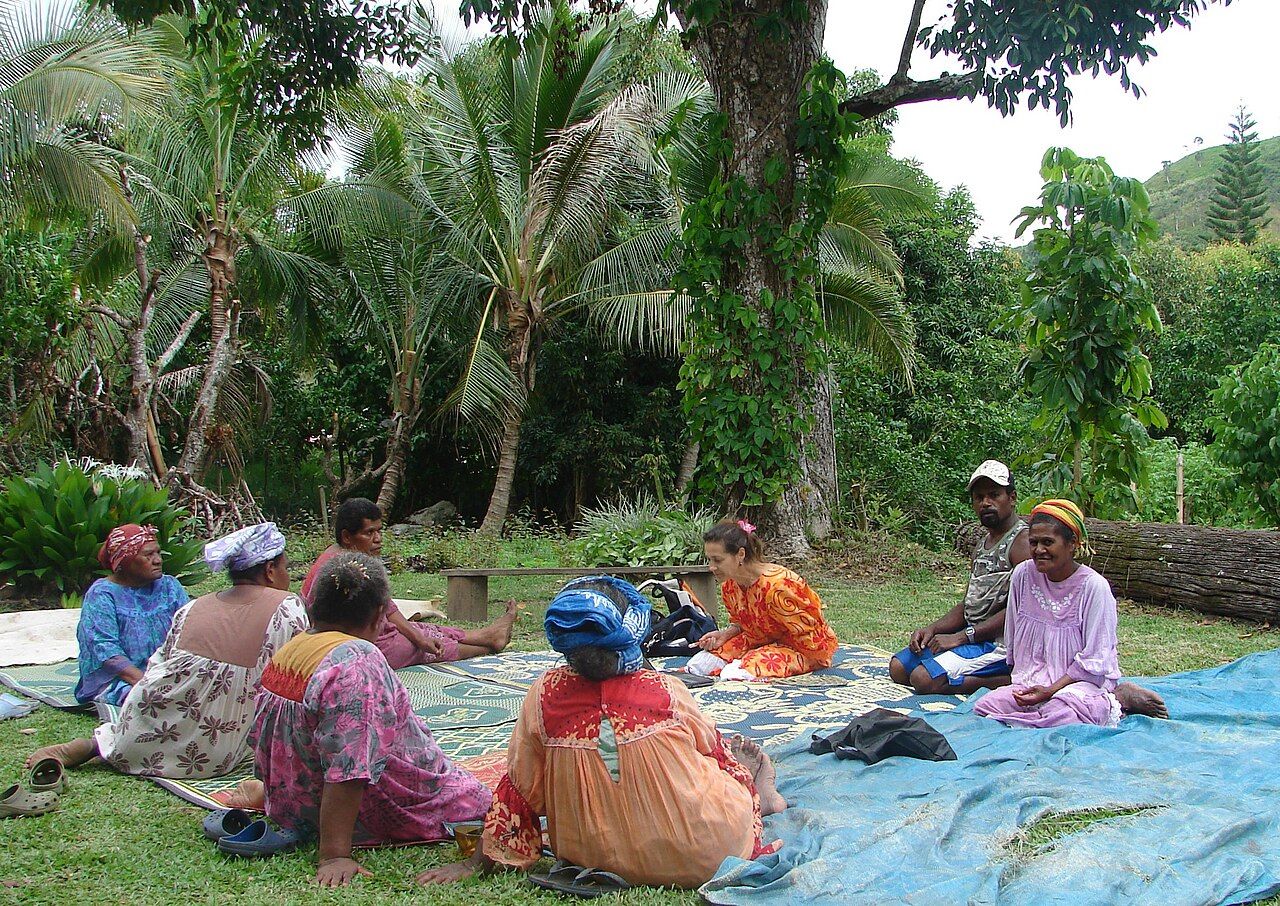
The fourth field
American anthropology is traditionally built on four fields — cultural, archaeological, biological, and linguistic anthropology — and it was Franz Boas, the founder of the American tradition, who insisted that language belonged at the center of the discipline. Boas argued that you cannot understand a people's categories of thought without their words for things, and that every language must be described on its own terms rather than forced into the grammar of Latin or English. His Handbook of American Indian Languages (1911) treated Indigenous North American languages as sophisticated systems worthy of careful study — a direct rebuke to the racist evolutionary ranking of languages common in his day. His student Edward Sapir, and Sapir's student Benjamin Lee Whorf, carried that project forward into the question of how language and worldview intertwine.
Linguistic anthropology is not the same as linguistics narrowly conceived. A linguist may study the grammar of a language as an abstract system; the linguistic anthropologist studies language in use — who says what, to whom, when, and to what social effect. Language is treated as a form of social action and a carrier of culture, so a wedding toast, a courtroom cross-examination, a market haggle, and a grandmother's bedtime story are all data.
How the fieldworker listens
Like all anthropology, the work rests on participant observation and long immersion. The descriptive linguist also uses elicitation — sitting with a fluent speaker, recording words and sentences, and slowly reconstructing the sound system and grammar — and increasingly does so as collaborative, community-based documentation, training local speakers to record and archive their own language. Two lenses guide the analysis. The emic perspective (a term Kenneth Pike coined from phonemic) captures the categories that matter to insiders — the sounds and distinctions a speaker hears as meaningful. The etic perspective (from phonetic) records everything an outside observer can measure, whether or not locals treat it as significant. Good ethnography of speech moves between the two.
The great functionalist Bronislaw Malinowski, working in the Trobriand Islands, noticed that much talk does no informational work at all. His term phatic communion names speech whose point is social bonding rather than content — “Cold enough for you?” on a winter morning is not a weather report but a small act of solidarity. Dell Hymes later formalized this into the ethnography of communication, arguing that a competent speaker needs more than grammar: they need communicative competence, the culturally specific knowledge of how to speak appropriately in each setting. Clifford Geertz's semiotic view of culture — culture as “webs of significance” that people spin and then read — fits language especially well, because language is the loom on which many of those webs are woven.
| Subfield | Central question | A key figure |
|---|---|---|
| Descriptive (structural) | How is this language built — its sounds, words, grammar? | Franz Boas |
| Historical | How are languages related, and how do they change over time? | Edward Sapir |
| Sociolinguistics | How does speech vary with class, gender, age, and setting? | William Labov |
| Ethnography of communication | What does a speaker need to know to talk appropriately here? | Dell Hymes |
- Linguistic anthropology is one of the four fields; Boas put language at anthropology's core and insisted each language be described on its own terms.
- The focus is language in use — speech as social action — not grammar as an abstract system.
- Emic (insider) and etic (observer) perspectives, from Pike's phonemic/phonetic, guide analysis.
- Malinowski's phatic communion and Hymes's communicative competence show that speaking is a social skill, not just a code.
Section 2What makes human language unique
Hockett's design features
Many animals communicate, but human language is different in kind, not just degree. The linguist Charles Hockett catalogued a set of design features to pin down that difference. Four are worth memorizing. Arbitrariness: there is no natural link between a word's sound and its meaning — nothing dog-like about the sounds in dog, chien, or perro — a point Ferdinand de Saussure made central to modern linguistics (onomatopoeia is the partial exception). Productivity (or openness): from a finite stock of words and rules, speakers generate an infinite number of sentences never uttered before, and hearers understand them instantly. Displacement: we can talk about what is not here and now — last year's harvest, a spirit world, next season, a purely hypothetical unicorn. Duality of patterning: a small set of meaningless sounds (perhaps a few dozen) recombines into thousands of meaningful words — the reason a language can be both economical and endless.
These features let us do things no other species' signals can. A vervet monkey has distinct alarm calls for leopards, eagles, and snakes — a genuine, studied communication system — but it cannot combine those calls to warn of “a leopard that was here yesterday” or invent a signal for a brand-new predator. Honeybees encode direction and distance in a waggle dance (decoded by Karl von Frisch), an astonishing feat — but the system is closed. Human language is open and learned: a baby raised in any community will acquire that community's language, showing that the content is culturally transmitted, not genetically fixed.
The levels of structure
Linguists dissect language into nested levels. Phonology studies the phonemes, the sounds a language treats as distinct: English hears l and r as different phonemes (light vs right), while Japanese does not, which is why the contrast is famously hard for Japanese learners of English. A sound that varies without changing meaning is an allophone — the puff of air on the p of pin versus spin is invisible to English speakers but phonemic elsewhere. Morphology studies morphemes, the smallest meaningful units: cats is two morphemes, cat plus a plural -s. Syntax is the grammar that orders words into phrases and sentences; semantics is meaning; and pragmatics is meaning-in-context — how “Can you pass the salt?” works as a request, not a question about ability.
| Level | Unit of study | Example |
|---|---|---|
| Phonology | Phonemes (distinctive sounds) | /l/ vs /r/ distinguishes light from right |
| Morphology | Morphemes (smallest meaningful units) | un- + break + -able |
| Syntax | Rules ordering words | “The dog bit the man” ≠ “The man bit the dog” |
| Semantics | Literal meaning | bank = riverside or money-house |
| Pragmatics | Meaning in context | “Can you pass the salt?” = a request |
How much of this structure is universal? Noam Chomsky argued that humans are born with an innate Universal Grammar — a species-wide template that makes rapid language learning possible and predicts deep commonalities across all languages, including recursion, the embedding of phrases inside phrases. Anthropological linguists have pushed back with data from the field: Daniel Everett's long work with the Pirahã of the Amazon led him to claim their language lacks recursion and number words, reopening a fierce debate about how far culture can reshape the human language faculty. Whichever way that debate settles, it shows a healthy tension between the universalist and relativist instincts in the study of language.
- Hockett's design features — especially arbitrariness, productivity, displacement, and duality of patterning — set human language apart from animal signaling.
- Language has nested levels: phoneme → morpheme → syntax → semantics → pragmatics.
- A phoneme is a meaning-distinguishing sound; sounds that vary without changing meaning are allophones.
- Chomsky's Universal Grammar claims an innate template; Everett's Pirahã work is a leading anthropological challenge to it.
Section 3Does your language shape your world?

The Sapir-Whorf hypothesis
Does the language you speak shape the way you think? The idea is known as the Sapir-Whorf hypothesis, or linguistic relativity, after Edward Sapir and Benjamin Lee Whorf. It comes in two strengths. The strong version, linguistic determinism, holds that language determines thought — that you literally cannot conceive what your language has no words for. Almost no scholar accepts the strong version today; people invent new words, borrow them, and think perfectly well about things their language handles clumsily. The weak version, linguistic relativity, holds that language influences habitual thought, nudging attention and memory along the grooves a grammar makes convenient. The weak version is well supported.
Whorf's own famous example — that the Hopi language encodes a different concept of time — has been heavily criticized (the linguist Ekkehart Malotki documented Hopi time expressions Whorf overlooked), and it stands as a caution against overreaching. But careful modern experiments have revived the field with better evidence for the modest, weak claim.
What the evidence actually shows
Consider color. Brent Berlin and Paul Kay showed in 1969 that basic color terms are not wholly arbitrary — languages add them in a largely predictable order — a finding on the universalist side. Yet later work restored a role for relativity: Russian speakers, who have separate basic words for lighter blue (goluboy) and darker blue (siniy), discriminate blues slightly faster at that boundary than English speakers do. Consider space. Speakers of Guugu Yimithirr in Australia do not say “the cup is to your left”; they use absolute cardinal directions — “the cup is to your north” — and, as Stephen Levinson documented, they can point toward distant places with remarkable accuracy, even indoors and after being turned around, because the grammar forces them to track direction constantly. A third example is often added but should not be: Lera Boroditsky and colleagues reported that German and Spanish speakers chose adjectives colored by whether a noun was grammatically masculine or feminine, yet that widely cited result comes from an unpublished study, and later attempts to replicate it directly have failed. Treat it as contested, not as settled evidence; the colour and space findings are the ones that carry this section.
The Amazonian Amondawa pictured above became a striking case: researchers reported that the language lacks the abstract “time-as-space” metaphors so natural in English (we “look forward to” a “long” afternoon), suggesting that ways of talking about time can vary far more than English speakers assume. None of this means the Amondawa cannot understand time — it means the habitual conceptual toolkit a language hands you is real, if not a prison.
| Version | Claim | Status |
|---|---|---|
| Linguistic determinism (strong) | Language determines thought; you cannot think what you cannot say | Rejected |
| Linguistic relativity (weak) | Language influences habitual attention and memory | Supported by evidence |
| Universalism | Deep cognitive categories are shared across humanity | Partly supported (e.g., color hierarchy) |
- The Sapir-Whorf hypothesis comes in a strong (determinism, rejected) and a weak (relativity, supported) form.
- Color research (Berlin & Kay) supports universals; Russian-blues and other studies restore a role for relativity.
- Grammar that requires tracking something — like Guugu Yimithirr's cardinal directions — shapes habitual attention.
- Language is best seen as a lens that tilts thought, not a cage that determines it.
Section 4The conversation without words
Kinesics, proxemics, paralanguage
A great deal of what we communicate never becomes a word. Nonverbal communication covers the body's whole repertoire, and anthropologists divide it into a few domains. Kinesics, a term from Ray Birdwhistell, is the study of body motion — posture, facial expression, eye behavior, and gesture. Proxemics, coined by the anthropologist Edward T. Hall, is the culturally patterned use of space: Hall distinguished intimate, personal, social, and public distances and showed that “the right distance” for a conversation differs sharply between, say, high-contact Mediterranean or Latin American norms and lower-contact northern European ones. Stand too close and you seem pushy; too far and you seem cold — and the same physical gap reads differently in each culture. Paralanguage is the vocal wrapping around words: pitch, loudness, tempo, tone, voice quality, and even silence, which in many communities is a comfortable, meaningful part of conversation rather than an awkward gap to fill. Keith Basso's classic study of the Western Apache showed that silence there is the appropriate response in situations of social uncertainty — meeting strangers, greeting a relative returned from a long absence, sitting with the bereaved — so what an outsider reads as coldness is in fact courtesy.
Why a gesture will not translate
Gestures feel natural, so travelers assume they are universal — a costly mistake. Paul Ekman and Wallace Friesen sorted gestures into types; the most treacherous are emblems, gestures with a direct verbal translation that is entirely culture-specific. The North American “OK” ring, the thumbs-up, and beckoning with the palm up are all friendly in some places and grossly offensive in others. Even head movement is not safe: in Bulgaria a lateral head shake conventionally means yes, while in much of South Asia a distinct side-to-side head tilt signals agreement, acknowledgment, or simply “I'm listening.” Illustrators (gestures that accompany and paint speech) and regulators (nods and glances that manage turn-taking) are more tightly bound to talking, while adaptors are self-touching movements we barely notice.
Ekman also argued that a handful of basic facial expressions of emotion — happiness, fear, disgust, anger, surprise, sadness — are recognized across cultures, a rare candidate for a universal in this domain. That claim is now contested — critics note that the original studies offered participants a forced choice among supplied emotion words, and recent cross-cultural work finds far more variation than the classic model predicted. In any case, each culture layers on display rules governing when and how strongly feelings may be shown, so a face that is honest in one setting is rude in another. One caution: sign languages such as American Sign Language are not mere gesture. They are full human languages with their own phonology (built from handshape, location, and movement), grammar, and duality of patterning — proof that the design features of language do not depend on sound at all.
| Channel | What it covers | Culturally variable? |
|---|---|---|
| Kinesics | Gesture, posture, facial expression, eye contact | Yes — emblems especially |
| Proxemics | Interpersonal distance and use of space | Yes — contact vs non-contact cultures |
| Paralanguage | Pitch, tempo, volume, tone, silence | Yes — norms for silence differ widely |
| Haptics / chronemics | Touch; the meaning of time and timing | Yes |
- Kinesics (body motion), proxemics (Hall's use of space), and paralanguage (vocal features and silence) are the main nonverbal domains.
- Emblems are culture-specific gestures with direct translations — and they are the easiest way to give unintended offense.
- Some facial expressions of emotion may be widely recognized — a contested claim — but display rules always govern their use culturally.
- Sign languages are full languages with grammar and duality of patterning, not simplified gesture.
Section 5Living languages never hold still
Dialects and the politics of “correct” speech
No language is a single fixed thing. Every one splinters into dialects — regional and social varieties that differ in sound, vocabulary, and grammar while remaining mutually intelligible. Where they blur into one another across a landscape you get a dialect continuum, and the line between “a dialect” and “a language” turns out to be political, not linguistic — captured in the quip, popularized by the Yiddish linguist Max Weinreich, that “a language is a dialect with an army and a navy.” The pioneer of sociolinguistics, William Labov, showed with elegant fieldwork — on Martha's Vineyard, and in a famous study of the pronunciation of r across New York City department stores — that the way people talk correlates tightly with social class, age, gender, and identity, and that we constantly style-shift and switch register (a formal register for a job interview, a casual one for friends).
Crucially, Labov and others established that stigmatized varieties are not “broken” language. African American English is a fully rule-governed system with its own consistent grammar, not sloppy Standard English — a finding with real stakes in classrooms and courtrooms. What counts as “correct” is a matter of prestige and power, not logic.
Mixing, contact, and loss
Bilingual speakers routinely code-switch, alternating languages within a conversation or even a sentence — not out of confusion but as skilled social work, signaling identity, intimacy, or authority (John Gumperz analyzed this in detail). A related pattern is diglossia, named by Charles Ferguson, in which a community reserves a “high” variety for formal life (classical Arabic, standard German) and a “low” variety for home and street. When speakers of different languages must communicate — in trade or on plantations — they may improvise a simplified pidgin; when children grow up speaking that pidgin as their first, full language, it becomes a creole, with a complete grammar of its own. Tok Pisin in Papua New Guinea and Haitian Creole are living examples.
And languages die. Of the world's roughly 7,000 languages, about half are endangered, many with only a few elderly speakers left. The usual mechanism is language shift: under economic and political pressure, a community gradually abandons its heritage tongue for a dominant one, and when the last fluent speaker dies, a whole library of knowledge — ecological, historical, poetic — goes with it. Anthropologists respond with documentation (recording and archiving, as in the photo above) and by supporting revitalization. The results can be moving: Hawaiian and Māori were pulled back from the brink through immersion “language nests,” and the Wampanoag language of Massachusetts, silent for more than a century, was reawakened from old written records by the community linguist Jessie Little Doe Baird — the first new native speaker in generations was her own daughter.
| Term | What it is | Example |
|---|---|---|
| Dialect | A mutually intelligible variety of a language | Southern vs Northern US English |
| Register | A style fitted to a setting | Interview speech vs slang with friends |
| Code-switching | Alternating languages in one exchange | Spanish-English “Spanglish” |
| Diglossia | High and low varieties with separate roles | Classical vs colloquial Arabic |
| Pidgin → Creole | Contact language that gains native speakers | Tok Pisin; Haitian Creole |
- Dialects are mutually intelligible varieties; the language/dialect line is political, and “correct” speech reflects prestige, not logic.
- Labov's sociolinguistics ties variation to class, gender, and identity; stigmatized varieties like African American English are fully rule-governed.
- Code-switching and diglossia are skilled uses of more than one variety; pidgins become creoles when children acquire them natively.
- Roughly half of all languages are endangered through language shift; documentation and revitalization try to save them.
The chapter in one breath
- Linguistic anthropology studies language in use as culture and social action; Boas insisted every language be described on its own terms.
- The emic/etic distinction (from phonemic/phonetic) and Hymes's communicative competence frame how speech is analyzed.
- Human language is set apart by design features — arbitrariness, productivity, displacement, and duality of patterning — that animal signaling lacks.
- Language is layered as phoneme → morpheme → syntax → semantics → pragmatics.
- The Sapir-Whorf hypothesis survives in its weak form: language influences habitual thought (color, space, time), but does not determine it.
- Nonverbal channels — kinesics, Hall's proxemics, and paralanguage — carry huge meaning, and emblems do not translate across cultures.
- Living languages vary and change through dialects, code-switching, and diglossia, and pidgins mature into creoles.
- About half of the world's languages face endangerment through language shift, driving urgent work in documentation and revitalization.
ReferenceWords worth knowing
A quick reference for the terms in this chapter — skim it now, or circle back whenever a word trips you up.
- Allophone
- A variant pronunciation of a phoneme that does not change a word's meaning in a given language.
- Arbitrariness
- The design feature that there is no inherent link between a word's sound and its meaning.
- Code-switching
- Alternating between two languages or varieties within a single conversation, often to signal identity or context.
- Communicative competence
- Hymes's term for the culturally specific knowledge a speaker needs in order to speak appropriately in a given setting, beyond grammatical correctness.
- Creole
- A pidgin that has become the native, first language of a community, with a full grammar of its own.
- Dialect
- A regional or social variety of a language that remains mutually intelligible with other varieties.
- Diglossia
- A situation in which a community uses a “high” variety for formal settings and a “low” variety for everyday life.
- Displacement
- The design feature that lets language refer to things not present in the here and now — the past, future, or imaginary.
- Duality of patterning
- The design feature by which a small set of meaningless sounds recombines into a vast number of meaningful words.
- Emblem
- A gesture with a direct verbal translation whose meaning is specific to a culture (e.g., the thumbs-up).
- Emic / etic
- The insider's meaningful categories (emic) versus the outside observer's measurable description (etic).
- Ethnography of communication
- Dell Hymes's approach to studying how people speak appropriately within a specific cultural setting.
- Kinesics
- The study of communication through body motion — posture, gesture, facial expression, and eye behavior.
- Language shift
- The process by which a community gradually abandons its heritage language for a dominant one, the usual path to language endangerment and loss.
- Linguistic anthropology
- The subfield that studies language as a cultural and social phenomenon, one of anthropology's four fields.
- Linguistic relativity
- The weak Sapir-Whorf claim that language influences (but does not determine) habitual thought.
- Morpheme
- The smallest unit of language that carries meaning, such as cat or the plural -s.
- Paralanguage
- The vocal features surrounding words — pitch, loudness, tempo, tone, and silence.
- Phatic communion
- Malinowski's term for speech whose purpose is social bonding rather than conveying information.
- Phoneme
- The smallest unit of sound that a language treats as distinguishing meaning.
- Pidgin
- A simplified contact language that arises when speakers of different languages must communicate.
- Productivity
- The design feature that lets speakers create and understand an infinite number of novel sentences.
- Proxemics
- Edward T. Hall's study of the culturally patterned use of interpersonal space.
- Register
- A variety of speech fitted to a particular social setting, such as formal interview speech versus casual talk with friends.
- Sociolinguistics
- The study of how language varies with social factors such as class, gender, age, and setting.
Check yourself
Making a Living
Every human group, everywhere, faces the same stubborn problem: how to pull food, energy, and material things out of a particular patch of the world — and how to move those things between people once they exist. The answers are astonishingly varied. A band of foragers in the Kalahari, a Nuer herdsman counting his cattle, a Javanese rice farmer, and a commuter buying coffee are all solving the same equation with wildly different tools. Economic anthropology is the study of that variety: how people produce, exchange, consume, and assign worth, and why an economy always turns out to be a way of organizing human relationships as much as a way of organizing goods. This chapter follows the thread from the field and the herd all the way to the market and the shopping cart.
By the end of this chapter you can
- Compare the five major subsistence strategies — foraging, pastoralism, horticulture, agriculture, industrialism — and how each shapes population, mobility, and social complexity.
- Explain what a mode of production is and distinguish the kin-ordered, tributary, and capitalist modes (Eric Wolf).
- Describe the domestic mode of production and Marshall Sahlins’s idea of the original affluent society.
- Distinguish reciprocity, redistribution, and market exchange (Karl Polanyi), and the three forms of reciprocity (Sahlins).
- Explain the Kula ring and the potlatch, and what Marcel Mauss meant by the gift.
- Analyze how cultures assign value, and contrast use value, exchange value, and prestige.
- Explain conspicuous consumption and how goods communicate identity (Veblen, Douglas, Bourdieu).
- Trace how the division of labor produces inequality across band, tribe, chiefdom, and state societies.
Section 1Subsistence strategies
Five ways to feed a society
A subsistence strategy (or mode of subsistence) is the basic way a society gets its food and energy from the environment. Anthropologists conventionally sort human economies into five broad types — foraging, pastoralism, horticulture, agriculture, and industrialism — not because every society fits neatly into one box, but because the food-getting strategy predicts so much else. It shapes how many people can live together, how often they move, how much surplus they can store, and, ultimately, how unequal they become. This is the core insight of cultural ecology, the approach Julian Steward built in the mid-twentieth century: culture and environment are locked in a feedback loop, and the way people make a living is the hinge between them.
The five strategies also fall in a rough order of intensity — how much human labor and energy is invested per unit of land. Foraging invests the least and supports the fewest people per square mile; industrial agriculture invests the most and supports the most. But “more intensive” does not mean “better” or “more advanced.” Each strategy is a finely tuned solution to a particular landscape, and older anthropology’s habit of ranking them from “primitive” to “civilized” — a legacy of Lewis Henry Morgan’s nineteenth-century ladder of savagery, barbarism, and civilization — has been firmly retired.
Foraging, herding, and gardening
Foraging (hunting and gathering) is how humans lived for well over ninety percent of our species’ history, and a number of peoples carried it into the twentieth century and beyond: the Ju/’hoansi San of the Kalahari, studied by Richard Lee; the Mbuti of the Congo forest, described by Colin Turnbull in The Forest People; the Hadza of Tanzania, some of whom still forage today. Foragers typically live in small, mobile bands, own little that cannot be carried, share food widely, and make decisions without permanent leaders. James Woodburn called such economies “immediate-return” — food is eaten within days rather than stored — and that lack of storable wealth is a large part of what keeps such groups egalitarian.
One caution before we go further, and it applies to every example in this chapter. The peoples named here are living communities with citizenship, wage jobs, land claims, schools, and politics of their own; most Ju/’hoansi today are not full-time foragers, and none of these groups is a window onto the human past. An ethnography describes a particular community at a particular moment, not a timeless stage of development. Read the cases below as snapshots of how people solved a problem in one time and place — never as evidence that some societies are earlier or simpler versions of others.
Pastoralism is a specialized economy built around herds of domesticated animals: cattle for the Nuer of South Sudan (immortalized in E. E. Evans-Pritchard’s ethnography), for whom cattle are wealth, bridewealth, and poetry at once (anthropologists prefer “bridewealth” to the older “bride-price,” which wrongly implies that a woman is being purchased); camels, goats, and sheep across the Middle East and Central Asia; reindeer among the Sami and Siberian peoples. Pastoralists are often nomadic or practice transhumance (seasonal movement between pastures), and they usually trade animal products for the grain they cannot grow. Horticulture — small-scale gardening with hand tools and no plough — often takes the form of swidden (slash-and-burn or shifting cultivation), as among the Yanomami of Amazonia or the Tsembaga Maring of highland New Guinea, whose ritual pig cycles Roy Rappaport analyzed as a form of ecological regulation. Horticulturalists clear a plot, garden it for a few years, then let it return to forest.
Agriculture and industrialism
Agriculture (intensive farming) uses the plough, draft animals, irrigation, terracing, and fertilizer to work the same land year after year. It produces a storable surplus — and surplus changes everything. It allows permanent villages and cities, feeds people who do not farm (priests, soldiers, artisans, rulers), and makes possible the deep social hierarchies of chiefdoms and states. Clifford Geertz’s classic study of Javanese wet-rice farming, Agricultural Involution, showed how intensifying the same system could absorb ever more labor without lifting anyone out of poverty — intensification is not automatically progress.
Industrialism harnesses fossil-fuel energy, machines, and wage labor to mass-produce goods, including food. Under industrialism, most people no longer produce their own subsistence at all; they earn money and buy it. That single fact — near-total dependence on the market for the necessities of life — is what most sharply separates an industrial economy from the four that came before, and it sets up every theme in the rest of this chapter.
| Strategy | Food source | Mobility | Typical scale | Example |
|---|---|---|---|---|
| Foraging | Wild plants & animals | High (mobile bands) | Small, egalitarian | Ju/’hoansi San, Mbuti, Hadza |
| Pastoralism | Herd animals & their products | Nomadic / transhumant | Small–medium tribes | Nuer, Maasai, Sami |
| Horticulture | Garden crops (hand tools) | Semi-sedentary (shifting plots) | Villages, tribes | Yanomami, Tsembaga Maring |
| Agriculture | Intensive field crops | Sedentary | Chiefdoms & states | Javanese rice farmers, Inca |
| Industrialism | Bought with wages | Sedentary, urban | Nation-states, global | Modern market societies |
- The five subsistence strategies are foraging, pastoralism, horticulture, agriculture, and industrialism, in rough order of energy invested per unit of land.
- Cultural ecology (Steward) treats the food-getting strategy as the hinge between environment and social form.
- Intensive agriculture and industrialism are the usual sources of the large storable surplus that supports cities, specialists, and steep hierarchy — but any subsistence base that allows storage and control of a dense resource can do it too, as Northwest Coast salmon fishing did.
- Ranking strategies from “primitive” to “advanced” is a discredited nineteenth-century idea; each is a good fit for its environment.
Section 2Modes of production
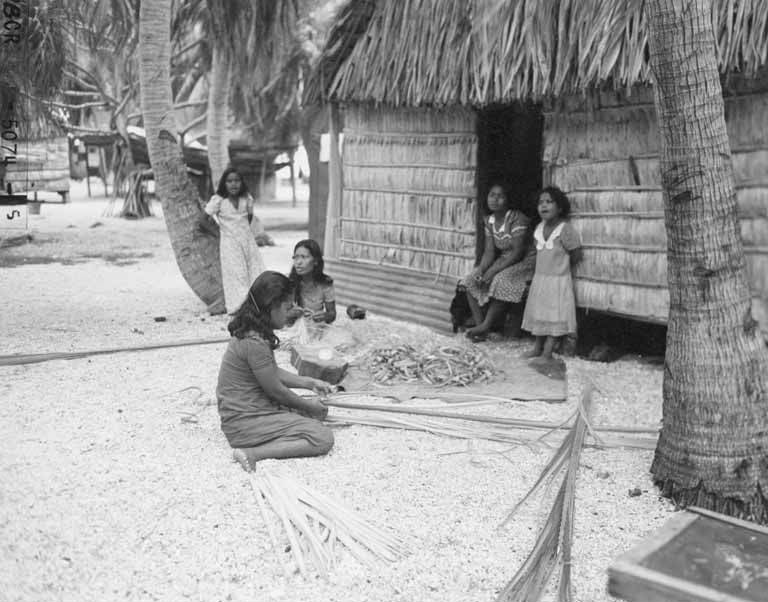
What a mode of production is
A subsistence strategy tells you what a society produces; a mode of production tells you how it is organized socially to do so. The concept comes from Karl Marx and was carried into anthropology most influentially by Eric Wolf in Europe and the People Without History. A mode of production combines two things: the means of production — the land, tools, water, seed, and animals people work with — and the relations of production — the social rules about who owns those means, who does the labor, and who gets to keep the surplus. Change the relations, and you change the society, even if the technology stays the same.
Wolf argued that the enormous diversity of human economies could be grouped into three great modes: the kin-ordered, the tributary, and the capitalist. The point of such a scheme is not to pigeonhole cultures but to ask a sharp question of any economy: who controls the means of production, and how is the surplus pumped out of the people who labor? That question is as revealing about a Melanesian village as about a modern factory.
The domestic mode of production
In kin-ordered economies, labor is mobilized not by wages but by relationships. Marshall Sahlins called the household-centered version the domestic mode of production: the family is the unit that owns the tools, does the work, and consumes the result. Crucially, it produces for use — enough to meet the household’s needs — rather than for profit or accumulation. Sahlins noticed a paradox he called “underproduction”: domestic economies typically stop well short of their maximum output, because once needs are met there is little reason to keep working. (The economist A. V. Chayanov had seen the same pattern in Russian peasant households.)
This is why the domestic mode resists the endless growth that market economies take for granted. Its brake is social, not technical. A family that could grow more grain simply chooses leisure, ceremony, or visiting instead — the same logic that makes foragers “affluent” by wanting little. To make such a society produce a large surplus, some outside force — a chief, a landlord, a tax collector — usually has to compel it.
Tributary and capitalist modes
In the tributary mode, a ruling class extracts surplus from primary producers through tribute, tax, rent, or forced labor. The producers still control day-to-day farming, but a portion of what they grow flows upward to a chief, temple, or state. The Inca mit’a labor draft, medieval European feudalism, and the great agrarian empires all worked this way. In the capitalist mode, by contrast, workers do not control the means of production at all; those are privately owned, and people survive by selling their labor for a wage. Goods are produced as commodities for sale, and the owner keeps the difference between what labor produces and what it is paid — what Marx called surplus value. This is also where Marx located alienation: the worker no longer owns the product, the process, or often even a sense of purpose in the work.
Naming these modes helps anthropologists see continuity and rupture at once. A single country today may contain households producing food for use, peasants paying rent to landlords, and wage laborers in factories — three modes braided together. The braid, not the pure type, is the usual reality.
| Mode | Who controls means | How labor is mobilized | Where surplus goes | Example |
|---|---|---|---|---|
| Kin-ordered (domestic) | The kin group / household | Kinship obligation | Stays in the household; little surplus | Foragers, horticultural villages |
| Tributary | Producers work it; elites claim a share | Tribute, rent, corvée labor | Upward to chief, temple, or state | Inca, feudal Europe |
| Capitalist | Private owners of capital | Wage labor | To owners as profit (surplus value) | Industrial market societies |
- A mode of production = the means of production plus the relations of production (who owns, who labors, who takes the surplus).
- Wolf’s three modes: kin-ordered, tributary, and capitalist.
- The domestic mode (Sahlins) produces for use, tends to underproduce, and resists growth unless compelled from outside.
- The capitalist mode is defined by wage labor, private ownership of the means of production, and commodity production for profit.
Section 3Economic exchange
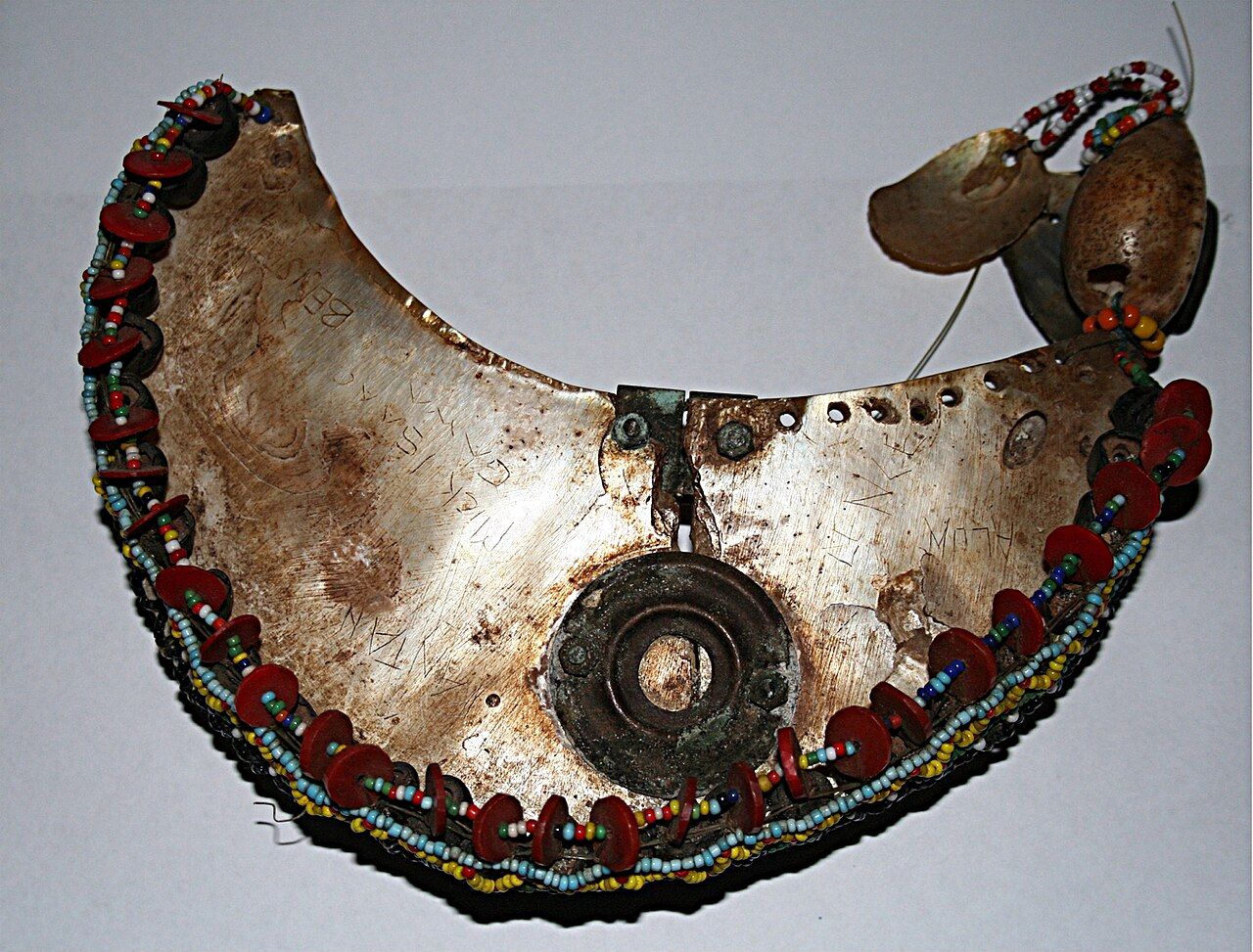
Polanyi’s three modes of exchange
Once goods exist, they have to move between people, and human societies have invented only a handful of principles for moving them. Karl Polanyi, whose substantivist approach insisted that the economy is always embedded in social relationships rather than a free-standing machine, named three: reciprocity, redistribution, and market exchange. Most economies mix all three, but usually one dominates and gives the society its economic character. Reading them requires an emic sensibility — grasping what an exchange means to the participants — because the same handful of yams can be a wage, a gift, or an insult depending entirely on the relationship it travels along.
Reciprocity and the gift
Reciprocity is the back-and-forth giving between people who stand in some social relationship. Marcel Mauss, in The Gift (1925), showed that the “free” gift is never free: it carries a threefold obligation — to give, to receive, and to repay — and it binds giver and receiver into an ongoing relationship. A gift is a total social fact, moral and economic and spiritual at once. Sahlins later sorted reciprocity into three shades. Generalized reciprocity is open-handed giving with no accounting and no expected return date — the way parents feed children, or close kin share. Balanced reciprocity expects a roughly equivalent return within a reasonable time. Negative reciprocity is the attempt to get something for nothing — hard bargaining, barter with strangers, even theft.
The textbook case of balanced reciprocity is the Kula ring, documented by Bronisław Malinowski in Argonauts of the Western Pacific (1922). Islanders of the Massim region off eastern Papua New Guinea — the Trobriands and their neighbors — undertake dangerous canoe voyages to exchange two kinds of ceremonial valuables: red-shell necklaces (soulava) that travel clockwise around a ring of islands, and white-shell armbands (mwali) that travel counterclockwise. The valuables are never kept for long; the prestige lies in receiving a famous piece and passing it on. Alongside this ceremonial circuit runs ordinary barter (gimwali) for practical goods — but confusing the two is a grave insult. Malinowski’s Kula demolished the old myth that “primitive” economies were just clumsy versions of our own; David Graeber later showed that the supposed pre-money world of pure barter is itself largely a myth — credit and reciprocity came first.
Redistribution and market
Redistribution pools goods at a social center and then sends them back out. A Melanesian “big man” persuades and cajoles his followers into contributing pigs for a huge feast; a chief collects first-fruits and hosts the village; a modern state collects taxes and funds roads and pensions. The most discussed anthropological case is the potlatch of the Northwest Coast peoples — the Kwakwaka’wakw and their neighbors — documented by Franz Boas. A host gives away staggering quantities of blankets, coppers, and food to validate a claim to rank, and the guests serve as witnesses to that claim. Status comes not from hoarding wealth but from distributing it. Two cautions: the dramatic destruction of property that fills older textbooks was never the whole of the institution and appears to have intensified under colonial upheaval, and the potlatch is not a thing of the past — it remains a living ceremony, central to naming, marriage, mourning, and the transfer of hereditary rights among Northwest Coast nations today. Market exchange, finally, moves goods by price, set impersonally by supply and demand and mediated by general-purpose money. Geertz’s study of the Moroccan suq (bazaar) shows that even “the market” is thick with culture — bargaining, clientship, and information games — but its organizing principle is the price, not the relationship.
| Mode | Direction of flow | Social principle | Example |
|---|---|---|---|
| Reciprocity | Person ↔ person | Obligation between social equals or kin | Kula ring, food sharing |
| Redistribution | In to a center, then out | A recognized central authority | Potlatch, big-man feast, taxation |
| Market exchange | Goods for money at a price | Supply, demand, and price | Bazaar, modern retail |
- Polanyi’s three modes of exchange are reciprocity, redistribution, and market exchange; the economy is embedded in social relations.
- Mauss showed the gift carries obligations to give, receive, and repay; Sahlins split reciprocity into generalized, balanced, and negative.
- The Kula ring (Malinowski) is the classic case of balanced, ceremonial reciprocity.
- The potlatch (Boas) shows redistribution as a route to rank — prestige through giving away.
Section 4Consumption and value
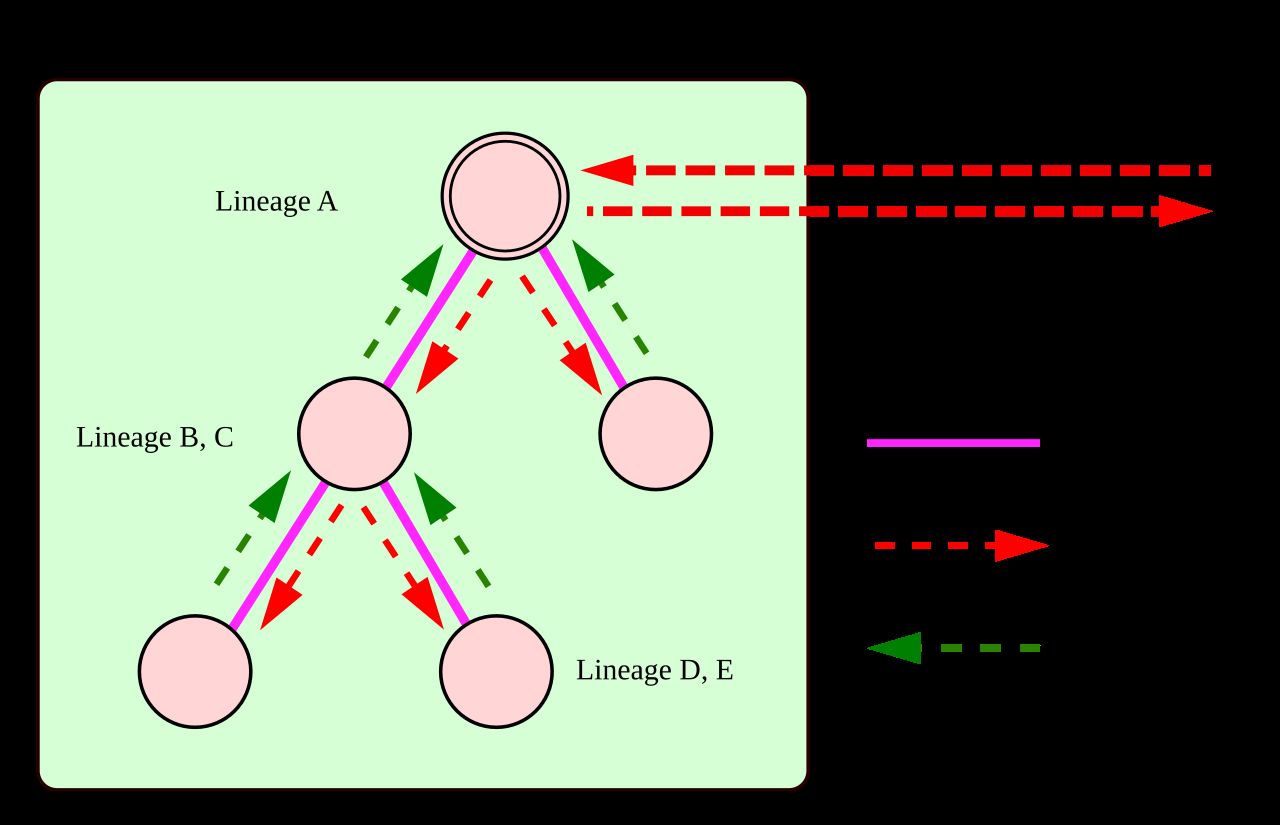
Where does value come from?
It is tempting to think a thing’s value is a fact about the thing — its usefulness, or the labor inside it. Marx distinguished use value (what a good does for you) from exchange value (what it trades for), and located the source of exchange value in labor. But anthropology adds a stubborn observation: value is culturally assigned, and cultures disagree profoundly about what is precious. A cow is capital and poetry to a Nuer and merely beef to a commuter; a Kula armshell is priceless in one circuit and worthless outside it. Paul Bohannan’s study of the Tiv of Nigeria described spheres of exchange: everyday food formed one sphere, prestige goods (cattle, brass rods) another, and rights in people (marriage) a third. Converting upward between spheres brought honor; converting downward — selling prestige goods for mere food — brought shame. Value, in other words, is a moral map, not a price list.
Consumption as communication
If production makes goods and exchange moves them, consumption is where they are used up — and where they do their loudest cultural work. Mary Douglas and Baron Isherwood argued in The World of Goods that consumption is a system of communication: what we eat, wear, and display is a running statement about who we are and where we belong. Thorstein Veblen had already coined conspicuous consumption to describe how the leisure class advertises status by wasteful display — spending precisely because it is visible and expensive. Pierre Bourdieu deepened this in Distinction: taste itself is learned, class-marked, and a form of cultural capital. The foods you find delicious and the music you find beautiful were installed by your upbringing — your habitus — and they quietly sort people into social ranks. Consumption is never just about need; it is about meaning and belonging.
Commodities and their biographies
Anthropologists also ask how a thing’s status can change over its life. Igor Kopytoff proposed writing the cultural biography of a thing: an object can move in and out of being a commodity. A basket woven for sale is a commodity; the same basket, once given to a daughter as an heirloom, is singularized and removed from the market. Arjun Appadurai gathered these ideas in The Social Life of Things. Annette Weiner, revisiting Malinowski’s Trobriands, identified inalienable possessions — sacred valuables that carry a group’s identity and are kept precisely while other things are given away. And Sidney Mintz’s Sweetness and Power traced a single commodity, sugar, from Caribbean plantation slavery to the English working-class tea table, showing how consumption at one end of the world is stitched to production and suffering at the other.
| Concept | What it captures | Example |
|---|---|---|
| Use value | What a good does for you directly | A shirt keeps you warm |
| Exchange value | What a good trades for | The shirt’s price tag |
| Prestige / sign value | The status a good signals | A designer label; a Kula shell |
| Inalienable possession | Wealth kept, not sold, that holds identity | An heirloom, a crown, a sacred valuable |
- Value is culturally assigned: distinguish use value, exchange value, and prestige, and note Bohannan’s spheres of exchange.
- Consumption is communication (Douglas & Isherwood); conspicuous consumption (Veblen) and taste as cultural capital (Bourdieu) mark class.
- A thing can move in and out of being a commodity (Kopytoff, Appadurai); inalienable possessions (Weiner) are kept, not sold.
- Commodity chains (Mintz’s sugar) link consumption here to production — and exploitation — there.
Section 5Work and inequality
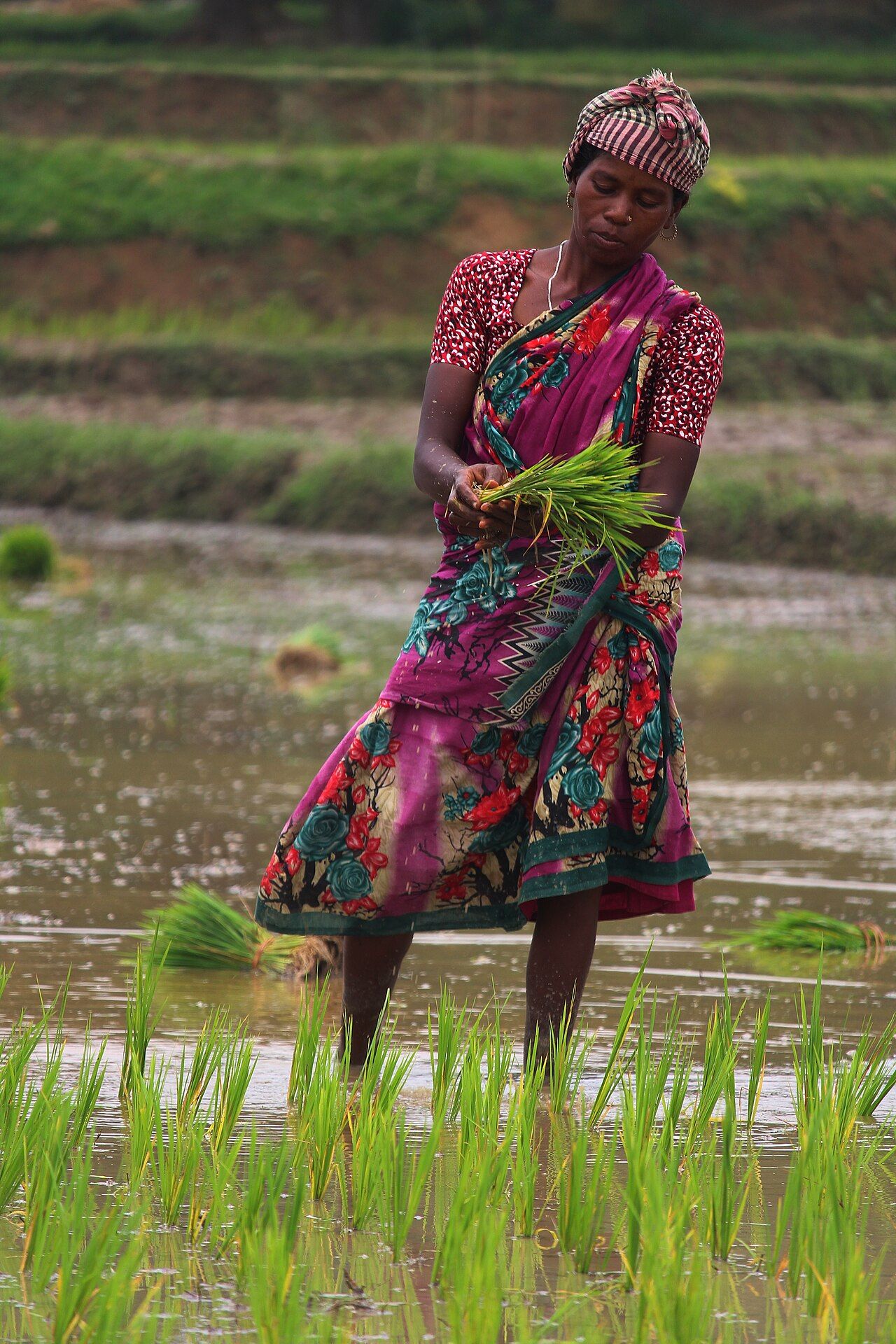
The division of labor
No society asks everyone to do everything. The division of labor — the systematic assignment of different tasks to different people — is a human universal, but how it is drawn is deeply cultural. The most widespread axis is gender: in most foraging societies men hunt and women gather (though women’s gathering often supplies the larger share of calories), and countless economies assign weaving, potting, herding, or trading to one gender. Yet the content of these assignments is not fixed by biology. Margaret Mead’s Sex and Temperament in Three New Guinea Societies (1935) found neighboring Sepik peoples with strikingly different ideas of what temperament was “naturally” male or female — gentle and nurturant in both sexes among the Arapesh, fierce in both among the Mundugumor, and reversed relative to Western expectations among the Tchambuli (Chambri) — powerful early evidence that gendered personality, and with it the roles built on it, is culturally constructed rather than given. Labor is also divided by age (children herd, elders advise) and, as societies grow complex, by specialization and craft.
From equality to hierarchy
Elman Service’s well-known typology — band, tribe, chiefdom, state — sorts societies by political centralization and inequality, and it roughly tracks the subsistence spectrum from Section 1. Use it as a set of analytic ideal types, not as a staircase every society must climb. Real histories move sideways and backward as readily as “up”: societies abandon centralized rule, absorb neighbors, or sit squarely between two labels, and the categories say nothing whatever about the worth or sophistication of the people in them. Foraging bands are assertively egalitarian: they use active leveling mechanisms to keep anyone from rising above the group. Tribes of horticulturalists and pastoralists have “big men” whose influence must be constantly re-earned through generosity. Chiefdoms introduce hereditary rank; states add permanent, institutionalized stratification — classes with unequal access to resources, enforced by law and force. The engine of this transformation is surplus: once food can be stored, controlled, and inherited, the door opens to permanent inequality. Friedrich Engels linked the rise of the state to private property and, controversially, to a decline in women’s status — a claim feminist anthropologists have debated and refined ever since.
Whose work counts?
A society’s idea of “work” is itself a cultural artifact, and it tends to make some labor invisible. Feminist anthropology has insisted that unpaid domestic and care work — cooking, child-rearing, tending the sick — is real, skilled, economically essential labor, even though market economies do not price it and censuses often ignore it. The same blind spot hides the vast informal economy — street vendors, day laborers, home workshops — on which much of the world’s population actually survives. And global commodity chains stretch the division of labor across the planet: the person who stitches a garment and the person who wears it may never share a language, a wage scale, or a legal system. Studying who does the work, who is paid, and who is counted is one of the sharpest tools anthropology has for seeing inequality plainly.
| Society type | Division of labor | Inequality | Example |
|---|---|---|---|
| Band | By age & gender only | Egalitarian; leveling mechanisms | Ju/’hoansi foragers |
| Tribe | Age, gender, some part-time specialists | Rank earned, not fixed (big men) | Highland New Guinea |
| Chiefdom | Hereditary rank; craft specialists | Ranked lineages | Northwest Coast, Polynesia |
| State | Full-time specialization; classes | Institutionalized stratification | Agrarian empires, modern states |
- The division of labor by gender, age, and specialization is universal, but its content is cultural (Mead).
- Service’s band, tribe, chiefdom, state typology is a scale of rising inequality driven by storable surplus — ideal types, not a ladder societies must climb.
- Egalitarian societies use active leveling mechanisms; states institutionalize stratification.
- Much real labor — unpaid care work and the informal economy — is made invisible by how “work” is defined and counted.
The chapter in one breath
- Societies feed themselves through five subsistence strategies — foraging, pastoralism, horticulture, agriculture, industrialism — and only the intensive ones yield the surplus that builds cities and hierarchy.
- A mode of production is the social organization of that labor: Wolf’s kin-ordered, tributary, and capitalist modes differ over who owns, who works, and who takes the surplus.
- The domestic mode (Sahlins) produces for use and tends to underproduce; the capitalist mode runs on wage labor and commodity production.
- Goods move by reciprocity, redistribution, or market exchange (Polanyi); the Kula ring and the potlatch show how exchange builds relationships and rank.
- The gift is never free (Mauss); reciprocity comes in generalized, balanced, and negative shades (Sahlins).
- Value is culturally assigned; consumption communicates identity, and conspicuous consumption and taste (Veblen, Bourdieu) mark class.
- The division of labor and the band–tribe–chiefdom–state typology show how surplus and specialization turn difference into inequality — and much real labor, unpaid and informal, goes uncounted.
ReferenceWords worth knowing
A quick reference for the terms in this chapter — skim it now, or circle back whenever a word trips you up.
- Agriculture
- Intensive farming of the same land year after year using the plough, irrigation, and draft animals; produces a storable surplus.
- Balanced reciprocity
- Exchange in which a roughly equivalent return is expected within a reasonable time, as in the Kula ring.
- Band
- The smallest, most egalitarian society type — a small, mobile group typical of foragers.
- Bridewealth
- Goods (often livestock) transferred from a groom’s kin to a bride’s kin to validate a marriage and compensate for the loss of her labor and children; not a purchase of the bride.
- Chiefdom
- A society with hereditary rank and a central figure who redistributes goods, intermediate between tribe and state.
- Commodity
- A good produced for exchange, whose value is measured against other goods or money.
- Conspicuous consumption
- Veblen’s term for wasteful, visible spending undertaken to display wealth and status.
- Cultural capital
- Bourdieu’s term for the tastes, knowledge, and manners learned through upbringing that mark and reproduce class position.
- Cultural ecology
- Julian Steward’s approach linking a society’s form to how it adapts economically to its environment.
- Division of labor
- The systematic assignment of different tasks to different people, drawn by gender, age, rank, and specialization.
- Domestic mode of production
- Sahlins’s term for household-based production for use, which tends to underproduce.
- Egalitarian
- Describing a society with no institutionalized differences in wealth, rank, or power beyond those of age and gender.
- Exchange value
- What a good will trade for — its worth measured against other goods or money, as distinct from its usefulness.
- Foraging
- Subsistence by hunting wild animals and gathering wild plants; the oldest human strategy.
- Generalized reciprocity
- Open-handed giving with no accounting and no set return, typical among close kin.
- Horticulture
- Small-scale gardening with hand tools and no plough, often involving shifting (swidden) cultivation.
- Inalienable possession
- Weiner’s term for a valuable kept out of exchange because it carries a group’s identity — wealth defined by being retained while other things are given away.
- Industrialism
- An economy based on fossil-fuel energy, machines, and wage labor, in which people buy rather than grow subsistence.
- Informal economy
- Economic activity outside official regulation, taxation, and measurement — street vending, day labor, home workshops — on which much of the world’s population survives.
- Kula ring
- The ceremonial exchange of shell valuables circulating among the Massim islands off eastern Papua New Guinea, documented by Malinowski; a classic case of balanced reciprocity.
- Market exchange
- The movement of goods for money at prices set impersonally by supply and demand.
- Mode of production
- The social organization of labor: the means of production plus the relations of production.
- Negative reciprocity
- The attempt to get something for nothing — hard bargaining, barter with strangers, or theft; typical of dealings with outsiders.
- Pastoralism
- Subsistence based on herds of domesticated animals, often involving nomadism or transhumance.
- Potlatch
- A Northwest Coast redistributive feast in which a host gives away wealth before witnesses to validate a claim to rank; outlawed in Canada 1885–1951 and still practiced today.
- Reciprocity
- Back-and-forth giving between people in a social relationship; generalized, balanced, or negative.
- Redistribution
- Exchange in which goods flow to a central authority and are then distributed outward.
- Spheres of exchange
- Bohannan’s term (from the Tiv) for separate ranked categories of goods that may be exchanged within a sphere but only rarely across them.
- State
- A society with centralized government, full-time specialization, and institutionalized class stratification backed by law and force.
- Stratification
- Permanent, institutionalized inequality in which classes or ranks have unequal access to resources, power, and prestige.
- Subsistence strategy
- The basic way a society obtains its food and energy from the environment.
- Surplus
- Production beyond immediate needs that can be stored, claimed, and inherited — the precondition for cities, specialists, and durable hierarchy.
- Swidden
- Shifting or slash-and-burn cultivation: a plot is cleared and burned, gardened a few years, then left to regrow while the gardeners move on.
- Transhumance
- The seasonal movement of herds and herders between established pastures, such as highland summer and lowland winter grazing.
- Tribe
- A society of horticulturalists or pastoralists larger than a band, with kin-based political organization and leaders whose influence must be earned rather than inherited.
- Tributary mode of production
- A mode in which a ruling class extracts surplus from producers through tribute, rent, or forced labor.
- Use value
- What a good does for its user directly — its practical usefulness, as distinct from what it trades for.
Check yourself
Kinship, Marriage & Family
Ask people anywhere on earth who they are, and sooner or later they will answer by telling you who they are related to. Kinship — the culturally recognized web of ties through birth, marriage, and choice — is the oldest and most powerful way human beings organize themselves, and for a century it sat at the very center of anthropology. This chapter shows how societies decide who counts as family, how they trace descent down the generations, how they name the relatives around them, why they make people marry out and give cattle or gold to seal the union, and where the newlyweds end up living. None of these answers is dictated by biology. Each is a cultural choice, and taken together they build the scaffolding on which whole societies stand.
By the end of this chapter you can
- Explain what kinship is and why anthropologists treat it as a form of social structure rather than a fact of biology.
- Distinguish consanguineal from affinal kin and read a basic genealogical diagram.
- Compare patrilineal, matrilineal, and bilateral descent, and define lineage, clan, and moiety.
- Describe the classic kinship terminology systems and explain what a naming system reveals about a society.
- State the major marriage rules — the incest taboo, exogamy, and endogamy — and contrast monogamy, polygyny, and polyandry.
- Explain bridewealth and dowry as forms of marital exchange and alliance.
- Identify the main postmarital residence patterns and family types, and connect residence to descent.
- Cite real ethnographic cases — Nuer, Trobriand, Nayar, Nyinba — that illustrate the diversity of human kinship.
Section 1Why kinship matters
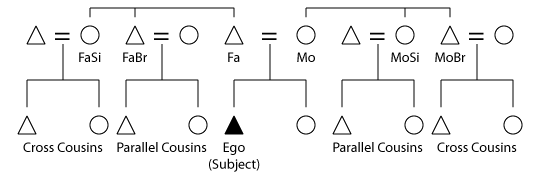
Kinship as social structure
For most of human history there were no governments, police, banks, or schools. What organized life instead was kinship. Who you could ask for food, who owed you labor, who you could marry, who would avenge your death, who inherited the land — all of it flowed through relationships of blood and marriage. When early anthropologists such as Lewis Henry Morgan and later Bronisław Malinowski and A. R. Radcliffe-Brown tried to understand small-scale societies, they found that kinship was the political system, the economy, and the religion, braided together. This is why kinship became anthropology’s signature subject: to grasp how a society without a state holds together, you follow the kin ties.
Blood, marriage, and the genealogical grid
Anthropologists sort kin into two great classes. Consanguineal kin (“of the same blood”) are relatives by birth — parents, children, siblings, cousins. Affinal kin are relatives by marriage — in-laws, spouses. To chart these ties precisely, fieldworkers use a standard notation built from a handful of letters, always drawn from the viewpoint of a single reference person called Ego. The diagram that results — triangles for males, circles for females, an equals sign for marriage — lets an anthropologist record a stranger’s entire family in the field and compare it with families across the world.
| Symbol | Means | Symbol | Means |
|---|---|---|---|
| F | Father | M | Mother |
| B | Brother | Z | Sister (“Z” so it isn’t confused with S) |
| S | Son | D | Daughter |
| H | Husband | W | Wife |
| MB | Mother’s brother (a key figure later) | FZ | Father’s sister |
Kinship is made, not found
It is tempting to think kinship simply mirrors biology — that a mother is whoever gave birth, a father whoever supplied the sperm. Anthropology’s deepest lesson is that this is not so. Many societies recognize fathers who are dead, mothers who never gave birth, and “milk kin” created by shared nursing. The anthropologist David Schneider argued forcefully that even the Western idea of kinship-as-biology is itself a cultural theory, not a natural fact. Kinship, in other words, is an emic category — a system of meaning that each society builds — and the anthropologist’s job is to describe it on its own terms rather than assume ours is universal.
- Kinship is the culturally recognized web of relationships that, in stateless societies, does the work of politics, economics, and law.
- Consanguineal kin are related by birth; affinal kin by marriage.
- Anthropologists chart families with a standard notation centered on Ego.
- Kinship is a cultural construction, not a direct read-out of biology.
Section 2Descent systems
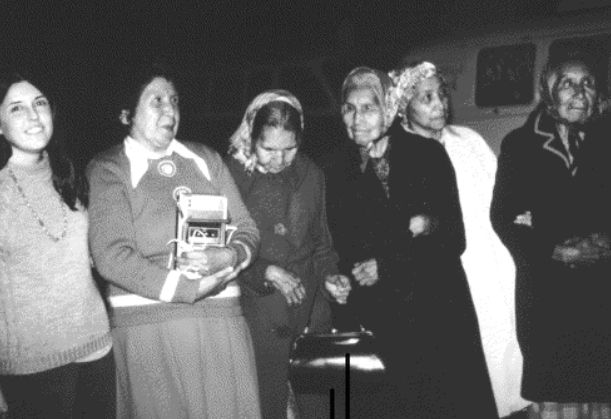
Unilineal descent: patrilineal and matrilineal
Most societies trace descent through one line only — a principle called unilineal descent — because a single line produces clear, non-overlapping groups that can own land and endure across generations. In patrilineal descent, a child belongs to the father’s group; sons and daughters take the father’s lineage, but only sons pass it on. The Nuer of South Sudan, famously studied by E. E. Evans-Pritchard, are strongly patrilineal: cattle, feuds, and political loyalty all run through the male line. In matrilineal descent, membership passes through the mother; the classic case is the Trobriand Islanders of Melanesia, whom Malinowski documented, where a boy inherits not from his father but from his mother’s brother.
The matrilineal puzzle and the mother’s brother
Matrilineal does not mean matriarchal — women rarely hold formal authority simply because descent runs through them. Instead, authority typically falls to a woman’s brother. Because a man’s heirs are his sister’s children, the mother’s brother (MB) becomes the disciplinarian and property-giver, while the father himself is an affectionate outsider. Anthropologists call this special bond the avunculate, and the tension it creates — a man torn between his own sons and his sister’s sons — is known as the “matrilineal puzzle.”
Bilateral descent and its variants
A minority of societies, including most of the modern industrial West and many foraging bands such as the Ju/’hoansi of the Kalahari, use bilateral (or cognatic) descent, tracing relatives equally through both parents. This produces a flexible personal network — the kindred — but no bounded, corporate group, since your kindred is not the same as your cousin’s. Some societies add further wrinkles: ambilineal descent lets each person choose the father’s or mother’s line, and double descent assigns some things (say, land) patrilineally and others (say, movable wealth) matrilineally.
| System | Traced through | Group formed | Ethnographic example |
|---|---|---|---|
| Patrilineal | Father’s line only | Corporate patrilineage / clan | Nuer, traditional Han Chinese |
| Matrilineal | Mother’s line only | Corporate matrilineage / clan | Trobriand, Hopi, Minangkabau |
| Bilateral | Both parents equally | Personal kindred (not bounded) | Ju/’hoansi, Euro-American |
| Double | Both, for different purposes | Two crosscutting sets | Yakö of Nigeria |
Unilineal systems build these ties into nested groups. A lineage is a descent group whose members can actually trace the genealogical links back to a common ancestor; a clan claims a common ancestor (often a mythical animal or plant totem) without tracing every step; and a moiety divides an entire society into two halves that typically must marry each other.
- Unilineal descent (patrilineal or matrilineal) traces membership through one line and builds corporate groups.
- Matrilineal ≠ matriarchal; authority often rests with the mother’s brother (the avunculate).
- Bilateral descent traces both sides and yields a flexible kindred rather than a bounded group.
- Lineage, clan, and moiety are nested levels of descent-based organization.
Section 3Kinship terminology
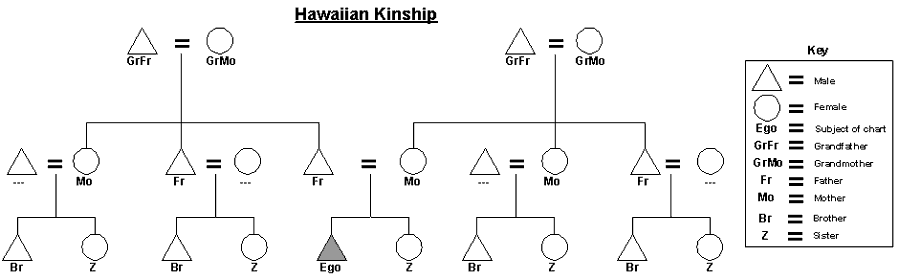
Why the words for relatives matter
English lumps your mother’s sister and your father’s sister under one word, “aunt,” and calls every child of every aunt or uncle a “cousin.” Other languages slice the family up completely differently — and those differences are not random. Lewis Henry Morgan, in his monumental Systems of Consanguinity and Affinity of the Human Family (1871), was the first to see that the labels a society uses reveal how it groups people for marriage, inheritance, and loyalty. If your language calls your father and your father’s brother by the same word, it is telling you that culturally they play the same role.
The six classic systems
Morgan and his successors distilled the world’s terminologies into a handful of types, usually named after the society where each was first described. They differ chiefly in how they treat cousins — and specifically whether they distinguish parallel cousins (children of a parent’s same-sex sibling) from cross cousins (children of a parent’s opposite-sex sibling), a distinction that is invisible in English but decisive elsewhere.
| System | How it names cousins | Typical setting |
|---|---|---|
| Eskimo (Inuit) | All cousins alike, but distinct from siblings; isolates the nuclear family | Bilateral societies (e.g., Euro-American) |
| Hawaiian | One term per generation & sex; cousins = siblings | Ambilineal / large households |
| Iroquois | Parallel cousins = siblings; cross cousins separate | Many unilineal societies |
| Sudanese | A different, descriptive term for nearly every relative | Complex, often stratified states |
| Crow | Iroquois-like, skewed by matrilineal descent | Strong matrilineal societies |
| Omaha | Iroquois-like, skewed by patrilineal descent | Strong patrilineal societies |
Classificatory versus descriptive
Morgan drew one broad line through all these systems. Descriptive terminologies (like Sudanese) give a unique label to each precise relationship. Classificatory terminologies (like Hawaiian or Iroquois) merge several biologically distinct relatives under one term — calling many men “father” or many women “mother.” To a newcomer this looks like confusion; in fact it is information, because the merges track exactly the people who share rights, duties, and marriage prohibitions.
- Kinship terms are not arbitrary; they encode a society’s rules for marriage, inheritance, and loyalty (Morgan, 1871).
- The key contrast is parallel vs cross cousins, invisible in English.
- The six classic systems are Eskimo, Hawaiian, Iroquois, Sudanese, Crow, and Omaha.
- Classificatory systems merge relatives who share a social role; descriptive systems name each separately.
Section 4Marriage
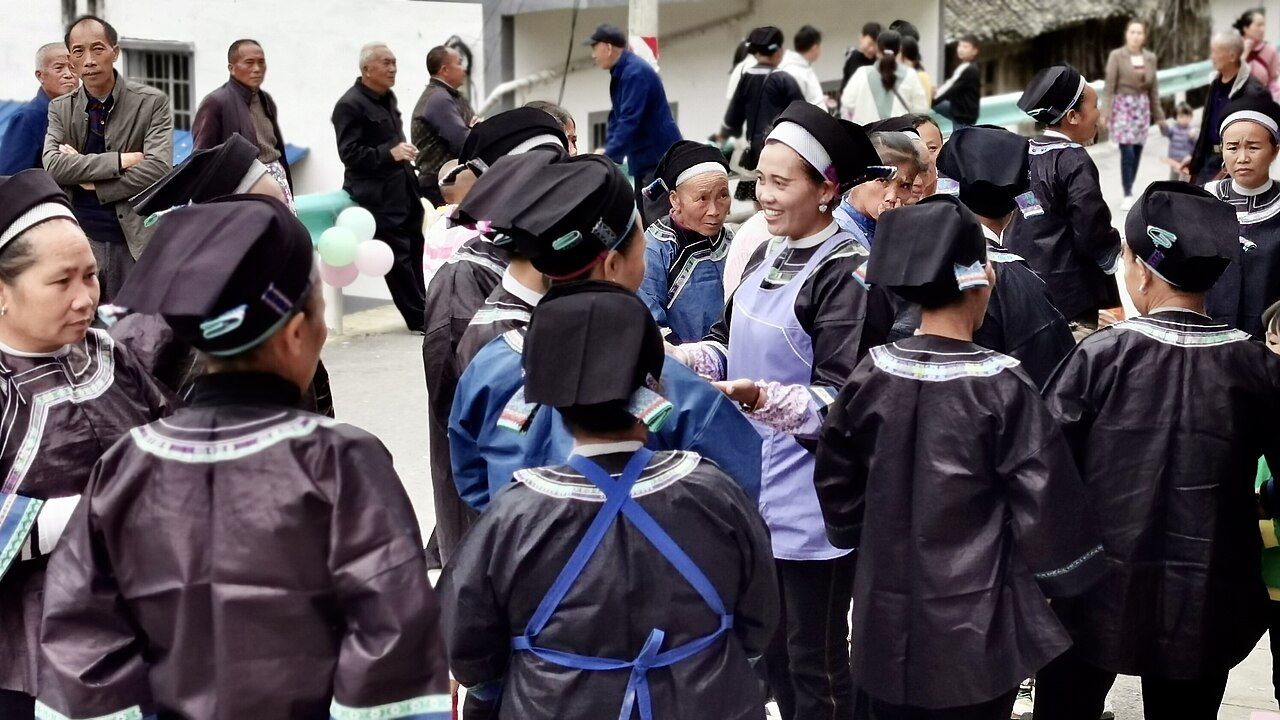
What marriage is, and whom you may marry
Marriage is famously hard to define, because every neat definition breaks against some real case. What marriage reliably does, cross-culturally, is create legitimate affinal ties, assign the children a place in the descent system, and forge an alliance between two groups. Claude Lévi-Strauss, in The Elementary Structures of Kinship, argued that marriage is fundamentally an exchange: by giving away a daughter or sister, a group obligates another group to reciprocate, weaving separate families into a wider society. Marriage, in this alliance view, is less about the couple than about the bond between the families that give and receive them — and it is often marked, as Arnold van Gennep noted, by an elaborate rite of passage that carries the couple from one social status to another.
Every known society has an incest taboo forbidding sex and marriage among close kin; Lévi-Strauss saw it as the very threshold between nature and culture, the rule that forces groups to look outward. Beyond that near-universal, societies add exogamy rules requiring marriage outside a defined group (your clan, your village) and endogamy rules requiring marriage within one (your caste, your religion, your class). The same person may face both at once — obliged to marry outside the lineage but inside the caste. Preferential rules can go further still, favoring cross-cousin marriage or, after a death, the levirate (a widow marries her late husband’s brother) or the sororate (a widower marries his late wife’s sister).
How many spouses: monogamy and plural marriage
Cultures also differ in how many spouses a person may have at once. Monogamy pairs one person with one; polygamy permits more. The common form of polygamy is polygyny (one husband, several wives), widespread in patrilineal African and Middle Eastern societies and often a marker of a man’s wealth and status. Far rarer is polyandry (one wife, several husbands): among the Nyinba and other Tibetan peoples, fraternal polyandry has a set of brothers share one wife, keeping the family’s scarce mountain land undivided. The Nayar of Kerala, studied by Kathleen Gough, pushed the definition to its limit, where a woman could have several “visiting husbands” and no husband lived with her — she remained in her matrilineal household (taravad) alongside her mother, her siblings, and her own and her sisters’ children — a case that forced anthropologists to rethink what marriage even is.
| Form | Arrangement | Where it is common / example |
|---|---|---|
| Monogamy | One spouse at a time | Industrial states; many societies |
| Serial monogamy | One at a time, but several over a life | Modern West (divorce & remarriage) |
| Polygyny | One husband, multiple wives | Most common plural form; e.g., Nuer, Hausa |
| Polyandry | One wife, multiple husbands | Rare; Nyinba & Tibetan, Toda |
Marriage as exchange: bridewealth and dowry
Because marriage joins groups, it almost always moves wealth. In bridewealth (or brideprice), the groom’s family transfers goods — classically cattle among the Nuer and other East African peoples — to the bride’s family, compensating them for the loss of her labor and children and legitimizing the offspring as members of the husband’s lineage. Where goods or labor are scarce, a man may instead give bride service, working for his in-laws for years. The mirror image is dowry, wealth that travels with the bride from her family to the marriage, common historically in Europe and in South Asia, where it can function as a daughter’s early inheritance — but also, in its inflated modern forms, as a source of serious social harm.
- Marriage legitimizes children, assigns descent, and above all forges alliances between groups (Lévi-Strauss).
- The incest taboo is near-universal; exogamy and endogamy further channel whom one may marry.
- Monogamy, polygyny, and (rarely) polyandry are the main forms; the Nayar case tests the definition of marriage itself.
- Bridewealth flows to the bride’s kin; dowry flows with the bride — both bind families through exchange.
Section 5Residence and family
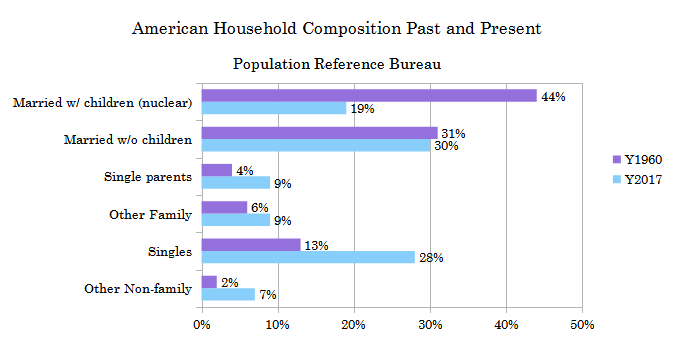
Where the newlyweds go: postmarital residence
Once a couple marries, they must live somewhere, and the choice is rarely free — it follows cultural rule. Postmarital residence patterns turn out to line up tightly with descent, because a society that traces membership through men usually wants its men to stay put together. In patrilocal (virilocal) residence, the couple joins or settles near the husband’s father’s household — the most common pattern worldwide, and the natural partner of patrilineal descent. In matrilocal (uxorilocal) residence, they move to the wife’s kin, as among the matrilineal Hopi and Navajo (Diné). In avunculocal residence, distinctive to some matrilineal societies, the couple lives with the husband’s mother’s brother, keeping the matrilineage’s men together.
Other patterns and the industrial shift
Two further options round out the picture. Ambilocal (bilocal) residence lets the couple choose either set of kin, a flexibility prized by foragers who must track scattered resources. Neolocal residence — the couple sets up an independent household apart from both families — is comparatively rare in human history but dominant in industrial, wage-earning societies, where jobs and housing markets, not lineages, decide where people live. That the modern West sees neolocal residence as “natural” is itself a clue to how a market economy reshapes kinship.
| Residence pattern | Couple lives with / near | Correlates with |
|---|---|---|
| Patrilocal | Husband’s father’s kin | Patrilineal descent (most common) |
| Matrilocal | Wife’s kin | Matrilineal descent (Hopi, Navajo) |
| Avunculocal | Husband’s mother’s brother | Some matrilineal societies |
| Ambilocal | Either set, by choice | Foraging bands; bilateral kin |
| Neolocal | A new, independent household | Industrial / market economies |
Family types
Residence in turn shapes what kind of household forms. The nuclear family — parents and their children — is one small building block, and every person belongs to two of them: a family of orientation into which they are born, and a family of procreation they help create by marrying. But nuclear households are far from universal. Extended families, spanning three or more generations under one roof or compound, are the historical norm across much of the world; joint families gather married brothers and their wives and children together, as in classical South Asia; and blended families knit together children from previous unions. The tidy nuclear household of the mid-twentieth-century West is a historically recent and geographically narrow arrangement, not the shape of family everywhere.
- Postmarital residence rules (patrilocal, matrilocal, avunculocal, ambilocal, neolocal) usually track the descent system.
- Neolocal residence is rare historically but typical of industrial, market economies.
- Everyone belongs to a family of orientation (birth) and a family of procreation (marriage).
- The nuclear family is only one form; extended, joint, and blended families are widespread.
The chapter in one breath
- Kinship is the culturally built web of relatedness that, in stateless societies, does the work of politics, economics, and law — and it is constructed, not simply biological.
- Kin are consanguineal (by birth) or affinal (by marriage), charted from a reference person, Ego.
- Descent runs patrilineally, matrilineally, or bilaterally; unilineal systems build lineages, clans, and moieties, and matriliny often empowers the mother’s brother.
- Kinship terminology (Morgan’s Eskimo, Hawaiian, Iroquois, Sudanese, Crow, Omaha systems) encodes marriage and inheritance rules; the cross/parallel cousin distinction is central.
- Marriage creates alliances between groups (Lévi-Strauss); the incest taboo, exogamy, and endogamy govern partners, while forms range from monogamy to polygyny to polyandry.
- Bridewealth flows to the bride’s kin and dowry flows with the bride, binding families through exchange.
- Postmarital residence tracks descent, and the nuclear family is just one of many family types — extended, joint, and blended families are the wider human norm.
ReferenceWords worth knowing
A quick reference for the terms in this chapter — skim it now, or circle back whenever a word trips you up.
- Affinity (affinal kin)
- Relationship created through marriage rather than birth — in-laws and spouses.
- Avunculocal residence
- A pattern in which a married couple lives with the husband’s mother’s brother, found in some matrilineal societies.
- Bilateral descent
- Tracing kinship equally through both the mother’s and the father’s lines, producing a personal kindred.
- Bridewealth
- Goods (classically cattle) transferred from the groom’s family to the bride’s to legitimize the marriage.
- Clan
- A descent group claiming a common (often mythical or totemic) ancestor without tracing every genealogical link.
- Consanguinity
- Relationship by birth or “blood” — parents, children, siblings, cousins.
- Cross cousin
- The child of a parent’s opposite-sex sibling (father’s sister’s or mother’s brother’s child); often a preferred marriage partner.
- Descent
- The culturally recognized rule for tracing kin ties down the generations and assigning group membership.
- Dowry
- Wealth that travels with the bride from her family into the marriage, sometimes an early inheritance.
- Endogamy
- A rule requiring marriage within a defined group, such as a caste or religion.
- Exogamy
- A rule requiring marriage outside a defined group, such as one’s clan or village.
- Incest taboo
- The near-universal prohibition on sex and marriage among close kin.
- Kinship
- The culturally constructed web of relationships through birth, marriage, and choice.
- Lineage
- A descent group whose members can trace the specific genealogical links to a common ancestor.
- Matrilineal descent
- Tracing descent and group membership through the female line.
- Moiety
- One of two halves into which a whole society is divided, typically obliged to intermarry.
- Neolocal residence
- A pattern in which a married couple establishes a new household apart from both families; typical of industrial societies.
- Nuclear family
- A household of parents and their children; each person has a family of orientation and of procreation.
- Parallel cousin
- The child of a parent’s same-sex sibling (father’s brother’s or mother’s sister’s child); often classed as a sibling and forbidden as a spouse.
- Patrilineal descent
- Tracing descent and group membership through the male line.
- Polyandry
- Marriage of one wife to multiple husbands; often fraternal, as among the Nyinba.
- Polygyny
- Marriage of one husband to multiple wives; the most common form of plural marriage.
- Unilineal descent
- Tracing descent through a single line only — either patrilineal or matrilineal.
Check yourself
Gender & Sexuality
A newborn is announced with a single word — "girl" or "boy" — and in that instant a lifetime of expectations begins to attach. But which expectations? Anthropology's central discovery about gender is that almost nothing we assume is "natural" about women and men survives a trip across cultures: the tasks, the temperaments, the clothing, and even the number of gender categories differ dramatically from one society to the next. This chapter separates biological sex from cultural gender, follows gender into the division of labor, meets the many societies that recognize more than two genders, weighs the evidence for male dominance and for matriarchy, and shows that sexuality itself — what people desire and how they act on it — is shaped by culture as much as by biology.
By the end of this chapter you can
- Distinguish sex from gender and explain why anthropologists treat gender as culturally constructed.
- Summarize Margaret Mead's Sex and Temperament and what it demonstrated about temperament and biology.
- Describe the gendered division of labor and how its content varies while its existence is near-universal.
- Identify third and additional gender categories with real examples — hijra, two-spirit, muxe, fa'afafine, bissu.
- Contrast the emic reality of these categories with the etic umbrella label "third gender."
- Define patriarchy and gender stratification, and evaluate the evidence for and against matriarchy.
- Separate matrilineal, matrilocal, and matrifocal from matriarchal.
- Explain how sexuality is culturally variable, using the Sambia, Trobriand, and Samoan cases.
Section 1Sex and gender
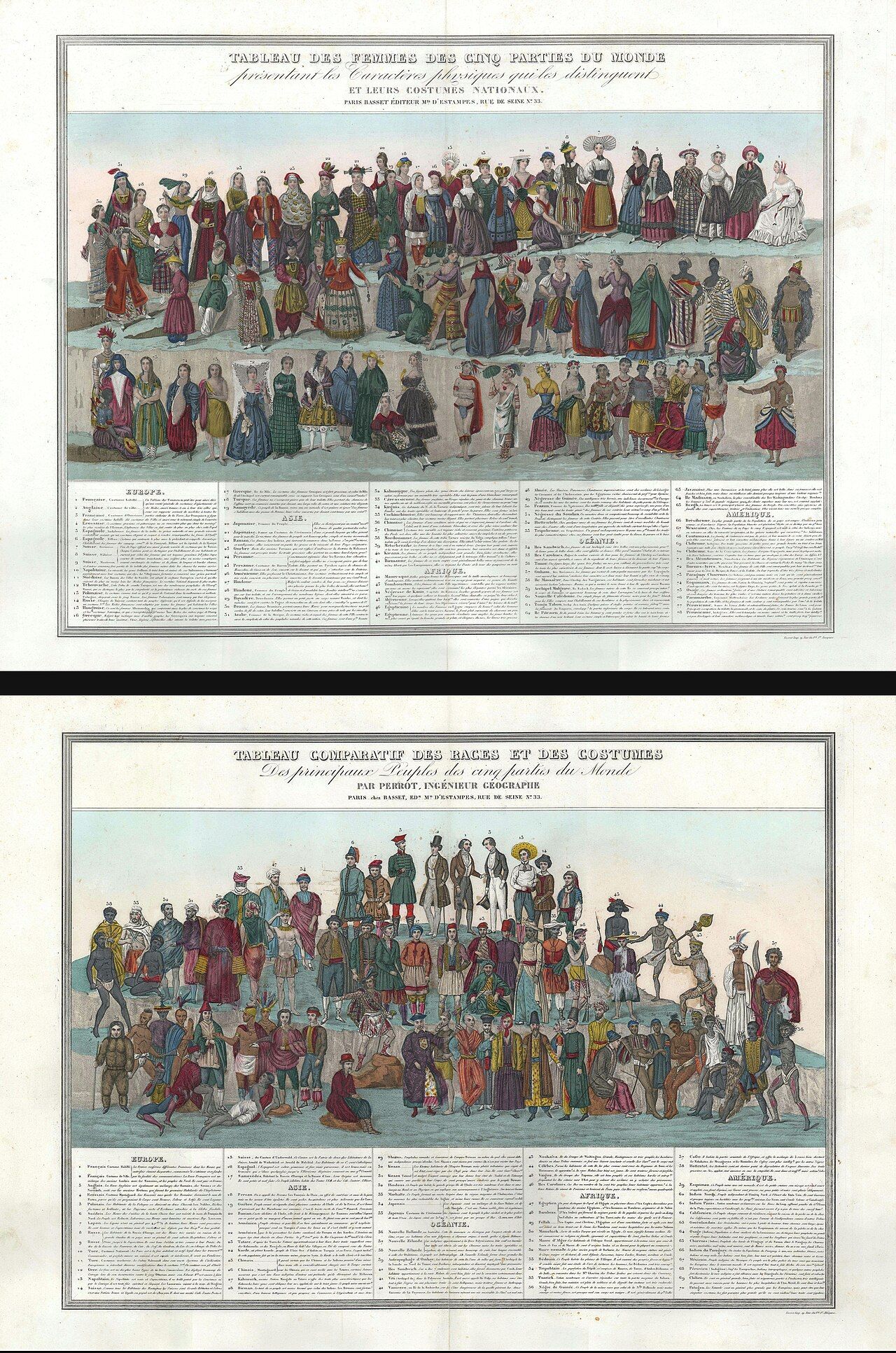
Two words that are not the same word
In everyday speech "sex" and "gender" are used interchangeably, but anthropology draws a firm line between them, and the whole field of gender studies grows out of that line. Sex refers to the biological distinctions between females and males — chromosomes, gonads, hormones, and reproductive anatomy. Gender refers to the cultural meanings, expectations, and behaviors a society attaches to those bodies: what it means to act like a woman or a man, how one should dress, speak, work, and feel. Sex is roughly the same everywhere; gender is astonishingly variable. That variability is the anthropologist's evidence that gender is learned, not inborn — it is acquired through enculturation, the same process by which we absorb any part of our culture.
The line is real but not perfectly clean, and anthropologists are careful here. Biology itself resists a tidy binary: intersex people are born with combinations of chromosomes, hormones, or anatomy that do not fit neatly into "female" or "male," and every society must decide what to make of them. Even the categories we call "biological sex" are, in part, cultural interpretations of bodies. The takeaway is not that biology is irrelevant, but that culture always has the last word on what a body means.
Mead in the Sepik
The classic demonstration came from Margaret Mead, a student of Franz Boas and a champion of his principle of cultural relativism. In Sex and Temperament in Three New Guinea Societies (1935), Mead compared three peoples of the Sepik region of New Guinea — not the Highlands, which Europeans had barely reached at the time: the Mountain Arapesh of the Torricelli range near the north coast, the Mundugumor (Biwat) of the Yuat River, and the Tchambuli (Chambri) of the Chambri Lakes on the middle Sepik. Among the Arapesh, both women and men were raised to be gentle, cooperative, and nurturing — by Western standards, both sexes seemed "feminine." Among the Mundugumor, both sexes were expected to be fierce, aggressive, and jealous. Among the Tchambuli (Chambri), the pattern reversed the Western script entirely: women were assertive, practical, and controlled the fishing and trade, while men were decorative, emotional, and preoccupied with art and ceremony.
Mead's argument was simple and radical: if temperament were fixed by biological sex, it could not flip from one people to the next. Because it does, the "natural" personalities of women and men must be cultural constructions. Later scholars have criticized details of Mead's fieldwork, but her core claim — that gendered temperament is culturally patterned — has held up across a century of cross-cultural research.
| Question | Sex | Gender |
|---|---|---|
| What is it? | Biological difference (chromosomes, hormones, anatomy) | Cultural meaning attached to those bodies |
| Where does it come from? | Largely from biology and development | Learned through enculturation |
| How much does it vary? | Roughly similar across societies | Varies dramatically across societies |
| How many categories? | Usually two, but intersex bodies exist | Two, three, or more, depending on the culture |
| Can it change in a lifetime? | Mostly stable | Can shift with age, ritual, or status |
- Sex is biological; gender is the cultural meaning a society attaches to sexed bodies.
- Gender is learned through enculturation, which is why it varies so much across cultures.
- Intersex bodies show that even biological sex is not a perfect binary.
- Mead's Sex and Temperament showed gendered temperament is culturally patterned, not biologically fixed.
Section 2Gender roles and the division of labor
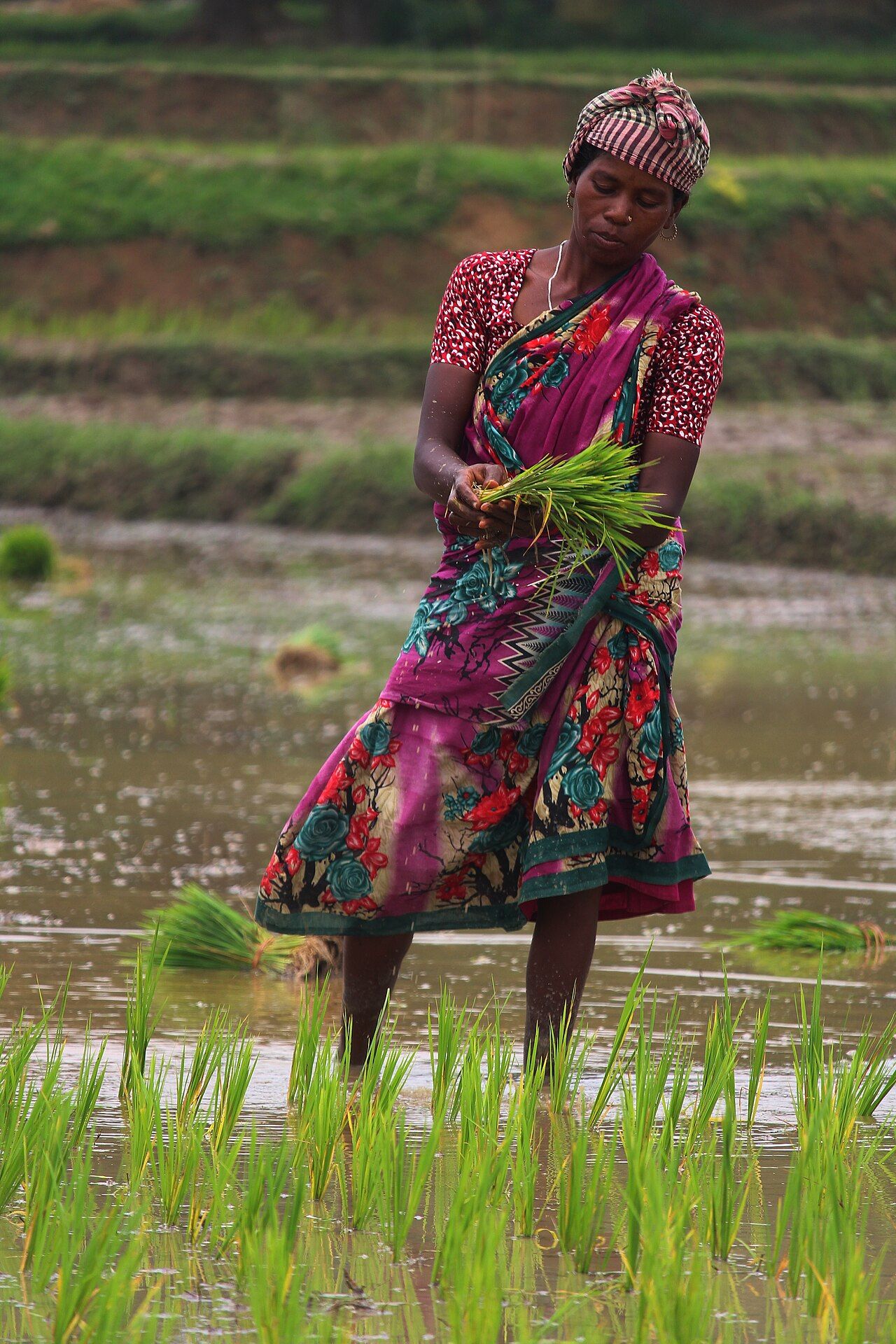
Universal division, arbitrary content
A gender role is the set of activities, rights, and duties a society assigns to a gender. Nearly every known society divides labor by gender in some way — the division of labor by gender is one of the closest things anthropology has to a human universal. What is not universal is which jobs belong to whom. Hunting large game and warfare are usually (not always) male; child care, cooking, and gathering are often (not always) associated with women. But cross-cultural surveys, such as those compiled by George Murdock and Caterina Provost, show that many tasks — farming, weaving, pottery, trade, building — are assigned to men in some societies and women in others with no biological rhyme or reason.
The exceptions matter as much as the patterns. Among the Agta of the Philippines, women hunt with bows and dogs and are respected hunters. In many foraging (hunter-gatherer) societies, women's gathering supplies the majority of the calories, making the "man the hunter" image both inaccurate and androcentric. The lesson is Boasian: describe the specific arrangement of a specific people before generalizing about "men's work" and "women's work."
Whose work counts
Assigning tasks is only half the story; societies also assign value, and here anthropology has repeatedly caught its own blind spots. When Bronisław Malinowski studied the Trobriand Islanders in the 1910s, he described a world of male yam gardens and male kula exchange. Decades later Annette Weiner returned to the same islands and found an entire economy Malinowski had walked past: women produce and exchange enormous quantities of banana-leaf bundles and skirts, wealth that is essential to mortuary ceremonies and that gives Trobriand women real, autonomous power. The work had been there all along; a male ethnographer simply had not seen it.
Patterns of subsistence also shape gender roles. The economist Ester Boserup argued that intensive plow agriculture, which demands upper-body strength and keeps fields far from the home, tends to concentrate farm labor in men and push women toward domestic work — and is statistically associated with steeper gender inequality than the hoe horticulture it often replaces. Technology and economy, in other words, are woven into the gender system.
| Task | Common tendency | Real exceptions |
|---|---|---|
| Hunting large game | Usually men | Agta women (Philippines) are active hunters |
| Gathering plant foods | Often women | Supplies most calories in many foraging bands |
| Warfare | Usually men | The agojie, the women's regiments of Dahomey (West Africa) |
| Weaving & cloth wealth | Varies widely | Women's banana-leaf wealth among the Trobrianders |
| Farming | Men under plow agriculture; women under hoe horticulture | Reverses between societies (Boserup) |
| Child care | Usually women | Aka "fathers" (Central Africa) among the most involved on record |
- A gendered division of labor is nearly universal; its content is culturally arbitrary.
- "Man the hunter" is androcentric — women's gathering often provides most of the food.
- Societies assign not just tasks but value; ethnographers can overlook women's contributions (Malinowski vs. Weiner).
- Subsistence technology, such as plow vs. hoe agriculture (Boserup), shapes gender roles and inequality.
Section 3More than two

Societies that count past two
Many cultures have long recognized gender categories that are neither "man" nor "woman," and treating gender as a strict binary is itself a cultural assumption — a Western one. In South Asia, the hijra form a recognized category studied classically by Serena Nanda in Neither Man Nor Woman; assigned male at birth, hijras live as a distinct gender, are devotees of the goddess Bahuchara Mata, and are called on to bless newborns and weddings. Across many Native North American nations, people who blended or crossed gendered roles held distinct social and often ceremonial statuses, though the particulars — the name, the duties, the degree of prestige — differed from nation to nation. The colonial-era term berdache has been replaced by two-spirit, an intertribal English term adopted at a 1990 gathering in Winnipeg; it is an umbrella for contemporary use, not a substitute for each nation's own word. Among the Zuni, the celebrated lhamana We'wha was a respected weaver, potter, and cultural ambassador who travelled to Washington in 1886, documented by Will Roscoe.
The list keeps going. The muxe of the Zapotec city of Juchitán, in Oaxaca, Mexico, are assigned male at birth and occupy a valued third role in family and festival life. Samoan fa'afafine ("in the manner of a woman") are an accepted part of village society. Among the Bugis of Sulawesi, the anthropologist Sharyn Graham Davies documented a system of five genders, including the ritually powerful bissu. In the highlands of Albania and Montenegro, "sworn virgins" (burrnesha) take a vow of celibacy and thereafter live socially as men, inheriting property and heading households.
Whose category is it?
Here the distinction between emic and etic becomes essential. "Third gender" is an etic label — an outsider's analytic umbrella, useful for comparison but coarse. From the emic point of view, a hijra, a two-spirit person, a muxe, and a bissu do not experience themselves as members of one shared "third" category; each is a specific status embedded in its own religion, kinship system, and history. Gilbert Herdt's collection Third Sex, Third Gender made exactly this point: the phrase is a scholarly convenience, and we should never flatten distinct, meaningful lives into a single exotic box. Nor should we assume these roles map onto modern Western identities such as "transgender" — sometimes they overlap, often they do not.
| Category | Society / region | In brief |
|---|---|---|
| Hijra | South Asia | Distinct gender; ritual role blessing births and weddings (Nanda) |
| Two-spirit | Many Native North American nations | Umbrella replacing berdache; often honored roles (e.g., Zuni lhamana) |
| Muxe | Zapotec, Oaxaca, Mexico | Assigned male at birth; valued role in family and festival |
| Fa'afafine | Samoa | "In the manner of a woman"; accepted village status |
| Bissu | Bugis, Sulawesi | One of five recognized genders; ritual specialists |
| Sworn virgin (burrnesha) | Balkans | Assigned female; vow to live socially as a man |
- Many societies recognize more than two genders; the binary is a cultural assumption, not a universal fact.
- Real examples include the hijra, two-spirit people, muxe, fa'afafine, and bissu.
- Berdache is an outdated term now replaced by two-spirit.
- "Third gender" is an etic umbrella; the emic reality is many distinct, non-interchangeable statuses.
Section 4Gender and power
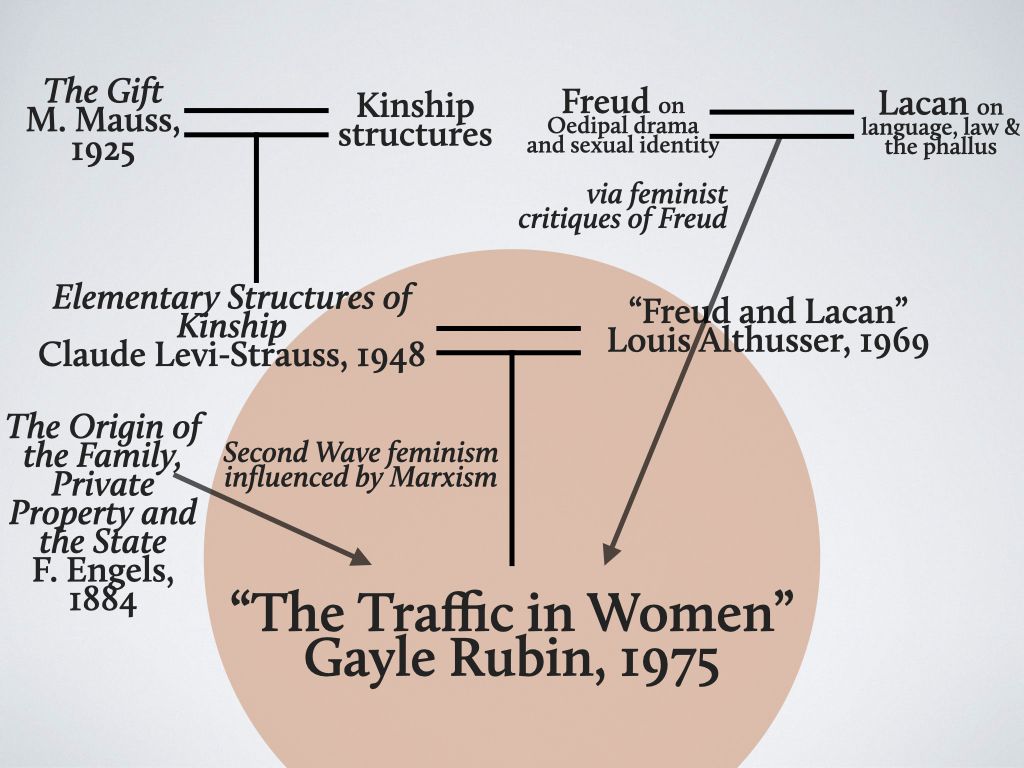
Patriarchy and gender stratification
Gender stratification is the unequal distribution of power, prestige, and resources between genders. Where men hold systematically more of these, we speak of patriarchy. Male dominance is common across the ethnographic record, but it is neither total nor uniform: societies range from steeply male-dominated to broadly egalitarian, and men's control in one domain (say, politics) may coexist with women's control in another (say, the household economy). Sherry Ortner's famous 1974 essay "Is Female to Male as Nature Is to Culture?" asked whether women are universally symbolically linked to nature, and therefore devalued, because of their role in reproduction. The essay launched decades of debate; most anthropologists now reject it as too sweeping, precisely because the ethnographic variation is so wide.
Was male dominance always this way? Eleanor Leacock, drawing on Engels's The Origin of the Family, Private Property and the State, argued that many foraging societies were fundamentally egalitarian, with gender complementarity rather than hierarchy, and that much of the male dominance ethnographers observed had been intensified by colonialism, missionization, and the spread of private property. Gender stratification, on this view, has a history — it is not a fixed fact of human nature.
Is there such a thing as matriarchy?
If patriarchy means rule by men, matriarchy would be its mirror image: rule by women. On that strict definition, anthropologists have never documented a matriarchy — no known society is governed by women in the way many are governed by men. But this is often misunderstood, because several distinct arrangements are well documented and are easily confused with matriarchy. A society can be matrilineal (descent and inheritance traced through the mother's line), matrilocal (a married couple lives with or near the wife's kin), or matrifocal (households centered on mothers), all without women "ruling."
Several such societies grant women striking power. Among the Haudenosaunee (Iroquois), the clan mothers controlled the longhouses and the stored food and nominated — and could remove — the male sachems who sat in council. The Minangkabau of Sumatra — the world's largest matrilineal society — pass land through women; Peggy Reeves Sanday argues they are best understood on their own emic terms as a "matriarchate" built on balance rather than female domination. Among the Mosuo (Na) of southwest China, described by Cai Hua, households are organized around women and property passes through the female line, with "walking marriages" that keep partners in separate homes. Marriage systems can also prise a social role loose from the sexed body altogether: among the Nuer of South Sudan, Evans-Pritchard described woman-marriage, in which a woman with no children of her own may marry another woman, pay the bridewealth, and stand as the legal father — the pater — of the children a male genitor fathers for the household. "Husband" and "father," it turns out, are social offices that a woman can hold. Finally, Gayle Rubin's "The Traffic in Women" (1975) reframed the whole question: building on Lévi-Strauss, she argued that marriage systems which exchange women between groups of men are a foundational mechanism of the "sex/gender system" that produces male power in the first place.
| Term | What it refers to | Example |
|---|---|---|
| Patriarchy | Systematic male dominance in power and prestige | Common but variable across societies |
| Gender stratification | Unequal access to power, prestige, resources by gender | Ranges from steep to near-absent |
| Matrilineal | Descent/inheritance through the mother's line | Minangkabau, Mosuo, many others |
| Matrilocal | Couple resides with the wife's kin | Common alongside matriliny |
| Matrifocal | Households centered on mothers | Documented widely; not "rule by women" |
| Matriarchy | Rule by women (mirror of patriarchy) | Not documented on the strict definition |
- Gender stratification is unequal access to power and resources; patriarchy is systematic male dominance.
- Male dominance is common but variable and, per Leacock, partly a product of history and colonialism.
- No matriarchy (rule by women) is documented, but many matrilineal/matrilocal/matrifocal societies empower women.
- Rubin's "Traffic in Women" locates male power in the marriage exchange of women itself.
Section 5Sexuality
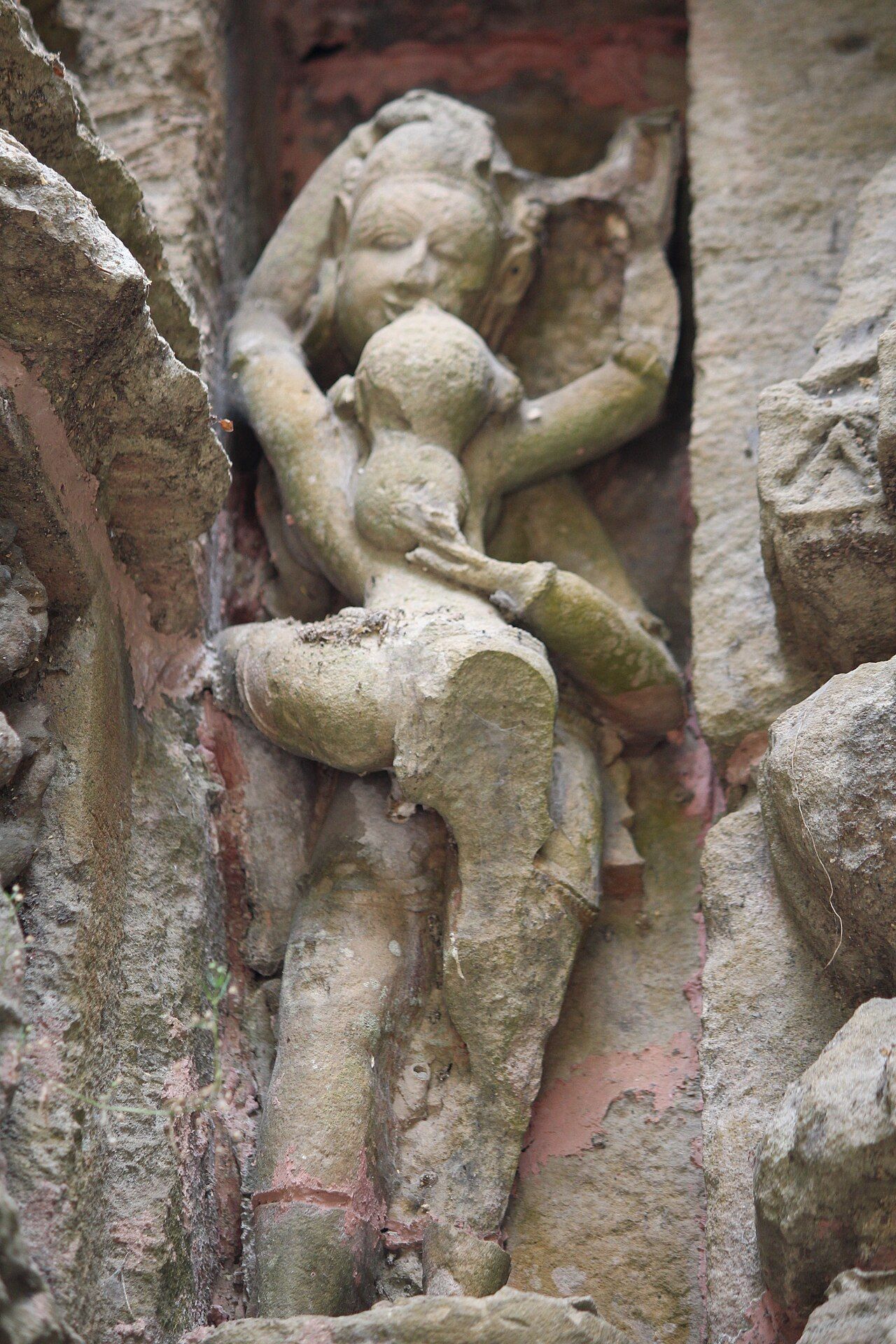
Sexuality is cultural, not just natural
It is tempting to think of sexuality as pure biological drive, the same everywhere. Anthropology says otherwise: while the capacity for sexual feeling is human, what is desired, who is a permissible partner, when sex is allowed or forbidden, and what it all means are shaped by culture. Early fieldwork made this vivid. Malinowski's 1929 Trobriand monograph — published under a title whose language is a relic of its era — described relatively open premarital relationships among Trobriand adolescents; Mead's Coming of Age in Samoa (1928) argued that Samoan youth passed through adolescence with far less sexual anxiety than American teenagers — a claim later contested by Derek Freeman, in a debate that itself became a landmark in anthropology.
The most powerful lesson is that behavior is not identity. Among the Sambia of Papua New Guinea — "Sambia" is a pseudonym Gilbert Herdt used to protect the people he studied — boys undergo years of staged male initiation that includes ingesting semen, which the Sambia understand emically as necessary for a boy to grow into a strong man and warrior. This is a rite of passage in van Gennep's sense: the initiates are separated from the world of women, held for years in a liminal state, and finally reincorporated as adult men. These same men then marry women and father children. To label this "homosexuality" in the Western sense — a fixed identity and orientation — badly misreads what is, emically, an age-structured ritual practice. The Etoro, elsewhere in Papua New Guinea — they live on the Great Papuan Plateau, hundreds of kilometres from the Sambia, and are grouped with them for their shared ritual complex rather than for geography — by contrast place long taboos on heterosexual intercourse for much of the year. And Evans-Pritchard documented age-structured relationships between warriors and boys among the Azande of Central Africa.
Where our categories came from
If behavior and identity can come apart, then our familiar categories — "heterosexual," "homosexual" — are themselves cultural products with a history. The philosopher Michel Foucault, whose work reshaped this corner of anthropology, argued in The History of Sexuality that "the homosexual" as a kind of person was a 19th-century Western invention: before that, there were forbidden acts, not sexual identities. Anthropologists therefore distinguish sexual behavior, sexual desire, and sexual identity, and warn against the ethnocentric error of assuming another society sorts these the way ours does. Understanding a people's sexuality means learning their categories — an emic project — not sorting them into ours.
| Society | Practice or belief | Anthropological point |
|---|---|---|
| Trobriand (Malinowski) | Open adolescent premarital relationships | Sexual norms vary; Western prohibition is not universal |
| Samoa (Mead) | Relatively low-anxiety adolescence | Adolescent stress is culturally shaped (Mead–Freeman debate) |
| Sambia (Herdt) | Ritual semen ingestion in male initiation | Behavior is not identity; the practice is age-structured |
| Etoro (PNG) | Seasonal taboos on heterosexual sex | Even reproduction can be culturally restricted |
| Azande (Evans-Pritchard) | Age-structured relations among warriors | Same-sex practice need not imply a Western "orientation" |
- Sexuality is culturally constructed: what, who, when, and what it means all vary.
- Classic cases — Trobriand, Samoa, Sambia, Etoro, Azande — show norms and practices far from the Western default.
- Sexual behavior, desire, and identity are distinct and should not be conflated.
- Foucault argued the modern "homosexual" identity is a recent Western category, not a human universal.
The chapter in one breath
- Sex is biological; gender is the cultural meaning attached to bodies and is learned through enculturation.
- Mead's Sex and Temperament showed gendered temperament flips between neighboring societies, so it cannot be biologically fixed.
- A gendered division of labor is near-universal, but which tasks belong to whom — and which are valued — is culturally arbitrary.
- Many societies recognize more than two genders (hijra, two-spirit, muxe, fa'afafine, bissu); "third gender" is an etic umbrella over distinct emic realities.
- Gender stratification and patriarchy are common but variable; no matriarchy is documented, though many matrilineal societies empower women.
- Keep matrilineal, matrilocal, and matrifocal distinct from matriarchal — they describe descent, residence, and household focus, not rule.
- Sexuality is cultural, not just natural; behavior is not identity, and even the hetero/homo categories have a history.
ReferenceWords worth knowing
A quick reference for the terms in this chapter — skim it now, or circle back whenever a word trips you up.
- Androcentrism
- Seeing or describing a culture from a male point of view, treating men's activities as central and women's as marginal.
- Berdache
- An outdated colonial term for gender-variant people in Native North America, now replaced by two-spirit.
- Bissu
- Among the Bugis of Sulawesi, a ritually powerful gender category within a system that recognizes five genders.
- Division of labor (gendered)
- The assignment of tasks by gender; near-universal in existence but culturally variable in content.
- Emic
- An account of a culture in terms of the insiders' own concepts and categories.
- Etic
- An account of a culture in terms of an outside analyst's comparative categories, such as "third gender."
- Fa'afafine
- A recognized Samoan gender, "in the manner of a woman," accepted within village society.
- Gender
- The cultural meanings, roles, and expectations a society attaches to sexed bodies; learned, not inborn.
- Gender role
- The activities, rights, and duties a society assigns to a particular gender.
- Gender stratification
- The unequal distribution of power, prestige, and resources between genders.
- Hijra
- A recognized gender category in South Asia, neither man nor woman, with ritual roles blessing births and weddings.
- Intersex
- Being born with chromosomes, hormones, or anatomy that do not fit typical definitions of female or male.
- Matriarchy
- Rule by women, the mirror image of patriarchy; not documented in any known society on the strict definition.
- Matrifocal
- Describing households or families centered on mothers; not the same as rule by women.
- Matrilineal
- Tracing descent and inheritance through the mother's line.
- Matrilocal
- A residence pattern in which a married couple lives with or near the wife's kin; distinct from matrilineal descent and from matriarchy.
- Muxe
- Among the Zapotec of Oaxaca, Mexico, people assigned male at birth who occupy a valued third gender role.
- Patriarchy
- A social system of systematic male dominance in power and prestige.
- Sex
- The biological distinctions between females and males — chromosomes, hormones, gonads, and anatomy.
- Sexuality
- Culturally shaped patterns of sexual desire, behavior, and identity.
- Third gender
- An etic umbrella term for recognized gender categories beyond man and woman; covers many distinct emic statuses.
- Two-spirit
- A modern pan-tribal term for Native North American people who blend or cross gendered roles, often in honored positions.
- Woman-marriage
- A socially recognized marriage between two women, as among the Nuer, where one takes a socially male role as "husband" and pater.
Check yourself
Race & Ethnicity
Walk through any city and people sort one another at a glance — Black or white, Hutu or Tutsi, English or Kurd — as if these boxes were stamped into the body. They are not. A century of anthropology has shown that race is a social invention with no biological reality, that ethnicity is a boundary a group draws and redraws rather than a fixed essence in the blood, and that the nation itself is a community imagined into being. This chapter separates the folk beliefs from the evidence: why there are no biological races, how ethnic and national identities are actually made, how racism keeps working even without racist individuals, and how anthropologists — Franz Boas above all — took apart the scientific racism of their own century.
By the end of this chapter you can
- Explain why race is a social construction rather than a valid biological division of humankind.
- Use clines and within-population variation to show why folk “races” do not hold up biologically.
- Define ethnicity and explain Fredrik Barth's argument that ethnic groups are held together by boundaries, not fixed cultural content.
- Distinguish prejudice, discrimination, and institutional (structural) racism.
- Explain Benedict Anderson's imagined community and how nations are constructed.
- Contrast primordialist, instrumentalist, and constructivist accounts of ethnicity and nationhood.
- Describe how Franz Boas and his successors dismantled scientific racism.
- Read historical race science (craniometry, the cephalic index) as a cultural artifact, not as fact.
Section 1Race as a construction
There is more difference within than between
The commonsense view treats race as biology: humankind supposedly divides into a few great stocks — Linnaeus once named four, Blumenbach five — each marked by skin color, hair, and skull shape, each breeding true down the generations. Genetics dismantled this picture. In a famous 1972 analysis the geneticist Richard Lewontin found that roughly 85% of all human genetic variation lies within any single local population; about 8% more separates populations within a so-called race, and only about 6% distinguishes the classic continental “races” from one another. Two people from the same Nigerian village can differ from each other more than either differs from a Norwegian. Traits also vary independently — skin color, blood type, and the ability to digest milk do not travel together in neat packages — so the packages are in the eye of the classifier, not in the biology. Humans are a young, restless, thoroughly interbred species.
Traits fall in clines, not boxes
Most human variation is clinal: it changes gradually across geography rather than jumping between bounded types. Skin pigmentation tracks ultraviolet radiation and latitude, and dark skin evolved repeatedly and independently near the equator — in Central Africa, in South India, in Melanesia, in Aboriginal Australia. Those populations are not one “race”; they simply share an adaptation to strong sun. Draw a color line anywhere on that gradient and the line is arbitrary. The sickle-cell trait tells the same story: it maps onto the historic range of malaria — West Africa, the Mediterranean, Arabia, India — not onto any folk race. Where the biology is a smooth slope, the boxes are cultural.
Same bodies, different races
The decisive proof that race is made is that the same person is classified differently in different societies. The United States runs on hypodescent — the “one-drop rule,” where any African ancestry makes a person Black, a rigid binary found nowhere in nature. Brazil instead uses a fluid spectrum of dozens of color terms (branco, pardo, moreno, preto) assigned by appearance and wealth, so that full siblings may be classed as different colors and, as the saying and the anthropology both note, “money whitens” (Marvin Harris, Conrad Kottak). Apartheid South Africa fixed race by law: the Population Registration Act of 1950 assigned every person to an official category, and classification boards could and did reclassify individuals by decree — sometimes splitting a single family. And in colonial Rwanda the Belgians hardened the fluid Hutu/Tutsi statuses into racial castes with identity cards and the pseudo-scientific “Hamitic hypothesis” — a fiction that helped make the 1994 genocide thinkable (Mahmood Mamdani). Because race is assigned by rules that differ from place to place and time to time, it is, in the phrase of Michael Omi and Howard Winant, a racial formation — a social construction, not a discovery.
| Society | Rule for assigning race | Result |
|---|---|---|
| United States | Hypodescent — any Black ancestry counts as Black | Rigid binary; mixed-ancestry people classed as Black |
| Brazil | Appearance plus wealth; dozens of color terms | Fluid continuum; siblings may differ; “money whitens” |
| South Africa (apartheid) | The Population Registration Act (1950) assigned White / Coloured / Indian–Asian / Black | State-enforced; individuals reclassified by decree |
| Rwanda (colonial) | Belgian ID cards froze Hutu/Tutsi by cattle and measurement | Fluid status turned into hereditary racial caste |
- Race is a social classification, not a biological one: most human genetic variation sits within populations, and traits vary in clines, not packages.
- The same individual is racialized differently in the US, Brazil, South Africa, and colonial Rwanda — proof the categories are made, not found.
- Hypodescent (the US “one-drop rule”) is a cultural rule, not a law of heredity.
- “Constructed” does not mean “unreal”: race shapes wealth, health, and survival.
Section 2Ethnicity and identity
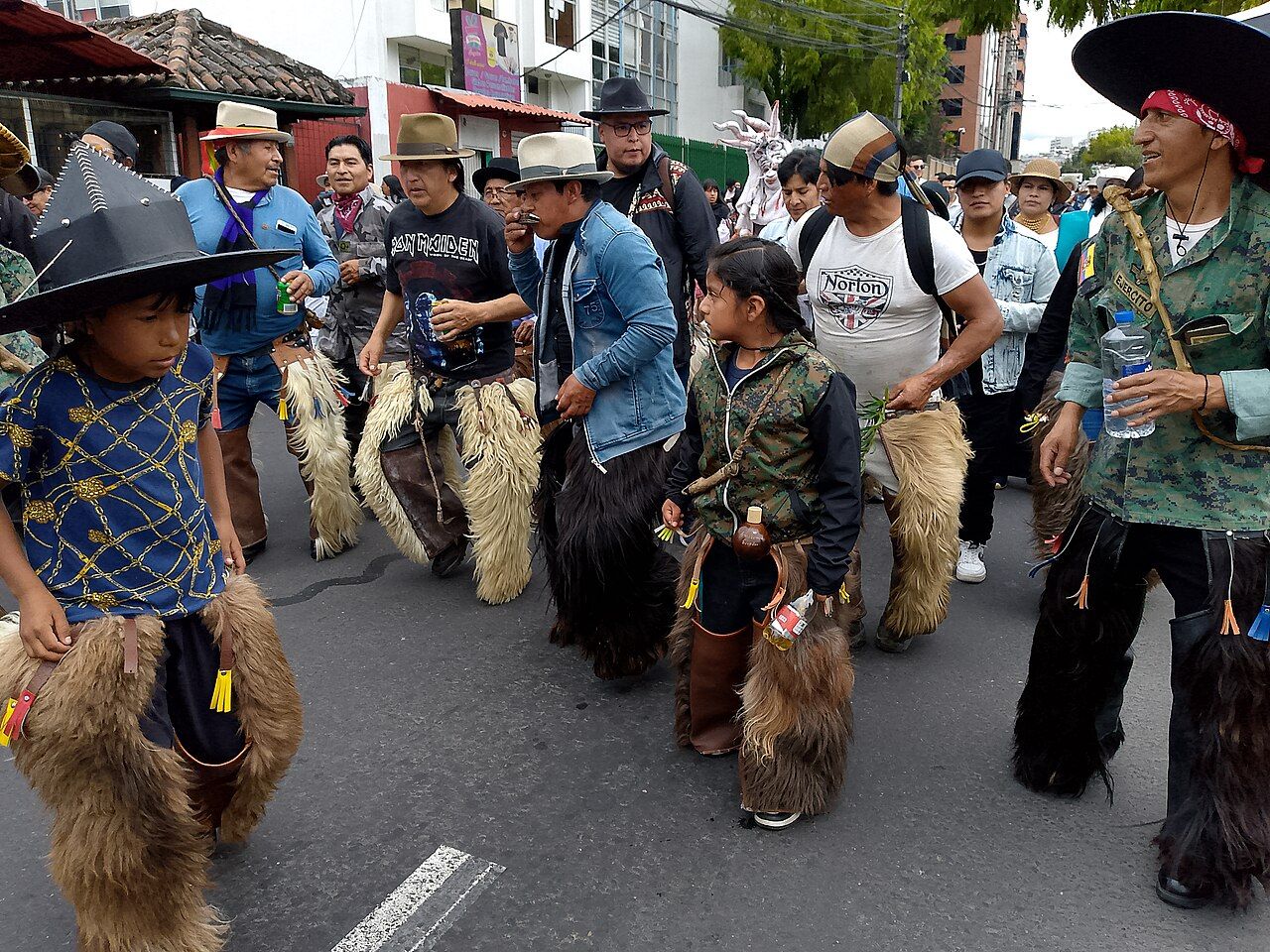
A sense of shared peoplehood
Ethnicity is a group's sense of shared descent, history, and culture — expressed through language, religion, homeland, food, dress, and a common name. Where race is imposed from outside and read off the body, ethnicity is usually claimed from within; it is about belonging, about a “we.” The distinction shows up in naming itself: the emic label a group uses for itself often differs from the etic label outsiders apply — the people others long called Navajo call themselves Diné; the Inuit were labeled Eskimo. Ethnic groups typically imagine a putative common ancestry, a family writ very large, even when the actual genealogy is thin or invented.
Barth: it is the boundary, not the contents
Fredrik Barth's Ethnic Groups and Boundaries (1969) overturned the older view. Before Barth, anthropologists treated an ethnic group as a “culture-bearing unit” — one people, one bounded, distinctive culture. Barth flipped the emphasis: what defines a group is the boundary it maintains, not the cultural “stuff” behind the boundary. Cultural content can change completely, and can even flow across the line, while the line itself persists. His frontier example is famous: on the Afghan–Pakistan borderland a Pathan who could no longer sustain Pathan norms of honor and hospitality could, in effect, “become Baluch” — cross the ethnic boundary — even as Pathan and Baluch remained separate identities. Ethnicity is therefore relational: there is no “us” without a “them.” It is also situational and nested — a person may be Yoruba at home, Nigerian abroad, and African in a still wider frame, with the salient identity shifting by context.
Primordial or instrumental?
Two long debates organize the field. Primordialism, associated with Clifford Geertz's notion of “primordial attachments,” stresses that ethnic bonds feel ancient, given, and deeply emotional, as if lodged in the blood. Instrumentalism counters that ethnicity is a resource, mobilized by leaders to compete for jobs, land, and votes — ethnic entrepreneurs rallying a following. Constructivism, the mainstream position today, holds that ethnic groups are made and remade in history, often quite recently, through ethnogenesis. Colonial states, for instance, frequently invented the “tribes” they claimed merely to govern — drawing map lines, appointing chiefs, and codifying “customary law” that froze once-fluid groupings. The honest answer blends all three: identities are felt as primordial, mobilized instrumentally, and constructed historically, all at once.
| Approach | Core claim | Associated with |
|---|---|---|
| Primordialism | Ethnic ties are ancient, given, felt as kinship | Geertz (“primordial attachments”) |
| Instrumentalism | Ethnicity is mobilized as a political or economic resource | Abner Cohen; “ethnic entrepreneurs” |
| Constructivism | Ethnic groups are made and remade in history (ethnogenesis) | Barth; Anderson |
- Ethnicity is a claimed sense of shared descent, history, and culture — asserted from within, whereas race is imposed from outside.
- Barth: ethnic groups are defined by the boundaries they maintain, not by a fixed cultural content that can change and cross over.
- Identities are relational and situational — “we” needs a “them,” and which identity is salient shifts by context.
- Explanations run from primordialism (Geertz) to instrumentalism to constructivism; most real cases mix all three.
Section 3Racism
Prejudice, discrimination, and the difference that matters
Two words are easy to confuse and important to keep apart. Prejudice is an attitude — a pre-judgment, usually negative and stubbornly resistant to evidence, expressed as a stereotype about a group. Discrimination is an action — treating people unequally because of the group they belong to. The two can come apart, as the sociologist Robert Merton showed: there are prejudiced people who never act on it (the “timid bigot”) and unprejudiced people who discriminate anyway because a biased system rewards it (the “fair-weather liberal”). Racism proper is the doctrine and the system that ranks racial groups and uses the ranking to justify unequal treatment — prejudice joined to power.
Racism you cannot see: institutional and structural
The most important move in modern anthropology and sociology was to recognize that racism need not live in hostile individuals at all. Institutional or structural racism is disadvantage built into the ordinary, seemingly neutral workings of institutions — housing, lending, schooling, policing, health care — that reproduce racial inequality even when no single actor is consciously bigoted. The classic case is redlining: government mortgage maps that denied loans to Black neighborhoods for decades, a policy whose imprint still shapes the racial wealth gap. Unequal school funding tied to local property taxes, and disparities in sentencing and bail, work the same way. Eduardo Bonilla-Silva calls the modern version “racism without racists,” a color-blind racism that defends inequality in the language of markets and merit rather than biology. Anthropologists connect this to structural violence (Johan Galtung, Paul Farmer) — harm inflicted by unjust arrangements rather than by a fist — and to ethnographies like Philip Bourgois's In Search of Respect, which traced how structural exclusion funneled young men in East Harlem into the underground economy.
How racism changes costume
Racism is not static; it re-narrates itself to survive. The older biological racism — inferior blood, inferior brains — was discredited after the Second World War, so it largely mutated into cultural racism, sometimes called the “new racism”: the claim that certain groups have deficient values or culture rather than inferior genes. The vocabulary is safer but the work is identical — to justify a hierarchy. Recognizing this is exactly why anthropologists insist on watching what systems do, not only what individuals say.
| Level | What it is | Example |
|---|---|---|
| Prejudice | A prejudged attitude or stereotype held in the mind | Believing a group is lazy or criminal |
| Individual discrimination | Unequal treatment by a person | A landlord rejecting a tenant by name or accent |
| Institutional / structural | Inequality built into an institution's normal operation | Redlining; unequal school funding; sentencing gaps |
- Prejudice is an attitude; discrimination is an action; they can occur separately (Merton).
- Racism = prejudice backed by power — a system that ranks groups and rations resources.
- Institutional / structural racism reproduces inequality through “neutral” institutions without requiring bigoted individuals (redlining; Bonilla-Silva's “racism without racists”).
- After 1945, biological racism largely mutated into cultural racism — same hierarchy, safer language.
Section 4Nationalism
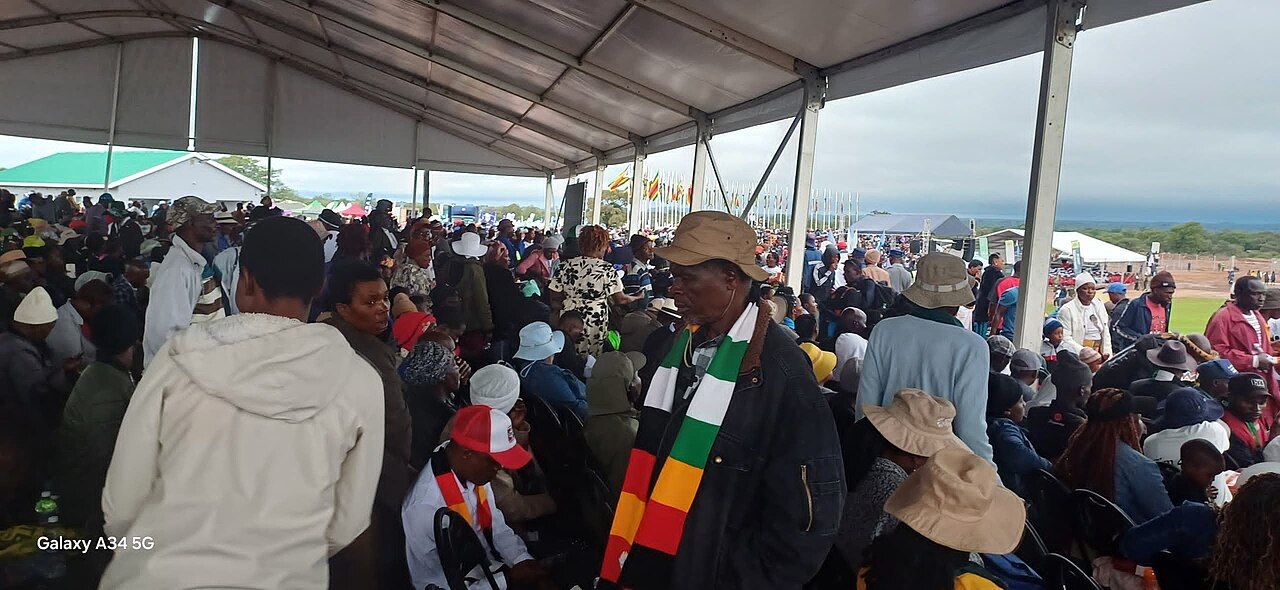
Nation, state, and nation-state
Three words that everyday speech runs together must be pulled apart. A state is a political and administrative apparatus that claims sovereign authority over a territory — the most complex form in anthropology's classic band–tribe–chiefdom–state series. A nation is a people who imagine themselves a single community entitled to self-rule. A nation-state fuses the two, embodying the modern ideal that political borders should coincide with a single “people.” But almost no actual state is ethnically homogeneous, which means the nation is always partly a project rather than a fact — something built, taught, and celebrated into existence.
Anderson: the imagined community
Benedict Anderson's Imagined Communities (1983) gave the field its defining phrase. The nation, he wrote, is “an imagined political community — and imagined as both inherently limited and sovereign.” Imagined, because a citizen will never meet more than a sliver of the compatriots she nonetheless feels bound to in “a deep, horizontal comradeship.” What made such imagining possible, Anderson argued, was print capitalism: newspapers and novels in a shared vernacular let scattered strangers picture themselves moving together through the same “homogeneous, empty time” — a phrase Anderson borrowed from Walter Benjamin. The colonial census, map, and museum then taught subject populations to see themselves as bounded nations. Crucially, imagined does not mean imaginary: the attachment is real enough that people kill and die for it.
Nations make traditions, and traditions make nations
Two further classics fill out the picture. Ernest Gellner argued that nationalism creates nations, not the reverse: industrial society needs a mobile workforce sharing one standardized “high culture,” delivered by mass schooling, and nationalism is that need turned into ideology. Eric Hobsbawm and Terence Ranger, in The Invention of Tradition, showed that many “timeless” national customs are recent fabrications — the Scottish clan tartan and the kilt as national emblems were largely eighteenth- and nineteenth-century inventions. Against a purely modernist story, Anthony Smith's ethnosymbolism insists that most modern nations are built on a pre-existing ethnic core — an ethnie of shared myths, memories, and symbols. Nationalism itself comes in two keys: civic (membership through shared institutions and citizenship) and ethnic (membership through descent). The ethnic key, pushed to its extreme, shades into exclusion and, at its worst, ethnic cleansing.
| Theory | Claim | Key figure / work |
|---|---|---|
| Primordialism | Nations are ancient, natural, given units | Folk and nationalist view (widely critiqued) |
| Modernism | Nations are modern constructs of print, industry, and schooling | Anderson, Imagined Communities; Gellner |
| Invention of tradition | “Timeless” national customs are recent fabrications | Hobsbawm & Ranger |
| Ethnosymbolism | Modern nations build on older ethnic cores (ethnie) | Anthony Smith |
- A state is a governing apparatus; a nation is an imagined people; the nation-state ideal (one people = one state) is almost never literally true.
- Anderson: the nation is an imagined community — limited, sovereign, felt as horizontal comradeship — enabled by print capitalism.
- Gellner ties nationalism to industrial society's need for a shared high culture; Hobsbawm shows many national “traditions” are recent inventions.
- Nationalism can be civic or ethnic; ethnic nationalism shades toward exclusion and violence.
Section 5Anthropology and race
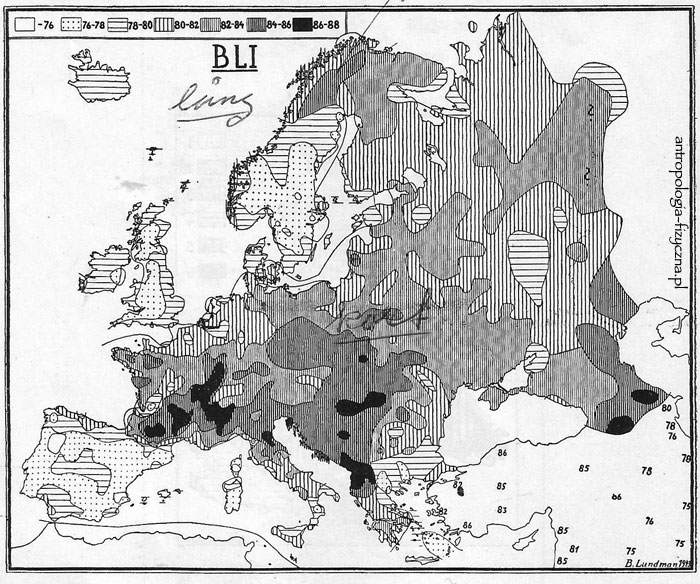
The science that built race
For a century the prestige of science was enlisted to prove racial hierarchy. Linnaeus (1758) sorted Homo sapiens into four varieties with temperaments attached; Johann Blumenbach named five and coined the flattering term “Caucasian.” Samuel Morton packed skulls with seed and lead shot to rank “cranial capacity” in his Crania Americana (1839) — work later re-examined by Stephen Jay Gould in The Mismeasure of Man as a case study in how bias shapes data. Nott and Gliddon's Types of Mankind (1854) preached polygenism, the claim that the races were separate creations, to defend American slavery. The cephalic index — the ratio of skull breadth to length — became the obsession of European race science and, later, of the eugenics movement. All of it was scientific racism: social hierarchy dressed up as measurement.
Boas takes it apart
Franz Boas — German-born, and the father of American four-field anthropology — led the demolition. His method was cultural relativism (judge a culture by its own standards, not by a European yardstick) and historical particularism (each culture is the product of its own particular history, not a rung on one universal ladder), both aimed squarely at the racial evolutionism of the day. His empirical bombshell came in Changes in Bodily Form of Descendants of Immigrants (1912), a study for the US immigration commission in which he measured thousands of immigrants and their American-born children. He found that head form — the supposedly fixed racial marker, the very cephalic index — shifted within a single generation in the new environment. If the master trait of race science was that plastic, race could not be the rigid biological essence it was claimed to be. Boas then trained the generation that carried the argument forward: Ruth Benedict, Margaret Mead, Zora Neale Hurston, Ella Deloria, Alfred Kroeber, and Melville Herskovits.
From Boas to the modern consensus
The dismantling continued past Boas. Ashley Montagu, one of his students, wrote Man's Most Dangerous Myth: The Fallacy of Race (1942) and then drafted the UNESCO Statement on Race (1950), which told a post-Holocaust world that race is a social myth rather than a biological fact and that no evidence tied race to intelligence or the capacity for civilization. Modern genetics confirmed the point (Lewontin, 1972). The American Anthropological Association's Statement on Race (1998) said it plainly: race is a folk idea that arose with European colonialism and slavery, not a fact discovered in nature. Anthropology's settled position today is twofold: human biological variation is real, important, and worth studying — but it is clinal, not racial; and “race” is best studied as what it actually is, a powerful social reality with a lethal history.
| Figure / work | Contribution |
|---|---|
| Boas, “Changes in Bodily Form…” (1912) | Showed head form (the cephalic index) changes in one generation — race is not fixed biology |
| Boas's students (Benedict, Mead, Hurston, Deloria) | Spread cultural relativism; separated the ideas of race, language, and culture |
| Montagu, Man's Most Dangerous Myth (1942) | Argued race is a social myth; drafted the UNESCO statement |
| UNESCO Statement on Race (1950) | Post-Holocaust declaration: race is a social construct, not biology |
| Lewontin (1972); AAA Statement (1998) | Genetics and the discipline confirm: there are no biological races |
- Scientific racism (Linnaeus, Blumenbach, Morton, Nott & Gliddon, the cephalic index, eugenics) used the authority of science to justify hierarchy and slavery.
- Boas dismantled it with cultural relativism, historical particularism, and his 1912 study showing head form is environmentally plastic.
- His students and Ashley Montagu carried the argument into the 1950 UNESCO Statement on Race.
- Modern genetics (Lewontin) and the AAA (1998) confirm: race is a social reality, not a biological division of humankind.
The chapter in one breath
- Race is a social construction: most genetic variation is within populations, traits fall in clines, and the same body is raced differently in the US, Brazil, South Africa, and colonial Rwanda.
- “Constructed” is not “unreal” — race shapes wealth and health and, in genocide and apartheid, survival.
- Ethnicity is a claimed sense of shared descent, maintained at a boundary (Barth), relational and situational, and explained by primordialism, instrumentalism, or (mainly) constructivism.
- Racism runs from prejudice (attitude) to discrimination (act) to institutional/structural racism that reproduces inequality without bigots (redlining; Bonilla-Silva).
- The nation is an imagined community (Anderson) built by print, schooling, and invented tradition (Gellner; Hobsbawm), civic or ethnic in form.
- Scientific racism (Morton, Nott & Gliddon, the cephalic index, eugenics) dressed hierarchy up as measurement.
- Franz Boas took it apart — cultural relativism plus his 1912 study showing head form is plastic — and his students, Montagu, and the 1950 UNESCO statement finished the job.
- Anthropology's verdict: human variation is real but clinal; race and ethnicity are social facts, and studying how they are made is the discipline's contribution.
ReferenceWords worth knowing
A quick reference for the terms in this chapter — skim it now, or circle back whenever a word trips you up.
- Assimilation
- The process by which a minority group takes on the culture of a dominant group; never automatic, because ethnic boundaries can persist even as cultural content changes.
- Cline
- A gradual, continuous change in a trait across geography (as with skin color and latitude); human biological variation is largely clinal rather than divided into bounded races.
- Constructivism
- The mainstream view that ethnic and national groups are made and remade in history — often recently — rather than being ancient givens; the position behind ethnogenesis.
- Cultural racism
- The “new racism” that replaced discredited biological claims after 1945: the assertion that a group's values or culture, rather than its genes, make it inferior. Same hierarchy, safer vocabulary.
- Cultural relativism
- Boas's principle that a culture should be understood and judged by its own standards, not ranked against an outside yardstick.
- Diaspora
- A population dispersed from an original homeland who retain a shared identity and ties across the places they now live.
- Discrimination
- Action: treating people unequally on the basis of their group membership (as distinct from prejudice, an attitude).
- Emic and etic
- An emic account uses the categories and meanings of the people themselves (Diné); an etic account uses the analyst's or outsider's categories (Navajo). Ethnic labels frequently differ between the two.
- Ethnic boundary
- In Barth's theory, the socially maintained line that separates one group from another; ethnicity resides in the boundary, not in fixed cultural content.
- Ethnicity
- A group's sense of shared descent, history, and culture, usually claimed from within and expressed through markers such as language, religion, and dress.
- Ethnogenesis
- The historical process by which a new ethnic group comes into being, often through colonialism, migration, or political mobilization.
- Ethnosymbolism
- Anthony Smith's argument that modern nations are not invented from nothing but built on a pre-existing ethnic core (an ethnie) of shared myths, memories, and symbols.
- Eugenics
- The early-twentieth-century movement to “improve” human heredity by controlling reproduction; a chief application of scientific racism.
- Hypodescent
- A rule assigning mixed-ancestry people to the subordinate group; in the US, the “one-drop rule” that classes anyone with African ancestry as Black.
- Imagined community
- Benedict Anderson's definition of the nation: a community imagined as limited and sovereign, felt as deep comradeship among people who will never meet.
- Institutional (structural) racism
- Inequality built into the normal operation of institutions — housing, lending, schooling, policing — that reproduces racial disadvantage without requiring bigoted individuals.
- Instrumentalism
- The view that ethnicity is a resource mobilized by leaders to compete for jobs, land, and votes, rather than an ancient sentiment (associated with Abner Cohen).
- Invention of tradition
- Hobsbawm and Ranger's term for ostensibly ancient customs that are in fact recent creations serving present purposes, such as national ceremonies and symbols.
- Nation
- A people who imagine themselves a single community entitled to self-rule — distinct from the state, which is the governing apparatus.
- Nationalism
- The ideology that a people (a nation) should have its own sovereign state; may be civic (by citizenship) or ethnic (by descent).
- Nation-state
- A state whose borders are claimed to coincide with a single nation; an ideal that few real states actually meet.
- Phenotype
- An organism's observable traits (such as skin color or head shape), produced by genes and environment together; the visible features on which folk race is read.
- Prejudice
- Attitude: a pre-judged, usually negative belief or feeling about a group, resistant to contrary evidence.
- Primordialism
- The view that ethnic and national ties are ancient, given, and deeply emotional, felt as a kind of extended kinship (associated with Geertz).
- Race
- A social classification of people by supposed biological type; a construction, not a valid biological division of humankind.
- Racial formation
- Omi and Winant's term for the historical, political process through which racial categories are created, inhabited, and transformed.
- Racism
- Prejudice joined to power: a doctrine and a system that ranks racial groups and uses the ranking to justify unequal treatment. It may operate through individuals or through institutions.
- Scientific racism
- The use of scientific-seeming methods (craniometry, the cephalic index) to justify racial hierarchy; discredited by Boas and later work.
- Situational ethnicity
- The way an individual's salient identity shifts with context — local, national, or continental depending on the setting.
- State
- A political and administrative apparatus claiming sovereign authority over a territory; the most complex form in the classic band–tribe–chiefdom–state series.
Check yourself
Political Systems & Social Control
Every human society has to answer the same three questions: who decides, how do we keep order, and what happens to the person who breaks the rules. What differs — enormously — is the machinery built to answer them. Some societies have no chiefs, no courts, no police, and no jails, and yet almost no one steals, because gossip, ridicule, and the fear of being left out do the work that a legal system does elsewhere. Others concentrate the power to tax, conscript, imprison, and execute in the hands of a very few. This chapter walks the whole range, from the campfire consensus of a foraging band to the tax rolls of an empire, and asks the political anthropologist's favorite question: how does anyone ever get anyone else to obey?
By the end of this chapter you can
- Describe the four classic types of political organization — band, tribe, chiefdom, and state — and explain why anthropologists treat them as ideal types rather than an evolutionary ladder.
- Distinguish power from authority, and identify Weber's three bases of legitimate authority.
- Contrast achieved leadership (the Melanesian big man) with ascribed leadership (the Polynesian chief).
- Explain how norms and sanctions maintain order, and give examples of informal social control that operate without any legal apparatus.
- Compare customary law with codified law, and distinguish mediation, arbitration, and adjudication.
- Distinguish feuding from warfare and describe real mechanisms of conflict resolution, including compensation and the moot.
- Explain how states create and maintain stratification through coercion, ideology, and law.
- Apply hegemony, structural violence, and everyday resistance to a political situation you can observe.
Section 1Types of political organization
Politics without government
Start by unlearning something. In everyday English, "politics" means elections, parties, and parliaments — the visible apparatus of a state. For anthropologists, political organization is much broader: it is whatever means a society uses to make collective decisions, allocate authority, and keep the peace. By that definition every society is political, including the many that never built a government at all. A group of thirty Ju/'hoansi foragers in the Kalahari deciding where to camp next is doing politics. So is a Nuer cattle camp working out whose herd grazes which pasture. The apparatus is invisible only if you are looking for the wrong thing.
The most widely taught framework comes from Elman Service, who in Primitive Social Organization (1962) sorted political systems into four types: band, tribe, chiefdom, and state. Morton Fried, in The Evolution of Political Society (1967), proposed a parallel scheme keyed to inequality rather than scale: egalitarian, ranked, stratified, and state societies. Learn both. Service tells you how big and how organized a system is; Fried tells you who gets more.
The four types
A band is the smallest and least formal unit — typically a few dozen people, related by kinship and marriage, subsisting by foraging, moving seasonally. Leadership is situational and persuasive: the best tracker leads the hunt, the eldest woman is heeded about plant foods, and nobody can command anyone. Decisions are made by talking until everyone agrees, or until the dissenters leave. That last option, fission, is the band's most powerful political tool. When Richard Lee lived among the Ju/'hoansi of the Dobe area in the 1960s, he found no office of chief at all; a man whom outsiders had labeled a "headman" told him flatly that all people were headmen over themselves.
A tribe is larger, usually horticultural or pastoral, and held together by pantribal sodalities — institutions that cut across local groups. Clans, age sets, and men's societies do this work. The Maasai age-set system moves young men through named grades together, creating loyalties that stretch across the whole society. Crucially, tribes still lack centralized authority. E. E. Evans-Pritchard's study of the Nuer of the upper Nile, in what is now South Sudan, The Nuer (1940), described a segmentary lineage system in which groups merge to face a more distant enemy and split again when the threat passes: lineages that feud with each other on Tuesday unite against an outside lineage on Wednesday. Order emerges from balanced opposition rather than from a ruler.
A chiefdom introduces something new and consequential: a permanent office of leadership, filled by inheritance, that outranks everyone else even when its current occupant is unimpressive. Chiefdoms are ranked societies — every lineage sits somewhere on a ladder of prestige relative to the chiefly line. The chief collects goods and gives them out again at feasts, a pattern called redistribution that both feeds people and advertises the chief's centrality. Polynesia is the classic laboratory: in Hawai'i, Tonga, and Samoa, chiefs held sacred power (mana) hedged by ritual prohibitions (tapu). In North America, the Mississippian centers of the Southeast, the Natchez, and the Timucua polities were chiefdoms, as were the Northwest Coast societies whose potlatch feasts validated rank through spectacular giving.
A state adds centralized administration, permanent specialized institutions, and, in Max Weber's famous phrase, a claim to a monopoly on the legitimate use of force. States are stratified: access to basic resources is unequal by law, not merely by prestige. They typically appear alongside intensive agriculture, dense population, record-keeping, standing military force, and taxation — in Mesopotamia, Egypt, the Indus, Shang China, Mesoamerica, and the Andes, where the Inca state of Tawantinsuyu ran a labor-tax system (mit'a) and a road network across thousands of kilometers using knotted-cord quipu records rather than writing as we usually define it.
| Type | Typical subsistence | Scale | Leadership | Decisions & order | Ethnographic examples |
|---|---|---|---|---|---|
| Band | Foraging | Tens | Informal, situational, achieved; no office | Consensus; conflict solved by talk, ridicule, or moving away | Ju/'hoansi, Hadza, Inuit, Mbuti |
| Tribe | Horticulture, pastoralism | Hundreds to thousands | Big man, headman, council of elders; influence, not command | Sodalities, age sets, lineages; feud regulated by kin | Nuer, Yanomami, Enga, Maasai, Hopi |
| Chiefdom | Intensive horticulture, fishing, agriculture | Thousands to tens of thousands | Ascribed hereditary office; ranked lineages | Chief adjudicates; redistribution at feasts | Polynesia, Natchez, Timucua, Northwest Coast |
| State | Intensive agriculture, industry | Tens of thousands to millions | Bureaucracy, ruler, permanent officials | Codified law, courts, police, army, taxation | Inca, Egypt, Shang, Dahomey, modern nation-states |
- Political organization is any means of making collective decisions and maintaining order — every society has one, with or without a government.
- Service: band, tribe, chiefdom, state. Fried: egalitarian, ranked, stratified, state.
- Bands and tribes have achieved, non-coercive leadership; chiefdoms add a permanent ascribed office; states add bureaucracy and a monopoly on legitimate force.
- The types are analytic ideal types, not stages — treating them as a ladder smuggles in a discredited unilineal evolutionism.
Section 2Power and authority
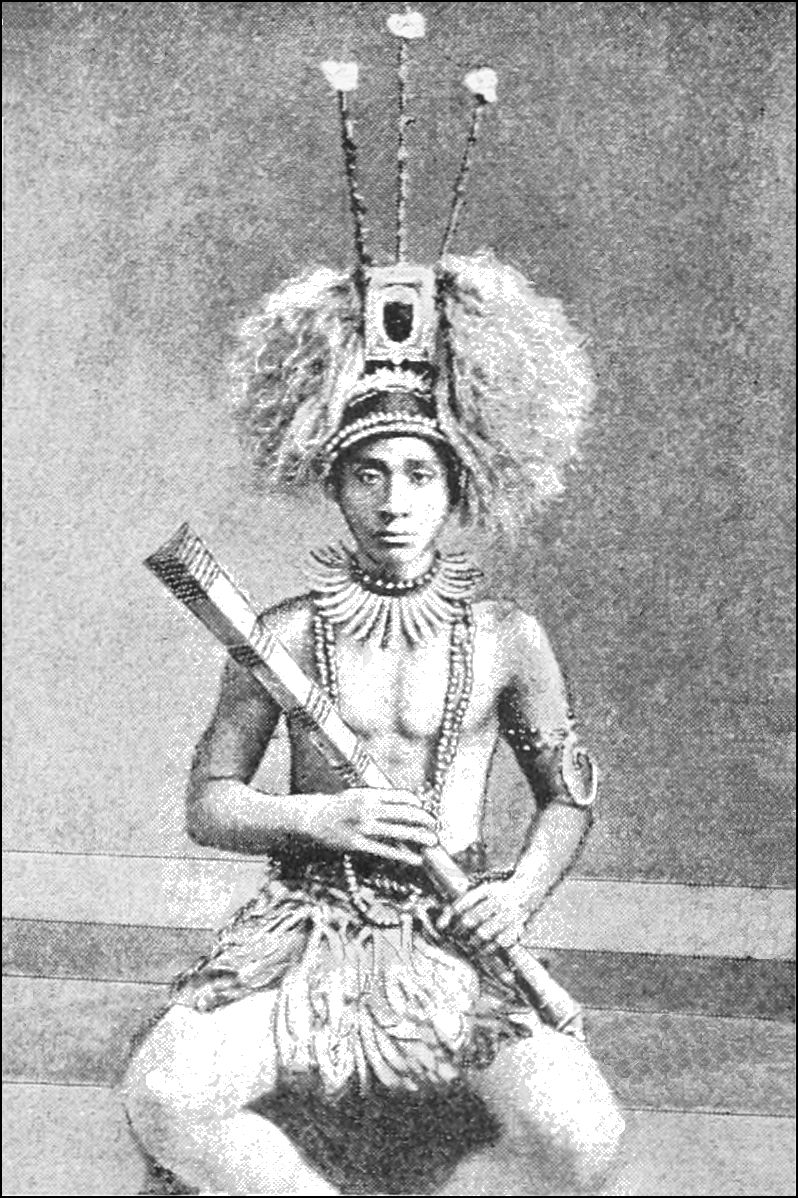
Power, authority, and legitimacy
The sociologist Max Weber gave anthropology its sharpest tool here. Power is the ability to make people do what you want even against their will — it can rest on nothing but force. Authority is power that people accept as rightful. The difference is legitimacy, and legitimacy is not a mood; it is a claim that something has made credible. Weber identified three such somethings. Traditional authority rests on inherited custom: this person leads because their line has always led. Charismatic authority rests on extraordinary personal qualities attributed to an individual — prophets, revolutionaries, founders. Rational-legal authority rests on impersonal rules: the office carries the power, the officeholder is temporary, and a bureaucrat who exceeds the rules is acting illegitimately even if the results are good.
A hard question follows: can anyone hold authority and no power at all? Among the Nuer, the leopard-skin chief was a ritual mediator who could offer sanctuary to a killer and press the two sides toward a settlement in cattle. He had no army, no jail, and no ability to compel a single person. His only leverage was the threat of a curse and the community's shared wish to see the bloodshed end. Evans-Pritchard's point was that in a society with no state, order can be produced by a man everyone respects and no one has to obey.
Earning it versus inheriting it
Marshall Sahlins drew the classic contrast in a 1963 essay, "Poor Man, Rich Man, Big-Man, Chief." The Melanesian big man holds achieved status. He builds a following one person at a time by working hard, marrying strategically, raising pigs, and giving them away in competitive exchange — the moka of Mount Hagen, described by Andrew Strathern, in which a man's prestige rises with what he hands over and the debts he thereby creates. His influence is personal, laborious, and mortal: it dies with him, and it evaporates if his followers drift away. The Polynesian chief, by contrast, holds ascribed status. He does not build a following; he inherits one, along with a title, a genealogy reaching to the gods, and the right to demand tribute. A lazy big man is nobody. A lazy chief is still the chief.
Where power is inherited and sacred, its display becomes a form of governance in itself. Clifford Geertz argued in Negara: The Theatre State in Nineteenth-Century Bali (1980) that the Balinese kingdoms were not primarily machines for taxing and coercing; their central activity was mass ritual, and the state existed to stage the spectacle that made the ruler an exemplary center of the cosmos. Power there was less a matter of what the king could force than of what the ceremony could make people believe about the order of the world — a reminder that the symbolic and the political are not separate departments. It is the same insight Geertz applied to the Balinese cockfight: a public performance can be an argument about status that everyone present understands.
| Leader type | Status | How power is gained | How power is held | Limits |
|---|---|---|---|---|
| Band headman | Achieved, informal | Skill, generosity, judgment, age | Persuasion and example only | Cannot command; leveling mechanisms punish arrogance |
| Big man (Melanesia) | Achieved | Feast-giving, exchange, debt creation (moka) | Continuous redistribution to followers | Personal, unstable, ends at death |
| Chief (Polynesia) | Ascribed, hereditary | Birth into a senior line; sacred mana | Tribute, redistribution, ritual prohibition (tapu) | Bounded by custom and by rival chiefly lines |
| State ruler or official | Ascribed or appointed | Inheritance, election, appointment, conquest | Law, taxation, bureaucracy, coercive force | Constitutions, factions, rebellion, legitimacy crises |
- Power is the ability to compel; authority is power recognized as legitimate.
- Weber's three bases of legitimate authority: traditional, charismatic, and rational-legal.
- The big man earns influence through exchange and loses it at death; the chief inherits an office that outlives its holder.
- Authority can exist without coercion (the Nuer leopard-skin chief), and spectacle itself can be a technology of rule (Geertz's theatre state).
Section 3Social control and law
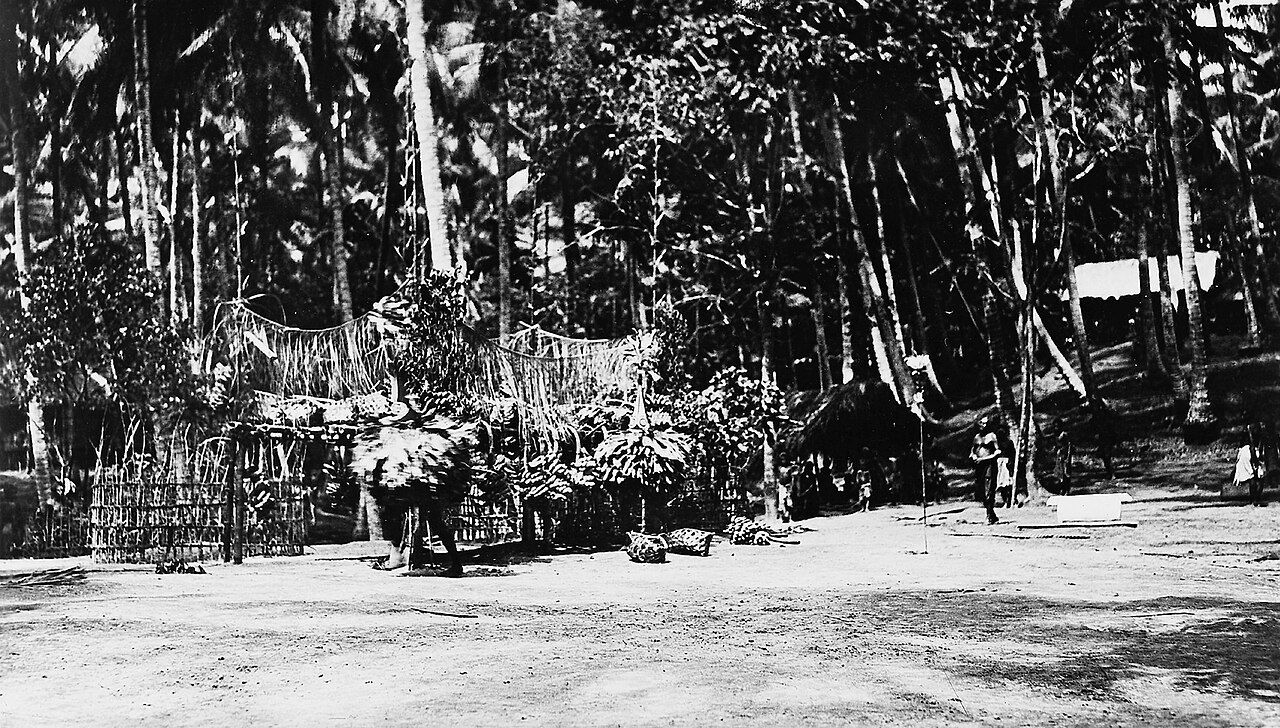
Norms and sanctions
Social control is the whole set of processes that get people to conform to the expectations of their group. It rests on norms: shared rules about how one ought to behave. William Graham Sumner's old distinction, drawn in Folkways (1906), still earns its keep. Folkways are norms of ordinary courtesy whose violation makes you odd — eating with the wrong hand, standing too close. Mores are norms felt to be morally serious, whose violation makes you dangerous or disgusting — incest, treachery, killing a kinsman. Both are enforced by sanctions, which come in four flavors: positive or negative, formal or informal. A medal is a positive formal sanction; a prison sentence is a negative formal one; a warm welcome is positive and informal; being talked about behind your back is negative, informal, and often the most effective of the four.
Most order, in most societies, most of the time, comes from the informal side. Gossip, ridicule, shaming, avoidance, and the withdrawal of cooperation are quietly ferocious in a small community where you cannot move away and everyone you will ever need is watching. Accusations of witchcraft do similar work. E. E. Evans-Pritchard's Witchcraft, Oracles and Magic among the Azande (1937) showed that Azande witchcraft beliefs were not random superstition but a coherent way of explaining particular misfortune — why this granary fell on this man on this afternoon — and, in practice, a system that made it dangerous to be conspicuously stingy, envious, or antisocial, because those were the people who got named. Belief in witches punished exactly the behavior that frays a community.
Some societies formalize this without building a court. Among the Tolai of New Britain, the masked Duk-Duk society appeared to collect debts, enforce obligations, and impose fines; the mask depersonalized the enforcement so that the sanction came from the society itself rather than from a neighbor with a grudge. Among Inuit groups, a grievance could be settled by a song duel, in which the disputants traded composed insults before an audience whose laughter decided the winner — a genuine legal proceeding whose only penalty was public opinion.
What makes something law
Bronislaw Malinowski attacked the idea that societies without courts have no law. In Crime and Custom in Savage Society (1926) he argued that Trobriand order rested on reciprocity: a coastal fisherman delivers to his inland partner because he will need garden produce traded back, and the mutual dependence built into the exchange is what binds the obligation. Law, on this reading, is what people are actually held to, not what a legislature has written down. The comparative study of law took a further step with Karl Llewellyn and E. Adamson Hoebel, whose The Cheyenne Way (1941) reconstructed Cheyenne law from remembered cases — actual disputes and how they were settled — rather than from abstract rules. Hoebel later proposed in The Law of Primitive Man (1954) that a norm counts as legal when its breach is met by the socially recognized application of force by someone with the recognized privilege to apply it.
Anthropologists therefore distinguish customary law — unwritten, precedent-based, embedded in kinship and community — from codified law, which is written, enforced by specialized officials, and typically the possession of states. The two do not simply replace one another. Legal pluralism is the ordinary condition of the modern world: village elders, religious tribunals, customary councils, and national courts all operate over the same people at once, and litigants shop among them, choosing the forum most likely to give them what they want.
| Sanction | Type | Where you see it | Force behind it |
|---|---|---|---|
| Praise, hospitality, a good reputation | Positive, informal | Every society | Desire for belonging and esteem |
| Medal, title, promotion, bonus | Positive, formal | States, institutions, chiefdoms | Recognized authority |
| Gossip, ridicule, shaming, avoidance, ostracism | Negative, informal | Bands and small communities especially | Public opinion; risk of isolation |
| Witchcraft accusation | Negative, informal but institutionalized | Azande and many others | Shared belief plus community consensus |
| Fine, corporal punishment, exile, imprisonment, execution | Negative, formal | Chiefdoms and states | Codified law and coercive institutions |
- Norms (folkways and mores) are enforced by sanctions that are positive or negative, formal or informal.
- Informal control — gossip, ridicule, ostracism, witchcraft accusation — carries most of the load in small-scale societies.
- Malinowski located law in reciprocity; Llewellyn and Hoebel reconstructed it from cases; Hoebel defined law by the legitimate application of force.
- Customary and codified law coexist as legal pluralism almost everywhere today.
Section 4Conflict
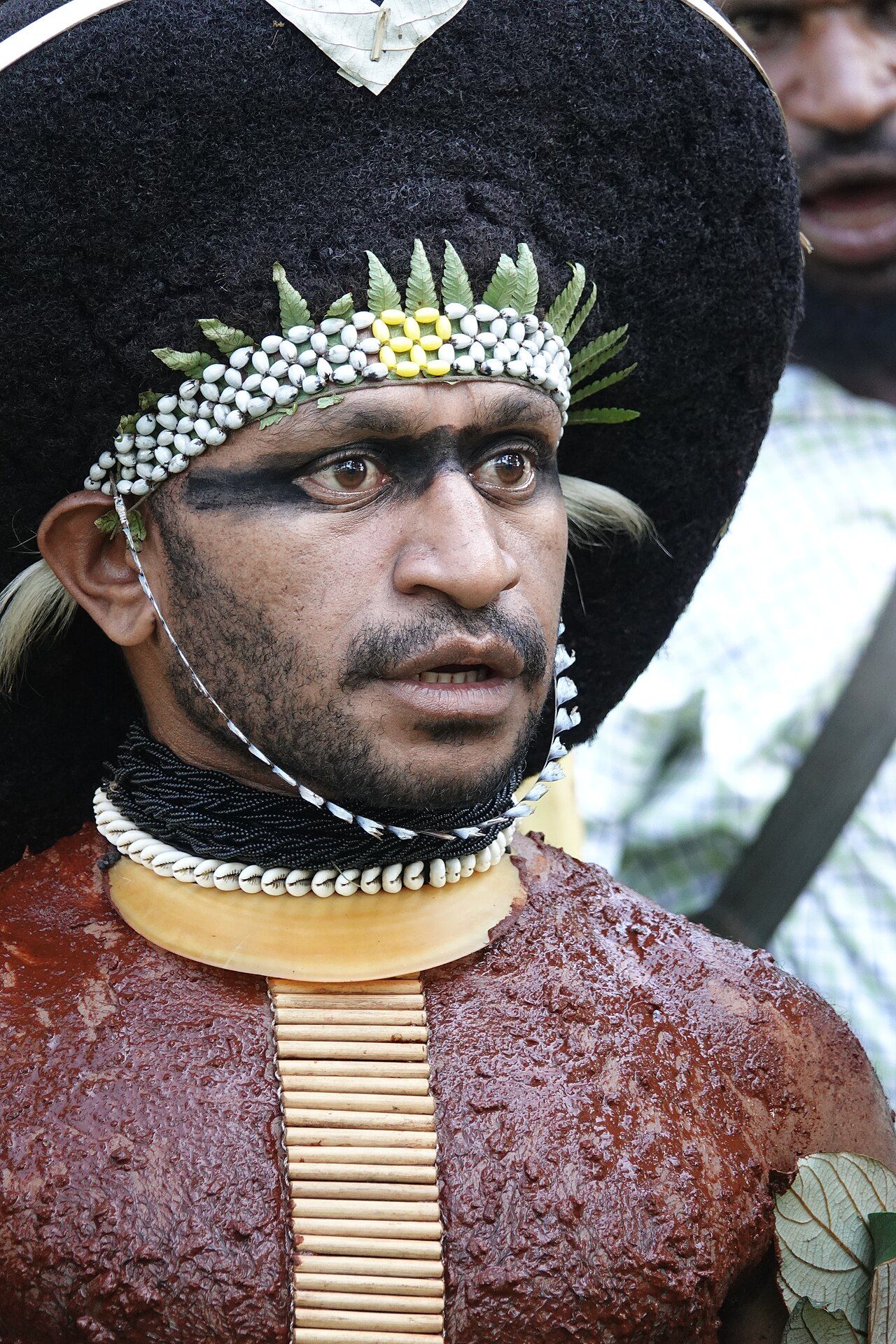
Feud, raid, and war
Anthropologists separate three things that English tends to lump together. A feud is protracted hostility between kin groups within the same society, driven by the obligation to avenge a wrong; it is bounded by shared norms and usually ends in a settlement rather than a conquest. A raid is a short, limited expedition to take something specific — livestock, goods, captives. Warfare is organized, socially sanctioned armed conflict between political communities, and its intensity scales with political complexity: bands skirmish, tribes fight seasonally over land and honor, states conquer and annex.
The Nuer feud is the textbook case because Evans-Pritchard showed exactly how a society with no police keeps a killing from tearing it apart. A homicide obligated the victim's lineage to retaliate. The killer took refuge with the leopard-skin chief, who then shuttled between the groups until the dead man's kin agreed to accept blood wealth — historically some forty head of cattle — in place of a life. Notice how the cattle work: they are not merely a fine but the means by which the dead man's kin will obtain a wife whose sons will carry his name. The compensation literally replaces the person.
In the New Guinea highlands, the Dani of the Grand Valley practiced a form of ritualized warfare, described by Karl Heider, in which arranged battles between alliances were fought on known ground with an etiquette of their own, and were understood as an obligation owed to the ghosts of the slain rather than a campaign to seize territory. Among the Enga, Mervyn Meggitt's Blood Is Their Argument (1977) traced clan fighting to intense competition for garden land as population pressed against a fixed resource. Enga conflict resolution is as elaborate as Enga conflict: fighting closes with negotiated compensation paid in pigs and valuables, a ceremony that reopens exchange between enemies and thereby restores the relationship the fighting had suspended.
Is warfare human nature?
This is where anthropology has been most contentious, and the caution matters. Napoleon Chagnon's work on the Yanomami of Venezuela and Brazil, published as Yãnomamö: The Fierce People (1968), presented raiding and revenge as central to Yanomami life; in a separate and much-disputed 1988 study he further argued that men who had killed left more offspring than those who had not. The book became one of the best-selling ethnographies ever written and one of the most fiercely disputed. R. Brian Ferguson, in Yanomami Warfare: A Political History (1995), argued from the historical record that much of the fighting Chagnon observed had been intensified by the contact situation itself — competition over steel tools, mission stations, and trade goods introduced from outside — and that a snapshot taken during that disruption should not be read as timeless human nature. Yanomami people have since objected publicly to being labeled "fierce," and their objection is itself an ethnographic fact worth taking seriously. The methodological lesson generalizes: what an ethnographer records in a single decade may be a product of the very forces that brought the ethnographer there.
The comparative record does not support an inevitable species-wide bellicosity either. Some societies are strikingly nonviolent — Robert Dentan described the Semai of peninsular Malaysia as a people whose ideal of nonaggression was so strong that even open confrontation was avoided. Douglas Fry and others have compiled the ethnographic and archaeological evidence for peaceful societies and argue that what is genuinely universal is not violence but dispute-resolution machinery.
Making peace
Every society has procedures for stopping a fight, and they sort into a few recognizable forms. In mediation, a neutral third party helps the disputants reach their own agreement but cannot impose one — the leopard-skin chief again. In arbitration, both sides agree in advance to accept a third party's decision. In adjudication, an authority with the power to enforce hands down a binding judgment, which is what a state court does. James Gibbs's account of the Kpelle moot in Liberia — the "house palaver" — showed a fourth possibility: an informal hearing among kin and neighbors whose goal is not to determine a winner but to repair the relationship, with an apology and a token gift closing the matter. Gibbs called it therapeutic, and it is the ancestor of what is now marketed as restorative justice.
| Form of conflict | Who fights | What it is about | How it typically ends |
|---|---|---|---|
| Dispute | Individuals or households | Property, insult, marriage, adultery | Talk, mediation, moot, apology and gift |
| Feud | Kin groups within one society | Revenge for a killing or grave wrong | Compensation (blood wealth) accepted through a mediator |
| Raid | Small party from a local group | Cattle, goods, captives, revenge | Retaliation, then a negotiated settlement |
| Warfare | Political communities | Land, resources, obligation to the dead, conquest | Truce, compensation ceremony, alliance, or annexation |
- Feud is internal and revenge-driven; raiding is limited and acquisitive; warfare is organized conflict between political communities and intensifies with political complexity.
- The Nuer settled homicide through a mediator and blood wealth; the Enga close clan fighting with negotiated compensation that restores exchange.
- The Yanomami debate (Chagnon versus Ferguson) warns that observed violence may reflect the contact situation rather than an unchanging cultural essence.
- Mediation, arbitration, adjudication, and the reparative moot are the recurring machinery of peacemaking.
Section 5Political inequality
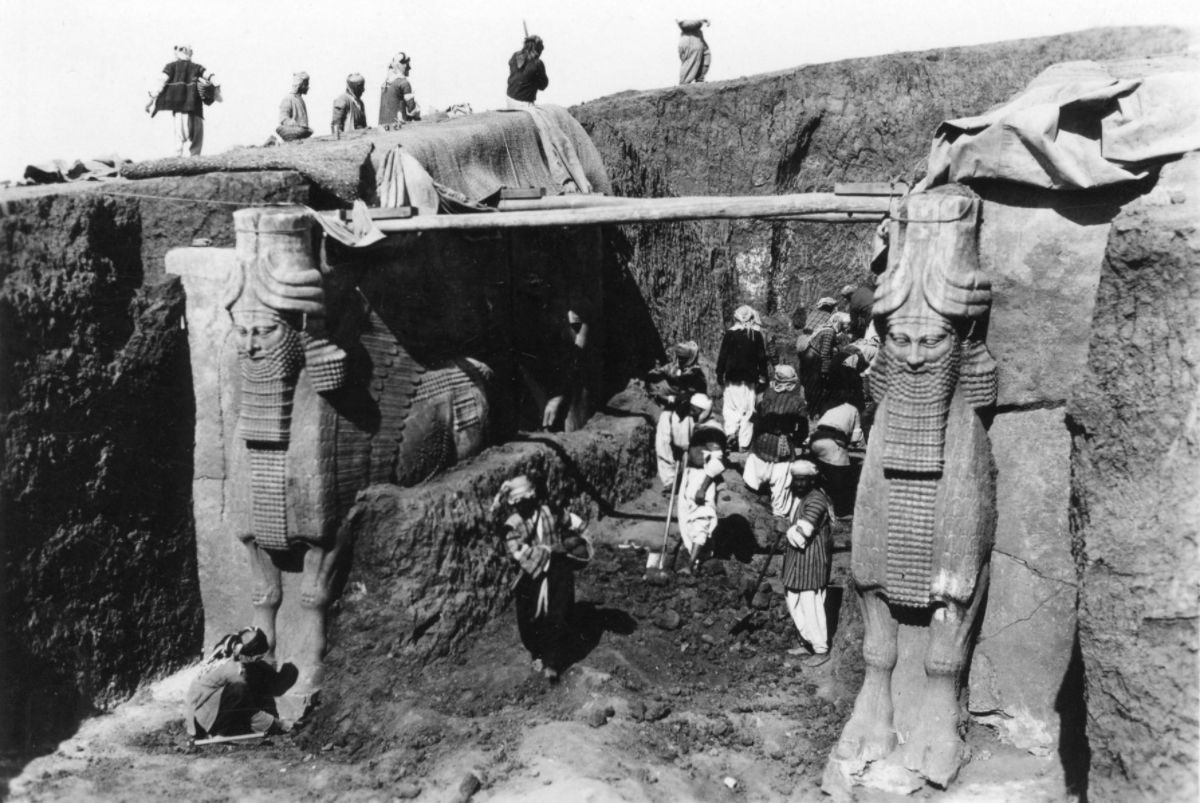
From ranked to stratified
Morton Fried's key move was to see that ranking and stratification are different animals. In a ranked society there are fewer positions of high prestige than there are people qualified to fill them, but everyone still has access to the resources needed to live — a Polynesian commoner had land. In a stratified society that access itself is unequal: some people own or control the means of production and others must obtain their living through them. Stratification is the threshold at which inequality stops being a matter of honor and becomes a matter of survival, and the state is the political form that arises to defend it.
How does a state hold a stratified order in place? Through several levers working together. Coercion: a standing army, police, prisons, and the claimed monopoly on legitimate violence. Extraction: taxation, tribute, labor service, rents. Law: codified rules and courts that define property and criminalize its redistribution. And ideology: the story that makes the arrangement look natural, ancient, sacred, or simply inevitable. The Assyrian palace gate flanked by colossal winged bulls, the Egyptian pyramid, the Inca stonework at Cusco, the Balinese royal cremation — these are not decoration. Monumental architecture and state ritual convert an argument about who should rule into a fact you cannot walk around.
Class, caste, and the politics of race
Stratified systems come in open and closed varieties. A class system is relatively open: position is partly achieved, mobility is possible in principle, and the boundaries are blurry — though anthropologists working in industrial societies have repeatedly documented how much less mobility exists in practice than the national ideology advertises. A caste system is closed: status is ascribed at birth, marriage is endogamous, and occupation and ritual standing are hereditary. Louis Dumont's Homo Hierarchicus (1966) analyzed the Indian caste system as an order built on the opposition of purity and pollution; later scholars, including Nicholas Dirks, argued that Dumont underplayed politics and economics and that British colonial census-taking and administration hardened and standardized categories that had been considerably more fluid.
Race belongs in this section rather than in a chapter on biology. Franz Boas and his students spent careers dismantling the claim that humanity divides into ranked biological races with corresponding capacities; genetic evidence has only confirmed that racial categories do not carve up human variation consistently. Race is nonetheless intensely real as a political fact — a socially constructed classification with enormous consequences for who is policed, employed, housed, and believed. That is the anthropological point exactly: a category can be biologically incoherent and politically decisive at the same time. Colonial administrations demonstrated this at scale, converting flexible identities into fixed, governable ones through indirect rule, identity documents, and the census — the machinery of dividing the ruled among themselves.
Consent, and its refusal
States cannot afford to coerce everyone all the time; it is expensive. Antonio Gramsci's concept of hegemony names the cheaper alternative: rule that works because the subordinated have come to accept the dominant group's worldview as ordinary common sense. Hegemony is what makes an unequal arrangement feel like the weather. Structural violence names the result: suffering inflicted not by an identifiable attacker but by the ordinary operation of political and economic structures that put some people, predictably and repeatedly, in harm's way. The peace researcher Johan Galtung coined the phrase in 1969; the medical anthropologist Paul Farmer made it central to the discipline, using it to explain why disease, hunger, and early death track so closely with poverty and racism rather than falling at random.
Which is not the end of the story, because subordination is rarely total. James C. Scott, in Weapons of the Weak (1985), lived in a Malaysian village and documented what peasants do when open revolt would be suicidal: foot-dragging, feigned ignorance, pilfering, slander, sabotage, false compliance. In Domination and the Arts of Resistance (1990) he called the offstage critique that accompanies these tactics the hidden transcript — what people say about the powerful when the powerful are not listening — and in The Art of Not Being Governed (2009) argued that upland peoples of Southeast Asia had for centuries chosen crops, settlement patterns, and social forms specifically to stay beyond the reach of lowland states. Read alongside Clastres, this is political anthropology's most useful corrective: evading the state is a political strategy, not a failure to invent one.
| Mechanism | How it works | Concrete forms |
|---|---|---|
| Coercion | Monopolizes legitimate force | Army, police, prisons, execution, surveillance |
| Extraction | Moves surplus upward | Taxes, tribute, rent, labor service (the Inca mit'a) |
| Law | Defines and defends property and status | Codified law, courts, land title, criminalization |
| Ideology | Makes the arrangement seem natural or sacred | Divine kingship, monumental architecture, state ritual, schooling, media |
| Classification | Divides the governed and fixes their status | Caste, census categories, racial classification, identity documents |
- Ranked societies restrict prestige; stratified societies restrict access to basic resources — that threshold is where states appear.
- States maintain inequality through coercion, extraction, law, ideology, and official classification.
- Class is relatively open and caste is closed; both are cultural systems hardened by colonial administration, and race likewise is a political construct with real effects rather than a biological division — a core Boasian finding.
- Hegemony and structural violence explain quiet domination; everyday resistance and the hidden transcript explain its limits.
The chapter in one breath
- Every society has political organization — a way to make decisions and keep order — even when it has no government.
- Service sorted political systems into band, tribe, chiefdom, state; Fried into egalitarian, ranked, stratified, state. Both are ideal types, not rungs on a ladder.
- Power is the ability to compel; authority is legitimate power, and Weber grounded legitimacy in tradition, charisma, or rational-legal rules.
- The Melanesian big man earns a personal following through exchange; the Polynesian chief inherits an office that outlasts him.
- Norms are enforced by sanctions, and in small-scale societies the informal ones — gossip, ridicule, ostracism, witchcraft accusation — do most of the work.
- Customary law rests on reciprocity and precedent (Malinowski; Llewellyn and Hoebel); codified law belongs to states; legal pluralism is now the norm.
- Feud, raiding, and warfare differ in scale and purpose, and are resolved by compensation, mediation, arbitration, adjudication, or the reparative moot.
- States create and defend stratification through coercion, extraction, law, ideology, and classification — and people answer with everyday resistance and the hidden transcript.
ReferenceWords worth knowing
A quick reference for the terms in this chapter — skim it now, or circle back whenever a word trips you up.
- Adjudication
- Settlement in which an authority with the power to enforce its ruling hands down a binding judgment, as a state court does.
- Arbitration
- Settlement in which disputants agree in advance to accept the decision of a third party they have chosen.
- Authority
- Power that is recognized as legitimate by those subject to it, and therefore obeyed without constant coercion.
- Band
- The smallest political unit: a small, kin-based, usually foraging group with informal, non-coercive leadership and decision by consensus.
- Big man
- A Melanesian leader whose influence is achieved through generosity, feast-giving, and competitive exchange, and which ends with his death.
- Blood wealth
- Compensation, classically in livestock, paid by a killer's kin group to the victim's kin group to forestall or end a feud.
- Caste
- A closed system of stratification in which status is ascribed at birth, marriage is endogamous, and occupation and ritual standing are hereditary.
- Chiefdom
- A ranked political system with a permanent, usually hereditary office of chief who adjudicates disputes and redistributes goods.
- Codified law
- Written law enacted and enforced by specialized institutions such as courts, police, and legislatures; characteristic of states.
- Customary law
- Unwritten, precedent-based rules embedded in kinship and community practice and enforced without a formal legal apparatus.
- Everyday resistance
- Scott's term for the low-risk tactics — foot-dragging, feigned ignorance, pilfering, false compliance — used by subordinate people when open revolt would be too dangerous.
- Feud
- Prolonged retaliatory hostility between kin groups within the same society, driven by the obligation to avenge a wrong.
- Hegemony
- Gramsci's term for domination achieved through consent, when a ruling group's worldview is accepted as ordinary common sense.
- Hidden transcript
- Scott's term for the offstage critique that subordinate people voice among themselves but never in front of the powerful.
- Legal pluralism
- The coexistence of several legal orders — customary, religious, and national — over the same population, among which litigants may choose.
- Leveling mechanism
- A social practice — ridicule, insult, obligatory sharing — that suppresses displays of superiority and keeps a group egalitarian.
- Mediation
- Settlement in which a neutral third party helps disputants reach their own agreement but cannot impose one.
- Moot
- An informal community hearing, such as the Kpelle house palaver, whose aim is to repair a relationship rather than to produce a loser.
- Norm
- A shared expectation about how one ought to behave; folkways govern etiquette, while mores carry serious moral weight.
- Pantribal sodality
- An association — a clan, age set, or men's society — that cuts across local residential groups and knits a tribe together without any central ruler.
- Political organization
- The means by which a society makes collective decisions, allocates authority, and maintains social order.
- Power
- The ability to make others act as one wishes, whether or not they consent.
- Redistribution
- An exchange pattern in which goods flow to a central figure such as a chief and are handed out again, typically at feasts, reinforcing that figure's centrality.
- Sanction
- A reward or penalty that enforces a norm; sanctions may be positive or negative and formal or informal.
- Segmentary lineage system
- A political structure, classically Nuer, in which descent groups merge against a more distant opponent and split apart again afterward.
- State
- A centralized political system with permanent bureaucracy, codified law, taxation, and a claimed monopoly on the legitimate use of force.
- Stratification
- Institutionalized inequality of access to basic resources, as opposed to mere inequality of prestige.
- Structural violence
- Harm produced by the ordinary workings of political and economic structures rather than by an identifiable attacker; coined by Johan Galtung and developed in anthropology by Paul Farmer.
- Tribe
- A political system larger than a band, usually horticultural or pastoral, integrated by pantribal sodalities but still lacking centralized coercive authority.
- Warfare
- Organized, socially sanctioned armed conflict between separate political communities, as distinct from the internal revenge cycle of a feud.
Check yourself
Religion, Ritual & Belief
Every human society yet described has something anthropologists are willing to call religion — and no two societies mean quite the same thing by it. Some address a single creator; some address the dead, the mountain, the ancestors in the roof beam. Some assign the work to a full-time priesthood trained for decades; some hand it to a woman who fell ill at nineteen, was cured by a spirit, and has been drumming ever since. This chapter is not about which of those claims is true — anthropology brackets that question entirely — but about what religious life does: how it is defined, who is authorized to perform it, how ritual moves people from one social identity to another, how misfortune gets explained, and how myth and cosmology assemble the world a person lives inside.
By the end of this chapter you can
- Compare the major anthropological definitions of religion — Tylor's, Durkheim's, Wallace's, and Geertz's — and explain why none of them fully satisfies.
- Explain why anthropology studies religion using emic and etic perspectives and methodological agnosticism rather than adjudicating truth claims.
- Distinguish a shaman from a priest and relate Wallace's four cult institutions to band, tribe, chiefdom, and state.
- Define ritual and distinguish rites of passage from rites of intensification.
- Apply van Gennep's three phases — separation, transition, incorporation — and Turner's concepts of liminality and communitas to a real ceremony.
- Describe Frazer's laws of sympathetic magic and evaluate Malinowski's anxiety theory of magic.
- Distinguish witchcraft from sorcery using Evans-Pritchard's Azande ethnography, and explain what witchcraft accusations do socially.
- Explain how myth, cosmology, and worldview differ, and describe syncretism and revitalization movements as forms of religious change.
Section 1Defining religion
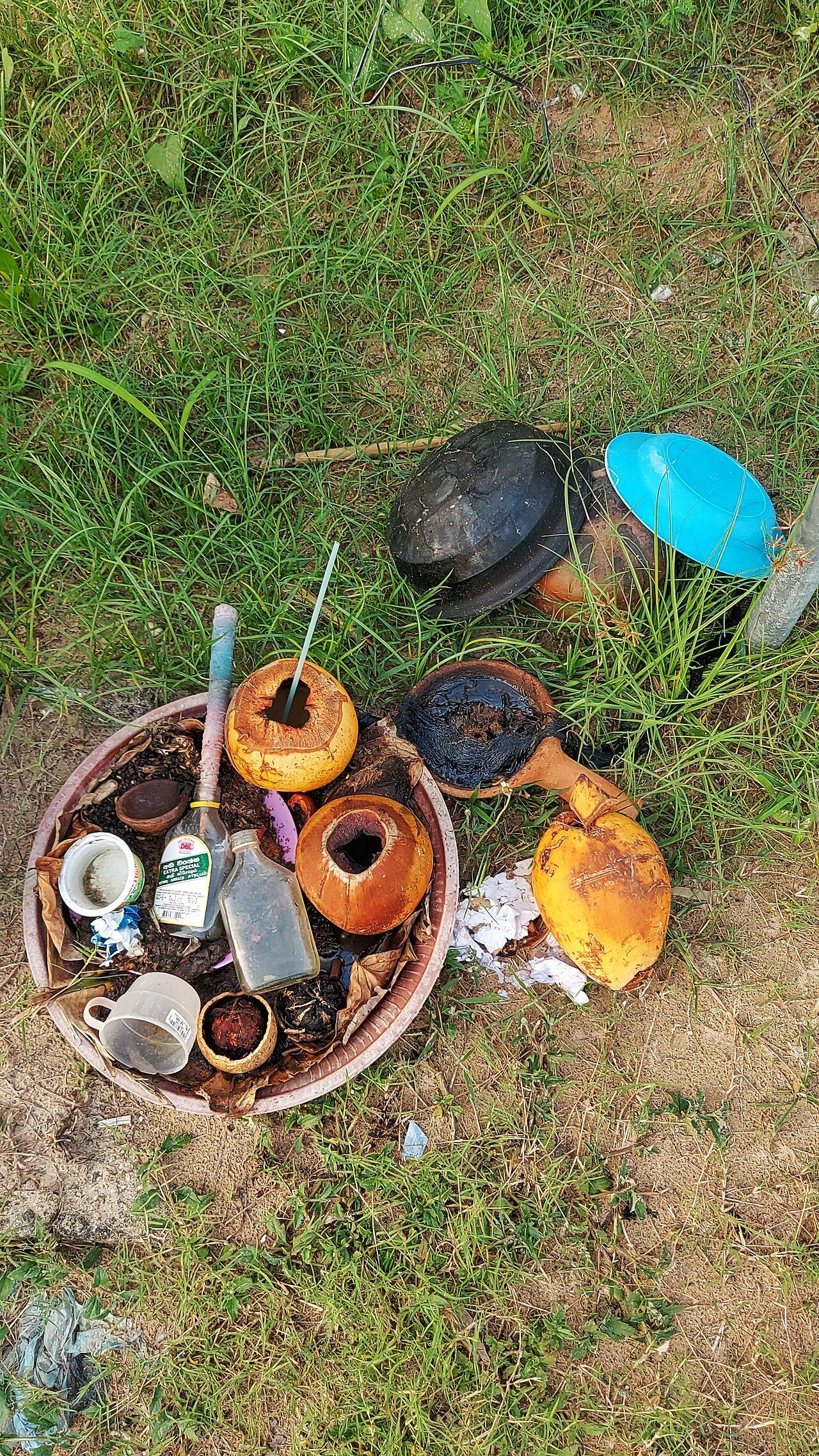
Why the definition is the hard part
Most fields begin with a clean definition and proceed. The anthropology of religion begins with an argument that has never been settled, and the argument is itself instructive. The trouble is that the English word religion carries freight from a particular history — congregations, scriptures, creeds, a separate institution with its own buildings and its own professionals. Carry that word into a Ju/'hoansi camp in the Kalahari or a Tsembaga Maring settlement in highland New Guinea and it will not fit: there is no membership, no scripture, no clergy, and frequently no word that separates "religious" activity from ordinary life. Anthropologists therefore build definitions that travel.
The first serious attempt was Edward Burnett Tylor's, in Primitive Culture (1871). Tylor proposed a deliberately minimal definition — religion is "the belief in spiritual beings" — and named the underlying idea animism: the attribution of a soul or spirit to persons, animals, plants, and features of the landscape. Tylor's definition is portable, but it is thin. It captures belief and ignores practice, and it excludes traditions built around impersonal power rather than beings, such as Polynesian and Melanesian mana, which R. R. Marett called animatism.
Émile Durkheim shifted the ground entirely in The Elementary Forms of Religious Life (1912). Working from ethnographic reports of Aboriginal Australian totemism, Durkheim argued that religion is not fundamentally about gods at all but about the division of the world into the sacred — set apart, protected by prohibition — and the profane, the ordinary. Religion, in his famous formulation, is a unified system of beliefs and practices relative to sacred things which unites adherents into a single moral community. What people worship, he claimed, is society itself in symbolic dress; the electric feeling of a gathered congregation, which he called collective effervescence, is society made perceptible. Durkheim's account is powerful and reductive in equal measure, and no serious student of religion has been able to ignore it since.
Later definitions: function and meaning
Two more definitions dominate current teaching. Anthony F. C. Wallace offered a workable etic definition — religion is a set of rituals, rationalized by myth, that mobilizes supernatural powers for the purpose of achieving or preventing transformations of state in people and nature. It is clunky, but it puts ritual first, which matches what ethnographers actually watch people do. Clifford Geertz, in "Religion as a Cultural System" (1966), went the other way and defined religion as a system of symbols that establishes powerful, pervasive, and long-lasting moods and motivations by formulating conceptions of a general order of existence and clothing those conceptions in such an aura of factuality that the moods and motivations seem uniquely realistic. Geertz's definition is about meaning: religion works because it makes suffering, injustice, and confusion intelligible rather than merely unbearable.
| Theorist | Key work | Religion is… | Strength / limitation |
|---|---|---|---|
| E. B. Tylor | Primitive Culture (1871) | Belief in spiritual beings (animism) | Portable and minimal; ignores practice and impersonal power |
| R. R. Marett | The Threshold of Religion (1909) | Sense of impersonal sacred force (animatism, mana) | Captures mana; hard to observe directly |
| Émile Durkheim | Elementary Forms (1912) | Practices around the sacred that bind a moral community | Explains solidarity; reduces the divine to society |
| Bronisław Malinowski | "Magic, Science and Religion" (1925; collected 1948) | A response to human anxiety and existential need | Grounded in fieldwork; understates social power |
| A. F. C. Wallace | Religion: An Anthropological View (1966) | Ritual rationalized by myth, mobilizing supernatural power | Observable and comparative; inelegant |
| Clifford Geertz | "Religion as a Cultural System" (1966) | A system of symbols producing moods, motivations, and an order of existence | Explains meaning; hard to falsify or measure |
What anthropologists actually do
Whatever definition is adopted, the method is consistent. Anthropologists study religion through participant observation, describing what practitioners believe and do in the practitioners' own terms — the emic account — and then setting those descriptions in comparative, analytic frames that no practitioner would use — the etic account. Both are required. An emic-only account cannot compare Azande witchcraft to Salem witchcraft; an etic-only account so thoroughly translates a tradition into outside categories that the people who live it would not recognize themselves in it.
Crucially, anthropology proceeds by methodological agnosticism. Whether spirits exist is not an anthropological question and not an anthropological finding. What is observable, and therefore studiable, is that people organize marriage, planting, healing, warfare, mourning, and moral judgement around such claims — and that these arrangements have consequences we can document. This posture descends from Franz Boas, whose insistence on cultural relativism and historical particularism dismantled the armchair evolutionary schemes of the nineteenth century, in which "primitive" magic supposedly matured into religion and then into science. Boas's students went to live with people instead, and the ranked ladder collapsed under the weight of the evidence.
- No single definition of religion works cross-culturally; the leading candidates emphasize belief (Tylor), the sacred and social solidarity (Durkheim), ritual and supernatural power (Wallace), or symbols and meaning (Geertz).
- Animism attributes spirit to beings and things; animatism (mana) describes impersonal sacred force.
- Anthropologists combine emic and etic perspectives through participant observation, and practice methodological agnosticism about truth claims.
- Boas and cultural relativism replaced nineteenth-century magic–religion–science evolutionary ladders with fieldwork-based description.
Section 2Religious specialists
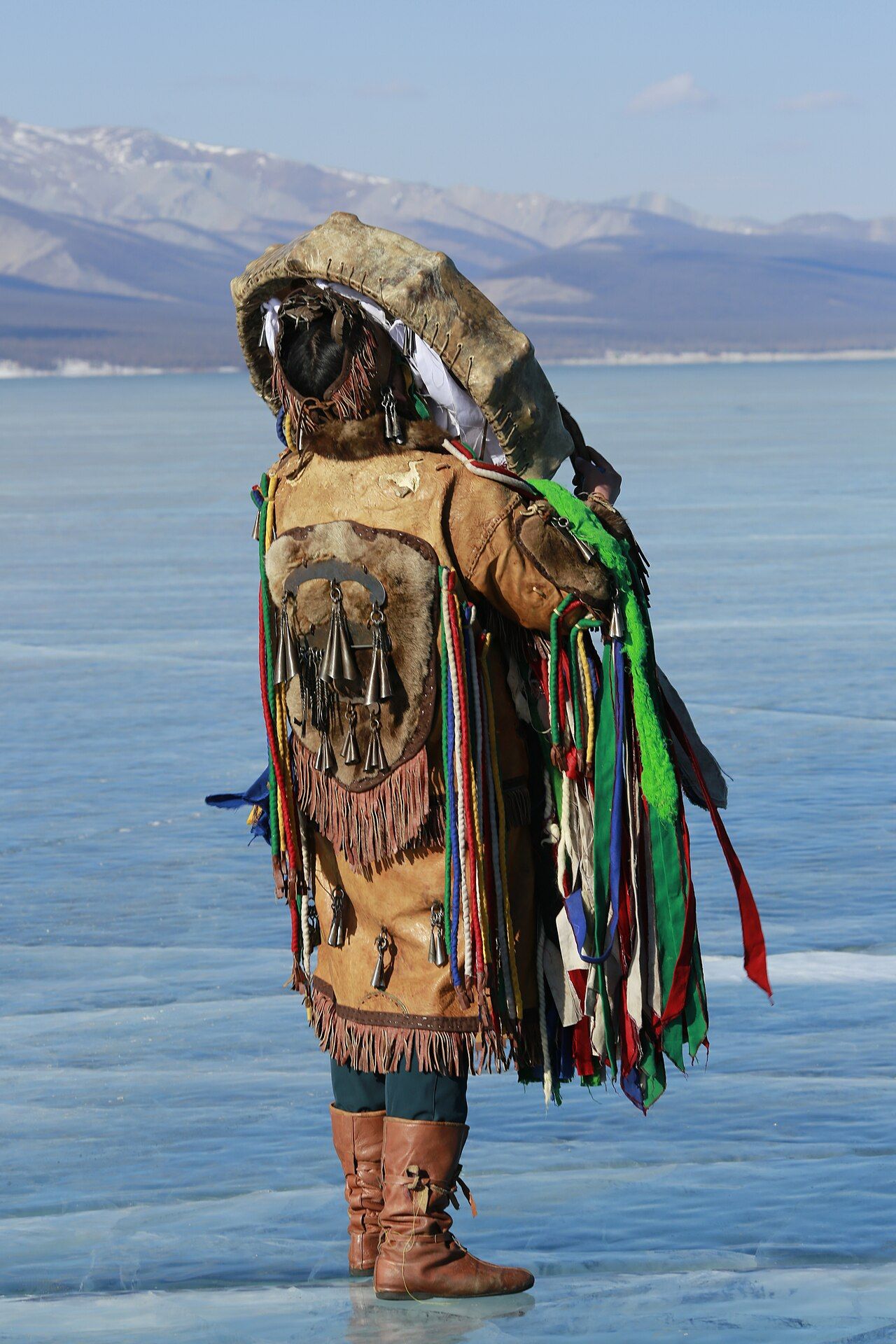
The shaman
The word shaman is not a generic label invented by scholars; it comes from šaman in Evenki, a Tungusic language of Siberia, and reached European languages through Russian accounts of Siberian practice in the seventeenth century. It has since been stretched to cover part-time religious specialists worldwide, and the stretching deserves care: a Mongolian böö, a Korean mudang, a Ju/'hoansi healer, and a Yanomami shabori are not the same office, and calling all of them shamans risks flattening real differences.
Still, a recognizable pattern recurs. The shaman is typically a part-time specialist who also hunts, herds, farms, or keeps a household. Authority is charismatic rather than institutional: it rests on demonstrated personal contact with the spirit world, often inaugurated by an unsought crisis — a grave illness, a seizure, a vision — interpreted as a spirit's call, followed by apprenticeship to an established practitioner. The work is usually done in an altered state of consciousness induced by drumming, dancing, fasting, or plant preparations, and its purposes are concrete and client-driven: curing an illness, recovering a lost soul, locating game, identifying the source of a misfortune. Mircea Eliade's phrase, "archaic techniques of ecstasy," names the method even where his broader historical claims have been criticized. Among the Ju/'hoansi of the Kalahari, healers activate n/um in an all-night trance dance and lay hands on everyone present, a communal event rather than a private consultation; among Korean mudang, overwhelmingly women, the kut ritual negotiates with the angry dead on behalf of a family.
The priest
A priest is a different social animal. Priesthood is a full-time office, entered through formal training and appointment rather than personal revelation, and the authority belongs to the office rather than to the person occupying it — which is precisely why a priest who is uninspired, or even disliked, can still perform a valid ritual. Priests tend to conduct a fixed calendrical cycle of rites on behalf of the whole community rather than responding to individual crises, they work from a body of memorized or written liturgy, and they are typically organized into a hierarchy. Historically, priesthoods appear where a society can support specialists who do not produce their own food: they are strongly associated with agricultural surplus, social stratification, and state or chiefdom organization — the Vedic Brahmins of South Asia, the Classic Maya priesthood tracking a ritual calendar from temple platforms, and the Catholic clergy are all examples.
| Dimension | Shaman | Priest |
|---|---|---|
| Employment | Part-time; also a producer | Full-time specialist |
| Source of authority | Charismatic — personal spirit contact | Institutional — the office itself |
| Recruitment | Call, crisis, vision; then apprenticeship | Formal training, examination, appointment |
| Technique | Altered state, trance, soul journey | Prescribed liturgy, learned text |
| Timing | On demand — a crisis brings the client | Calendrical — the date brings the rite |
| Clientele | Individual or household | Whole congregation or polity |
| Typical society | Bands and tribes; foragers, horticulturalists | Chiefdoms and states; agriculturalists |
| Examples | Evenki and Darkhad shamans, Korean mudang, Ju/'hoansi healers | Brahmins, Maya priests, Catholic clergy |
Wallace's four cult institutions
Wallace organized these specialists into a cumulative scheme of cult institutions — not a ladder of progress, but an observation that societies of greater scale add forms rather than replacing them. Individualistic cults require no specialist at all: a Plains vision quest, a private offering, a personal guardian spirit. Shamanic cults add the part-time specialist. Communal cults add rites performed by non-specialist groups — a lineage tending its ancestors, an age set staging an initiation, a men's or women's association such as the Duk-Duk society of the Tolai in New Britain. Ecclesiastical cults add the full-time priesthood and its bureaucracy. Laid against political organization, the rough pattern runs: bands hold individualistic and shamanic cults; tribes add communal cults tied to lineages, age sets, and associations; chiefdoms and states add the ecclesiastical layer, since only they can support specialists released from food production. The correlation with political scale is real but loose, and the categories are additive: a modern state contains ecclesiastical institutions and communal rites and shamanic healers and entirely private devotions, all at once.
- Shamans are part-time, charismatic specialists who work in altered states for individual clients, typically in bands and tribes.
- Priests hold full-time institutional office, are formally trained, and perform calendrical rites for a whole community — typical of chiefdoms and states.
- The word shaman comes from Evenki (Siberia); applying it globally requires care.
- Wallace's cult institutions — individualistic, shamanic, communal, ecclesiastical — are cumulative, not a ladder of progress.
Section 3Ritual and rites of passage
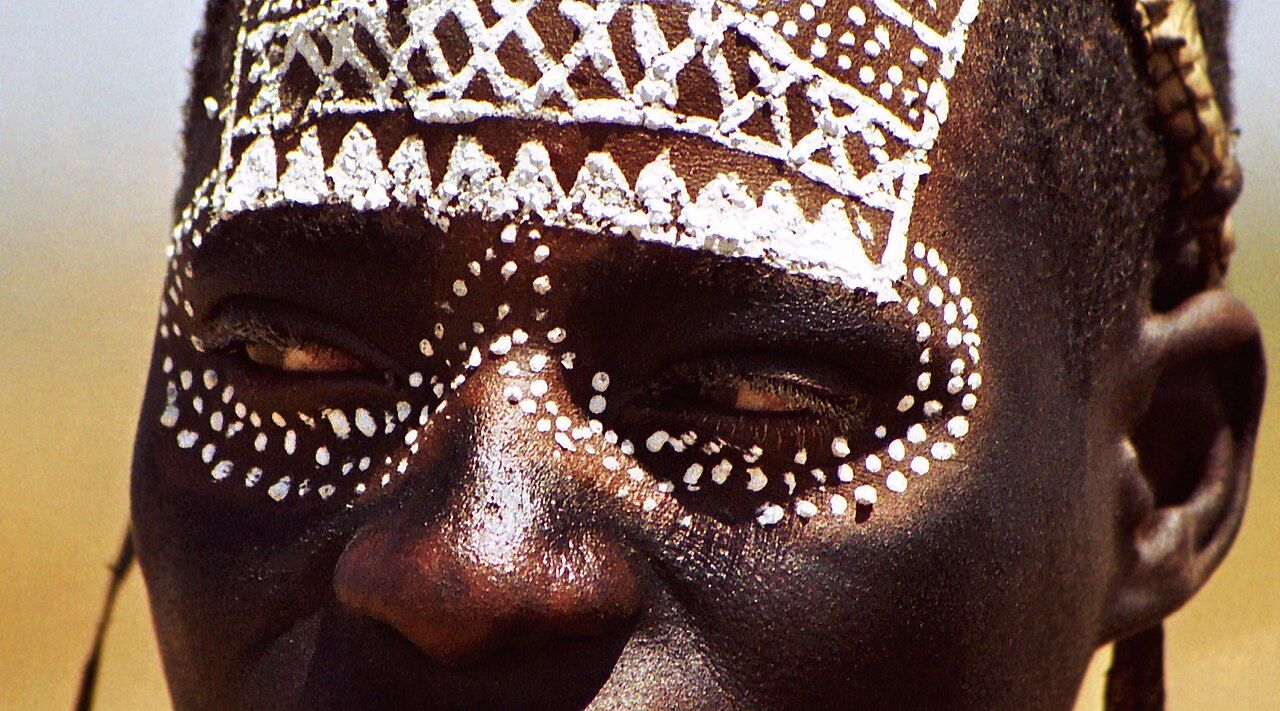
What makes a ritual a ritual
A ritual is a patterned, repeated, formalized sequence of acts and words, prescribed rather than improvised, that is understood to accomplish something beyond its practical effect. The definition deliberately includes far more than worship. Roy Rappaport, whose Pigs for the Ancestors (1968) traced how Tsembaga Maring ritual cycles regulated pig populations, warfare, and land use, argued that ritual's distinguishing feature is the performance itself: by taking part in a prescribed form, a participant publicly accepts the order that form encodes, whatever they privately believe. That is why ritual can bind a group whose members disagree.
Anthropologists sort rituals by what they accomplish. Rites of intensification (also called rites of solidarity) are performed by a group at recurring intervals or in a shared crisis — harvest festivals, annual pilgrimages, a national memorial day, a rain ceremony during drought. They reaffirm the group and restore equilibrium, and their timing is usually calendrical or reactive to collective stress. Rites of passage are performed for individuals or cohorts and are transformational: they move a person from one recognized social status to another. Birth rites, initiations, weddings, ordinations, and funerals all belong here.
Van Gennep's three phases
In Les rites de passage (1909), the French ethnographer and folklorist Arnold van Gennep made an observation of astonishing generality: rites of passage everywhere, regardless of content, share the same three-part architecture. First comes separation (préliminal), in which the initiate is detached from their former status by symbolic acts of removal — leaving the village, having the head shaved, surrendering ordinary clothing, being escorted from the family home. Second comes transition (liminal, from Latin limen, "threshold"), in which the person is neither what they were nor what they will become: often secluded, subjected to ordeal or instruction, stripped of name and rank. Third comes incorporation (postliminal), in which the person is returned to society bearing the new status, usually marked publicly — a new name, new clothing, a feast, the right to sit or speak where they could not before.
| Phase | What happens | Wedding | Maasai male initiation | Funeral |
|---|---|---|---|---|
| 1. Separation | Detachment from the prior status; symbolic removal | Rehearsal, last night apart, escorted down the aisle | Removal from the household; head shaved | Body washed, removed from the home, wake begins |
| 2. Transition (liminal) | Ambiguity, seclusion, ordeal, instruction, levelling | Standing before witnesses — no longer single, not yet married | Seclusion with age-mates; white ochre body and face designs; distinctive dress | Mourning period; the deceased is dead but not yet an ancestor |
| 3. Incorporation | Return with a new status, publicly marked | Pronouncement, rings, name change, feast | Emergence as a warrior with new name, ornament, and rights | Burial or second burial; the dead take their place among the ancestors |
Turner, liminality, and communitas
Victor Turner took van Gennep's neglected middle phase and made it the centre of modern ritual theory. Working among the Ndembu of northwestern Zambia — whose girls' initiation (Nkang'a), fertility rites (Isoma), and healing cults he analysed in The Forest of Symbols (1967) and The Ritual Process (1969) — Turner described liminality as a genuine social condition, not merely a gap. Liminal persons are, in his phrase, "betwixt and between": they have no status, no property, no insignia, no rank among themselves. They may be treated as dead, as newborn, as invisible, as polluting. They are frequently subjected to humility, ordeal, and unquestioning obedience to elders, and they are given the community's deepest teaching precisely while they are stripped bare.
Out of that stripping, Turner argued, comes communitas: an intense, unstructured bond of equality among those who pass through together, standing in direct opposition to the ranked, differentiated ordinary world he called structure. Liminality is antistructure — a temporary suspension of the social order that ultimately renews it, because the initiate returns and takes up a position within it. Turner also showed that ritual symbols are multivocal (they carry many meanings at once) and condensed: the Ndembu mudyi or milk tree, whose white latex evokes breast milk, motherhood, matrilineal descent, and the unity of Ndembu society, means all of these simultaneously and to different participants differently. In later work he distinguished obligatory liminal phenomena in small-scale societies from optional, leisure-based liminoid phenomena — theatre, festivals, sport, travel — in industrial ones.
- Ritual is formal, repeated, prescribed action understood to accomplish more than its practical effect; participation signals acceptance of an order regardless of private belief.
- Rites of intensification renew a group on a recurring or crisis schedule; rites of passage transform an individual's status.
- Van Gennep's three phases — separation, transition, incorporation — describe rites of passage worldwide.
- Turner analysed the middle phase as liminality ("betwixt and between") and the bond it produces as communitas, an antistructure that renews structure; ritual symbols such as the Ndembu mudyi tree are multivocal.
Section 4Magic and witchcraft
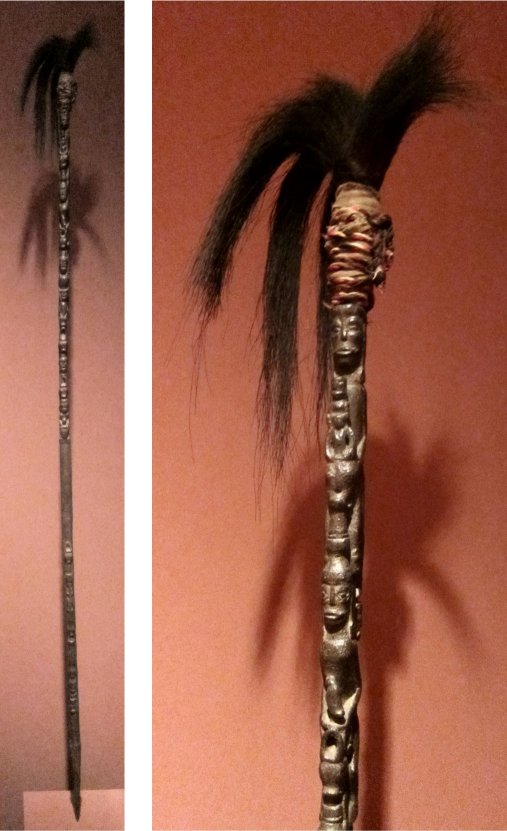
Frazer and the laws of sympathetic magic
James George Frazer's The Golden Bough (first edition 1890) was armchair comparativism at its most sweeping and its most influential. Frazer's grand evolutionary claim — that humanity climbs from magic to religion to science — has been thoroughly rejected; magic and science coexist in every society, including this one. But his analytic distinction survived, because it describes a real regularity in how people reason about causation. Frazer called it sympathetic magic, and divided it in two.
The law of similarity holds that like produces like: acting on an image or imitation of a thing affects the thing itself. Frazer called magic based on it homeopathic or imitative magic — the effigy pierced to injure its subject, the pouring of water to summon rain, the ritual re-enactment of a successful hunt on the eve of a real one. The law of contagion holds that things once in contact remain in contact: acting on a part affects the whole, permanently. Magic based on it is contagious magic — the use of hair clippings, nail parings, saliva, an item of clothing, or footprints to reach the person they came from. This is also why, in many societies, such leavings are carefully disposed of.
| Principle | Frazer's law | Logic | Ethnographic and everyday examples |
|---|---|---|---|
| Imitative (homeopathic) | Law of similarity | Like produces like; the image affects the original | Effigies; pouring water to bring rain; miming the hunt beforehand |
| Contagious | Law of contagion | Things once joined stay joined; the part affects the whole | Hair, nails, or clothing used against a person; relics; a keepsake that carries a person's presence |
Malinowski: magic where control runs out
Bronisław Malinowski replaced Frazer's library with a tent. During his fieldwork in the Trobriand Islands (1915–1918) he noticed a pattern that has anchored the topic ever since: Trobriand fishermen working the safe, predictable inner lagoon used ordinary technique and almost no magic, while the same men preparing for hazardous open-ocean expeditions — and for the long kula voyages that carried shell valuables between islands — performed elaborate canoe magic, weather and safety magic, mwasila (kula) magic, and beauty magic. (Trobriand garden magic, the subject of Malinowski's Coral Gardens and Their Magic, is a separate domain attached to horticulture, not to sea voyages.) His conclusion was psychological and functional: magic clusters wherever knowledge and technique run out and danger begins, and it works on the practitioner by converting paralysing anxiety into confident action. Trobrianders were not confused about causation; they caulked their canoes and recited the spells.
A. R. Radcliffe-Brown offered the standing objection: ritual can generate anxiety as easily as relieve it, since a person who believes in magic must now also fear its failure and its misuse against them. Both observations hold, and the pair of them is a good model of how anthropological argument works — a fieldwork-grounded generalization, immediately tested against its inverse.
Witchcraft, sorcery, and the explanation of misfortune
The single most influential book on this subject is E. E. Evans-Pritchard's Witchcraft, Oracles and Magic among the Azande (1937), based on fieldwork carried out between 1926 and 1930 in the Zande district of the Anglo-Egyptian Sudan, in what is now South Sudan. Evans-Pritchard drew a distinction that anthropology still uses. Witchcraft among the Azande is an inherited, embodied capacity: a physical substance called mangu, said to be transmitted along same-sex lines — father to son, mother to daughter — which can harm others through the witch's ill will — sometimes without the witch's knowledge or intent. Sorcery, by contrast, is a learned technique deliberately performed with materials, spells, and medicines; anyone can acquire it, and it always involves intent. The difference matters socially: a witch may be accused, confronted, and asked to cool their heart — an outcome that repairs a relationship — whereas a sorcerer has committed a deliberate act.
Evans-Pritchard's deepest point concerns what witchcraft explains. The famous example is the collapsing granary. Azande know perfectly well that termites weaken the supports of a raised granary and that granaries eventually fall; they also know that people sit in a granary's shade on a hot afternoon. What their empirical knowledge cannot tell them is why this granary fell at the exact moment these particular people were beneath it. Witchcraft answers that second question. It is not a substitute for natural causation but a theory of coincidence — an answer to "why me, why now" that Western explanation typically consigns to chance. To adjudicate accusations, Azande consulted oracles, above all the benge poison oracle, in which a question is put to a substance administered to a fowl and the answer read from whether the fowl lives or dies. Divination of this kind does more than reveal hidden facts: it removes the decision from any individual's hands, which is often its most important social work.
Later scholarship pressed on the sociology. Accusations are not random; they concentrate along a society's existing fault lines — between co-wives, between neighbours in a land dispute, against the unusually fortunate, the unusually poor, the newcomer, the widow. Monica Wilson called witch beliefs "the standardized nightmares of a group," a phrase worth remembering, because it says that what a society fears most in its witches tells you what it fears most in itself. The same analysis illuminates the Salem accusations of 1692 and the European witch trials, and it must be said plainly that witchcraft accusation is not a historical curiosity: accusations continue to result in exile, injury, and killing in a number of societies today, most often directed at women, older people, and children. Understanding the logic is the beginning of taking the harm seriously, not an excuse for it.
- Frazer's laws of similarity (imitative magic) and contagion (contagious magic) survive; his magic–religion–science ladder does not.
- Malinowski's Trobriand lagoon-versus-ocean contrast supports an anxiety-management theory of magic; Radcliffe-Brown countered that ritual also creates anxiety.
- Witchcraft is an inherited, often unintentional capacity (Azande mangu); sorcery is a learned, deliberate technique.
- Witchcraft explains the particular misfortune, not the general mechanism; divination such as the Azande benge oracle depersonalizes decisions, and accusations follow existing social tensions.
Section 5Belief systems
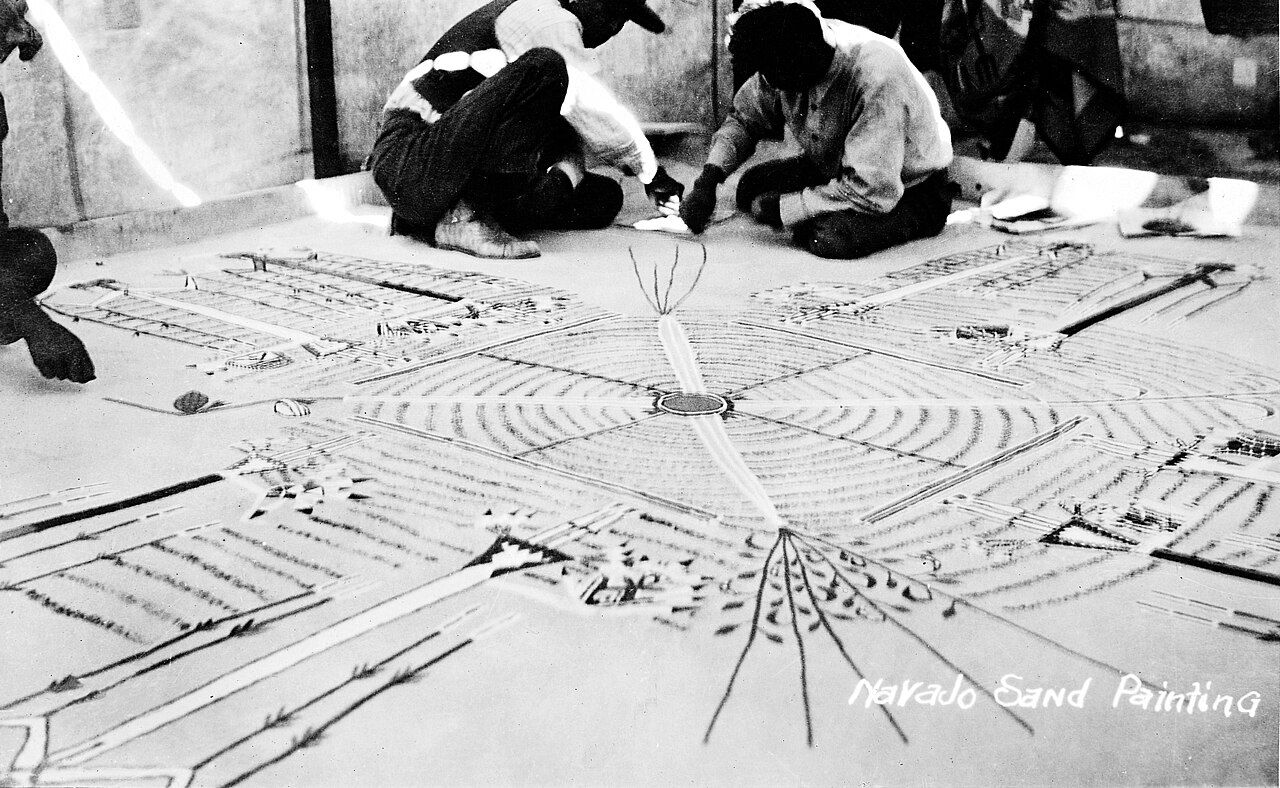
Myth
In ordinary English, calling something a myth means calling it false. In anthropology the word carries no such judgement. A myth is a sacred narrative — a story a community holds as authoritative — that accounts for origins: of the world, of death, of fire, of a people, of a rule everyone must follow. Myths are distinguished from legends, which are set in remembered historical time and treated as having happened, and from folktales, which entertain and instruct without claiming sacred authority. The boundaries are porous, and which stories fall where is itself an ethnographic question.
Malinowski argued that myth functions as a charter: Trobriand myths of clan emergence from particular holes in the ground did not merely narrate the past, they legitimated present claims to land and rank, which is why the version told depended on who was telling it and what they wanted. Claude Lévi-Strauss asked a different question. In Structural Anthropology (1958) and the four-volume Mythologiques beginning with The Raw and the Cooked (1964), he treated myth as a logical instrument for handling contradictions a society cannot resolve in life — nature and culture, raw and cooked, life and death, insider and outsider. Myths, in his reading, work through binary oppositions and invent mediating figures to bridge them, which is why the trickster — coyote, raven, the carrion-eater who feeds on meat without ever making the kill, and so sits between the hunter and the harvester — appears so persistently in the mythologies of the Americas. Franz Boas, meanwhile, spent decades recording Tsimshian, Kwakwaka'wakw, and other Northwest Coast narratives verbatim in the original languages — a very different but equally consequential contribution, since it preserved the texts that later theorists, Lévi-Strauss included, would analyse.
Cosmology
A cosmology is a culturally specific model of the universe: what layers or realms exist, what beings occupy them, where humans stand, how time runs, where power flows from, and what happens after death. Cosmologies are commonly organized around a vertical axis — an upper world, this world, an underworld, joined by a world tree, mountain, or centre post that Eliade called the axis mundi — and around directions, colours, and numbers that recur across every domain of life. The Diné (Navajo) cosmos is anchored by four sacred mountains at the cardinal directions and organized by the ideal of hózhó, a state of beauty, balance, and right relation; illness is understood as its disruption, and ceremonies such as the Blessingway (Hózhóójí) work to restore it. A sandpainting made for such a ceremony is a working diagram of that cosmos, created with pigment on the hogan floor, used, and swept away before nightfall.
Cosmology also generates taboo. Mary Douglas, in Purity and Danger (1966), argued that pollution rules are not primitive hygiene but a by-product of classification: dirt, in her celebrated formulation, is matter out of place, and a thing becomes polluting when it violates the categories a society uses to order the world. Her reading of the dietary prohibitions in Leviticus turns on anomaly — creatures that fail to fit their assigned domain cleanly are the ones marked as abominations. The general principle travels far beyond that case: what a culture finds unspeakably out of place is a map of the categories it takes most seriously.
| Level | What it is | Question it answers | Example |
|---|---|---|---|
| Myth | Sacred narrative treated as authoritative | Where did this come from, and why must it be so? | Trobriand clan emergence stories as a charter for land rights |
| Legend | Story set in remembered historical time | What happened to us, and who were we? | Founding-ancestor and migration accounts |
| Folktale | Story told to entertain and instruct | How should a person behave? | Trickster and animal tales |
| Cosmology | Model of the structure of the universe | What exists, where am I, what follows death? | Diné four sacred mountains and hózhó |
| Worldview | The whole encompassing outlook a cosmology supports | What kind of world is this, and how should I live? | Geertz's "model of" and "model for" reality |
Worldview, syncretism, and change
Worldview is the broadest of the three terms: the encompassing set of assumptions through which a person apprehends reality — assumptions so basic they are rarely stated, because they feel like description rather than interpretation. Robert Redfield brought the term into anthropology to name the way a people characteristically look outward upon their universe — culture seen from the inside out rather than as an observer catalogues it — and Geertz sharpened it with a distinction worth memorizing. Religious symbols function as a model of reality — a picture of how the world is — and simultaneously as a model for reality — a template for how to act in it. That double duty is what gives religion its grip: it describes the order of things and, in the same gesture, tells you what to do, so that following the rule feels like conforming to the world rather than obeying an authority. Alongside worldview, Geertz distinguished ethos — a people's moral and aesthetic style, their tone and temper — and argued that religion works by making the two seem to confirm each other.
Worldviews are not static, and the most interesting anthropology of religion concerns how they change under pressure. Syncretism is the blending of traditions into something new: Haitian Vodou and Cuban Lucumí (Santería) fuse West and Central African religions — carried across the Atlantic by enslaved people — with Catholic saints and imagery, producing systems that are neither of their sources; Mexican Día de los Muertos braids Indigenous Mesoamerican practices of feeding and honouring the dead with the Catholic calendar. Revitalization movements, which Wallace defined as deliberate, organized efforts by members of a society to construct a more satisfying culture, arise under stress — typically colonization, dispossession, or epidemic. Wallace's own case was the Seneca prophet Handsome Lake, whose visions from 1799 produced the Longhouse Religion; other well-documented instances include the Ghost Dance of 1889–1890, which began with the Northern Paiute prophet Wovoka in Nevada and spread across the Plains, and the Melanesian movements often labelled cargo cults, whose adherents were reasoning, quite systematically, about the origins of the wealth arriving on foreign ships and planes. What all of them share is a worldview under strain and a prophet who offers a revised one.
- In anthropology a myth is a sacred, authoritative narrative — not a false one; legends and folktales differ in authority and setting.
- Malinowski read myth as a social charter; Lévi-Strauss read it as a structure of binary oppositions mediating unresolvable contradictions.
- A cosmology models the structure of the universe and generates taboo; Mary Douglas showed pollution rules follow from classification — dirt is matter out of place.
- Worldview is the encompassing outlook; Geertz's symbols work as a model of and a model for reality. Syncretism and revitalization movements show worldviews changing under pressure.
The chapter in one breath
- Religion resists a single cross-cultural definition; Tylor emphasized belief in spirits (animism), Durkheim the sacred and social solidarity, Wallace ritual and supernatural power, Geertz symbols and meaning.
- Anthropology studies religion through participant observation, pairing emic and etic accounts and holding to methodological agnosticism about truth claims — a stance descended from Boas and cultural relativism.
- Shamans are part-time charismatic specialists working in altered states for individual clients; priests hold full-time institutional office and perform calendrical rites for the whole community, a form tied to chiefdoms and states.
- Ritual is prescribed, repeated, formal action; rites of intensification renew the group while rites of passage transform an individual's status.
- Van Gennep's three phases — separation, transition, incorporation — and Turner's liminality and communitas explain initiations, weddings, funerals, and boot camps alike.
- Frazer's laws of similarity and contagion describe sympathetic magic; Malinowski found magic clustering where technique and control run out.
- Witchcraft (inherited, often unintended) differs from sorcery (learned, deliberate); Evans-Pritchard's Azande showed witchcraft explains the particular misfortune, and accusations track social tension.
- Myth, cosmology, and worldview nest from story to model of the universe to encompassing outlook; syncretism and revitalization movements are how they change.
ReferenceWords worth knowing
A quick reference for the vocabulary of this chapter — skim it now to prime the terms, then return to it whenever a concept in the reading needs pinning down.
- Animism
- Tylor's term for the attribution of a soul or spirit to people, animals, plants, objects, and features of the landscape; his minimal definition of religion was "the belief in spiritual beings."
- Communitas
- Turner's term for the intense, unranked solidarity that arises among people passing through a liminal phase together; the antistructure that temporarily suspends, and ultimately renews, ordinary social structure.
- Cosmology
- A culturally specific model of the universe — its realms, beings, directions, origins, and the place of humans within it.
- Divination
- A technique for obtaining otherwise unavailable information — the cause of a misfortune, the identity of a witch, the wisdom of a plan — through a procedure that removes the answer from any individual's control, such as the Azande benge poison oracle.
- Ecclesiastical cult
- In Wallace's typology, the level of religious organization built around a full-time, hierarchically organized priesthood; typically found in states.
- Liminality
- The middle, transitional phase of a rite of passage, in which a person is "betwixt and between" statuses — often secluded, stripped of rank and insignia, and subject to ordeal and instruction.
- Magic
- The use of prescribed words, substances, or acts believed to compel a specific practical outcome, typically for an individual purpose and often outside communal worship.
- Mana
- An impersonal supernatural force or potency concentrated in people, places, or objects; described first in Polynesia and Melanesia and central to Marett's concept of animatism.
- Myth
- A sacred narrative held as authoritative by a community, accounting for origins and legitimating present arrangements; in anthropology the word implies nothing about truth or falsity.
- Priest
- A full-time religious specialist who holds a formally trained institutional office and performs calendrical rites on behalf of a whole community.
- Revitalization movement
- Wallace's term for a deliberate, organized attempt by members of a society under stress to build a more satisfying culture, usually led by a prophet; examples include the Longhouse Religion and the Ghost Dance.
- Rite of intensification
- A ritual performed by a group at recurring intervals or during a shared crisis to reaffirm solidarity and restore equilibrium, such as a harvest festival or a drought ceremony.
- Rite of passage
- A ritual that moves an individual or cohort from one recognized social status to another — birth, initiation, marriage, ordination, death.
- Ritual
- Patterned, repeated, formalized action prescribed rather than improvised, understood to accomplish something beyond its practical effect.
- Sacred and profane
- Durkheim's fundamental division between what is set apart and protected by prohibition (the sacred) and the ordinary business of life (the profane).
- Shaman
- A part-time religious specialist whose charismatic authority rests on direct personal contact with the spirit world, typically achieved in an altered state of consciousness on behalf of individual clients; from Evenki šaman.
- Sorcery
- The deliberate, learned use of materials, spells, and techniques to cause harm or effect an outcome; unlike witchcraft it is acquired rather than inherited and always intentional.
- Sympathetic magic
- Frazer's category for magic operating by the law of similarity (imitative magic — like produces like) or the law of contagion (contagious magic — things once in contact remain connected).
- Syncretism
- The blending of elements from two or more religious traditions into a new system, as in Haitian Vodou or Cuban Lucumí.
- Taboo
- A prohibition on contact with, consumption of, or speech about something regarded as dangerous or polluting; Douglas argued taboos follow from a culture's classification system rather than from hygiene.
- Witchcraft
- An inherited or innate capacity to cause harm through ill will, sometimes without the witch's intent or knowledge; among the Azande it is attributed to a bodily substance called mangu.
- Worldview
- The encompassing set of largely unstated assumptions through which a people apprehend reality; Geertz described religious symbols as functioning both as a model of and a model for that reality.
Check yourself
Art & Expressive Culture
No society has ever been found that does not sing, dance, decorate, or tell stories — and yet a great many societies have no word that means "art." That gap is the puzzle this chapter is built around. When anthropologists study expressive culture they are not ranking masterpieces; they are asking what a carved prowboard does to a trading partner, why a healing painting is destroyed before sundown, how a chin tattoo can be a genealogy, and what happens to a design when it moves from a ceremonial ground onto a canvas in a Sydney gallery. Art turns out to be one of the most efficient ways a culture has of talking to itself about itself — and one of the sharpest tools it has for drawing the line between us and them.
By the end of this chapter you can
- Explain why the Western category of fine art travels badly, and state an anthropological working definition of expressive culture.
- Apply the emic/etic distinction to aesthetics, using real systems of local art criticism.
- Describe at least five social functions of art with a specific ethnographic case for each.
- Summarize what ethnomusicology adds to the study of sound, using Merriam's three-part model.
- Explain oral-formulaic composition and why the Parry–Lord research reshaped how we read epic poetry.
- Analyze body art as a rite of passage using van Gennep and Turner, and distinguish permanent from temporary marking.
- Evaluate claims about authenticity, tourist art, and cultural appropriation without assuming that change equals loss.
- Connect art to ethnic boundaries, exchange systems, and political legitimation in bands, tribes, chiefdoms, and states.
Section 1What is art?
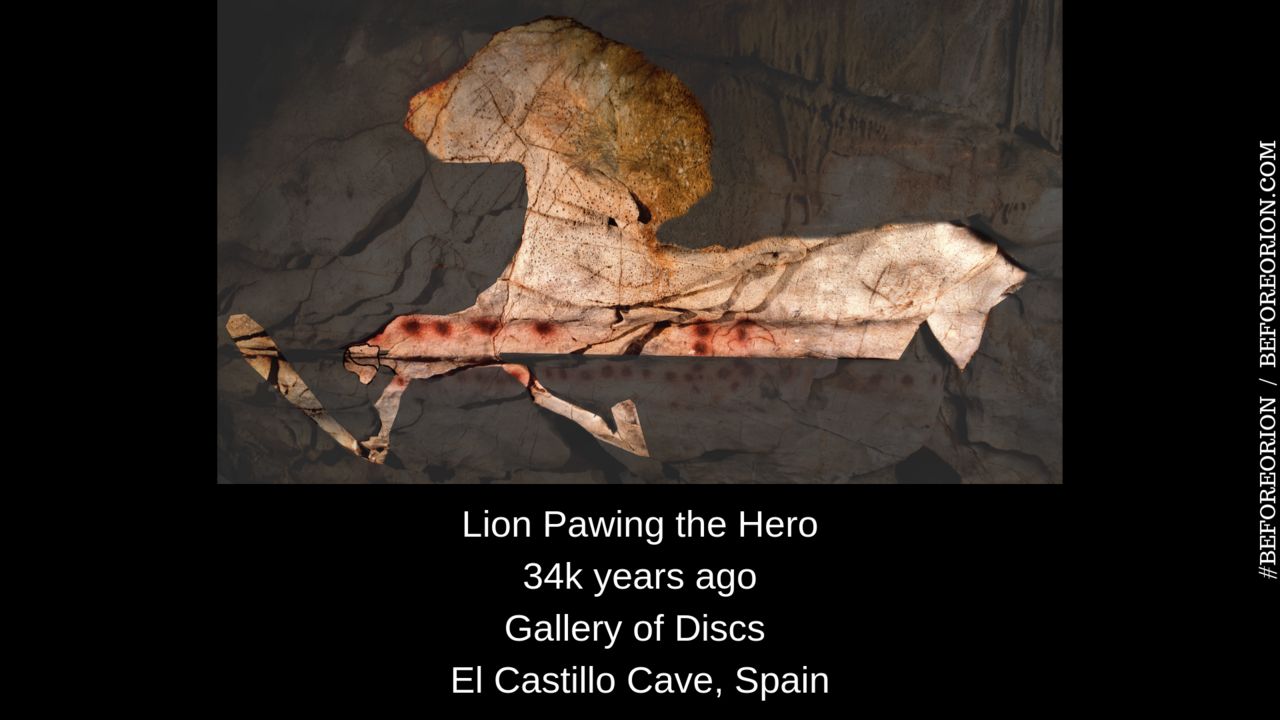
A word that does not translate
Start with an uncomfortable fact. The English word art carries a load of assumptions that are historically recent and geographically narrow: that art objects are made to be contemplated rather than used, that they are signed by an individual genius, that they belong in a museum behind a rope, and that they are separable from religion, politics, and work. That bundle congeals in Europe after the Renaissance and hardens in the eighteenth and nineteenth centuries with the rise of the public museum and the art market. Carry it into a Sepik men's house or a Diné healing ceremony and it distorts everything it touches.
Most of the world's languages have no term that maps onto it. The Yoruba of Nigeria, the Abelam of Papua New Guinea, and the Kwakwaka'wakw of the Northwest Coast all produce objects of staggering formal sophistication, and all of them have rich vocabularies for evaluating those objects — but the vocabularies are about skill, efficacy, propriety, ancestry, and effect, not about "art" as a category set apart from life. Anthropologists therefore prefer the broader phrase expressive culture: the whole field of humanly patterned, culturally valued making and doing — visual form, music, dance, verbal art, dress, body marking, festival, play.
A workable cross-cultural definition has four parts. Expressive culture involves (1) skill — it is made well, by a standard someone can articulate; (2) form — it is patterned, and the pattern is deliberate; (3) affect — it is meant to do something to whoever encounters it; and (4) evaluation — a community judges it, and the judgments are shared, teachable, and arguable. Notice what is missing: nothing here requires uselessness, individuality, or a frame.
Emic aesthetics: how other people criticize
Because judgment is the fourth criterion, the anthropologist's first job is emic — recovering the categories insiders actually use — before offering any etic comparison. The classic demonstration is Robert Farris Thompson's work on Yoruba art criticism, in which he sat with Yoruba connoisseurs and recorded the terms they used to praise and condemn carvings. What emerged was a coherent, teachable aesthetic: a sculpture should occupy a midpoint between blank abstraction and slavish lifelikeness; it should be visible and legible, with clear delineation of parts; it should have luminosity, a polished shine; it should be straight and upright; and above all it should show coolness — composure, controlled calm in the face. A Yoruba critic can tell you exactly why a head fails. That is criticism, and it is not ours.
Anthony Forge found something different again among the Abelam of Papua New Guinea, whose spectacular painted ceremonial house facades resist verbal explanation. When Forge asked what a painting meant, he was given no key and no code. His conclusion — in "Learning to See in New Guinea" — was that Abelam initiation does not teach meanings; it teaches seeing. The paintings communicate in a register that is not reducible to language, and the ability to be moved by them is itself the knowledge that initiation confers. Franz Boas had made a related argument in Primitive Art (1927): pleasure in form and mastery of technique are human universals, and the styles of any people can only be understood historically and internally — never as rungs on an evolutionary ladder.
Art as a technology of effect
Alfred Gell pushed the argument further. In his essay on the "technology of enchantment" and in Art and Agency (1998), Gell proposed that we stop asking what art objects mean and start asking what they do. His case study came from Bronislaw Malinowski's Trobriand material: the carved and painted prowboards on the ocean-going canoes of the kula ring. Those boards are not decoration. They are dazzle weapons. A Trobriander arrives on a distant island to negotiate the exchange of shell valuables, and the overwhelming, technically astonishing beauty of his canoe is designed to unsettle his partner's mind and loosen his grip on his armbands. The board works as magic works, and it works because its virtuosity looks superhuman. Art here is instrumental, embedded in a system of reciprocity — and utterly serious.
| Western fine-art assumption | Cross-cultural reality | Case |
|---|---|---|
| Art is for contemplation, not use | Most expressive objects are made to do work — heal, persuade, legitimate, protect | Kula prowboards; Diné sandpaintings |
| Art is permanent, to be preserved | Many forms are deliberately ephemeral or destroyed on schedule | Sandpainting dismantled by sunset |
| Art has a named individual creator | Authorship may be collective, ancestral, or inherited by descent | Northwest Coast crest designs |
| Art is separate from religion and politics | Expressive form is often the medium of religion and politics | Benin brass plaques; bisj poles |
| "Fine art" outranks "craft" | The hierarchy is a local Western folk category, not a universal | Textiles, pottery, tattoo |
The stakes of getting this wrong are not merely academic. Sally Price's Primitive Art in Civilized Places (1989) showed how museum labels routinely strip non-Western makers of their names, dates, and biographies — "Dan mask, wood, twentieth century" — while a European object of the same age is credited to an individual. James Clifford made a parallel case against the Museum of Modern Art's 1984 "Primitivism" exhibition, which paired African and Oceanic objects with Picasso and Giacometti to show "affinity," and in doing so erased the histories, functions, and colonial routes by which those objects had reached New York.
- The Western fine art category — useless, framed, individually authored — is historically specific and travels badly.
- Anthropologists use expressive culture: skilled, patterned, affecting making that a community evaluates.
- Emic aesthetics are real and teachable (Yoruba coolness and midpoint mimesis); Boas insisted styles be read historically, never as evolutionary stages.
- Gell's technology of enchantment reframes the question from what art means to what art does — kula prowboards as instruments of persuasion.
Section 2The functions of art
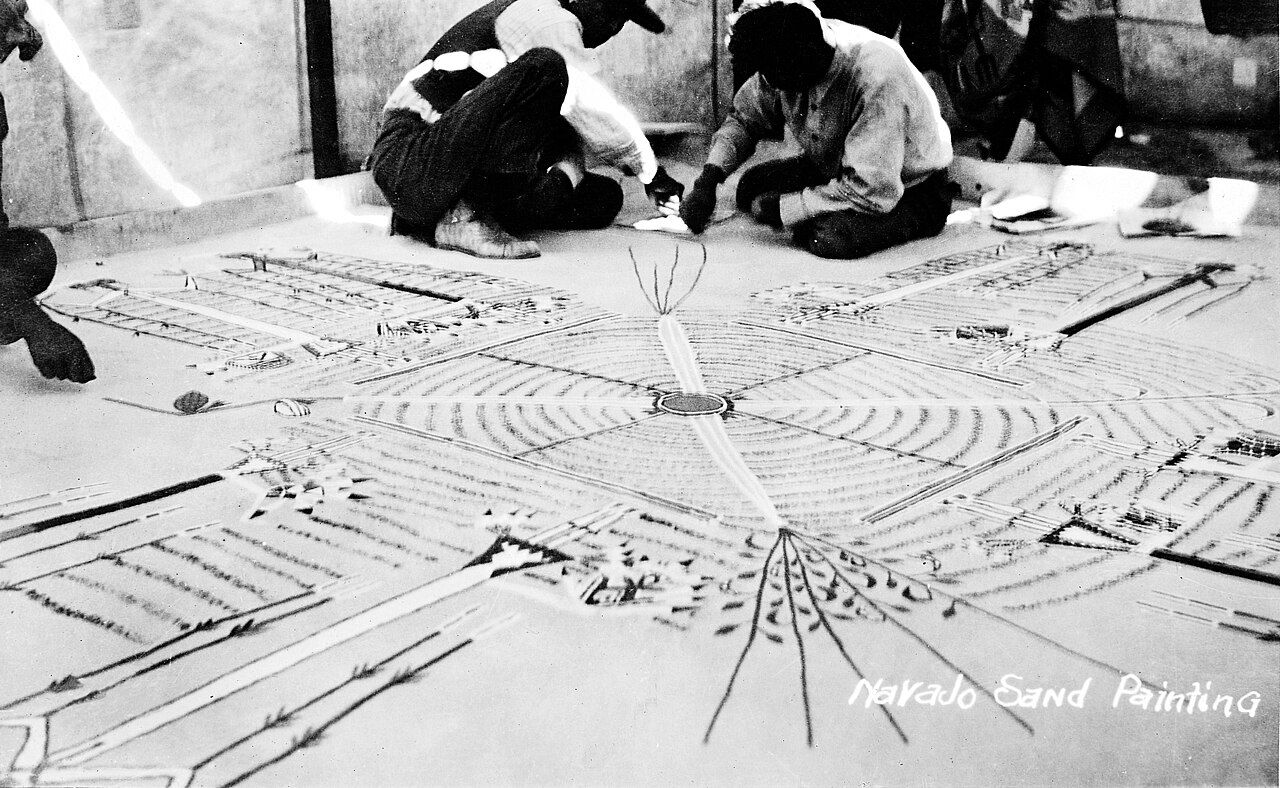
Why every culture makes something
The universality of expressive culture demands an explanation, and "people like pretty things" is not one. Clifford Geertz offered the sharpest formulation in "Art as a Cultural System": art is a way a community renders its own sensibility visible to itself. It is not a mirror held up to society and it is not a coded message with a single solution; it is a public form in which a people's feeling about experience gets shaped so that it can be shared, argued with, and passed on. On this view art is an instrument of local knowledge, and reading it requires the same thick description Geertz brought to a Balinese cockfight.
Underneath that general claim sit a set of concrete jobs that expressive culture does. Most objects and performances do several at once, which is exactly why the "art versus function" question is malformed.
| Function | What it accomplishes | Ethnographic case |
|---|---|---|
| Ritual efficacy | The object is the mechanism by which a ceremony works | Diné sandpainting: the patient sits on the image and the sand is pressed to the body |
| Social solidarity | Joint performance manufactures shared feeling | Mbuti molimo singing in the Ituri forest (Turnbull) |
| Status & rank | Display validates inherited position and wealth | Northwest Coast crest art displayed at the potlatch |
| Political legitimation | Dynastic history is fixed in durable form by a state | Benin brass plaques recording the Oba's court and campaigns |
| Socialization | Children absorb values, cosmology, and correct form | Abelam initiation as training in how to see |
| Land & title | Designs assert rights over territory and story | Australian Aboriginal Dreaming designs as evidence of country |
| Persuasion & exchange | Beauty is deployed as leverage in trade | Trobriand kula canoe prowboards |
| Mortuary work | The dead are honored, avenged, or released | Asmat bisj poles in coastal New Guinea |
Art that is meant to disappear
The Diné (Navajo) sandpainting, or iikaah, is the cleanest case against the museum model of art. Made inside the hogan by a singer (hataałii) and assistants during one of the Holyway curing chants — Nightway, Shootingway, Beautyway, Mountainway — it is built from colored sands, pollen, and crushed minerals trickled between the fingers into a precise, memorized design of Holy People, sacred plants, and directional guardians. The patient is seated on the finished image; portions of it are pressed against the body, transferring the power of the depicted beings inward and drawing the illness outward. Then the painting is dismantled, in reverse of the order it was made, and the sand is carried out before sunset. Nothing survives. The object was never the point — the event was.
The same logic runs through Tibetan Buddhist sand mandalas swept into a river, through the ephemeral flower and food constructions of Day of the Dead altars, and through the vast painted body designs that are washed off after a night's dancing. Permanence is a cultural preference, not a requirement.
Art, rank, and the politics of display
On the Northwest Coast of North America, expressive form is inseparable from political economy. Among the Tlingit and Haida, crest images — Raven, Eagle, Bear, Killer Whale — are property, held by lineages and transmitted through matrilineal descent. To carve a crest you are not entitled to is theft. These crests appear on house fronts, poles, chests, blankets, and masks, and they are validated in public at the potlatch, the great feast of redistribution in which a host gives away enormous quantities of goods and, in doing so, makes his lineage's claims stick in the memory of witnesses. Boas, working with George Hunt among the Kwakwaka'wakw, documented this system in extraordinary detail. The Canadian state understood the political weight of it perfectly well: an 1884 amendment to the Indian Act outlawed the potlatch, the ban stood in force from 1885 until it was dropped in 1951, and masks and regalia were confiscated — an attack on art as an attack on governance.
Contrast the scale. In a band — small, mobile, egalitarian — expressive culture tends to be portable, participatory, and unspecialized: everyone sings, and nobody owns a song by right of birth. In a tribe, a larger settled horticultural or pastoral society knit together by kin groups, age sets, and ceremonial exchange rather than by inherited office, expressive form can become monumental and technically specialized without becoming hereditary property — Abelam men raise towering painted ceremonial house facades and grow prize yams as competitive display, and the prestige earned that way builds a big-man's following rather than a lineage's estate. In a chiefdom like those of the Northwest Coast or Polynesia, art marks hereditary rank and underwrites redistribution. In a state such as the Kingdom of Benin, full-time guild artists working in brass produce an official visual record for a divine king. The complexity of the art system tracks the complexity of the political system that feeds it. Treat Elman Service's band–tribe–chiefdom–state sequence as a rough sorting device rather than a staircase every society climbs — but the correlation it points at is real.
- Geertz: art is a cultural system through which a community makes its own sensibility visible to itself.
- Expressive culture does concrete work — ritual efficacy, solidarity, rank, legitimation, socialization, land claims, exchange, mourning — usually several at once.
- Ephemeral forms like the Diné sandpainting show that permanence is a Western preference, not a property of art.
- Art scales with political organization: participatory in bands, monumental but not hereditary in tribes, rank-marking in chiefdoms, guild-produced and dynastic in states.
Section 3Performance
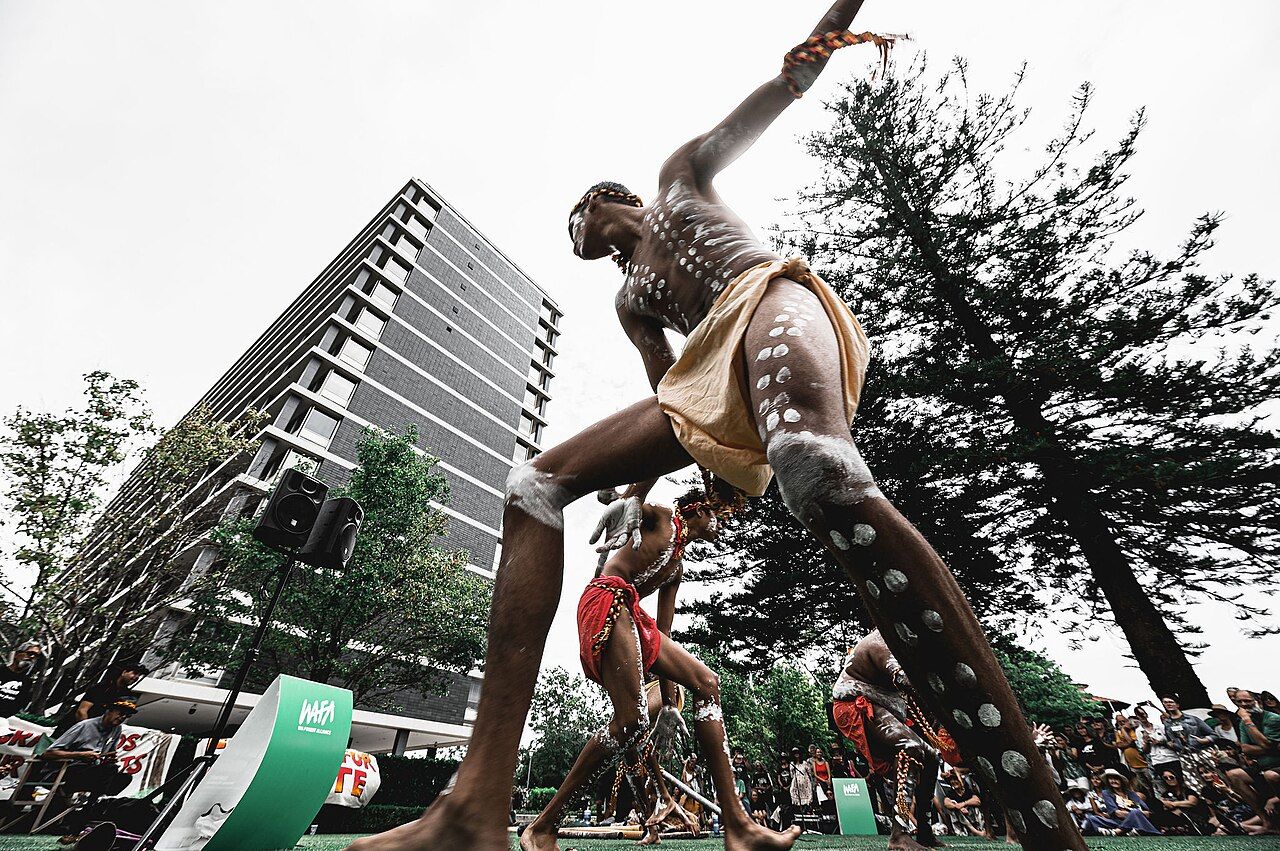
Music: sound, behavior, concept
Ethnomusicology is the anthropological study of music, and its founding insight is that you cannot understand a song by transcribing it. Alan Merriam's The Anthropology of Music (1964) proposed a three-part model — sound (the acoustic product), behavior (what performers physically and socially do), and concept (what people believe music is, where it comes from, who may make it) — with each level continuously feeding back into the others. Merriam also catalogued ten recurrent functions of music, among them emotional expression, symbolic representation, enforcement of conformity to social norms, validation of ritual and institutions, and the integration of society. Note how many of those are social rather than aesthetic.
John Blacking, who studied Venda children's songs and initiation music in South Africa, framed the universal claim in How Musical Is Man? (1973): music is "humanly organized sound," and there are no unmusical peoples — only societies that restrict who is permitted to perform. Steven Feld's Sound and Sentiment (1982) offers perhaps the finest single demonstration of what an anthropology of sound can achieve. Among the Kaluli of the Bosavi rainforest in Papua New Guinea, Feld traced a tight web linking birds, the dead, weeping, poetry, and song: birds are spirits of the dead, certain songs are built to make listeners weep by naming places along a path that evokes loss, and Kaluli people describe their layered, overlapping vocal texture with a term Feld translates as "lift-up-over-sounding" — a densely interlocking sound modeled on the forest itself. Emotion, ecology, cosmology, and musical form are one system.
Colin Turnbull's account of the Mbuti of the Ituri forest describes the molimo, a long trumpet and the ceremony surrounding it, sung night after night for a month or more when the forest has "gone bad" — typically after a death. Men sing through the night to wake the forest; the singing itself repairs the group. That is music functioning as social therapy in a small-scale band society where no one is a professional musician.
| Performance genre | What the analyst attends to | Landmark study |
|---|---|---|
| Music | Sound, behavior, and concept together; who may perform, and when | Merriam, The Anthropology of Music (1964) |
| Song & lament | How poetic form produces emotion; links to landscape and the dead | Feld, Sound and Sentiment (1982), Kaluli |
| Communal singing | Solidarity work; repair of the group after crisis | Turnbull on the Mbuti molimo |
| Dance & trance | Body technique, child-rearing, temperament, altered states | Mead & Bateson, Balinese Character (1942) |
| Ritual drama | Liminality, communitas, and the shape of social conflict | Turner, The Ritual Process (1969) |
| Epic singing | Composition in performance; formula, theme, variation | Lord, The Singer of Tales (1960), guslari |
| Praise & genealogy | Hereditary specialists; narrative as political precedent | Mande griot performance of Sunjata |
| Myth telling | Narrative as charter for land, rank, and rights | Malinowski, Myth in Primitive Psychology (1926) |
Dance, trance, and social drama
Dance is culturally encoded movement, and it is dense with information that the participants often cannot state in words. Margaret Mead and Gregory Bateson's Balinese Character (1942) — built from thousands of photographs and film sequences — examined how Balinese children were trained into a bodily style of controlled, unstartled composure, and how that same body could enter trance in the barong and rangda dramas, with performers pressing kris blades against their own chests. Body technique, child-rearing, temperament, and theater were treated as a single continuum.
Victor Turner supplied the theory that most performance analysis still runs on. Building on Arnold van Gennep's rites of passage — separation, liminality, incorporation — Turner argued in The Ritual Process (1969) that the liminal phase generates communitas, an intense, leveling, anti-structural bond among those passing through together. In From Ritual to Theatre (1982) he extended this to modern performance, distinguishing obligatory liminal ritual in small-scale societies from optional liminoid leisure genres — concerts, theater, sport — in industrial states. A rock festival and a Ndembu initiation are not the same thing, but they are recognizably related things.
Oral tradition and verbal art
Before writing, and alongside it, human societies stored their law, history, cosmology, and entertainment in trained memory. The most important twentieth-century discovery about how that works came from Milman Parry and Albert Lord, who went to the South Slavic highlands in the 1930s to record illiterate guslari — singers who performed epics of thousands of lines to a bowed lute. Lord's The Singer of Tales (1960) showed that these singers were not reciting memorized texts. They were composing in performance, assembling narrative from a stock of metrically fitted formulas and typical scenes. The same epic told twice differed in length and wording while remaining "the same song" to singer and audience. Because the Homeric poems are built from exactly such formulas — the wine-dark sea, swift-footed Achilles — the finding transformed classical scholarship: oral-formulaic composition is a technology, not a failure of literacy.
West Africa offers the living parallel. Among Mande peoples of Mali, Guinea, and neighboring states, griots (jeliw) are hereditary specialists in speech, praise, genealogy, and history, accompanying themselves on kora or ngoni. Their central repertoire includes the epic of Sunjata, founder of the Mali empire, a narrative that is simultaneously entertainment, dynastic charter, and a store of political precedent. Malinowski made the same point in Myth in Primitive Psychology (1926): Trobriand myth is not idle storytelling but a social charter — a justification of present rights in clan land and rank. Dell Hymes and the ethnopoetics movement later showed that Native American narratives collected as flat prose by earlier fieldworkers were in fact organized in lines, verses, and scenes, and that re-transcribing them recovered a poetic architecture the page had destroyed.
- Merriam's model reads music on three levels — sound, behavior, concept; Blacking's "humanly organized sound" denies any people is unmusical.
- Feld's Kaluli work links birds, weeping, poetics, and vocal texture into one cultural system of sound.
- van Gennep's rites of passage plus Turner's liminality and communitas remain the core framework for analyzing performance.
- Oral-formulaic composition (Parry and Lord) explains epic singing as composition-in-performance; griots and Trobriand myth show oral art functioning as charter and history.
Section 4Body art
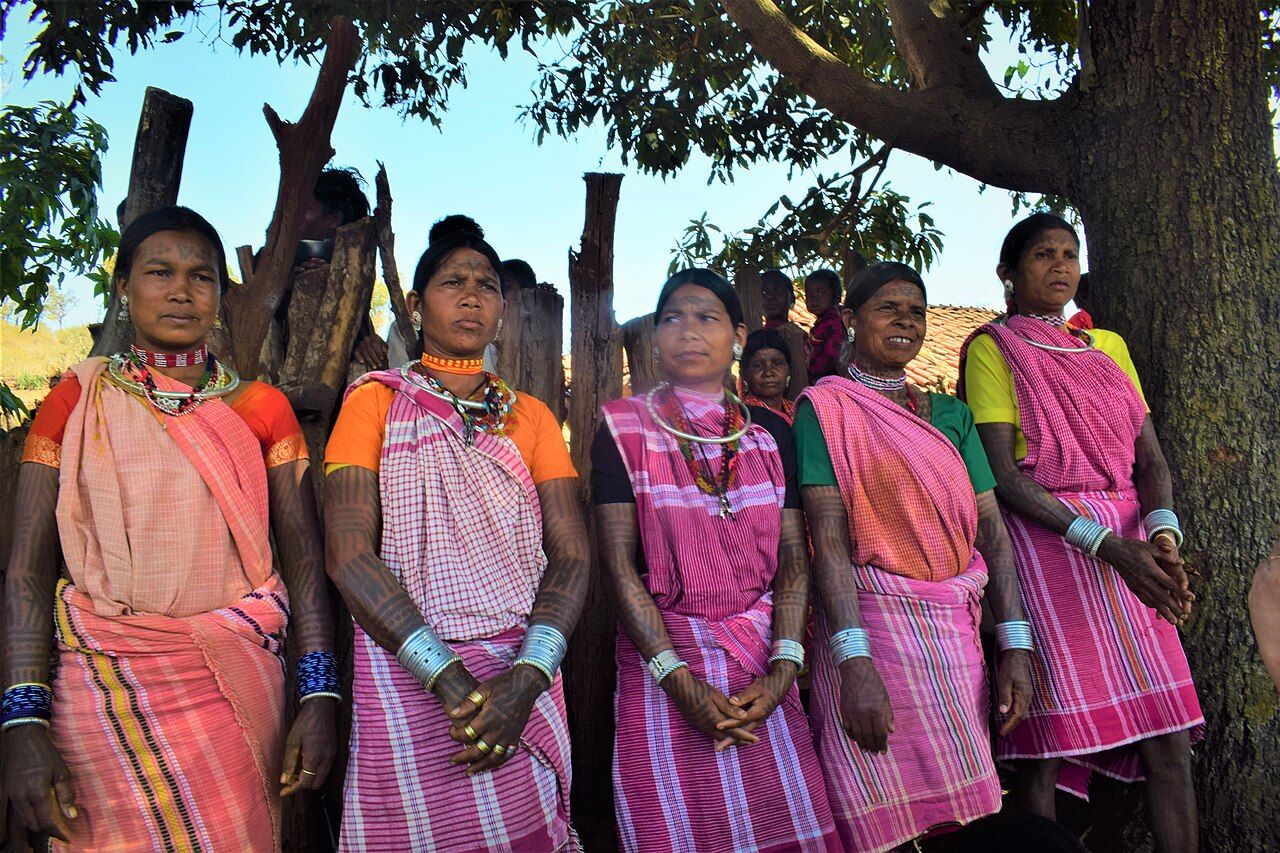
The social skin
Terence Turner's essay "The Social Skin" (1980), written from fieldwork among the Kayapo of central Brazil, remains the best single statement of why body art matters. The skin, Turner argued, is the frontier between the individual organism and society, and every culture works that frontier. What is painted, pierced, cut, shaved, covered, or left bare is a continuously updated public statement of a person's age, gender, rank, marital status, ritual condition, and moral standing. Kayapo bodies were painted in black genipapo dye and red annatto in patterns that varied by life stage; infants were painted by their mothers in dense all-over designs, while adult men's designs grew simpler and bolder; lip discs and ear spools marked oratorical and social maturity. To be unpainted was not to be neutral. It was to be, in Turner's terms, socially unfinished.
This reframes body art away from "decoration." A body is a document. And unlike a document, it is always with you, always on display, and impossible to disclaim.
Permanent marks: tattoo and scarification
The English word tattoo is itself an artifact of the encounter between Europe and Oceania: it entered the language after Cook's Endeavour voyage reached Tahiti in 1769, from the Polynesian tatau. In Samoa the practice survives with unusual continuity. A master tattooist, the tufuga ta tatau, works with hand tools of bone or boar tusk struck with a mallet, applying the male pe'a — a dense field of pigment from waist to knees requiring many sessions over many days — and the finer female malu on the thighs. The pain is not incidental. Completion is public proof of endurance and of commitment to service of family and village; abandoning an unfinished pe'a is a lasting shame borne visibly for life.
Maori ta moko works differently again. Traditionally incised with a chisel (uhi) that grooved rather than merely punctured the skin, moko encodes whakapapa — genealogy — along with rank and tribal affiliation, with the face divided into zones carrying paternal and maternal information. Nineteenth-century colonization and missionization suppressed the practice, and moko became rare; since the late twentieth century it has been powerfully revived, with moko kauae, the women's chin moko, now worn publicly by Maori women as a deliberate assertion of identity and sovereignty.
Scarification — deliberate cutting or branding that heals into a raised keloid pattern — is widespread across Africa and parts of Melanesia. It is often explained by the observation that a design in relief reads clearly on darker skin, where inserted pigment would not; the explanation is partly right and wholly insufficient, since the societies in question could have tattooed and chose instead to be marked in a medium you can feel as well as see. E. E. Evans-Pritchard described the Nuer gaar of what is now South Sudan: six long horizontal cuts across the forehead, made at male initiation, converting boys into men in a single unmistakable and irreversible act. Paul Bohannan's 1956 study of the Tiv of Nigeria — "Beauty and Scarification amongst the Tiv" — made the crucial analytic point that fashions in scarification changed over time, that Tiv discussed them as beauty rather than as mere marking, and that the pain endured was itself part of what made the result beautiful. James Faris's Nuba Personal Art (1972) documented southeastern Nuba body painting keyed precisely to age grade and physical condition, where an ill-timed design was simply incorrect.
Read these through van Gennep and Turner and the pattern is clear. A permanent mark applied during the liminal phase of a rite of passage converts a temporary social transformation into a permanent, portable, unforgeable record of it. You cannot take the initiation off.
| Mode | Duration | Typical message | Ethnographic case |
|---|---|---|---|
| Tattoo | Permanent | Endurance, adulthood, genealogy, service | Samoan pe'a and malu; Maori ta moko |
| Scarification | Permanent | Initiation completed; ethnic and age-grade identity | Nuer gaar; Tiv beauty scars |
| Piercing / inserts | Semi-permanent | Oratorical standing, maturity, gender | Kayapo lip disc and ear spools |
| Body paint | Days | Ritual state, age grade, mourning, celebration | Kayapo genipapo designs; Nuba painting |
| Cosmetic / skin dressing | Daily | Beauty, health, ethnic belonging | Himba otjize of ochre and butterfat |
| Henna | A month or so | Celebration, marriage, blessing, festivity | Mehndi at South Asian and North African weddings |
| Dress & regalia | Occasion | Rank, ethnicity, ritual role, political claim | Maya huipil; Northwest Coast button blankets |
Temporary adornment and the ethnography of beauty
Impermanent marking does different work: it announces a current state rather than a completed transition. Himba women in northwestern Namibia apply otjize, a paste of red ochre and butterfat, daily to skin and hair — simultaneously cosmetic, protective against sun and insects, and an unmistakable statement of Himba identity. Maasai initiates pass the seclusion following circumcision in dark clothing with white chalk designs patterned across the face, publicly signaling that they are between statuses. Mehndi applied to a bride's hands and feet marks a threshold night, then fades over the following month as the new status settles.
Body art is also the fastest way to dislodge students' assumptions about gender and beauty. Among the Wodaabe, Fulani pastoralists of Niger, the yaake and geerewol dances feature young men in elaborate makeup — faces washed in pale yellow or red ochre, lips darkened and eyes lined with black kohl so that the teeth and eyes flash white, ostrich plumes rising above — who dance for hours in the sun, rolling their eyes and baring their teeth to display the valued traits of white eyes, white teeth, height, and a straight nose. Young women chosen for the role serve as judges. Every element of the Euro-American default — women adorn, men appraise — is reversed, and it is reversed by a fully coherent local aesthetic.
- Turner's social skin: the body's surface is a continuously updated public statement of age, gender, rank, and ritual state.
- Permanent marks (tattoo, scarification) typically certify completed rites of passage; temporary ones (paint, henna, ochre) announce current status.
- Samoan pe'a, Maori ta moko, Nuer gaar, and Tiv scars all tie beauty and validity to endured pain.
- Wodaabe geerewol inverts Euro-American gendered adornment — men display, women judge.
Section 5Art and identity

Style as a boundary
Fredrik Barth's Ethnic Groups and Boundaries (1969) reoriented the study of ethnicity around a simple reversal: what makes an ethnic group is not the cultural stuff it contains but the boundary it maintains, and boundaries are maintained by a small set of highly visible diacritical signs. Expressive culture supplies most of them — dress, textile pattern, hairstyle, musical genre, ornament. This is why a change of clothing can register as a change of allegiance, and why the diagnostic markers of an identity are so often things you can see across a market square.
Highland Guatemala illustrates both the beauty and the danger of the mechanism. Maya women's huipiles — woven on backstrap looms, with motifs, colors, and neckline forms specific to particular towns — historically allowed anyone to place a wearer's community at a glance. During the armed conflict of the late twentieth century, that same legibility made traje a liability: the garment that announced belonging also announced ethnicity to those hunting for it. Identity markers cut both ways.
And they are frequently newer than they claim. Eric Hobsbawm and Terence Ranger's The Invention of Tradition (1983) assembled cases in which practices asserted to be ancient turned out to have been assembled recently for political purposes — the clan-specific Scottish tartan system among them, largely elaborated in the eighteenth and nineteenth centuries and retrofitted onto Highland history. Calling a tradition invented is not an accusation of fraud. All traditions are made; the analytic question is when, by whom, and against what.
Markets, tourists, and the authenticity trap
Once expressive objects enter market exchange they change — in size, in medium, in subject, and in who makes them. Nelson Graburn's Ethnic and Tourist Arts (1976) established the field and pushed back against the reflexive dismissal of "airport art." Consider the range of what has happened:
- Guna molas (Panama): layered reverse-appliqué panels whose designs descend from body painting, moved onto blouse panels and then, for outside buyers, onto standalone framed pieces — while remaining central to Guna women's dress and household economy.
- Inuit printmaking at Kinngait (Cape Dorset): a printmaking and carving cooperative established in the mid-twentieth century became a major income source and produced internationally exhibited artists working in a medium that had no local precedent.
- Western Desert acrylics: at Papunya in 1971, senior men began transferring ceremonial ground and body designs onto board and canvas. The movement became one of the most significant art movements of the century — and immediately raised an internal problem, because some designs were restricted knowledge. Painters responded by over-dotting and abstracting to shield what outsiders were not entitled to see. The paintings are simultaneously commercial products, sacred geography, and evidence in land claims.
The recurring student question — is it still authentic? — is the wrong question. Authenticity is not a chemical property of an object; it is a claim made by someone, for an audience, with interests attached. A mola sold to a tourist is not a fake mola. The useful questions are: who controls the design, who is paid, whose name is on it, and what rights travel with it.
| Question about authenticity | Why it misleads | Ask instead |
|---|---|---|
| Is it made the traditional way? | Techniques and materials always changed; steel tools and trade beads are centuries old | Who decided to change, and why? |
| Was it made for outsiders? | Much celebrated art was made for patrons, states, and trade partners | Who profits, and on what terms? |
| Is the maker "traditional"? | Assumes cultures are static and their members are not modern people | What is the maker's standing and training in their own community? |
| Does it look like the museum piece? | Museum holdings are a colonial-era sample, not a baseline | How did that object get to that museum? |
Ownership, appropriation, and revival
Because expressive forms carry identity, control over them is political. Three currents dominate the present moment. Repatriation: the United States' Native American Graves Protection and Repatriation Act (1990) obliged federally funded institutions to inventory and return human remains, funerary items, sacred objects, and objects of cultural patrimony to descendant nations, and comparable pressure has driven the ongoing return of the Benin Bronzes — looted by a British punitive expedition in 1897 — from museums in Europe and North America to Nigeria. Cultural appropriation: disputes over war bonnets worn as festival costume, over Maori moko designs printed on commercial products, and over the commercial use of restricted patterns turn on precisely the property questions the Northwest Coast crest system makes explicit — some images are owned, and not everyone has standing to wear them.
The third current is revitalization, and it is the one that most reliably surprises. The Northwest Coast pole-carving tradition, suppressed along with the potlatch, was deliberately rebuilt from the mid-twentieth century onward through new pole raisings, apprenticeships, and museum collaboration. Moko kauae is worn by more Maori women now than at any point in living memory. Indigenous artists across the Americas and Oceania work fluently in film, printmaking, fashion, and electronic music — groups such as The Halluci Nation (formerly A Tribe Called Red) fold powwow drum and vocal traditions into club production for global audiences. None of this is dilution. It is what living traditions have always done: absorb new tools and new markets while continuing to say who we are.
- Barth: ethnic identity is maintained at the boundary, and expressive culture supplies the visible markers — textile, dress, ornament, genre.
- Traditions can be recently invented (Hobsbawm and Ranger) without being fraudulent.
- Tourist art is a real form with real makers; authenticity is a claim about control and profit, not a property of the object.
- Repatriation (NAGPRA, the Benin Bronzes), appropriation disputes, and revitalization all turn on who owns and may use an expressive form.
The chapter in one breath
- Every society has expressive culture; almost none has the Western category "art," so anthropologists define art by skill, form, affect, and shared evaluation rather than by uselessness and framing.
- Emic aesthetics are systematic and teachable — Yoruba criticism prizes midpoint mimesis, luminosity, and coolness; Abelam initiation teaches seeing rather than meanings.
- Gell's technology of enchantment shifts the question from what art means to what art does, as with Trobriand kula prowboards.
- Art performs concrete work — ritual efficacy (Diné sandpainting), solidarity (Mbuti molimo), rank (potlatch crest art), legitimation (Benin brass), land title (Aboriginal designs) — and its complexity tracks political scale from band to state.
- Performance unites music, dance, and speech: Merriam's sound/behavior/concept model, Blacking's "humanly organized sound," Feld's Kaluli poetics, and Turner's liminality and communitas.
- Oral-formulaic composition (Parry and Lord) explains epic as composition-in-performance; griots and Trobriand myth show oral art operating as history and social charter.
- Body art is the social skin: permanent marks like the Samoan pe'a, Maori ta moko, and Nuer gaar certify completed rites of passage; paint, ochre, and henna announce current status.
- Art marks and remakes identity — boundaries (Barth), invented traditions, tourist markets, repatriation, appropriation, and revitalization — and change in a tradition is evidence that it is alive, not that it has died.
ReferenceWords worth knowing
A quick reference for the terms in this chapter — skim it now, or circle back whenever a word trips you up.
- Adornment
- Any modification or covering of the body — paint, jewelry, dress, hairstyle, scent — that communicates social information.
- Aesthetics
- The culturally shared standards by which form is judged good, correct, beautiful, or effective; always plural across societies.
- Big-man
- A leader in many tribal societies whose influence rests on personally accumulated prestige — through feasting, exchange, oratory, and ceremonial display — rather than on inherited office, and who cannot pass that standing to an heir.
- Communitas
- Victor Turner's term for the intense, leveling, unstructured solidarity felt by people passing together through a liminal phase.
- Cultural appropriation
- Use of another group's expressive forms — especially restricted or owned ones — by outsiders without permission, standing, or benefit to the source community.
- Emic / etic
- An emic account uses insiders' own categories and judgments; an etic account uses the analyst's comparative framework. Good art ethnography establishes the emic first.
- Ethnoaesthetics
- The study of a particular society's own criteria of artistic evaluation, as in Thompson's recording of Yoruba sculptural criticism.
- Ethnomusicology
- The anthropological study of music as sound, behavior, and concept in cultural context.
- Expressive culture
- The full range of skilled, patterned, culturally valued making and performing: visual form, music, dance, verbal art, dress, body marking, festival, play.
- Griot (jeli)
- A hereditary West African specialist in speech, praise, genealogy, music, and history among Mande peoples; keeper of epics such as Sunjata.
- Historical particularism
- Boas's position that each culture must be explained by its own particular history of borrowing, migration, and invention rather than by placement on a universal evolutionary ladder.
- Invented tradition
- A practice claiming ancient origin that was in fact assembled recently, often to serve national or political ends (Hobsbawm and Ranger).
- Liminality
- The ambiguous middle phase of a rite of passage, when a person is no longer what they were and not yet what they will become (van Gennep; Turner).
- Oral-formulaic composition
- Composing long narrative poetry in performance from a stock of metrical formulas and typical scenes, rather than reciting a memorized text (Parry and Lord).
- Oral tradition
- Knowledge, narrative, law, and history transmitted and preserved through trained speech and song rather than writing.
- Repatriation
- The return of human remains, sacred objects, and cultural patrimony to descendant communities; mandated in the United States by NAGPRA (1990).
- Rite of passage
- A ritual marking movement between social statuses, structured as separation, liminality, and incorporation (van Gennep, 1909).
- Salvage anthropology
- The turn-of-the-century drive to document "vanishing" cultures before they disappeared; valuable as a record, but built on the mistaken premise that authentic culture ends at contact.
- Scarification
- Deliberate cutting or branding of the skin to produce a lasting raised pattern, often marking initiation and group membership.
- Social charter
- Malinowski's term for myth's function of justifying present rights, ranks, and land claims by grounding them in origin narrative.
- Social skin
- Terence Turner's concept of the body surface as the boundary where individual and society meet and where social identity is displayed.
- Tattoo
- Permanent insertion of pigment beneath the skin; the English word derives from Polynesian tatau by way of eighteenth-century Pacific voyages.
- Technology of enchantment
- Alfred Gell's idea that art works by dazzling — its virtuosity produces an effect on the viewer that serves the maker's social ends.
- Tourist art
- Expressive forms produced wholly or partly for outside buyers; a genuine genre with its own history, economics, and innovation (Graburn).
- Verbal art
- Culturally elaborated speech genres — epic, myth, praise poetry, proverb, riddle, joke — studied as performance rather than as text alone.
Check yourself
Health & Medical Anthropology
A body breaks down in every society on earth, but no two societies break it down the same way. What counts as a symptom, who is qualified to name it, whether the cause lies in a microbe or a broken promise or an envious neighbor, and what the sufferer is owed by everyone else — all of that is culture, not biology. Medical anthropology is the study of that gap between the fact of a suffering body and the enormous, varied, deadly serious machinery a society builds around it. It is the branch of the discipline where fieldwork most often changes what happens to real patients: it has redesigned burial teams in an Ebola epidemic, rewritten psychiatric diagnostic manuals, and put multidrug-resistant tuberculosis treatment into villages that global health economists had written off. This chapter shows you how anthropologists think about sickness, healing, healers, and the body itself.
By the end of this chapter you can
- Distinguish disease, illness, and sickness, and explain why the distinction changes clinical practice.
- Use Arthur Kleinman's explanatory model framework and apply the emic/etic distinction to illness categories such as susto and nervios.
- Contrast naturalistic and personalistic etiologies and identify ethnomedical healing roles across band, tribe, chiefdom, and state societies.
- Explain medical pluralism, Kleinman's three sectors of health care, and the idea of hierarchies of resort.
- Argue why biomedicine is itself a cultural system with its own rituals, metaphors, and blind spots.
- Apply structural violence, syndemic theory, and structural competency to real global health failures.
- Describe embodiment, habitus, and the three bodies, and analyze childbirth as a rite of passage in van Gennep's and Turner's terms.
- Evaluate, respectfully and without romance or condescension, healing practices very different from your own.
Section 1Culture and illness
Disease, illness, and sickness
Ordinary English collapses three very different things into one word. Medical anthropology pulls them apart, following a distinction sharpened by Arthur Kleinman and Allan Young. Disease is the practitioner's object: a biological malfunction defined by a professional system — a fasting glucose of 260, an infiltrate on a chest film, a tumor with a stage. Illness is the sufferer's experience: what it feels like to be unwell, what the person believes is happening, what it costs them at home and at work. Sickness is the social fact: the way a whole society recognizes, labels, funds, stigmatizes, or ignores a condition — why one disorder gets a fun-run and a ribbon and another gets a shrug.
Notice that the three can move independently, and that most trouble in clinics lives in the gaps. A person can have disease without illness (hypertension for a decade with no sensation of anything wrong — which is exactly why medication adherence is so poor). A person can have illness without demonstrable disease (chronic fatigue, chronic pain, or the vast category once dismissed as "functional"), and be disbelieved for it. And sickness can be manufactured or withheld by politics: HIV in the early 1980s was catastrophic disease and shattering illness long before it was granted the social recognition that funds research and protects the dying.
| Term | Whose reality | Defined by | Example |
|---|---|---|---|
| Disease | The practitioner's | A professional diagnostic system | "Stage II adenocarcinoma" |
| Illness | The sufferer's | Lived experience and local meaning | "A weight in my chest that came after my brother died" |
| Sickness | The society's | Recognition, stigma, policy, money | Who gets disability status, research funding, or blame |
Explanatory models and the "why me, why now" question
Kleinman's most portable tool is the explanatory model (EM): the account a person carries about their own condition — its cause, its timing, its mechanism, its expected course, and what should be done about it. Everyone has one, including the clinician; the clinician's just happens to be institutionally backed. When the patient's EM and the practitioner's EM do not touch at any point, the encounter fails no matter how correct the prescription is. Kleinman's Patients and Healers in the Context of Culture (1980) proposed eight simple questions — what do you call it, what do you think caused it, why did it start when it did, what does it do to you, how severe is it, what do you fear most about it, what problems has it caused you, what treatment should you receive — and those questions have quietly restructured how good clinicians open an interview.
Biomedicine is unusually strong at how and unusually weak at why me. It can explain the mechanism of a stroke in exquisite detail and has nothing whatsoever to say about why it happened to this person at this moment. Most of the world's medical systems answer that second question first. E.E. Evans-Pritchard's classic Witchcraft, Oracles and Magic Among the Azande (1937) makes the point permanently: when a granary collapsed on people sitting in its shade, the Azande knew perfectly well that termites had eaten the supports. What witchcraft explained was the coincidence — why these people were sitting there at that moment. Azande theory does not compete with a mechanical explanation; it supplies the layer biomedicine leaves empty. Clifford Geertz, in "Religion as a Cultural System," called this the problem of suffering: the demand is not that pain be avoided but that it be made sufferable — that it be given a shape a person can bear.
Emic categories and the trouble with translation
An emic account uses the categories of the people themselves; an etic account uses the analyst's comparative categories. Illness is where this distinction earns its keep, because emic categories are not merely quaint labels for etic diseases — they carve the world differently. Susto, widely reported across Latin America, is soul loss following a fright, presenting with listlessness, appetite loss, and sleep disturbance. Arthur Rubel and colleagues studied it epidemiologically in Mexico and found that people identified as suffering susto had measurably worse outcomes, including higher mortality, than matched controls — the category was tracking something real about distressed, socially strained bodies, even though no etic label mapped onto it cleanly. Mark Nichter's term idiom of distress names the general phenomenon: cultures supply a vocabulary — somatic, spiritual, or psychological — through which suffering is legitimately expressed. In some places you may say your nerves are bad; in others you may say your stomach burns; in others you may say a spirit has entered.
The older label culture-bound syndrome has largely been retired, and for a good reason: it implied that exotic people have culture while biomedicine has facts. The DSM-5 replaced it with cultural concepts of distress and added a Cultural Formulation Interview — effectively Kleinman's questions, formalized. The reframing cuts both ways. Anorexia nervosa, with its specific pursuit of thinness, is now widely analyzed as a condition shaped by particular Euro-American body ideals — Anne Becker's Fiji research tracked disordered eating rising after television arrived — and Kleinman and Byron Good's Culture and Depression (1985) pressed the same argument about the way Western psychiatry has exported depression as a universal.
| Cultural concept of distress | Where reported | Emic account | What an etic gloss misses |
|---|---|---|---|
| Susto | Latin America | Soul loss after a frightening event | The social strain and role failure that precede it |
| Nervios / ataque de nervios | Latin America, Caribbean | Nerves overwhelmed by loss, threat, or family conflict | That it is a legitimate public claim for help, not a private pathology |
| Hwa-byung | Korea | "Fire illness" from swallowed anger and injustice | The moral accusation embedded in the complaint |
| Shenjing shuairuo | China | "Neurasthenia" — weakness of the nerves | Kleinman showed it carried distress that was politically unsafe to name |
| Qaug dab peg | Hmong communities | "The spirit catches you and you fall down" | That it can mark a child as spiritually gifted, not only afflicted |
- Disease (practitioner's object), illness (sufferer's experience), and sickness (society's recognition) come apart, and most clinical failure lives in the gaps.
- An explanatory model is anyone's working account of cause, timing, course, and cure — clinicians have them too.
- Biomedicine answers how; most medical systems answer why me, why now first — Evans-Pritchard's Azande and Geertz's "problem of suffering."
- Emic categories such as susto are not decorated versions of etic diseases; they cut reality differently, and they predict real outcomes.
Section 2Ethnomedicine
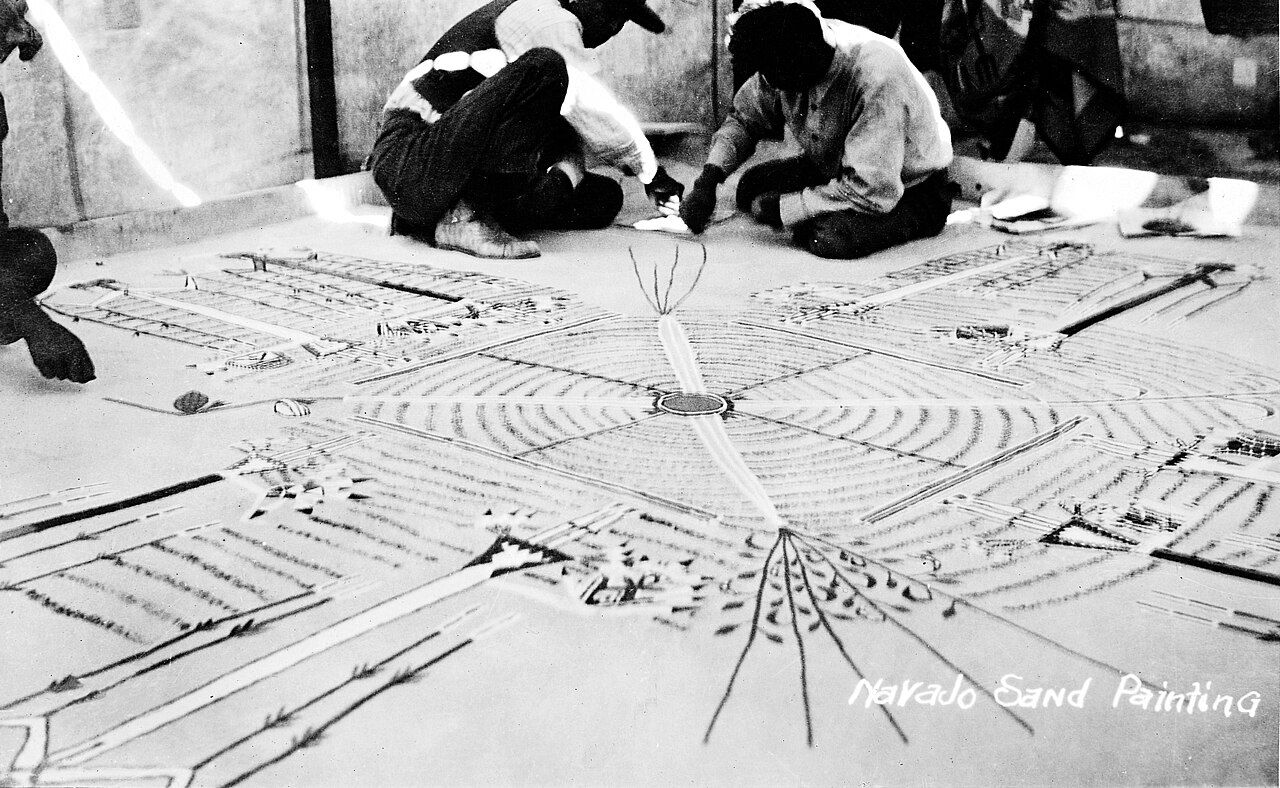
Naturalistic and personalistic etiologies
Ethnomedicine is the study of any society's health beliefs, practices, and practitioners — including, properly understood, our own. George Foster and Barbara Anderson gave the field a durable sorting principle by distinguishing two families of explanation. In a naturalistic etiology, illness follows from an impersonal imbalance: humors out of proportion, hot and cold food misaligned with a hot or cold condition, qi obstructed along a meridian, dosha deranged. In a personalistic etiology, illness is the deliberate work of an agent: a witch, a sorcerer, an offended ancestor, a spirit whose territory you crossed, a person you wronged. The two coexist comfortably almost everywhere, including in a modern hospital where a patient may accept the oncologist's staging entirely and still believe, privately, that the cancer arrived because of something someone did.
Naturalistic systems can be spectacularly elaborate. Ayurveda organizes the body around three doshas — vata, pitta, kapha — and prescribes diet, regimen, and compound preparations to restore proportion. Classical Chinese medicine maps a circulatory system of qi through channels that appear nowhere in a dissection, and reasons from yin–yang balance. Greco-Islamic humoral theory — blood, phlegm, yellow bile, black bile — ruled European practice for two millennia and survives as Unani medicine in South Asia. Hot–cold classifications across Latin America and the Caribbean are the practical descendant of that same logic, and they matter clinically: a patient who classifies a condition as "hot" may refuse a medicine classified as hot, and will look, to an unprepared clinician, simply noncompliant.
The healer and the healer's toolkit
The word shaman comes from Evenki (Tungusic) Siberia and has been stretched, often carelessly, to cover part-time religious specialists worldwide who enter altered states to negotiate with spirits on a patient's behalf. Used carefully it is still useful, and it is worth holding it against its opposite number. Anthony F. C. Wallace's standard contrast sets the shaman — part-time, called rather than appointed, trained by vision or apprenticeship, working on individual clients in trance — against the priest, who is full-time, formally installed in an office that outlives whoever holds it, trained in a fixed liturgy, and acting for the whole community rather than for one sufferer. Shamans predominate where political organization is small and fluid; priesthoods appear with chiefdoms and states, because a full-time office has to be paid for. The two coexist often enough, and the boundary is a gradient, not a wall. The classic account is Claude Lévi-Strauss's pair of essays from 1949. In "The Sorcerer and His Magic," he retells the autobiography of Quesalid, a Kwakwaka'wakw man recorded in Franz Boas's texts, who apprenticed as a healer specifically in order to expose the fraud — learned the trick of the concealed bloody down spat out as the extracted illness — and then found that his patients recovered, that he was a better healer than his rivals, and that his skepticism had nowhere left to stand. In "The Effectiveness of Symbols," Lévi-Strauss analyzes a Guna (Cuna) shaman's chant for obstructed labor, which narrates a journey along the birth path and, he argued, gives the laboring woman a language for otherwise formless pain, allowing the body to reorganize around it. Both essays are about the same claim: symbols do work in bodies. Modern research on the meaning response, argued at length by Daniel Moerman, is the same insight with a control group attached.
Alongside the shaman sit herbalists, bonesetters, birth attendants, diviners, and ritual specialists, and their pharmacopoeias have repeatedly turned out to be right. James Frazer's The Golden Bough catalogued the reasoning behind much of it as sympathetic magic, in two forms: homeopathic (like produces like — the doctrine of signatures that treats a walnut-shaped kernel as good for the brain) and contagious (things once in contact stay connected — hence the care taken with hair clippings and nail parings). Frazer treated this as failed science; anthropology since has treated it as a coherent logic of resemblance and connection that happens, in some hands, to produce excellent empirical results. Bronisław Malinowski, working in the Trobriand Islands, added a further mechanism: Trobrianders used elaborate magic for dangerous open-sea voyaging and almost none for safe lagoon fishing. Magic clusters where uncertainty and stakes are both high — which is precisely where serious illness lives.
Who becomes a healer, and who pays
Healing roles scale with political complexity, which is one of the tidiest places in anthropology to see Elman Service's band–tribe–chiefdom–state typology do real work. (Treat it as a rough ladder of scale and centralization, not a march of progress; real societies sit between the rungs.) In small foraging bands the healer is part-time and unpaid in any formal sense, embedded in the generalized reciprocity that Marshall Sahlins described as the glue already binding everyone. In tribal societies, healing tends to be organized into cults of affliction — those who have suffered a condition become the specialists who treat it. Chiefdoms support full-time ritual specialists through redistribution: goods flow to a center and back out, and the healer-priest is fed by that flow. States license professions, build hospitals, and pay through market exchange or taxation, which is also how they acquire the power to declare rival healers illegal.
Descent matters too. Victor Turner's Ndembu ethnography in Zambia — The Drums of Affliction, The Forest of Symbols — is the deepest study of this. Ndembu villages combined matrilineal descent with a strong pull toward virilocal residence, a structural contradiction that generated chronic tension between a man's obligations to his sister's children and his desire to keep his own wife and children near him. When someone fell ill, the diviner and the chimbuki (ritual doctor) read that illness as a symptom of the group. The Ihamba ritual sought a dead hunter's tooth lodged in the sufferer's body, but its real machinery was a public airing of grudges: the tooth would not come out until the assembled kin had spoken their resentments aloud. Turner's formulation is worth memorizing — the Ndembu doctor treats not a patient but a disturbed set of social relationships, of which the patient is the visible sign.
| Society type | Typical healing role | How the healer is supported | Ethnographic example |
|---|---|---|---|
| Band | Part-time shaman; everyone holds some plant knowledge | Generalized reciprocity — no accounting | Ju/'hoansi n/um healing dance |
| Tribe | Diviner plus cult of affliction; sufferers become specialists | Balanced reciprocity — gifts, feasts, obligation | Ndembu chimbuki and Ihamba (Turner) |
| Chiefdom | Full-time priest-healer attached to a ranked center | Redistribution through the chief | Polynesian ritual specialists under tapu |
| State | Licensed professions, hospitals, public health bureaucracy | Market exchange, insurance, taxation | Physicians, and the laws that define who is not one |
- Naturalistic etiologies blame impersonal imbalance (humors, hot/cold, qi, dosha); personalistic etiologies blame an agent. Most people hold both.
- Shamans are part-time, called, and work on individual clients in trance; priests hold a full-time office that outlives them and act for the whole community — which is why priesthoods need chiefdoms and states to pay for them.
- Lévi-Strauss (via Boas's Quesalid text and the Guna birth chant) argued that symbols do measurable work in bodies — the ancestor of research on the meaning response.
- Frazer's sympathetic magic (homeopathic and contagious) and Malinowski's uncertainty argument explain the logic of healing practice, not merely its content.
- Healing roles track political scale — band/tribe/chiefdom/state — and are paid through reciprocity, redistribution, or market exchange.
- Turner's Ndembu: the ritual doctor treats a disturbed set of social relations, and matrilineal descent under virilocal residence supplies the tension he reads.
Section 3Medical pluralism
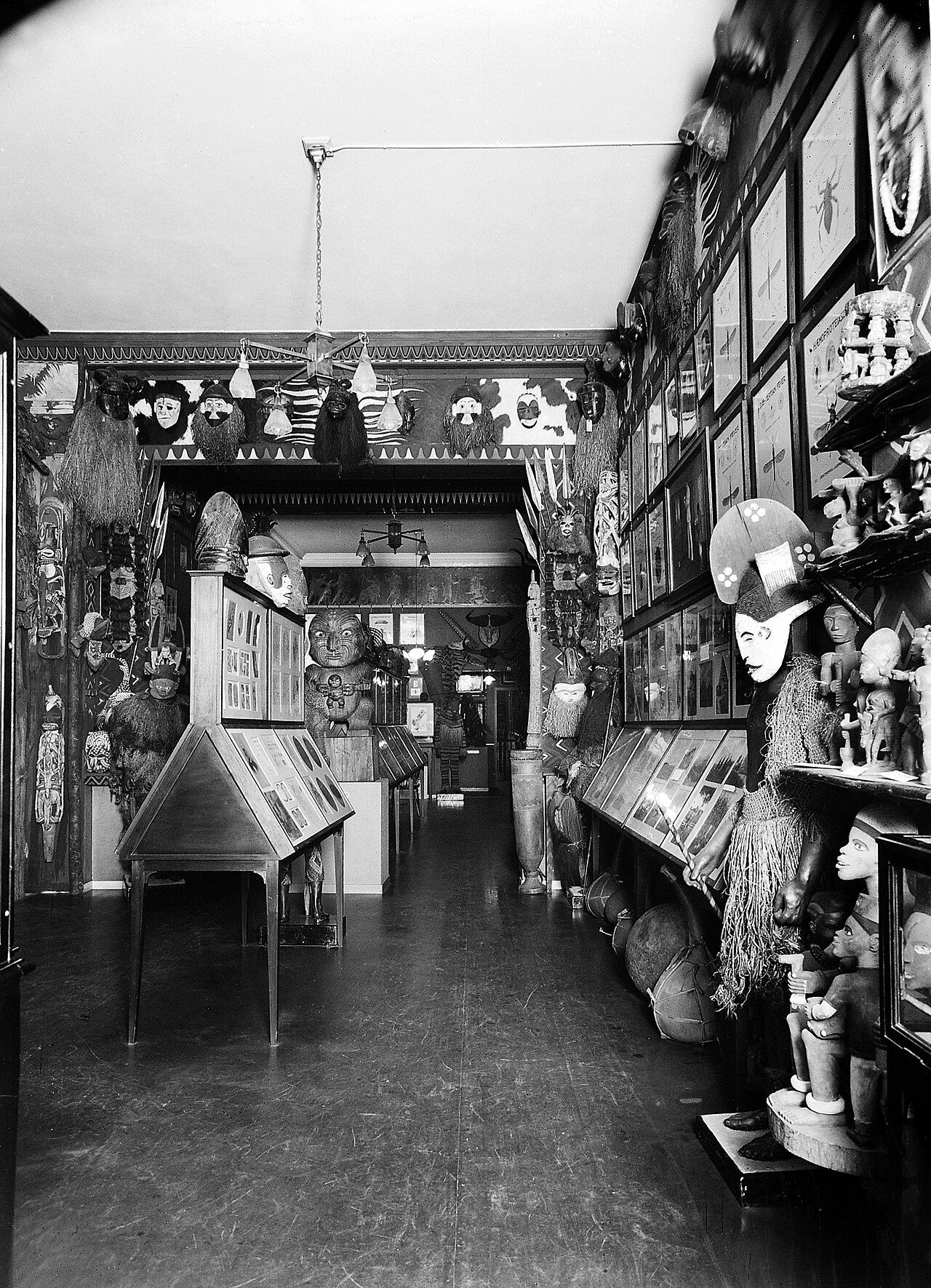
Three sectors, one patient
Medical pluralism — a term brought into focus by Charles Leslie's Asian Medical Systems (1976) — is the ordinary condition of nearly every society: several medical systems operating at once, with different theories, different practitioners, and different claims to legitimacy. Kleinman organized the field into three sectors of health care. The popular sector is family and self-care: the mother who decides whether this fever is worth an appointment, the aunt consulted first, the internet search, the leftover antibiotics in the drawer. This is where an estimated 70–90 percent of all illness episodes worldwide begin and end, and it is the sector clinicians see least and understand worst. The folk sector holds non-professionalized specialists — herbalists, bonesetters, birth attendants, spiritual healers. The professional sector is the legally sanctioned, credentialed system, which in most countries means biomedicine but in India also means registered Ayurvedic and Unani practitioners.
| Sector | Who | Basis of authority | Share of illness episodes |
|---|---|---|---|
| Popular | Self, family, neighbors, community networks | Experience, kinship, common sense | The large majority — most episodes never leave it |
| Folk | Herbalists, bonesetters, birth attendants, diviners, shamans | Apprenticeship, calling, community reputation | Substantial, and often consulted in parallel with clinics |
| Professional | Licensed practitioners of a state-recognized system | Credential, statute, institution | A minority of episodes, but most of the money and prestige |
Hierarchies of resort: what people actually do
Patients are not loyalists. They are pragmatists who move between systems, often simultaneously, in a pattern anthropologists call a hierarchy of resort. The order depends on cost, distance, the perceived cause, previous results, and who in the family is making the decision. A common pattern across much of the world runs: home remedy first, then the local pharmacist or drug seller, then a folk healer if the illness resists or if its cause is suspected to be personalistic, then the clinic, then back to the healer if the clinic fails to explain why. Crucially, people frequently see no contradiction in this. A Ghanaian patient may take antimalarials exactly as prescribed while also consulting about who sent the illness; the first addresses the parasite, the second addresses the malice. Asking a patient to choose is asking them to abandon half of what they need.
States respond to pluralism in different ways. India's AYUSH ministry gives Ayurveda, Yoga and naturopathy, Unani, Siddha, and Homoeopathy formal standing, degree programs, and hospitals. China integrated traditional Chinese medicine into the state system, most famously through the barefoot doctor program, and today runs integrative hospitals in which both systems are billed. The WHO's Alma-Ata Declaration of 1978, which set the goal of health for all through primary health care, explicitly recognized traditional practitioners as part of the workforce — a rare moment of official humility. Elsewhere, states have criminalized traditional healing, which reliably drives it underground rather than ending it.
Biomedicine is also an ethnomedicine
The most productive move medical anthropology ever made was to turn its gaze back on the clinic. Biomedicine — the term itself is deliberate, marking it as one system among several rather than as "medicine" full stop — is a cultural system with a cosmology (the body as a machine of separable parts), a moral order (the autonomous individual patient), initiation rites (dissection, the white coat ceremony, the brutal liminality of residency), sacred objects, taboos, and a distinctive origin myth. Byron Good's work on medical education showed students being taught not merely facts but a way of seeing that constructs the patient as a body to be read. Michel Foucault called that trained perception the clinical gaze and traced how modern states came to govern populations through health — biopower. Emily Martin's The Woman in the Body showed medical textbooks describing menstruation in the language of failed industrial production, and her essay "The Egg and the Sperm" (1991) caught cell biology narrating fertilization as a romance with a passive damsel and questing suitors, long after the lab data had shown the egg to be an active participant.
None of this is an argument that biomedicine does not work. It works, at enormous scale, better than any system in history at what it is good at. The argument is that its assumptions are assumptions and not the absence of assumptions — and that its characteristic failures (poor management of chronic pain, of dying, of suffering without a lesion) follow directly from those assumptions. Margaret Lock's Twice Dead makes the point unforgettably: brain death, which North American medicine treats as a straightforward biological fact enabling organ transplantation, was resisted for decades in Japan, where personhood is not located so exclusively in the cortex. Two professional systems, the same physiology, different deaths.
- Medical pluralism is normal, not exceptional; Leslie's Asian Medical Systems put it on the map.
- Kleinman's sectors — popular, folk, professional — and most illness never leaves the popular sector.
- A hierarchy of resort describes real patient behavior: parallel, pragmatic, and rarely exclusive.
- States handle pluralism by integration (India's AYUSH, China's TCM), recognition (Alma-Ata 1978), or prohibition.
- Biomedicine is itself a cultural system — Good on training, Foucault on the clinical gaze and biopower, Martin on metaphor, Lock on brain death.
Section 4Global health
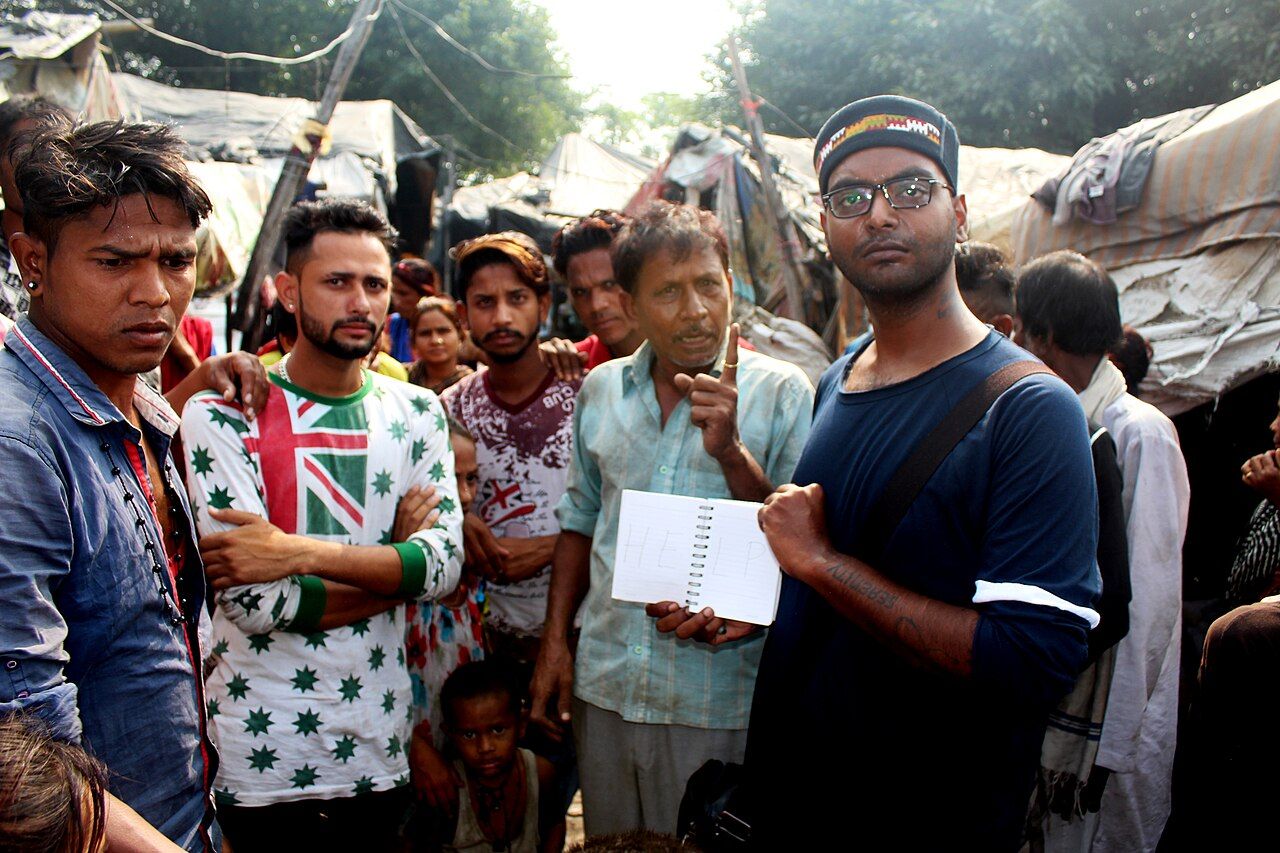
Structural violence: when the cause is the arrangement
Paul Farmer, a physician-anthropologist who worked for decades in Haiti's Central Plateau and co-founded Partners In Health, built his career on a single stubborn observation: the distribution of tuberculosis, HIV, and cholera is not random and is not explained by patient beliefs. It is explained by structural violence — a term coined by the peace researcher Johan Galtung in 1969 and carried into medicine by Farmer — the arrangements of poverty, racism, gender inequality, and political economy that place some people in harm's way and keep them there, without any identifiable individual doing the harming. In Infections and Inequalities and Pathologies of Power, Farmer showed how readily "cultural" explanations get reached for when structural ones are inconvenient. Haitian women were said to have fatalistic beliefs about AIDS; when Farmer took life histories, what he found was a sequence of forced economic migrations, unequal sexual relationships entered for survival, and no access to condoms or care. The belief followed the constraint; it did not cause it.
His most consequential fight was over multidrug-resistant tuberculosis. Global health orthodoxy in the 1990s held that MDR-TB treatment was not cost-effective in poor settings, and that failure was driven by patient noncompliance. Farmer's team in Carabayllo, Peru treated it anyway, with community health workers delivering directly observed therapy and food support, and cured people at rates that forced the WHO to revise its guidelines and reprice second-line drugs. The anthropological contribution was not a cultural insight. It was the refusal to accept that a description of what poor patients do could substitute for an explanation of the conditions they do it in.
Nancy Scheper-Hughes's Death Without Weeping, from a shantytown in Northeast Brazil, is the other landmark and the more uncomfortable one. Facing appalling infant mortality, mothers on the Alto do Cruzeiro withheld attachment from infants judged unlikely to survive, describing them as children "who wanted to die." Scheper-Hughes read this not as callousness but as what she and others have called socialization for scarcity — a maternal practice produced by conditions no mother chose. She also traced how hunger came to be spoken of and treated as nervos, a nervous condition, with clinics dispensing tranquilizers and vitamin tonics for what was starvation. Medicalizing a political problem makes it treatable and leaves it in place.
Syndemics: diseases that cooperate
Merrill Singer's concept of the syndemic (with Hans Baer and the school of critical medical anthropology) names something epidemiology had underweighted: two or more conditions that cluster in a population because of shared social conditions and then interact to make each other worse. Singer's original case was SAVA — substance abuse, violence, and AIDS in poor urban American neighborhoods — where none of the three can be understood, or treated, in isolation. Diabetes and tuberculosis form a syndemic; so do depression and diabetes; so, as many argued during the COVID-19 pandemic, did SARS-CoV-2 and the chronic diseases of poverty. The practical implication is sharp: a vertical, single-disease program aimed at one member of a syndemic will underperform its own trial data, because the trial removed the interaction that defines the real-world problem.
Anthropologists in the outbreak
Epidemics are where anthropology is most visibly useful and most often called in too late. In the 2014–16 West African Ebola epidemic, early control efforts collided head-on with funerary practice: Ebola's viral load peaks around death, and washing, touching, and kissing the body are core obligations in much of Sierra Leone, Liberia, and Guinea. The first response was to ban burials and remove bodies in sealed bags to unmarked graves, which was epidemiologically defensible and socially catastrophic — families hid the sick and the dead, and transmission accelerated. Anthropologists, including work drawn together by Paul Richards in Ebola: How a People's Science Helped End an Epidemic, helped redesign the protocol into "safe and dignified burials" that preserved what could be preserved: family witness, a named grave, prayer, control over the process. Earlier, during Uganda's 2000–01 outbreak, Barry and Bonnie Hewlett had documented among the Acholi of the north an indigenous epidemic protocol called gemo — quarantine, marked houses, suspended funerals, survivor caregivers — that closely paralleled what outside experts arrived to impose.
The northern Nigeria polio boycott of 2003–04 is the counterexample every global health student should know. Political and religious leaders in Kano suspended oral polio vaccination amid a widely believed claim that the vaccine was a covert sterilization campaign. Dismissing this as ignorance missed the history that made it credible — including a notorious drug trial conducted during a meningitis epidemic in the same state. Vaccination paused for roughly a year, polio re-exported to more than a dozen previously polio-free countries, and eradication was set back by years and hundreds of millions of dollars. Trust is infrastructure. It is built and destroyed by history, and it cannot be messaged into existence.
| Case | What the culture-blame account said | What ethnography found | What changed |
|---|---|---|---|
| MDR-TB, Peru & Haiti | Poor patients are noncompliant | No drugs, no food, no transport, no follow-up | Community-based DOT; WHO guidelines and drug prices revised |
| Ebola, West Africa 2014 | Dangerous burial customs driving spread | Sealed-bag removals destroyed trust; families hid cases | Safe and dignified burial protocols; local burial teams |
| Polio, northern Nigeria 2003 | Irrational rumor and religious resistance | Rational distrust rooted in documented past abuses | Local production/testing, leader engagement — after a year lost |
| Infant mortality, NE Brazil | Mothers who do not grieve | Attachment withheld under conditions of extreme scarcity | Hunger re-read as hunger, not as nervos |
- Structural violence (Farmer) explains disease distribution far better than patient belief; MDR-TB treatment in Peru and Haiti proved it operationally.
- Scheper-Hughes's Death Without Weeping shows maternal practice reshaped by scarcity — and hunger medicalized as nervos.
- A syndemic (Singer) is a socially produced cluster of interacting conditions — SAVA is the founding case.
- Ebola control succeeded when burial protocols preserved dignity; polio eradication stalled where trust had already been destroyed.
- Structural competency asks what options a person actually had, before attributing behavior to belief.
Section 5The cultural body
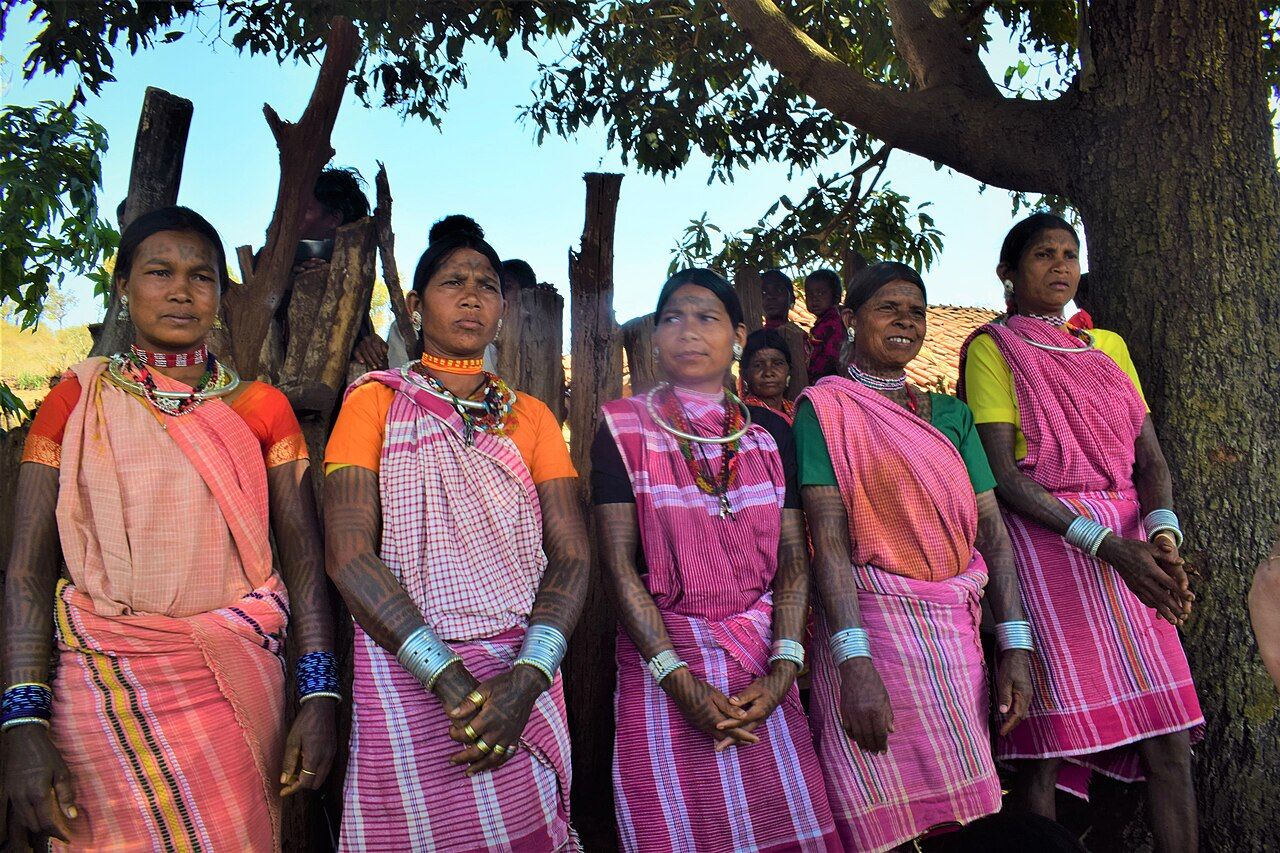
Techniques of the body
Marcel Mauss's short 1934 lecture "Techniques of the Body" is the origin point for everything in this section. Mauss noticed, while watching soldiers and swimmers and hospital nurses, that the most basic uses of the body — how you walk, dig, squat, carry a child, sleep, spit, give birth — are not natural at all. They are learned, transmitted, and nationally distinctive; he could identify a walking gait as French or English. The body is the first and most obvious instrument of every culture, and it is trained before anyone can think about it. Pierre Bourdieu later formalized this as habitus: durable dispositions installed in the body by upbringing, operating below deliberate thought, and reproducing social position through posture, taste, accent, and comportment. Margaret Mead and Gregory Bateson's Balinese Character (1942) had already tried to capture it photographically — thousands of images of how Balinese parents held, carried, and handled infants, offered as evidence that character is built through bodily handling.
This is embodiment: culture is not a set of ideas laid over a universal body but something that becomes flesh. It has direct clinical consequences. Pain expression is culturally trained — stoicism and vocal complaint are both learned performances, and both are read (usually wrongly) as evidence about severity. Body posture in labor, the acceptability of squatting, the meaning of eye contact during examination, whether nausea or dizziness or "gas" is the culturally available word for anxiety — all of it is habitus, and all of it enters the clinical record as data.
Three bodies, and the body as a map of society
Nancy Scheper-Hughes and Margaret Lock's 1987 essay "The Mindful Body" gave the field its most useful scaffold by distinguishing three bodies at once. The individual body-self is the lived, felt body — the phenomenological experience of being embodied. The social body is the body used as a symbol to think about nature, society, and culture — hearts as seats of feeling, guts as seats of intuition, the body politic, the head of state. The body politic is the body as an object of regulation and surveillance: quarantine, vaccination mandates, drug testing, reproductive law, incarceration, the border.
Mary Douglas supplied the theory behind the middle term in Purity and Danger (1966). Dirt, she argued, is not a substance but a judgment — "matter out of place," a violation of a classification system. That is why the same material is clean in one location and polluting in another, why bodily margins and the substances that cross them (blood, saliva, milk, feces, semen) attract such intense rule-making everywhere, and why the human body so consistently serves as a model for the social body: societies worried about their boundaries are worried about their orifices. Every pollution rule you can name — kashrut, halal, caste rules about cooked food and touch, hospital sterile fields, the elaborate American vocabulary of germs — is a boundary system before it is a hygiene system.
| Body | What it is | Key theorist | Clinical or political expression |
|---|---|---|---|
| Individual body-self | The lived, felt experience of being embodied | Merleau-Ponty; Csordas | Pain, nausea, fatigue — and whether they are believed |
| Social body | The body as a symbol for thinking about society | Douglas, Purity and Danger | Pollution rules, dietary law, ideas of contamination |
| Body politic | The body as object of regulation and surveillance | Foucault; Scheper-Hughes & Lock | Quarantine, mandates, reproductive law, organ markets |
Marking, passing through, and local biologies
Bodies are also where societies write their transitions. Arnold van Gennep's Les rites de passage (1909) identified the universal three-part structure — separation from the old status, a liminal margin in which the person is betwixt and between, and incorporation into the new status — and observed that the passage is very often inscribed on the body: circumcision, scarification, tooth removal, tattooing, head-shaving, the Nuer gaar cut across the forehead that makes a boy a man. Victor Turner took the middle phase and made a career of it, showing that liminal persons are dangerous, powerless, stripped of insignia, leveled among themselves into what he called communitas, and subjected to authority they cannot contest.
Now apply that to a hospital. Robbie Davis-Floyd's Birth as an American Rite of Passage analyzes standard obstetric procedure as ritual in exactly Turner's sense: the mother is separated from home and clothing, stripped of ordinary status, confined and immobilized, attached to monitors that speak about her body in a language she does not have, and finally reincorporated with a new social identity. Brigitte Jordan's Birth in Four Cultures — Yucatan, Holland, Sweden, and the United States — introduced the essential concept of authoritative knowledge: in any birth setting, one way of knowing what is happening carries weight and the others become irrelevant, and the machine's account routinely displaces the mother's. Neither author argues that obstetric technology is useless. Both argue that its ritual dimension is invisible to its practitioners precisely because it is their own.
Finally, culture may reach further into the flesh than anyone expected. Lock's research comparing Japanese kōnenki with North American menopause found strikingly different symptom profiles — hot flashes reported far less often in her Japanese sample — which cannot be reduced to reporting bias alone once diet, reproductive history, and life course are accounted for. She named the phenomenon local biologies: biology and culture are not layers but a feedback loop, in which what people eat, how they work, when they bear children, and what they are taught to notice help produce measurably different bodies. That is the strongest form of the argument this chapter has been building toward. The body is not the neutral substrate beneath culture. It is culture's most thoroughly worked material.
- Mauss's techniques of the body and Bourdieu's habitus: the most basic bodily acts are culturally learned, and precede conscious thought.
- Scheper-Hughes and Lock's three bodies — individual body-self, social body, body politic — separate three questions usually asked at once.
- Douglas: dirt is "matter out of place," so pollution rules are boundary systems, and the body models the society.
- Van Gennep's rites of passage and Turner's liminality apply to hospital birth as precisely as to initiation; Jordan's authoritative knowledge names whose account counts.
- Lock's local biologies: culture and biology form a feedback loop that yields measurably different bodies.
The chapter in one breath
- Disease, illness, and sickness are three different objects — the practitioner's, the sufferer's, and the society's — and clinical failure lives in the gaps between them.
- Everyone carries an explanatory model; biomedicine answers how while most systems answer why me, why now first, which is Geertz's problem of suffering and Evans-Pritchard's Azande witchcraft.
- Emic categories such as susto, nervios, and hwa-byung are real idioms of distress, not folk mistranslations of etic diseases.
- Ethnomedicine divides into naturalistic and personalistic etiologies; healing roles scale with band/tribe/chiefdom/state and are paid through reciprocity, redistribution, or market exchange.
- Turner's Ndembu showed the healer treating a disturbed social group, with matrilineal descent under virilocal residence supplying the tension the ritual airs.
- Medical pluralism is the normal condition; Kleinman's popular, folk, and professional sectors plus hierarchies of resort describe what patients actually do.
- Biomedicine is itself a cultural system, with its own metaphors, initiations, and characteristic failures — Foucault's clinical gaze, Martin's metaphors, Lock's two deaths.
- Structural violence, syndemics, and structural competency explain global health failures better than culture-blame — as MDR-TB, Ebola burials, and the Kano polio boycott each demonstrate.
ReferenceWords worth knowing
A working vocabulary for medical anthropology — skim it now, and come back to it whenever a term in the chapter refuses to hold still.
- Biomedicine
- The professional medical system grounded in biology and the natural sciences, named this way to mark it as one cultural system among several rather than as medicine in general.
- Biopower
- Foucault's term for the modern state's governance of populations through the management of health, birth, death, and bodies.
- Cultural concept of distress
- A locally recognized pattern of suffering with its own name, cause, and expected course (e.g., susto, hwa-byung); the DSM-5 term replacing "culture-bound syndrome."
- Disease
- Biological malfunction as defined by a professional diagnostic system; the practitioner's object.
- Embodiment
- The principle that culture is not laid over a universal body but becomes flesh — shaping posture, perception, pain, and physiology.
- Emic
- An account using the categories and concepts of the people being studied; the insider's frame.
- Ethnomedicine
- The comparative study of any society's health beliefs, practices, and practitioners — biomedicine included.
- Ethnopharmacology
- The study of medicinal substances used in a culture, and of their chemical activity; the route from willow bark to aspirin and from qinghao to artemisinin.
- Etic
- An account using the analyst's comparative, cross-cultural categories; the outsider's frame.
- Explanatory model
- Kleinman's term for a person's working account of an illness — its cause, timing, mechanism, course, and proper treatment. Practitioners have them too.
- Habitus
- Bourdieu's term for durable bodily dispositions installed by upbringing, operating below conscious thought and reproducing social position.
- Hierarchy of resort
- The order in which a person actually moves among available healing options — home remedy, drug seller, folk healer, clinic — often in parallel rather than in sequence, and driven by cost, distance, suspected cause, and past results.
- Idiom of distress
- Nichter's term for the culturally available vocabulary — somatic, spiritual, or emotional — through which suffering can legitimately be expressed.
- Illness
- The lived experience of being unwell, including what the sufferer believes is happening; the patient's reality.
- Local biologies
- Lock's argument that culture and biology form a feedback loop producing measurably different bodies, as in Japanese kōnenki versus North American menopause.
- Medical pluralism
- The coexistence of several medical systems in one society, each with its own theory, practitioners, and claim to legitimacy.
- Medicalization
- The process by which a condition or behavior comes to be defined and managed as a medical problem — sometimes helpfully, sometimes to conceal a political one.
- Personalistic etiology
- An explanation attributing illness to a purposeful agent — witch, sorcerer, ancestor, or spirit — as opposed to a naturalistic etiology attributing it to impersonal imbalance.
- Priest
- A full-time religious specialist installed in a formal office that outlasts its holder, trained in fixed liturgy and acting for a whole community — contrast the part-time, individually called shaman.
- Rite of passage
- Van Gennep's three-phase ritual structure — separation, liminality, incorporation — that moves a person from one social status to another, very often by marking the body.
- Sectors of health care
- Kleinman's division of any health system into the popular (family and self), folk (non-professional specialists), and professional (licensed) sectors.
- Shaman
- Originally an Evenki (Siberian) term; a part-time religious specialist who enters an altered state to negotiate with spirits on a community's or patient's behalf.
- Sickness
- The social recognition of a condition — its stigma, its funding, its status — as distinct from disease and illness.
- Structural competency
- Metzl and Hansen's 2014 corrective to cultural competency: before attributing a behavior to belief, establish what options the person actually had — transport, clinic hours, documents, food, money.
- Structural violence
- Coined by Johan Galtung and brought into medical anthropology by Farmer: the harm done by social and economic arrangements — poverty, racism, gender inequality — that put some people in danger and keep them there without any individual perpetrator.
- Syndemic
- Singer's term for two or more conditions that cluster because of shared social conditions and then worsen one another, as in the SAVA syndemic of substance abuse, violence, and AIDS.
Check yourself
Globalization & Culture Change
No culture has ever sat still, and none has ever been alone. Long before anyone used the word globalization, shell valuables circulated the kula ring across the Massim islands, silver from Potosí financed Chinese silk, and beaver pelts from the Great Lakes reshaped Cree kinship. What is new in the last five centuries is the scale and the asymmetry of the connection — the fact that European colonial empires reorganized most of the planet's societies on terms those societies did not choose, and that the world economy those empires built still sorts people into winners and losers. This chapter is about that long encounter: how colonialism made the modern world (and made anthropology), how goods, people, and ideas now move at unprecedented speed, and how communities from the Andes to Aotearoa have refused the ending that was written for them.
By the end of this chapter you can
- Define colonialism, distinguish its major forms, and describe the colonial encounter as a transformation of both colonized and colonizer.
- Explain anthropology's own entanglement with empire and how Boas, Malinowski, and later critics such as Talal Asad figure in that story.
- Define globalization and analyze global flows using Wallerstein's world-systems model and Appadurai's five “scapes.”
- Contrast cultural homogenization with hybridity, creolization, and glocalization, using real ethnographic cases.
- Distinguish types of migration and explain transnationalism, diaspora, and the role of remittances in transnational identity.
- Define revitalization movement in Anthony F. C. Wallace's sense and describe its stages with real examples.
- Distinguish genocide from ethnocide and summarize the modern framework of Indigenous rights (UNDRIP, ILO 169, FPIC, NAGPRA).
- Describe how local communities resist, accommodate, appropriate, and revitalize in the face of global change, and explain multi-sited ethnography.
Section 1Colonialism
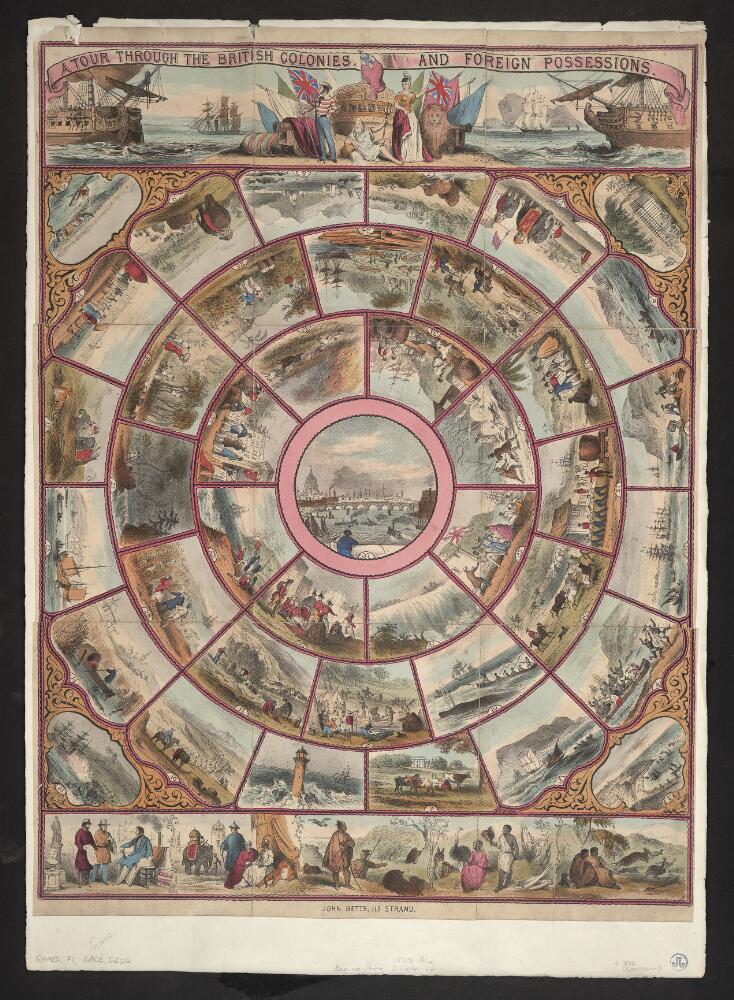
What colonialism was, and what it did
Colonialism is the political, economic, and cultural domination of one people by another over an extended period, backed by force and administered from a distant metropole. It is not a single thing. Anthropologists distinguish settler colonialism, where colonists come to stay and displace the original inhabitants (the United States, Canada, Australia, South Africa); extractive or exploitation colonialism, where a thin administrative layer governs a large local population in order to move minerals, rubber, or cash crops outward (the Belgian Congo, the Dutch East Indies); and plantation colonialism, which ran on coerced labor — roughly 12.5 million people were forced aboard slave ships in the transatlantic trade alone, of whom about 10.7 million survived the crossing — to grow sugar, cotton, and coffee for distant markets.
The consequences were never only economic. Colonial rule rearranged the deepest structures anthropologists study. Political organization was flattened: societies that had been organized as bands, tribes, and chiefdoms in Elman Service's typology were encapsulated inside states whose borders were drawn in European conference rooms — most infamously at the Berlin Conference of 1884–85, which set the rules by which Africa was partitioned with almost no reference to the peoples living there. Exchange was reorganized: economies that had run largely on reciprocity and redistribution, in Karl Polanyi's three-part scheme, were pulled by taxation, wage labor, and cash cropping toward the market principle. Head taxes payable only in colonial currency were a deliberate instrument for this — you cannot pay a tax in yams, so you must sell your labor.
Descent systems were altered too. Colonial land registration typically recorded a single male “head” of household, which quietly eroded women's land rights in matrilineal societies and hardened fluid, negotiable lineage claims into fixed legal title. Anthropologists also learned to be suspicious of the word tribe itself: as Aidan Southall and others argued, many named “tribes” are partly colonial artifacts, produced when administrators needed bounded, countable units with identifiable chiefs to govern through — the system Frederick Lugard formalized as indirect rule.
| Form | How it worked | Example | Cultural consequence |
|---|---|---|---|
| Settler | Colonists come to stay; land is the prize; original inhabitants displaced or confined | Australia, Canada, U.S. West, South Africa | Dispossession, reserves/reservations, boarding schools, language loss |
| Extractive | Small administrative elite governs a large local population to move resources out | Belgian Congo, Dutch East Indies | Forced labor, cash-crop dependency, distorted local economies |
| Plantation | Coerced or indentured labor imported to work export monocrops | Caribbean sugar, Brazilian coffee, Fiji (Indian indenture) | Creolized new societies, enduring racial hierarchies |
| Indirect rule | Empire governs through selected “traditional” authorities it recognizes and pays | British Nigeria, Northern Rhodesia | “Tribes” and chiefships hardened, sometimes invented outright |
| Internal colonialism | A state treats a region or minority within its own borders as a colony | Various post-independence states | Persistent marginalization without a foreign flag |
Anthropology's own entanglement
Anthropology grew up inside the empire, and honest teaching says so. Sir James Frazer wrote The Golden Bough (1890) without leaving his study, synthesizing reports mailed home by missionaries, district officers, and traders — the “armchair” method, dependent on a colonial information pipeline and organized around an evolutionary ladder from magic to religion to science that placed Europe conveniently at the top. Bronisław Malinowski broke with the armchair by living in the Trobriand Islands across two stays between 1915 and 1918, but he did so as an enemy alien — an Austro-Hungarian subject — permitted to remain in Australian-administered Papua; his celebrated study of the kula ring was made possible by the very colonial peace he was documenting. E. E. Evans-Pritchard undertook his Nuer research in the 1930s at the request of the Anglo-Egyptian Sudan government, shortly after military expeditions against the Nuer — a fact he acknowledged with discomfort.
In 1973 Talal Asad's edited volume Anthropology and the Colonial Encounter forced the discipline to reckon with this. His argument was not that anthropologists were spies but something subtler and harder: that anthropological knowledge was produced under conditions of radically unequal power, which shaped what could be asked, who would answer, and what got published. Yet the same discipline also produced empire's sharpest critics. Franz Boas spent his career dismantling scientific racism and the evolutionary ranking of cultures, insisting on historical particularism and cultural relativism — that each culture must be understood in its own terms and its own history rather than as a rung on a universal ladder. Margaret Mead, his student, used Coming of Age in Samoa (1928) to argue that adolescent turmoil was cultural rather than biological, turning ethnography outward as a critique of the anthropologist's own society. Boas also drove salvage ethnography, the urgent recording of Northwest Coast languages and ceremonies under assimilationist pressure — a project whose paternalism is now criticized, but whose archives are today actively used by Kwakwa̱ka̱'wakw and other nations in their own language revitalization.
The legacy
Formal empires ended; their architecture did not. Postcolonial states inherited straight-line borders, export-dependent economies, and administrative categories that had been made rigid on paper. Clifford Geertz's Agricultural Involution (1963) traced how the Dutch Cultivation System in Java forced sugar and indigo onto peasant rice land, driving an ever more elaborate labor-absorbing rice agriculture that fed more people at steadily lower per-capita returns — a poverty with a specific colonial genealogy, not a timeless condition. In Rwanda, Belgian administrators issued identity cards fixing every person as Hutu, Tutsi, or Twa, converting a flexible and partly occupational distinction into a hereditary racial one with catastrophic downstream consequences. Structural violence — a term coined by the peace researcher Johan Galtung in 1969 and brought into anthropology by Paul Farmer — names the outcome anthropologists now trace in Haiti and elsewhere: harm produced not by a visible perpetrator but by durable arrangements of poverty, land tenure, and political exclusion laid down centuries ago. Neocolonialism describes the continuation of that dependency through debt, trade terms, and corporate power rather than through governors and garrisons.
- Colonialism takes several forms — settler, extractive, plantation, indirect rule, internal — each with distinct cultural consequences.
- Colonial rule pulled societies from reciprocity and redistribution toward the market, and encapsulated bands, tribes, and chiefdoms inside imposed states.
- Anthropology emerged within empire: Frazer's armchair comparison, Malinowski's and Evans-Pritchard's colonially permitted fieldwork; Asad (1973) named the problem.
- Boas and Mead used the same discipline against racism and ethnocentrism; salvage ethnography's archives now serve revitalization.
- The legacy persists as neocolonialism and structural violence, not merely as memory.
Section 2Globalization
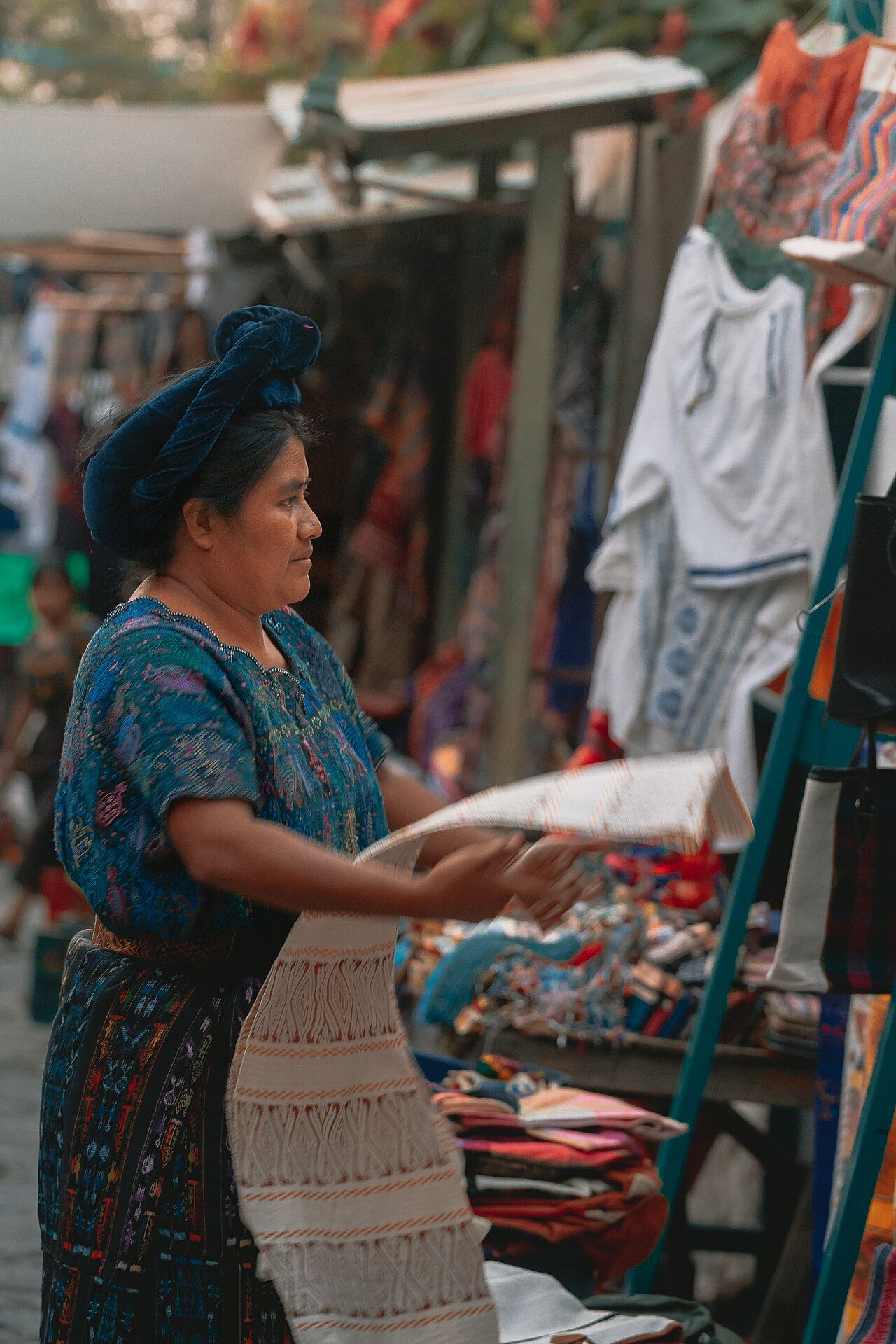
Not new, but newly fast
Globalization is the accelerating worldwide integration of economies, politics, communication, and culture — and the increasing consciousness of the world as a single place. Anthropologists insist on two correctives. First, it is old. Eric Wolf's Europe and the People Without History (1982) demolished the idea that anthropology studies isolated societies onto which history later arrived: the Cree and Ojibwa hunters of the North American fur trade, he showed, were already deeply enmeshed in a world market by the seventeenth century, reorganizing their kinship, settlement, and hunting around European demand for pelts. There are no people without history. Second, globalization is uneven. Immanuel Wallerstein's world-systems theory divides the global economy into a core that captures high-value production, a periphery that supplies raw materials and cheap labor, and a semi-periphery in between — a structure inherited directly from the colonial division of labor described in Section 1.
What is genuinely new is velocity. David Harvey's time-space compression names the collapse of the friction of distance: a container ship, a wire transfer, and a video call each shrink the world in a different way. The market principle, once one mode of exchange among Polanyi's three, is now the dominant idiom of value nearly everywhere — though reciprocity and redistribution never disappeared. They persist inside the global economy, which is precisely why a Filipino nurse in Dubai sends money home on a schedule that looks nothing like a market transaction and everything like a kinship obligation.
Five scapes: how to see a global flow
Arjun Appadurai's Modernity at Large (1996) gave anthropology its most useful vocabulary for this. He argued that global flows are disjunctive — they do not move together or arrive in step. Money, people, machines, images, and ideologies each travel their own path at their own speed, and the friction between them is where the interesting cultural work happens. He called these five dimensions scapes, using the suffix deliberately: like a landscape, each looks different depending on where you are standing.
| Scape | What flows | Example |
|---|---|---|
| Ethnoscape | People — migrants, refugees, tourists, guest workers, students | Filipino and Kerala nurses across the Gulf and North America |
| Technoscape | Machinery and technical know-how across borders | Smartphone assembly split across a dozen countries |
| Financescape | Capital, currency, credit, remittances | Over $650 billion in remittances sent to low- and middle-income countries yearly |
| Mediascape | Images, narratives, and the means of producing them | Nollywood films circulating across Africa and its diasporas |
| Ideoscape | Political ideas and keywords — rights, sovereignty, democracy | “Indigenous rights” as a globally usable claim (Section 4) |
Homogenization or hybridity?
The nightmare version of globalization is cultural homogenization: one world, one menu, one soundtrack. George Ritzer's “McDonaldization” thesis argued that the fast-food logic of efficiency, calculability, predictability, and control was colonizing every institution, and cultural imperialism named the fear that Western media would simply overwrite local meaning. Real ethnography complicates this sharply. James Watson's Golden Arches East (1997) found that McDonald's in East Asia was thoroughly indigenized: in Beijing it became a place to linger for hours rather than eat and leave, in Hong Kong a children's birthday-party venue that supplied a ritual form Cantonese culture had not previously had, and across the region a rare source of clean public restrooms and a socially acceptable space for young women to sit alone. Daniel Miller's work in Trinidad showed Coca-Cola absorbed into local categories of “black sweet drink” and mixed with rum, becoming a marker of Trinidadian identity rather than an American one.
The concepts that capture this are hybridity (new cultural forms from the meeting of distinct traditions), creolization (borrowed from linguistics, where contact produces a full new language with its own grammar — Haitian Kreyòl, Tok Pisin), indigenization (a foreign import reworked to serve local meanings), and glocalization (global products deliberately adapted to local markets). None of this makes globalization harmless. Power still runs downhill: the flows are real, the losses are real, and the fact that people creatively rework what arrives does not mean they chose what arrived.
- Globalization is old but newly fast; Wolf showed there are no people without history.
- World-systems theory (core / semi-periphery / periphery) explains why the flows are unequal; time-space compression explains why they are quick.
- Appadurai's ethno-, techno-, finance-, media-, and ideoscapes are disjunctive — they move at different speeds.
- Ethnography repeatedly finds indigenization and hybridity where theory predicted homogenization (Watson on McDonald's, Miller on Coca-Cola).
- Creative local reworking does not cancel the power asymmetry that delivered the goods.
Section 3Migration and diaspora
Kinds of movement
Roughly one person in thirty now lives outside their country of birth — about 280 million people — and far more have moved within their own country's borders. Anthropologists resist the flat language of “push and pull” factors, useful as it is, because it makes migration sound like weather rather than a decision made by people inside families, obligations, and histories. Households, not individuals, are usually the decision-making unit: a family invests in sending one member abroad, and that member carries the debt and the duty.
The legal categories matter enormously to the people sorted into them. A refugee has crossed an international border with a well-founded fear of persecution and is protected under the 1951 Refugee Convention; an internally displaced person has fled the same violence but not crossed a border, and has far weaker protection; a labor migrant may be doing exactly the same work as either but is legally treated as a matter of economics. Circular migration — seasonal movement out and back — is one of the oldest patterns of all.
| Category | Defining feature | Anthropological point |
|---|---|---|
| Labor migrant | Moves primarily for work, often on a temporary visa | Usually a household strategy, not an individual escape |
| Circular migrant | Repeated seasonal out-and-back movement | Very old pattern; keeps home ties and land claims alive |
| Refugee | Crossed a border fleeing persecution; Convention-protected | Legal status shapes identity, work rights, and belonging |
| Internally displaced person | Fled but did not cross a border | Same danger, far weaker international protection |
| Diaspora | Dispersed population maintaining a homeland orientation | Identity sustained across generations, not just distance |
| Transmigrant | Lives socially in two or more countries at once | Not “leaving” and “arriving” but sustaining both |
Transnationalism: living in two places at once
The older model assumed a one-way trip ending in assimilation. In the early 1990s Nina Glick Schiller, Linda Basch, and Cristina Blanc-Szanton proposed transnationalism instead: migrants who build and sustain multi-stranded social fields linking home and host society are better called transmigrants. They vote in two countries, hold obligations in two kinship networks, and are physically present in one place while socially present in another. Peggy Levitt's The Transnational Villagers (2001) followed a single Dominican community, Miraflores, and its migrants in Boston, and found the village and the neighborhood functioning as one social unit: money flowed one way, and what Levitt called social remittances — ideas about gender, politics, child-rearing, and consumption — flowed back the other way, changing Miraflores as much as the cash did.
Financial remittances are among the largest and most reliable flows in the world economy, exceeding total official development aid to low- and middle-income countries by a wide margin. They also restructure kinship. The matrilineal Minangkabau of West Sumatra practice merantau, a culturally elaborated pattern in which young men leave to make their way in the wider world while ancestral rice land and houses continue to pass through the female line — a matrilineal descent system that has absorbed centuries of male out-migration without dissolving. Elsewhere, transnational families invent new forms: “astronaut” households split across the Pacific, and children raised by grandparents while parents work abroad, a pattern documented among Filipino and Caribbean families and sometimes termed transnational motherhood.
Diaspora and the shape of identity
A diaspora is a population dispersed from a homeland that maintains a collective memory of and orientation toward that homeland — the Jewish, Armenian, African, South Asian, and Palestinian diasporas among the classic cases. Stuart Hall argued that diasporic identity is not a fixed essence recovered from the past but a continual production: not simply being, but becoming. Second-generation members are rarely torn cleanly between two cultures; more often they assemble a third thing that belongs to neither parent society.
Two classic tools illuminate the experience. Arnold van Gennep's rites de passage (1909) described the three-phase structure of transitions — separation, liminality, incorporation — and Victor Turner developed the middle phase, showing that liminal people are betwixt and between, structurally ambiguous, and often bound to one another by intense communitas. Migration reproduces this structure exactly, but with a cruel difference: the liminal phase can last for years or decades. An asylum seeker awaiting a decision, or a person with temporary status who cannot travel home, is separated but never incorporated — a permanent liminality that ritual theory says human societies find nearly intolerable, which is why migrant communities build such dense mutual-aid associations, hometown societies, and congregations.
- Migration is usually a household strategy; legal categories (refugee, IDP, labor migrant) profoundly shape lived experience.
- Transnationalism replaced the one-way assimilation model; transmigrants sustain social fields in two or more countries.
- Remittances exceed development aid; Levitt's social remittances carry ideas back to the sending community.
- Diasporic identity is produced, not recovered (Hall); it is becoming as much as being.
- Van Gennep and Turner's liminality illuminates migration — and prolonged legal limbo is liminality with no incorporation phase.
Section 4Cultural survival
Revitalization movements
When a society is subjected to sustained stress that its existing culture cannot absorb, one common response is a deliberate attempt to build a better one. Anthony F. C. Wallace, working from the history of the Seneca prophet Handsome Lake, defined a revitalization movement in 1956 as “a deliberate, organized, conscious effort by members of a society to construct a more satisfying culture.” The word deliberate is doing heavy work: these movements are not spasms of irrationality but purposeful cultural engineering, usually launched by a prophet who has had a transformative vision and who assembles a new synthesis from old and borrowed elements.
Wallace described a sequence: a steady state; a period of individual stress as the old order stops delivering; cultural distortion, when the society's institutions are visibly failing and pathology spreads; the revitalization phase itself, which begins with what Wallace called mazeway reformulation — a prophet's wholesale reorganization of the mental map by which a person navigates the world — and proceeds through communication, organization, adaptation, cultural transformation, and routinization; and finally a new steady state. Handsome Lake's Gaiwiio, revealed in visions beginning in 1799 amid land loss and alcohol devastation, fused Seneca tradition with selected Quaker elements and became the Longhouse Religion, still practiced today. The Ghost Dance, taught by the Paiute prophet Wovoka in 1889, promised that ceremonial dancing would restore the game and reunite the living with the ancestors; Wovoka preached peace and explicitly forbade violence, but its spread across the Plains alarmed U.S. authorities, and the attempt to suppress it culminated in the massacre of some three hundred Lakota — most of them women, children, and elders — at Wounded Knee in December 1890. The dance itself was not extinguished there; it continued quietly among several nations well into the twentieth century. Melanesian movements once labeled “cargo cults” — the John Frum movement on Tanna, Vanuatu, is the best known — are now read far more carefully: less as confusion about Western goods than as sophisticated ritual and political responses to the staggering wealth disparity revealed by colonial and wartime contact. Many anthropologists avoid the term entirely because of its condescending history.
| Movement | Setting | Prophet / leader | Character |
|---|---|---|---|
| Longhouse Religion (Gaiwiio) | Seneca, New York, from 1799 | Handsome Lake | Synthesis of Seneca tradition with Quaker elements; still practiced |
| Ghost Dance | Great Basin and Plains, 1889–90 | Wovoka (Paiute) | Ritual renewal of a destroyed world; suppressed at Wounded Knee |
| Native American Church | Plains and Southwest, from the 1880s | Multiple | Pan-Indian peyote religion; legally protected in the U.S. since 1994 |
| John Frum | Tanna, Vanuatu, from the 1930s | John Frum (figure) | Ritual-political response to colonial and wartime inequality |
| Māori Kōhanga Reo | Aotearoa New Zealand, from 1982 | Community elders | “Language nests” — revitalization through early-childhood immersion |
Genocide, ethnocide, and the rise of a rights framework
Two terms must be kept distinct. Genocide is the destruction of a people. Ethnocide (or cultural genocide) is the destruction of a people's culture while the people themselves survive — banning a language, outlawing a ceremony, removing children. The residential and boarding school systems of Canada, the United States, and Australia were ethnocidal by design; Richard Henry Pratt, founder of the Carlisle Indian Industrial School, stated the program with appalling clarity in 1892 as the intent to “kill the Indian” in order to “save the man.” Canada's Truth and Reconciliation Commission concluded in 2015 that the residential school system amounted to cultural genocide, and the Stolen Generations of Australia name a parallel history.
Against this, Indigenous peoples built an international legal vocabulary — a textbook case of Appadurai's ideoscape flowing in an unexpected direction. ILO Convention 169 (1989) recognized Indigenous and tribal peoples' rights to land and consultation. The UN Declaration on the Rights of Indigenous Peoples (UNDRIP), adopted in 2007 after more than two decades of Indigenous-led negotiation, affirms self-determination, cultural integrity, and land rights, and enshrines free, prior, and informed consent (FPIC) — the principle that projects on Indigenous lands require genuine consent obtained before the fact. In the United States, NAGPRA (1990) requires federal agencies and museums that receive federal funding to repatriate ancestral remains, funerary and sacred objects, and objects of cultural patrimony to lineal descendants and affiliated nations, reversing a century of collecting practice that had swept up material during the salvage era described in Section 1. Advocacy organizations such as Cultural Survival, founded by the anthropologists David and Pia Maybury-Lewis in 1972, and Survival International work alongside these instruments.
Bringing languages back
Roughly 40 percent of the world's some 7,000 languages are endangered, and a language dies roughly every few weeks — taking with it, as linguistic anthropologists emphasize, a distinct way of encoding kinship, landscape, and ecological knowledge. This is the defensible core of linguistic relativity — the Sapir-Whorf hypothesis in its moderate form, that language habitually channels attention and categorization, rather than the discredited strong claim that it imprisons thought. Revitalization works when communities control it. Hawaiian had fallen to roughly 2,000 native speakers, fewer than fifty of them children, before the Pūnana Leo immersion preschools opened in 1984, modeled partly on the Māori kōhanga reo “language nests” begun in 1982; both now feed full immersion school systems and thousands of new speakers. The Wôpanâak Language Reclamation Project, led by jessie little doe baird from 1993, brought back a language with no living speakers using seventeenth-century documents — including a Wampanoag-language Bible — and produced the first new native speaker in seven generations. Modern Hebrew remains the largest-scale case of a liturgical language returned to daily use.
- A revitalization movement (Wallace, 1956) is a deliberate, organized effort to build a more satisfying culture; its stages run steady state → stress → cultural distortion → revitalization → new steady state.
- Handsome Lake's Longhouse Religion, the Ghost Dance, and Melanesian movements are classic cases; “cargo cult” is now widely rejected as a label.
- Ethnocide destroys a culture while the people survive; boarding and residential schools are the paradigm case.
- UNDRIP (2007), ILO 169, FPIC, and NAGPRA form the modern Indigenous-rights framework.
- Language nests (kōhanga reo, Pūnana Leo) and archival reclamation (Wôpanâak) show revitalization succeeding under community control.
Section 5The local and the global
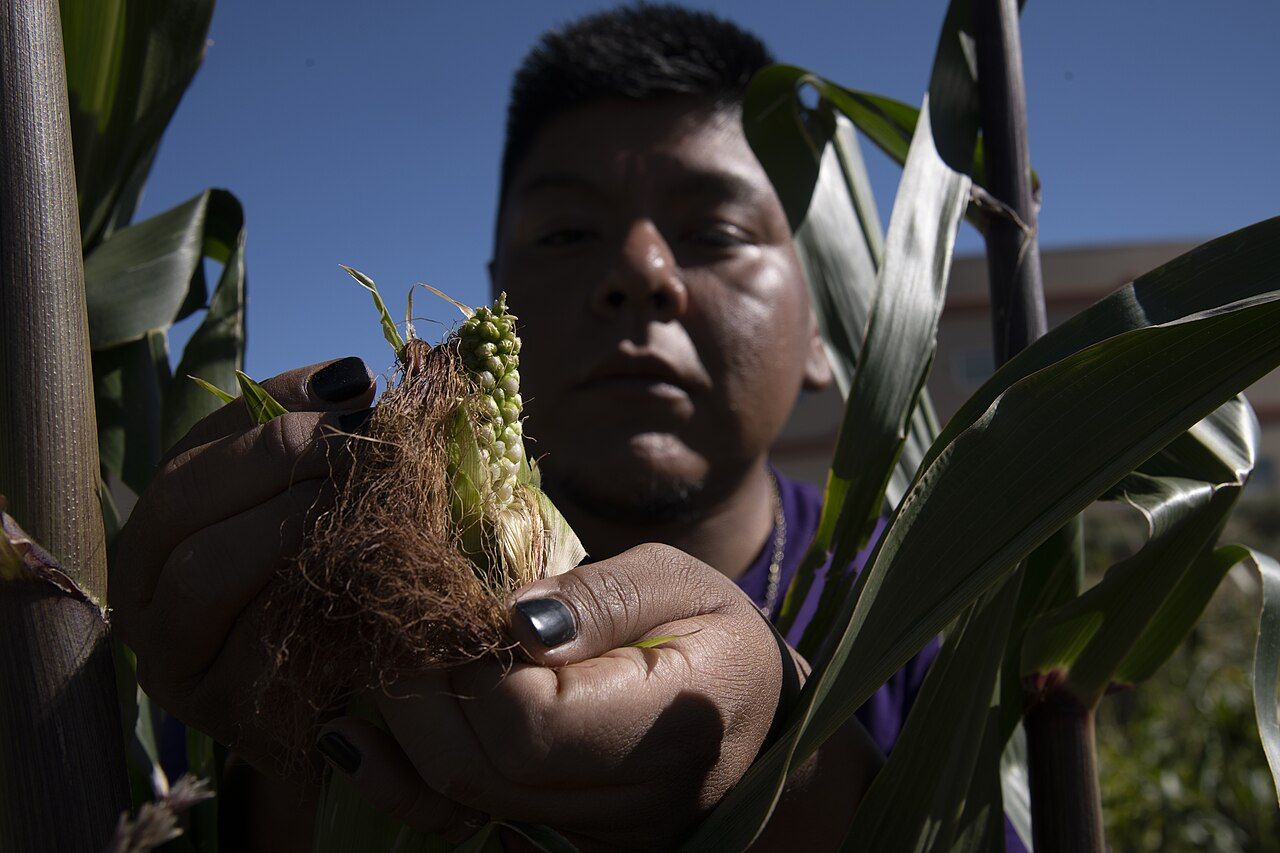
Four ways communities answer
Global change does not arrive as a verdict. Mid-century anthropology gathered culture change under the single heading of acculturation — change produced by sustained firsthand contact between societies — but the word flattened too much, since it said nothing about who held the power or what the receiving community was trying to accomplish. Ethnography across the last four decades shows communities responding instead along a recognizable repertoire: resistance (open or, in James Scott's phrase, through the “weapons of the weak” — foot-dragging, evasion, sabotage, gossip), accommodation (selective adoption on the community's own terms), appropriation (taking the tools of global culture and turning them to local purposes), and revitalization (Section 4). Marshall Sahlins compressed the central insight into a phrase: what looks like development is often “develop-man” — the use of foreign goods and money to pursue thoroughly local projects of prestige, kinship, and ritual obligation. He called the broader phenomenon the indigenization of modernity: people using the world system to develop their own culture.
Appropriation is the most striking. In 1989 the Kayapó of the Brazilian Amazon, whose video work Terence Turner documented, took camcorders to the Altamira gathering against the Xingu dam and recorded the proceedings themselves — producing both an internal archive and a global media event, in full ceremonial regalia, on their own terms. The Zapatistas of Chiapas turned the internet into a weapon of a peasant rebellion in 1994 — not from the jungle directly, but by writing communiqués that a global network of supporters carried online within hours, outflanking the Mexican state's control of the story. In Central Australia, Warlpiri people at Yuendumu built their own media association from the early 1980s, and remote communities across the continent later ran radio and television under the BRACS scheme; acrylic painting, a foreign medium taken up at Papunya from 1971, became a means of asserting Dreaming-track land claims in a form outsiders would pay attention to and pay for.
| Response | What it looks like | Ethnographic example |
|---|---|---|
| Resistance | Refusal, protest, or Scott's everyday “weapons of the weak” | Anti-dam mobilization on the Xingu; peasant foot-dragging in Malaysia |
| Accommodation | Selective, conditional adoption | McDonald's remade as a Hong Kong birthday venue (Watson) |
| Appropriation | Global tools turned to local ends | Kayapó video; Zapatista internet; Warlpiri media |
| Revitalization | Deliberate cultural reconstruction | Kōhanga reo; Longhouse Religion |
| Hybridization | New forms from the meeting of traditions | Creole languages; Nollywood; Otavalo textiles in world markets |
Heritage, tourism, and the price of being watched
One of the sharpest dilemmas of the local-global encounter is that culture now has a market value. UNESCO's Intangible Cultural Heritage convention (2003) extended heritage protection beyond monuments to living practices — songs, crafts, festivals, foodways — which is a genuine victory and also a pressure, since inscription tends to fix a version of a practice that was previously fluid. Ethnic tourism brings income and can strengthen a community's hand, but Dean MacCannell's staged authenticity names what often results: a front region performed for visitors while real life retreats backstage. Kathleen Adams's long research among the Toraja of Sulawesi traced how their elaborate funerals became a tourist attraction and how Toraja people themselves debated, managed, and profited from that attention rather than simply suffering it. The Otavaleños of highland Ecuador have been perhaps the most successful case: weavers who turned a colonial-era obrajes textile tradition into a global business, traveling to sell in Bogotá, Amsterdam, and Tokyo while reinvesting in Otavalo itself and maintaining Kichwa language and dress as deliberate markers of identity.
The unresolved questions are real. Who owns a design, a song, a seed variety, or a plant's medicinal knowledge? Biopiracy disputes — over the neem tree, over quinoa, over pharmaceutical prospecting in the Amazon — turn on whether collective, undocumented knowledge can be patented by an outsider. Fair-trade and geographic-indication schemes are partial answers; so is the FPIC principle from Section 4, applied to knowledge as well as land.
How anthropologists study a world in motion
If the object of study no longer sits in one village, the method must change. George Marcus's 1995 essay on multi-sited ethnography proposed following the thing, the person, the metaphor, the story, or the conflict across the sites that constitute it — studying a mango or a T-shirt from farm to container ship to supermarket, or a family across Miraflores and Boston as Levitt did. Laura Nader's earlier call to study up (1972) pushed the same direction from below: anthropology had studied the powerless thoroughly and the powerful barely at all, and understanding globalization requires ethnographies of banks, regulators, corporations, and NGOs. Geertz's thick description remains the standard of craft — the difference between a twitch and a wink is still the difference between recording behavior and understanding meaning — but the wink now has to be followed through airports.
The discipline's final contribution is a stance. Cultural relativism is a method for understanding, not a refusal to judge, and it sits alongside a commitment to human rights that anthropologists have argued about since the American Anthropological Association's ambivalent 1947 statement on the draft Universal Declaration, which worried that a universal standard would smuggle in one civilization's values — a position the association substantially revised in its 1999 Declaration on Anthropology and Human Rights, which affirms human rights explicitly. Applied and engaged anthropologists now work on climate adaptation with Pacific Island and Arctic communities, on displacement, on health equity, and on repatriation. The core insight has not changed since Boas: no culture is a museum piece, no people is without history, and change is not the same thing as loss.
- Communities respond by resisting, accommodating, appropriating, revitalizing, and hybridizing — rarely by passively absorbing.
- Indigenization of modernity (Sahlins): global tools serve local projects — Kayapó video, Zapatista internet, Warlpiri media.
- Heritage and tourism monetize culture, producing income, staged authenticity (MacCannell), and hard questions about ownership and biopiracy.
- Multi-sited ethnography (Marcus) and studying up (Nader) are the methods a global object of study demands.
- Cultural relativism is a tool for understanding, not a bar to advocacy; change is not the same thing as loss.
The chapter in one breath
- Colonialism — settler, extractive, plantation, indirect — reorganized political systems, exchange, and descent worldwide, and its legacy persists as neocolonialism and structural violence.
- Anthropology grew up inside empire (Frazer's armchair, Malinowski's permitted fieldwork, Asad's 1973 reckoning) and also produced its critics (Boas, Mead).
- Globalization is old but newly fast; Wolf showed there are no people without history, and world-systems theory shows why the flows are unequal.
- Appadurai's five scapes move disjunctively; ethnography keeps finding hybridity and indigenization where theory predicted homogenization.
- Transnationalism replaced the assimilation model: transmigrants live in two social worlds, and remittances (financial and social) run both ways.
- Diasporic identity is produced, not recovered; van Gennep and Turner's liminality explains why legal limbo is so corrosive.
- Revitalization movements (Wallace) are deliberate cultural repair, and UNDRIP, FPIC, and NAGPRA give those claims global legal form.
- Communities resist, accommodate, appropriate, and revitalize — indigenization of modernity — and anthropologists now follow them with multi-sited methods.
ReferenceWords worth knowing
A quick reference for the terms in this chapter — skim it now, or circle back whenever a word trips you up.
- Acculturation
- Cultural change resulting from sustained firsthand contact between societies, often (though not always) with one in a dominant position.
- Appadurai's scapes
- Five disjunctive dimensions of global flow — ethnoscape, technoscape, financescape, mediascape, ideoscape.
- Biopiracy
- The appropriation and patenting of local biological resources or traditional knowledge without consent or benefit-sharing.
- Colonialism
- Long-term political, economic, and cultural domination of one people by another, backed by force and administered from a metropole.
- Creolization
- The emergence of a new, fully formed cultural or linguistic system out of sustained contact between distinct traditions.
- Cultural imperialism
- The spread of a dominant society's culture at the expense of others, whether by policy or by market power.
- Diaspora
- A population dispersed from a homeland that maintains collective memory of, and orientation toward, that place of origin.
- Ethnocide
- Destruction of a people's culture — language, ceremony, kinship transmission — while the people themselves survive; also called cultural genocide.
- Free, prior, and informed consent (FPIC)
- The principle, central to UNDRIP, that Indigenous communities must genuinely consent, in advance, to projects affecting their lands or knowledge.
- Genocide
- The destruction of a people itself, as distinct from ethnocide, which destroys a culture while its people survive.
- Globalization
- Accelerating worldwide integration of economies, politics, communication, and culture, together with the growing awareness of the world as one place.
- Glocalization
- The deliberate adaptation of a global product, practice, or institution to a specific local market or context.
- Hybridity
- New cultural forms produced when distinct traditions meet and combine.
- Indigenization of modernity
- Sahlins's term for people using global goods, media, and institutions to pursue their own culturally specific projects.
- Linguistic relativity
- The moderate Sapir-Whorf claim that a language habitually shapes what its speakers notice and how they categorize — not that it determines what they can think.
- Multi-sited ethnography
- Marcus's method of following a person, object, story, or conflict across the several places that constitute it.
- Neocolonialism
- Continued domination of formerly colonized nations through debt, trade terms, and corporate power rather than direct rule.
- Postcolonialism
- The critical study of colonialism's ongoing effects on knowledge, identity, and power after formal independence.
- Remittance
- Money sent home by a migrant; social remittances (Levitt) are the ideas, norms, and practices that travel back with it.
- Revitalization movement
- Wallace's term for a deliberate, organized, conscious effort by members of a society to construct a more satisfying culture.
- Staged authenticity
- MacCannell's term for a performed “front region” of culture presented to tourists while ordinary life continues backstage.
- Structural violence
- Harm inflicted by durable social, political, and economic arrangements rather than by an identifiable perpetrator.
- Transnationalism
- The maintenance by migrants of dense, ongoing social, economic, and political ties across national borders.
- World-systems theory
- Wallerstein's model of a single global economy divided into core, semi-periphery, and periphery.
Check yourself
Applied Anthropology
For most of this book, anthropology has been a way of understanding — of learning how a kinship system organizes obligation, how a ritual moves a person from one social status to another, how an economy runs on reciprocity rather than price. This chapter asks a different question: what happens when you use that understanding? Applied anthropology puts ethnographic method to work on problems that will not wait for the next monograph — a reforestation project that keeps failing, a tuberculosis program patients keep abandoning, a mass grave that needs names, a software interface nobody can figure out. It is the largest employer of anthropologists alive today, and it is also where the discipline's ethics get tested hardest, because the moment your findings change what someone does to somebody else, you have stopped being a neutral observer. This chapter covers what applied work is, where it happens, how it shades into advocacy, what it owes the people it studies, and where the field is heading.
By the end of this chapter you can
- Define applied anthropology and distinguish it from basic (academic) anthropology and from practicing anthropology.
- Explain why the emic perspective, holism, and long-term participant observation are the applied anthropologist's central assets.
- Describe the working roles anthropologists take — researcher, evaluator, cultural broker, impact assessor, advocate — with real examples.
- Compare development, medical, business/design, and forensic anthropology, and name a landmark project in each.
- Explain advocacy anthropology and engaged anthropology, and evaluate the critiques leveled at both.
- State the core obligations in the AAA Principles of Professional Responsibility, starting with do no harm.
- Analyze cases where applied anthropology went wrong — Project Camelot, the Human Terrain System, the Havasupai blood samples — and say what principle each violated.
- Identify emerging directions: multi-sited and digital ethnography, climate work, studying up, and the decolonizing turn.
Section 1Applied anthropology: using anthropology to solve real problems
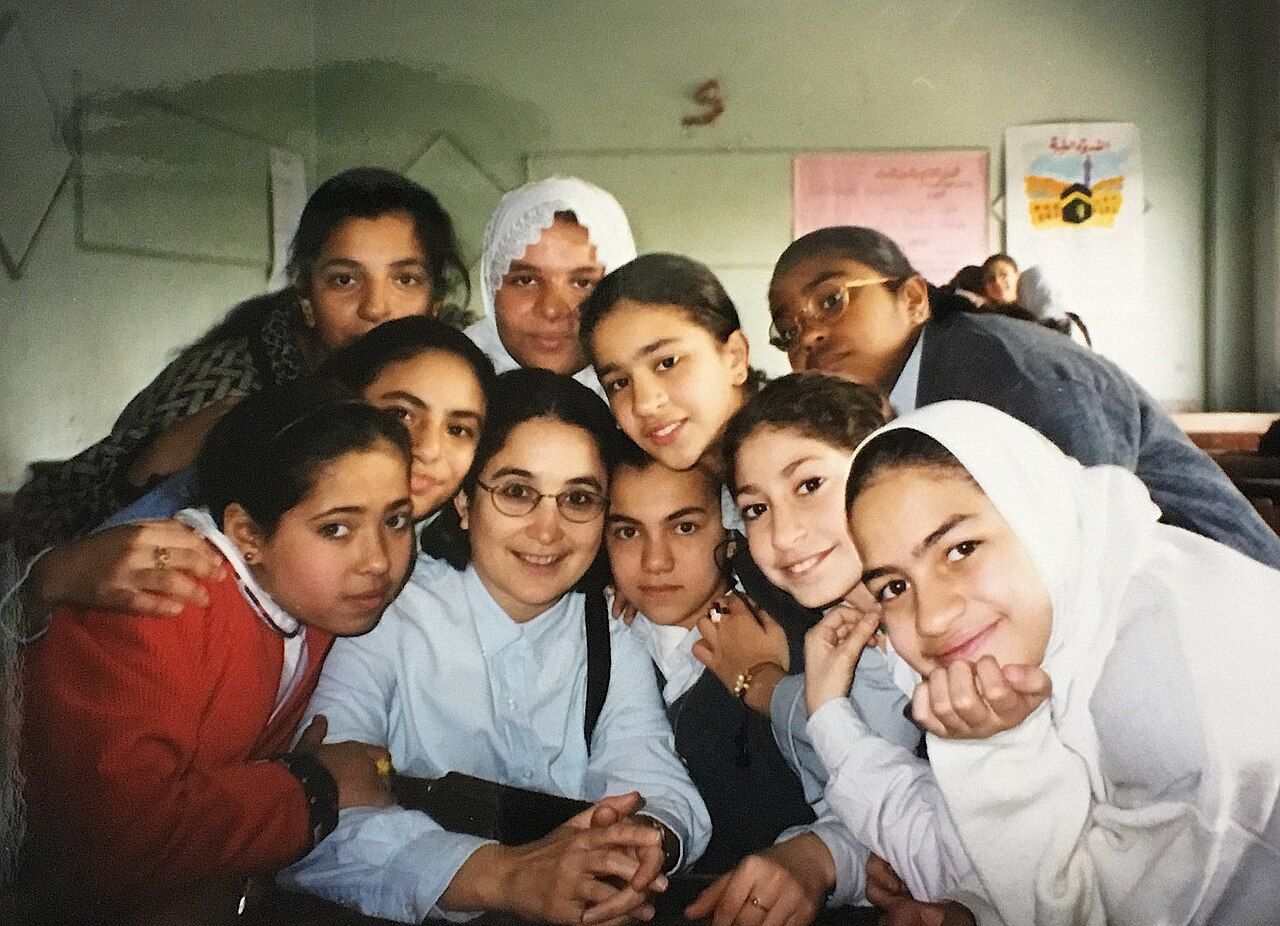
What applied anthropology is
Applied anthropology is the use of anthropological theory, method, and data to identify, assess, and solve practical problems. It is sometimes called the discipline's "fifth field," sitting alongside cultural, biological, archaeological, and linguistic anthropology — though that framing is a little misleading, because application draws on all four. A forensic anthropologist reading trauma on a femur is doing applied biological anthropology; a consultant redesigning a hospital discharge process is doing applied cultural anthropology; a cultural resource manager surveying a highway corridor before construction is doing applied archaeology.
The idea is older than the label. Bronisław Malinowski — the same fieldworker whose Trobriand research gave us the kula ring and the modern standard of long-term immersion — published an essay in 1929 called "Practical Anthropology," arguing that colonial administrators were making expensive, humiliating mistakes that an ethnographer could have prevented. The essay is uncomfortable reading now, since the "practical" client he had in mind was a colonial government, but it named the core claim that still holds: policy fails when it is built on a mistaken picture of how people actually live. The Society for Applied Anthropology was founded in 1941, and its journal Human Organization remains the field's home.
Two related terms are worth separating. Applied anthropology describes the work; practicing anthropology describes the career — an anthropologist employed outside a university, in a firm, agency, hospital, museum, or NGO. Today a majority of new anthropology PhDs in the United States build careers outside the professoriate, which means the "applied" wing is no longer a side door. It is the main entrance.
Why ethnography is the right tool
Surveys tell you what people say they do. Randomized trials tell you whether an intervention worked on average. Neither tells you why a program collapses in month seven, and that is exactly the question a client usually has. The anthropologist's advantage is the emic perspective — the insider's account of what an action means, in the categories the insiders themselves use — recovered through participant observation, and then set against an etic analytic frame the outsider brings. Clifford Geertz called the resulting description "thick": not the twitch of an eyelid but the wink, the parody of the wink, and the rehearsal of the parody. A program evaluator who only counts eyelid movements will get the answer exactly wrong.
Holism is the second asset. Anthropology insists that an economic problem is also a kinship problem, a religious problem, and a political problem. Introduce a cash crop into a village organized by generalized reciprocity — the open-ended giving among kin that Marshall Sahlins distinguished from balanced and negative reciprocity — and you have not simply added income. You have created a household that can refuse a request, which the neighbors will read as an insult. Push a development scheme through a state bureaucracy into a community with no chiefs, no headmen, and no standing authority to sign for anyone (an acephalous tribe rather than a chiefdom or state, in Elman Service's classic typology) and the "community consent" on file may represent one ambitious man.
This is the antithesis of the armchair. James Frazer assembled The Golden Bough from other people's reports without leaving Cambridge; applied anthropology cannot be done that way, because the whole value proposition is that someone went and looked.
The roles anthropologists play
John van Willigen and Erve Chambers, among others, have catalogued the working roles of applied practice. They are worth knowing because they map directly onto job descriptions.
| Role | What it involves | Real example |
|---|---|---|
| Researcher | Collects primary ethnographic data to answer a client's question | Needs assessment before a clinic opens in an underserved district |
| Evaluator | Judges whether a program worked, and why or why not | Post-project review of a water-and-sanitation intervention |
| Cultural broker | Translates between two groups who misread each other | Interpreting patient explanatory models for a clinical team |
| Impact assessor | Forecasts social consequences of a proposed change (social impact assessment) | Displacement analysis before a dam or pipeline is approved |
| Policy researcher | Supplies evidence shaping regulation or law | Ethnographic input to housing or food-assistance rules |
| Advocate | Openly supports a community's own stated goals | Expert testimony in an Indigenous land claim |
| Trainer | Teaches cultural competence and method to non-anthropologists | Briefing humanitarian staff on local burial practice |
Method adapts to the clock. Classic fieldwork runs a year or more; a client may need an answer within the month. Applied anthropologists therefore developed rapid assessment procedures (RAP) — short, team-based, triangulated studies combining focused observation, key-informant interviews, and group discussion. RAP trades depth for speed and is honest about it.
Two early projects define the field's promise and its peril. Sol Tax's Fox Project (begun 1948, with the Meskwaki of Iowa) invented action anthropology: researchers would help the community pursue goals the community itself defined, and would learn theory from the attempt rather than arriving with a plan. The Vicos Project (Cornell University and Peru, 1952–1966) went further — Allan Holmberg's team leased a highland hacienda and its resident labor force, then restructured it, eventually transferring ownership to the residents. Vicos raised incomes and education. It also made anthropologists the patrón, and critics have asked ever since whether a benevolent landlord is still a landlord.
- Applied anthropology uses anthropological method to solve practical problems; practicing anthropology is the career built outside academia.
- Malinowski's 1929 "Practical Anthropology" named the case early — and its colonial client is a permanent warning about who applied work serves.
- The core assets are the emic perspective, holism, and participant observation; RAP compresses them when deadlines demand it.
- Action anthropology (Tax, Fox Project) begins from community-defined goals; the Vicos Project shows how easily intervention slides into control.
Section 2Where anthropologists work
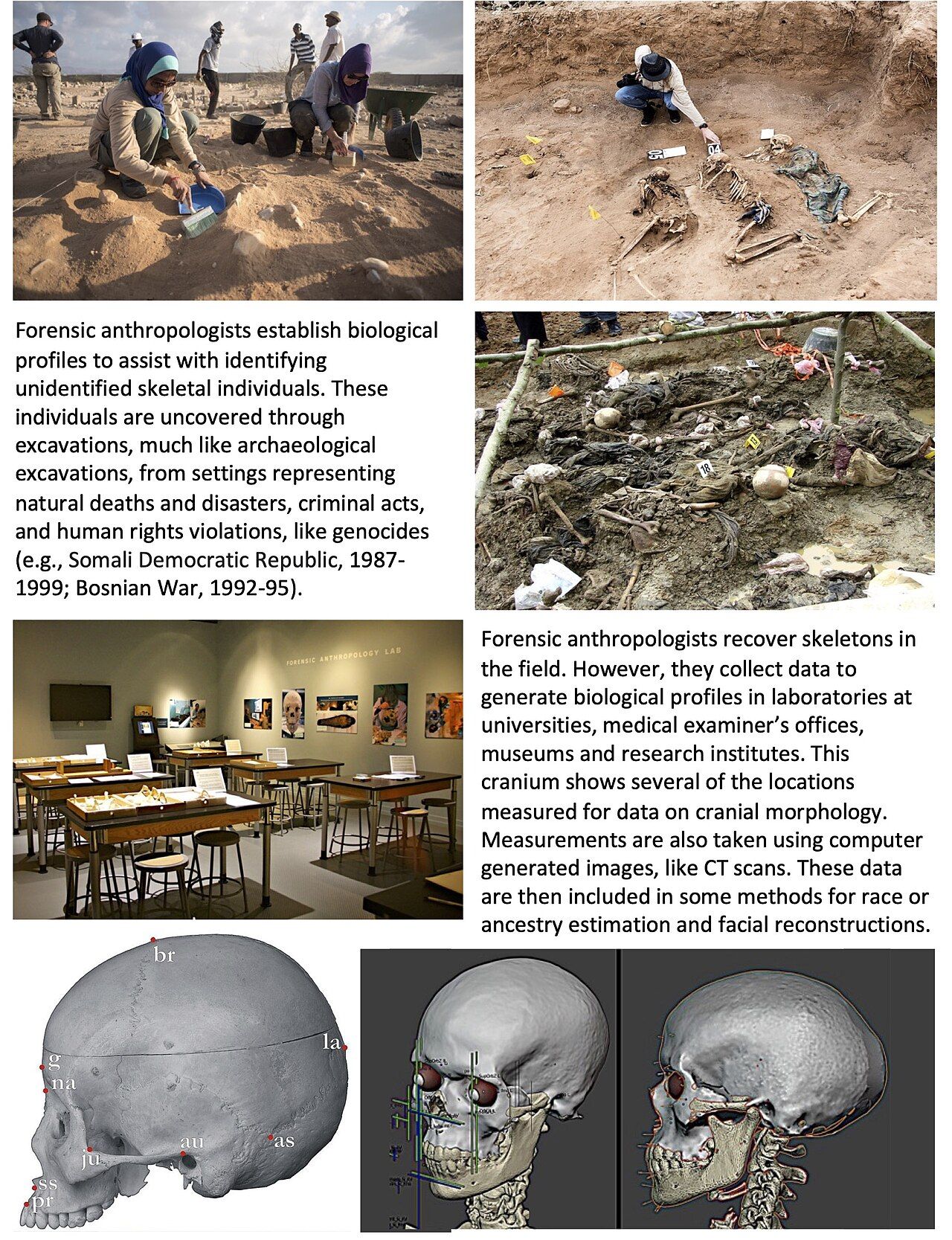
Development anthropology
Development anthropology means working inside development projects — for the World Bank, USAID, ministries, and NGOs — to make them fit the societies they land in. It should be distinguished from the anthropology of development, which studies the development industry itself as a cultural system, often critically (Arturo Escobar's Encountering Development is the standard statement).
The critical case everyone cites is James Ferguson's study of a Canadian-funded rural project in Thaba-Tseka, Lesotho, published as The Anti-Politics Machine (1990). Planners described Lesotho as an isolated subsistence peasantry needing modern inputs. It was in fact a labor reserve whose men worked South African mines and whose cattle functioned less as meat than as a store of value and a claim on kin — what Ferguson called the "bovine mystique." A livestock-marketing scheme built on the planners' picture could not work, because selling the herd meant liquidating a social relationship. Ferguson's larger argument stings: the project failed on its own terms while quietly expanding state bureaucracy into the highlands, converting a political question about migrant labor into a technical question about cattle.
The counter-case is Gerald Murray's agroforestry work in Haiti. Earlier reforestation efforts had failed for a generation: seedlings were framed as public goods for erosion control, planted on land farmers did not securely hold, and were treated as government property farmers were forbidden to cut. Murray, who had done dissertation fieldwork on Haitian land tenure, reframed the tree as a crop — fast-growing timber the farmer owned outright and could harvest and sell whenever he chose — and routed seedlings through NGOs rather than the state. Beginning in 1981, the project put tens of millions of seedlings into the ground with participation from hundreds of thousands of households. The technical package barely changed. The tenure and ownership logic did, and that was the whole difference.
Medical anthropology
Medical anthropology studies health, illness, and healing as cultural and biological phenomena at once. Its foundational distinction, from Arthur Kleinman, separates disease (the biomedical practitioner's object — a lesion, a pathogen, a lab value) from illness (the patient's lived experience of being unwell, embedded in family and moral life). Kleinman's explanatory model interview is a set of eight questions asking a patient what they call the problem, what they think caused it, why it started when it did, what it does to the body, how severe it is, what treatment they expect, what they fear most about it, and what trouble it has caused them — a compact tool for surfacing the emic view inside a single clinical encounter.
Paul Farmer, physician and anthropologist, built Partners In Health from a clinic in Haiti's Central Plateau and brought into medical anthropology the concept of structural violence — a term coined by the peace researcher Johan Galtung in 1969 and given clinical teeth by Farmer: the social and economic arrangements — poverty, racism, unequal geography — that predictably put some bodies in harm's way while leaving others untouched. Farmer's argument against calling tuberculosis patients "noncompliant" is the applied lesson in miniature: when a patient a day's walk from the clinic with no bus fare misses appointments, the failure is structural, not attitudinal, and the fix is transportation and community health workers, not a lecture. Nancy Scheper-Hughes, working in a Brazilian shantytown she called the Alto do Cruzeiro (Death Without Weeping, 1992), documented how routine infant mortality reshaped maternal grief itself — and later founded Organs Watch to investigate the global traffic in transplant organs, a deliberate move from documentation to intervention.
The West African Ebola epidemic of 2014–2016 is the clearest recent proof of the field's value. Early response messaging treated funerals as a hazard to be banned; families kept washing and touching the dead anyway, because the alternative — a body zipped into plastic by strangers, buried unseen — violated obligations to the dead that structure the entire moral world of the living. Anthropologists mobilized through the Ebola Response Anthropology Platform helped design "safe and dignified burial" protocols that preserved viewing, prayer, and family participation while breaking transmission. Note the mechanism: rites of passage in Arnold van Gennep's sense — separation, liminality, reincorporation — are not decoration around a death. Victor Turner showed that the liminal phase does real social work; interrupt it and you leave a family and a village suspended, which is why a banned funeral becomes a secret funeral.
Business, organizational, and design anthropology
Corporations discovered ethnography when they noticed that what people say in a focus group is a poor guide to what they do at home. Lucy Suchman, at Xerox PARC, filmed users failing to operate a "helpful" photocopier and argued in Plans and Situated Actions (1987) that human action is improvised in response to circumstance, not executed from a stored plan — a finding that reshaped human–computer interaction. Her colleague Julian Orr (Talking About Machines, 1996) rode along with Xerox service technicians and found that the real repair knowledge lived not in the manuals but in "war stories" swapped over breakfast, which is why an efficiency drive that eliminated the breakfast would have destroyed the company's diagnostic capacity. Genevieve Bell ran Intel's user-experience research on the same premise. Today "design anthropology" and UX research are among the largest destinations for anthropology graduates, and the method — watch what people actually do, in the place they actually do it — is unchanged from the Trobriands.
Forensic anthropology
Forensic anthropology is applied biological anthropology: the analysis of skeletal remains for medico-legal purposes. From bone the analyst builds a biological profile — estimated age at death, sex, stature, ancestry — then reads trauma (perimortem fracture patterns, gunshot beveling, sharp-force cut marks), pathology, and taphonomy to estimate time since death. Facilities such as the University of Tennessee's Anthropology Research Facility, founded by William Bass in 1981, exist to study decomposition systematically.
The field's moral weight comes from human rights work. Clyde Snow trained a group of Argentine students in 1984 to exhume the graves of the desaparecidos — those forcibly disappeared under the military junta; they became the Argentine Forensic Anthropology Team (EAAF) and have worked in dozens of countries since. Comparable teams operate in Guatemala (FAFG, on the massacres of the internal armed conflict) and in the Balkans, where the International Commission on Missing Persons combined anthropology with large-scale DNA matching to identify the majority of the Srebrenica dead. The deliverable is a name returned to a family — and evidence admissible in court.
| Area | Typical employer | Question it answers | Landmark case |
|---|---|---|---|
| Development | World Bank, USAID, NGOs, ministries | Why does this project keep failing here? | Ferguson, Lesotho; Murray, Haiti agroforestry |
| Medical | Health ministries, WHO, hospitals, PIH | Why do patients decline, delay, or abandon care? | Kleinman's explanatory models; Ebola burials |
| Business / design | Tech firms, consultancies, market research | How do people really use this product or work? | Suchman at PARC; Orr's photocopier technicians |
| Forensic | Medical examiners, courts, human rights teams | Who was this person, and what happened to them? | Snow and the EAAF, Argentina |
- Development anthropology works inside projects; the anthropology of development studies the industry critically (Ferguson's "anti-politics machine").
- Murray's Haiti agroforestry succeeded by reframing trees as an owned crop — tenure, not technology, was the constraint.
- Medical anthropology splits disease from illness; Kleinman's explanatory models and Farmer's structural violence are its workhorse concepts.
- Safe-and-dignified Ebola burials worked because they preserved the rite of passage (van Gennep, Turner) instead of abolishing it.
- Business/design anthropology (Suchman, Orr, Bell) exports participant observation to products and workplaces.
- Forensic anthropology builds a biological profile from bone; the EAAF turned it into a human-rights instrument.
Section 3Anthropology and advocacy
From describing to taking sides
Advocacy anthropology is research conducted explicitly in support of a community's own political goals. The older ideal of the detached observer never really held — Franz Boas, the founder of American anthropology, spent his career using anthropological evidence as a weapon against scientific racism, demonstrating with immigrant head-form data that supposedly fixed racial types shifted within a single generation, and insisting that culture, not biology, explained human difference. Margaret Mead took the discipline to a mass public and to wartime government service, serving as executive secretary of the National Research Council's Committee on Food Habits. Boas also drew anthropology's first great ethics fight: his 1919 letter in The Nation denouncing anthropologists who had used fieldwork as cover for espionage got him censured by the American Anthropological Association — a censure the association finally rescinded in 2005.
The modern term of art is engaged anthropology: sustained collaboration in which the research question, and sometimes the research design, come from the community. Where classic ethnography asked "what is going on here?", engaged work asks "what is going on here, and what do you want done about it?"
What advocacy actually looks like
The most consequential advocacy work is unglamorous and evidentiary. In land and title claims, anthropologists document continuous connection to territory, customary tenure, and the descent systems that determine who holds rights — whether a group reckons membership patrilineally, matrilineally, or through cognatic descent decides who the claimants legally are. Australia's Mabo decision (1992) and the subsequent Native Title Act (1993) created a standing demand for exactly this expertise. In Canada, Delgamuukw v. British Columbia turned on whether Gitxsan and Wet'suwet'en oral histories counted as evidence; the trial judge largely dismissed them, and the Supreme Court in 1997 held that oral tradition must be placed on an equal footing with written history — a ruling with anthropological argument in its bones.
In museums and heritage, the Native American Graves Protection and Repatriation Act (NAGPRA, 1990) obliges US institutions receiving federal funds to inventory human remains and cultural items and repatriate them to affiliated descendants. The long fight over the skeleton called Kennewick Man, or the Ancient One — found in Washington State in 1996, litigated for years, and finally returned to a coalition of Columbia Basin tribes in 2017 after ancient-DNA analysis confirmed Native American affinity — marked a durable shift in who is presumed to hold authority over the past. Advocacy organizations founded by anthropologists, notably Cultural Survival (founded by David and Pia Maybury-Lewis in 1972), work on Indigenous land, language, and self-determination.
Stuart Kirsch's two decades with the Yonggom of Papua New Guinea show what long-haul engagement costs and yields. Tailings and waste rock from the Ok Tedi copper mine devastated the Fly River system the Yonggom depend on; Kirsch worked with them through international litigation against the mine's operators, translating between village grievance, NGO campaigning, and courtroom procedure. He also wrote candidly about the strain — being called on to be lawyer, publicist, and fundraiser at once, and knowing that the anthropologist's presence changes the movement it joins.
| Mode of advocacy | What the anthropologist supplies | Example |
|---|---|---|
| Expert witness | Documentation of customary tenure, descent, and continuous connection | Australian native title claims after Mabo (1992) |
| Evidentiary standing for oral tradition | Argument that oral history is systematic testimony, not folklore | Delgamuukw v. British Columbia (1997) |
| Repatriation | Cultural affiliation determinations under law | NAGPRA (1990); return of the Ancient One, 2017 |
| Litigation support | Environmental and social impact documentation, translation across forums | Kirsch and the Yonggom, Ok Tedi mine |
| Public education | Countering racist or dehumanizing accounts with evidence | Boas against scientific racism |
The critiques, which are serious
Advocacy raises the question of authorization: who asked you to speak, and on whose behalf? Communities are not unanimous. Supporting "the community's goals" can mean amplifying whichever faction is most legible to outsiders — often the English-speaking, male, formally educated one. The Indigenous scholar Vine Deloria Jr. put the case bluntly in Custer Died for Your Sins (1969), arguing that anthropologists had spent a century extracting careers from Native communities while returning nothing usable. Linda Tuhiwai Smith's Decolonizing Methodologies (1999) developed the point into a program: research is itself a colonial instrument unless communities set the questions, control the data, and share the credit.
The constructive answer has been collaborative and participatory action research — community members as co-investigators, not informants; data-sharing agreements written before fieldwork begins; findings returned in a usable form and language. Tax's action anthropology anticipated this in 1948; the difference now is that communities increasingly have the legal and institutional standing to require it.
- Advocacy anthropology supports a community's stated goals; engaged anthropology builds the research agenda with them.
- Boas used anthropology against scientific racism and was censured for exposing anthropologist-spies — the AAA rescinded it in 2005.
- Land-claim work turns on documenting descent systems and customary tenure; Delgamuukw (1997) gave oral tradition evidentiary weight.
- NAGPRA (1990) and the return of the Ancient One shifted authority over the past toward descendant communities.
- Deloria and Tuhiwai Smith's critiques drove the field toward collaborative and participatory models in which communities set the questions.
Section 4The ethics of application

Do no harm, and the obligations that follow
Applied work raises an ethical problem basic research can dodge: there is a client, and the client's interests may diverge from the interests of the people studied. Anthropology's answer, codified in the AAA Principles of Professional Responsibility (first adopted 1971, substantially revised in 2012), is that the primary obligation runs to the people and communities studied — ahead of the funder, the employer, and the discipline. The current statement organizes practice around seven principles.
| Principle | What it demands in practice | Classic failure |
|---|---|---|
| Do no harm | Anticipate harms — legal, physical, reputational, economic — and forgo research that cannot avoid them | Human Terrain System fieldwork in active conflict zones |
| Be open and honest | Disclose funder, purpose, and intended use; no covert research | Fieldwork used as cover for intelligence gathering |
| Obtain informed consent | Ongoing, comprehensible, revocable permission — not a signature once | Havasupai blood samples reused without consent |
| Weigh competing obligations | Name conflicts between client, community, and colleagues openly | Project Camelot's undisclosed military sponsorship |
| Make results accessible | Return findings to the community in usable form and language | Data extracted, published abroad, never seen locally |
| Protect records | Secure field notes, recordings, and identifiers against subpoena and leak | Boston College Belfast Project interview tapes |
| Maintain respectful relationships | Fair credit, fair pay, mentorship, no exploitation of students or staff | Uncredited local research assistants |
When anthropology was weaponized
The codes exist because of specific disasters. During the Second World War, anthropologists including Mead worked for the US government — and others served as "community analysts" inside the War Relocation Authority camps where Japanese Americans were incarcerated, studying a population that could not leave and had not consented to anything.
Project Camelot (1964–1965) was a US Army–funded social science program to model the causes of insurgency, with Chile as an early target. Its military sponsorship was not disclosed to the Chilean scholars approached; when the Norwegian sociologist Johan Galtung, invited to take part, refused and made the sponsorship public, the resulting scandal reached the Chilean Senate and the US State Department, and the project was cancelled in 1965. A parallel controversy over anthropologists' counterinsurgency work in Thailand followed in 1970. Together they produced the AAA's first formal Principles of Professional Responsibility in 1971.
The lesson had to be relearned. The US Army's Human Terrain System (2007–2014) embedded social scientists with brigades in Iraq and Afghanistan to map local social structure. In 2007 the AAA Executive Board declared it "an unacceptable application of anthropological expertise," and the association's commission on engagement with security and intelligence agencies elaborated the reasoning: research conducted by armed personnel in an occupied country cannot yield voluntary informed consent, cannot guarantee that findings will not be used to target the people who provided them, and cannot be published openly for peer scrutiny. Every one of the seven principles fails at once.
Consent, confidentiality, and who owns the data
Informed consent in anthropology is a process, not a form. Participant observation blurs the edges of "the study" — a conversation at a funeral may become data — so consent must be renewed, explained in the local language and in local terms, and revocable. Literacy-based consent forms can themselves be harmful where signing a document for an outsider carries political risk.
Confidentiality is harder than it looks. Arthur Vidich and Joseph Bensman's Small Town in Mass Society (1958) used pseudonyms for the upstate New York village they studied, but residents identified themselves and their neighbors instantly from the detail, and the town responded with a mocking parade float bearing an effigy of the authors. Pseudonyms do not anonymize a place where only one person holds a given office.
The landmark consent case is the Havasupai litigation. Beginning in 1990, Arizona State University researchers collected blood samples from members of the Havasupai Tribe for a study of the community's high rate of type 2 diabetes. The samples were later used for research on schizophrenia, inbreeding, and population migration — the last directly contradicting the tribe's own account of its origin in the Grand Canyon. The tribe sued; the case settled in 2010 with a payment of $700,000, return of the remaining samples, and other assistance. The precedent it set is now standard: consent is specific to a stated purpose, biological samples and data carry the community's stake with them, and secondary use requires going back and asking. Institutional review boards, tribal research review boards, and pre-negotiated data-sharing agreements are the machinery built in response.
- The anthropologist's primary obligation is to the people studied, above funder or employer.
- The AAA Principles of Professional Responsibility (1971; revised 2012) center do no harm, transparency, informed consent, accessibility, and record protection.
- Project Camelot (undisclosed military sponsorship) produced the 1971 code; the Human Terrain System was declared an unacceptable application in 2007.
- Informed consent is ongoing and purpose-specific; the Havasupai settlement (2010) established that secondary use of samples requires fresh consent.
- Pseudonyms are weak protection in small communities — Small Town in Mass Society is the cautionary tale.
Section 5The future: anthropology in a changing world
New objects, same method
The classic field site was a bounded place you could walk across. Almost nothing anthropologists now study stays put. George Marcus proposed multi-sited ethnography in 1995 as the response: follow the thing, the person, the money, the story, or the metaphor across the locations that constitute a single system — a garment from a Dhaka factory floor to a Rotterdam container port to a Chicago sales rack. The unit of analysis becomes the connection.
Digital worlds get the same treatment. Tom Boellstorff conducted two years of participant observation entirely inside the virtual world Second Life, publishing Coming of Age in Second Life (2008) — a title nodding to Mead — and argued that a culture can be studied in its own terms wherever people make meaning together, without needing to chase participants offline first. Bonnie Nardi did comparable work in World of Warcraft, published as My Life as a Night Elf Priest (2010). The methodological point is conservative: the fieldwork standard has not changed, only the location.
Climate and environment have become central. Susan Crate's long research with Viliui Sakha cattle-and-horse herders in northeastern Siberia traces what happens to a subsistence system, a calendar, and a cosmology when permafrost thaws and the ground itself becomes unreliable — work she frames as "climate ethnography," insisting that global models need local meaning to be actionable. Anthropologists of disaster, pandemics, and infrastructure work the same seam: a levee, a vaccine rollout, and a supply chain are all cultural artifacts before they are technical ones.
Studying up, and the decolonizing turn
In a 1972 essay, "Up the Anthropologist," Laura Nader asked why the discipline overwhelmingly studied the poor and the colonized rather than the institutions that shape their lives — and called for studying up: ethnographies of banks, regulators, law firms, insurers, corporate boards. That call has been answered by a large literature on finance, bureaucracy, science, and technology, and it neatly inverts the old power gradient of fieldwork.
Alongside it runs the discipline's reckoning with its own colonial formation. Anthropology grew up alongside empire; its museums hold objects and remains taken without consent; its authority was long exercised over people who could not answer back. The decolonizing turn shows up as concrete practice: repatriation of remains and objects, co-authorship with community researchers, community-controlled archives and data sovereignty, publication in local languages, open access so findings are not paywalled away from the people described, and hiring and citation practices that stop treating scholars from the Global South as sources rather than theorists.
Why it still matters
Broad cultural models — national scores for individualism, tidy regional types, ranked stages of society — are seductive and thin. They flatten internal variation, freeze cultures that are always changing, and confuse a statistical average with a way of life. Ethnography's stubborn, slow contribution is to complicate them from the inside, and that is precisely why organizations keep hiring anthropologists after the dashboard fails to explain something. The intellectual equipment travels: cultural relativism as an analytic discipline — understanding a practice in its own context before judging it, which is a method rather than a moral surrender; comparison across the human range; holism; and the emic commitment to how people describe their own lives.
| Emerging area | Question it asks | Anchor example |
|---|---|---|
| Multi-sited ethnography | How do dispersed places form one system? | Marcus (1995): follow the thing, the person, the metaphor |
| Digital / virtual ethnography | Is online life culture in its own right? | Boellstorff, Coming of Age in Second Life (2008) |
| Climate & environment | What does warming do to a livelihood and a cosmology? | Crate with Viliui Sakha herders, Siberia |
| Studying up | How do powerful institutions actually make decisions? | Nader, "Up the Anthropologist" (1972) |
| Decolonizing research | Who sets the question, holds the data, gets the credit? | Tuhiwai Smith (1999); repatriation under NAGPRA |
| Health & pandemics | Why do people accept or refuse an intervention? | Ebola burial redesign, West Africa, 2014–2016 |
- Multi-sited ethnography (Marcus, 1995) follows people, things, and stories across the sites that make up one system.
- Digital ethnography treats online worlds as cultures in their own right (Boellstorff, Second Life).
- Climate ethnography (Crate) links global environmental change to local livelihoods and cosmologies.
- Studying up (Nader, 1972) redirects ethnography toward powerful institutions.
- The decolonizing turn is concrete: repatriation, co-authorship, data sovereignty, open access, and community-set questions.
The chapter in one breath
- Applied anthropology uses ethnographic theory and method on practical problems; practicing anthropology is the career outside the university, and it is now where most anthropologists work.
- The advantage is the emic perspective plus holism — recovering what a practice means to the people doing it, which is the piece surveys and dashboards routinely miss.
- Anthropologists work as researchers, evaluators, cultural brokers, impact assessors, and advocates; rapid assessment procedures adapt the method to short deadlines.
- Development work succeeds by fixing meaning and ownership (Murray's Haitian trees) and fails by misreading the local economy (Ferguson's Lesotho cattle).
- Medical anthropology separates disease from illness (Kleinman) and exposes structural violence (Farmer); the Ebola response worked once burials were redesigned as intact rites of passage.
- Business and design anthropology (Suchman, Orr, Bell) and forensic anthropology (Snow, the EAAF) show how far the method travels — from a photocopier to a mass grave.
- Advocacy is unavoidable but must be authorized: Boas against scientific racism, land claims and NAGPRA repatriation, and the Deloria and Tuhiwai Smith critiques that pushed the field toward collaborative research.
- Ethics is the load-bearing wall — do no harm, informed consent, transparency, accessible results — and Project Camelot, the Human Terrain System, and the Havasupai case are the reasons the rules read as they do.
ReferenceWords worth knowing
A quick reference for the terms in this chapter — skim it now, or circle back whenever a word trips you up.
- Action anthropology
- An approach, developed by Sol Tax in the Fox Project, in which researchers help a community pursue goals the community itself defines, generating theory from the attempt.
- Advocacy anthropology
- Research conducted openly in support of a studied community's own political, legal, or economic goals.
- Applied anthropology
- The use of anthropological theory, method, and data to identify, assess, and solve practical problems.
- Biological profile
- The estimate of age at death, sex, stature, and ancestry that a forensic anthropologist builds from skeletal remains.
- Cultural broker
- An applied role in which the anthropologist translates between two groups — such as clinicians and patients — who systematically misread each other.
- Cultural relativism
- The analytic discipline of understanding a practice within its own cultural context before evaluating it; a method, not a suspension of moral judgment.
- Design anthropology
- Ethnographic research applied to the creation of products, services, and interfaces, grounded in observing real use rather than reported preference.
- Development anthropology
- Applied work inside development projects and agencies, as distinct from the anthropology of development, which studies the development industry critically.
- Emic and etic perspectives
- The emic view describes belief and behavior in the categories and meanings insiders use; the etic view frames the same material in the outside analyst's comparative and theoretical categories. Applied work needs both.
- Engaged anthropology
- Sustained collaboration in which the research agenda is set with, not merely about, the community studied.
- Explanatory model
- Arthur Kleinman's concept for a person's own understanding of what their illness is, what caused it, and what should be done about it.
- Forensic anthropology
- Applied biological anthropology: analysis of skeletal remains for legal and human-rights purposes, including identification and trauma interpretation.
- Illness (vs. disease)
- The patient's lived, socially embedded experience of being unwell, distinguished from disease, the biomedical pathological process.
- Informed consent
- Voluntary, comprehensible, purpose-specific, and revocable permission to participate in research — understood in anthropology as an ongoing process rather than a single signature.
- Medical anthropology
- The study of health, illness, and healing as simultaneously cultural and biological phenomena.
- Multi-sited ethnography
- George Marcus's strategy of following a person, object, story, or process across the multiple locations that together constitute one system.
- NAGPRA
- The Native American Graves Protection and Repatriation Act (1990), requiring US institutions receiving federal funds to inventory and repatriate Native human remains and cultural items.
- Practicing anthropology
- Professional anthropological employment outside academia — in agencies, firms, hospitals, museums, and NGOs.
- Rapid assessment procedures (RAP)
- Short, team-based, triangulated ethnographic studies designed to deliver usable findings on a policy or program timetable.
- Social impact assessment
- Systematic forecasting of the social consequences — displacement, livelihood loss, disruption of kin networks — of a proposed project or policy.
- Structural violence
- Social and economic arrangements that predictably expose particular populations to harm and premature death. Coined by Johan Galtung (1969) and made central to medical anthropology by Paul Farmer.
- Studying up
- Laura Nader's call to direct ethnography at powerful institutions and elites rather than only at the poor and marginalized.