Nutrition Basics
Every day you make dozens of decisions about what to eat, and every one of them delivers a specific chemical payload to a body that has very specific chemical needs. Nutrition is the science that connects those two things — the food on the plate and the physiology inside the person. This chapter builds the scaffolding the rest of the book hangs on: what a nutrient actually is, the six classes they sort into, how food energy is measured and where the familiar 4-4-9 numbers come from, the system of reference standards that tells us how much of a nutrient people need, and how all of that gets translated into practical guidance. None of it requires you to label a food good or bad — it requires you to understand what that food does.
By the end of this chapter you can
- Define nutrition, food, and nutrient, and explain what makes a nutrient essential.
- Name the six classes of nutrients and sort them into macronutrients and micronutrients.
- State the energy yield of carbohydrate, protein, fat, and alcohol in kilocalories per gram, and use those factors to work out the energy in a food.
- Distinguish a kilocalorie from a calorie and from a kilojoule.
- Explain what the DRIs are and define EAR, RDA, AI, and UL, including who each one applies to.
- Explain why a nutrient recommendation changes with age, sex, pregnancy, and lactation.
- Contrast nutrient density with energy density, and describe what "empty calories" means and why the phrase is imprecise.
- Tell the difference between a nutrition claim backed by strong evidence and one that is still preliminary.
Section 1What nutrition is
Food, nutrients, and the difference between them
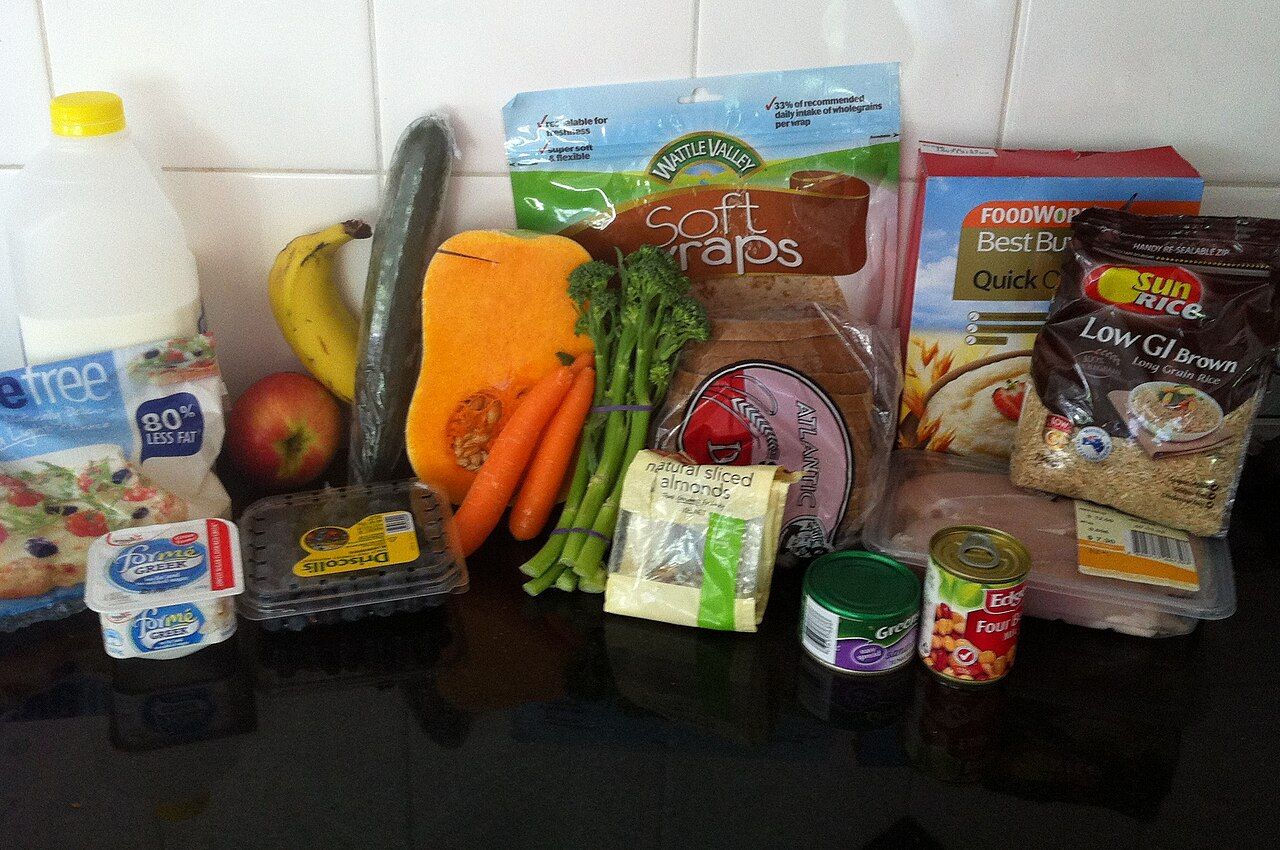
Nutrition is the science of how the body takes in, breaks down, absorbs, transports, uses, and disposes of the substances in food — and how those processes affect health across a lifetime. Food is what you actually eat: a physical, cultural, sensory, economic thing, bought at a store, cooked in a kitchen, shared at a table. Nutrients are the individual chemical compounds inside that food which the body requires to grow, to repair itself, to run its machinery, and to regulate that machinery.
Holding those two words apart matters more than it looks. Food is never a single nutrient; a chickpea delivers protein, starch, fiber, folate, iron, magnesium, and water simultaneously, and those components arrive bound up in a physical matrix that changes how fast they are digested. This is why nutrition research so often finds that a whole food behaves differently from the isolated nutrient it contains — and why a supplement that delivers one compound in a capsule frequently fails to reproduce the benefit seen with the food.
Essential nutrients: the short list your body cannot make
The body manufactures thousands of compounds for itself. A nutrient is called essential (or indispensable) when the body cannot synthesize it at all, or cannot synthesize enough of it to meet its needs, so it has to come from the diet. There are roughly forty of them, and the definition is strictly operational: remove the nutrient from the diet, a characteristic deficiency develops; put it back, the deficiency resolves. That reversal is the test.
The essential list includes nine essential amino acids (histidine, isoleucine, leucine, lysine, methionine, phenylalanine, threonine, tryptophan, and valine), two essential fatty acids (linoleic acid, an omega-6, and alpha-linolenic acid, an omega-3), thirteen vitamins, a set of minerals, and water. Notice what is not on it: there is no essential carbohydrate. The body can make the glucose it needs from other substrates, which is why very-low-carbohydrate diets are survivable — though that fact says nothing about whether they are optimal, which is a separate question with a much messier evidence base.
| Term | What it means | Example |
|---|---|---|
| Food | The edible material itself, with all its components and its physical structure | An orange |
| Nutrient | A specific chemical in food the body needs | Vitamin C in the orange |
| Essential nutrient | The body cannot make enough; the diet must supply it | Vitamin C — humans lost the enzyme to synthesize it |
| Non-essential nutrient | Useful, but the body can synthesize it from other material | Alanine, an amino acid the body builds itself |
| Phytochemical | Plant compound with biological activity but no established requirement | Lycopene in tomatoes |
| Deficiency disease | The syndrome that appears when an essential nutrient runs short | Scurvy from prolonged lack of vitamin C |
Why diet matters to health — and how strongly
Diet influences health through at least three distinct routes, and they carry very different weights of evidence. The first is deficiency: the classic nutrient-deficiency diseases — scurvy, beriberi, pellagra, rickets, iodine-deficiency goiter, iron-deficiency anemia — are causally settled. We know the nutrient, the syndrome, and the cure, and that knowledge is among the most solid in all of medicine. The second is dietary pattern and chronic disease: large cohort studies plus a smaller number of randomized trials link overall eating patterns rich in vegetables, fruits, legumes, whole grains, nuts, and unsaturated fats to lower rates of cardiovascular disease. This evidence is good but is about patterns, not single foods. The third route is food insecurity and access, which shapes what is realistically eatable long before preference enters the picture.
The contrast with single-nutrient supplement claims is instructive, and worth internalizing early. Observational studies once suggested that people with high beta-carotene intakes had less lung cancer. When that was tested directly in large randomized trials of beta-carotene supplements in smokers, lung cancer incidence went up, not down. Similarly, large trials of vitamin D supplementation have not reproduced the broad non-skeletal benefits that observational data implied. The pattern repeats often enough to be a rule of thumb: a nutrient's behavior inside a whole diet is not reliably predicted by its behavior inside a pill.
- Nutrition is the science of how the body uses food; food is what is eaten, and nutrients are the chemicals inside it.
- An essential nutrient is one the body cannot make in adequate amounts — removing it causes a deficiency, restoring it cures the deficiency.
- There are about forty essential nutrients, including 9 essential amino acids, 2 essential fatty acids, 13 vitamins, several minerals, and water; there is no essential carbohydrate.
- Evidence for deficiency diseases is very strong; evidence for whole dietary patterns is good; evidence for isolated single-nutrient supplements preventing chronic disease is generally weak or negative.
Section 2The six classes of nutrients

Six classes, two categories
Every nutrient in every food belongs to one of exactly six classes: carbohydrate, lipid (fat), protein, vitamin, mineral, and water. That list has not changed in a century, and memorizing it early pays off, because almost every later topic in nutrition is an elaboration of one of these six.
The classes then split along a second axis. Macronutrients are needed in gram quantities each day: carbohydrate, lipid, protein, and — by most conventions — water. Micronutrients are needed in milligram or microgram quantities: the vitamins and minerals. "Macro" and "micro" refer to the amount required, not the importance. The recommended intake of carbohydrate for adults is 130 g a day — a figure derived from the brain's average minimum glucose use, not from carbohydrate being essential — while the recommendation for iodine is 150 µg — a difference approaching a millionfold, yet running out of iodine damages the thyroid just as surely as running out of energy starves the body.
The energy-yielding three, plus the three that are not
Only three classes supply usable energy: carbohydrate, lipid, and protein. Vitamins, minerals, and water supply none. This is a point students get wrong constantly, usually about vitamins — a "B-complex for energy" supplement does not contain any energy. Several B vitamins act as coenzymes in the pathways that release energy from macronutrients, which is a genuine and important role, but the coenzyme is a tool, not fuel. Giving extra tools to a system that already has enough does not make it run faster.
A quick tour of the six. Carbohydrates — sugars, starches, and fibers — are the body's most readily used fuel — glucose is the brain's preferred substrate and, because mature red blood cells have no mitochondria, their obligatory one; fiber is a carbohydrate that human enzymes cannot digest, so it reaches the colon largely intact and feeds the gut microbiota. Lipids include triglycerides, phospholipids, and sterols; they are the densest fuel store, they build every cell membrane, they carry the fat-soluble vitamins A, D, E, and K, and they supply the two essential fatty acids. Proteins are chains of amino acids that build and repair tissue and serve as enzymes, transporters, antibodies, and some hormones; the body will burn protein for fuel, but that is a fallback, not its job. Vitamins are organic compounds — four fat-soluble (A, D, E, K) and nine water-soluble (vitamin C and the eight B vitamins) — that regulate metabolic processes. Minerals are inorganic elements, split into major minerals needed at more than 100 mg/day (calcium, phosphorus, magnesium, sodium, potassium, chloride, sulfur) and trace minerals needed in smaller amounts (iron, zinc, iodine, selenium, copper, manganese, fluoride, chromium, molybdenum). Water is a nutrient in its own right, makes up roughly 50–70% of adult body weight, and is the one whose absence kills fastest — days, not weeks or months.
| Class | Macro or micro | Organic? | Yields energy? | Main jobs |
|---|---|---|---|---|
| Carbohydrate | Macro | Yes | Yes — 4 kcal/g | Primary fuel; fiber feeds gut microbiota and adds stool bulk |
| Lipid (fat) | Macro | Yes | Yes — 9 kcal/g | Concentrated fuel and storage; membranes; carries vitamins A, D, E, K |
| Protein | Macro | Yes | Yes — 4 kcal/g | Structure and repair; enzymes, transporters, antibodies |
| Vitamin | Micro | Yes | No | Regulate metabolism; many act as coenzymes |
| Mineral | Micro | No | No | Structure (bone), fluid balance, nerve and muscle signaling, cofactors |
| Water | Macro | No | No | Solvent, transport, temperature regulation, chemical participant |
Deficiency and excess both have consequences
Because micronutrients are needed in tiny amounts, it is tempting to treat them as trivial. The deficiency syndromes say otherwise, and they are worth knowing by name. Vitamin C deficiency produces scurvy; thiamin (B1) deficiency produces beriberi, and in the setting of chronic alcohol use, Wernicke–Korsakoff syndrome; niacin (B3) deficiency produces pellagra. Vitamin D deficiency causes rickets in growing children and osteomalacia in adults. Vitamin A deficiency causes night blindness progressing to xerophthalmia and is a leading cause of preventable childhood blindness worldwide. Iodine deficiency causes goiter and, during pregnancy, impaired neurological development in the child. Iron deficiency causes iron-deficiency anemia. Vitamin B12 deficiency causes megaloblastic anemia together with neurological damage that can become permanent.
The mirror image is real too. Fat-soluble vitamins are stored rather than readily excreted, so chronic high intakes of preformed vitamin A can cause liver damage and are teratogenic in pregnancy. Excess iron is toxic, and acute iron ingestion is a classic pediatric poisoning. Water itself can be harmful in extreme excess by diluting blood sodium (hyponatremia). The take-home is that a nutrient's dose–response curve has two ends, which is exactly the problem the upper-limit standard in Section 4 exists to solve.
- The six classes are carbohydrate, lipid, protein, vitamin, mineral, and water.
- Macronutrients (carbohydrate, lipid, protein, water) are needed in grams; micronutrients (vitamins, minerals) in milligrams or micrograms.
- Only carbohydrate, lipid, and protein yield energy; vitamins, minerals, and water yield none.
- Carbohydrate, lipid, protein, and vitamins are organic (carbon-containing); minerals and water are inorganic — vitamins are compounds, minerals are single elements.
- Both deficiency and excess cause defined syndromes, which is why standards specify an upper limit as well as a recommended amount.
Section 3Calories and energy

What a Calorie actually is
A calorie is a unit of energy: the heat needed to raise the temperature of one gram of water by one degree Celsius. That unit is inconveniently tiny for food, so nutrition uses the kilocalorie — 1,000 calories, written kcal, the heat needed to raise one kilogram of water by one degree Celsius. Here is the vocabulary trap: the "Calories" printed on a food label are kilocalories. A 200-Calorie granola bar contains 200 kcal, which is 200,000 calories in the strict physics sense. Some countries and most scientific journals use the SI unit instead, the kilojoule (kJ), where 1 kcal = 4.184 kJ. Nothing about the food changes; only the units do.
Food energy was originally measured with a bomb calorimeter: burn a weighed sample of food in oxygen inside a sealed chamber surrounded by water, and measure how much the water warms. That gives gross energy. The human body is not a bomb calorimeter — it does not absorb everything and does not oxidize everything completely — so the values used in nutrition are physiological ones, refined by W. O. Atwater and colleagues and known as the Atwater factors.
The 4-4-9 rule (and 7 for alcohol)
These four numbers are among the very few worth committing to memory exactly:
| Substance | Energy per gram | Per gram in kJ | Note |
|---|---|---|---|
| Carbohydrate | 4 kcal/g | ~17 kJ/g | Applies to sugars and starches; digestible carbohydrate |
| Protein | 4 kcal/g | ~17 kJ/g | Gross energy is higher (~5.65 kcal/g); nitrogen is excreted as urea, so ~4 is available |
| Fat (lipid) | 9 kcal/g | ~37 kJ/g | More than twice carbohydrate or protein — the densest fuel |
| Alcohol (ethanol) | 7 kcal/g | ~29 kJ/g | Yields energy but is not a nutrient — it is not required for any body function |
| Fiber | ~2 kcal/g | ~8 kJ/g | Not digested by human enzymes; some energy is recovered from colonic fermentation |
| Vitamins, minerals, water | 0 kcal/g | 0 | Essential, but contribute no energy at all |
With those factors you can compute a food's energy from its composition. A food supplying 30 g carbohydrate, 10 g protein, and 12 g fat delivers (30 × 4) + (10 × 4) + (12 × 9) = 120 + 40 + 108 = 268 kcal. You can also run it backwards to find the share of energy from each macronutrient: in this example fat supplies 108 of 268 kcal, or about 40% of the energy, even though it is only about 23% of the 52 g of macronutrient weight. That gap — fat being a small share of the mass but a large share of the energy — is the direct consequence of the 9.
Energy in, energy out
Total energy expenditure has three main components. Basal metabolic rate (BMR) is the energy needed to keep a resting body alive — breathing, circulation, ion gradients, cell turnover — and it is by far the largest piece, typically around 60–70% of the total in a sedentary adult. Physical activity is the most variable component, ranging from a few percent to a very large share in athletes and heavy manual workers. The thermic effect of food, the energy spent digesting and processing a meal, accounts for roughly 10% of intake. Individual requirements differ substantially with body size, body composition, age, sex, growth, pregnancy, lactation, and activity, which is precisely why the standards in the next section are stated for defined groups rather than as one number for everybody.
- A food-label Calorie is a kilocalorie (kcal); 1 kcal = 4.184 kJ.
- Energy yields: carbohydrate 4, protein 4, fat 9, alcohol 7 kcal/g; fiber contributes roughly 2 kcal/g.
- Vitamins, minerals, and water supply no energy, and alcohol supplies energy without being a nutrient.
- Multiply grams by these factors to get a food's energy; divide by total energy to get the percentage of calories from each macronutrient.
- Expenditure = BMR (largest share) + physical activity (most variable) + thermic effect of food (~10% of intake).
Section 4Dietary standards
The DRI framework
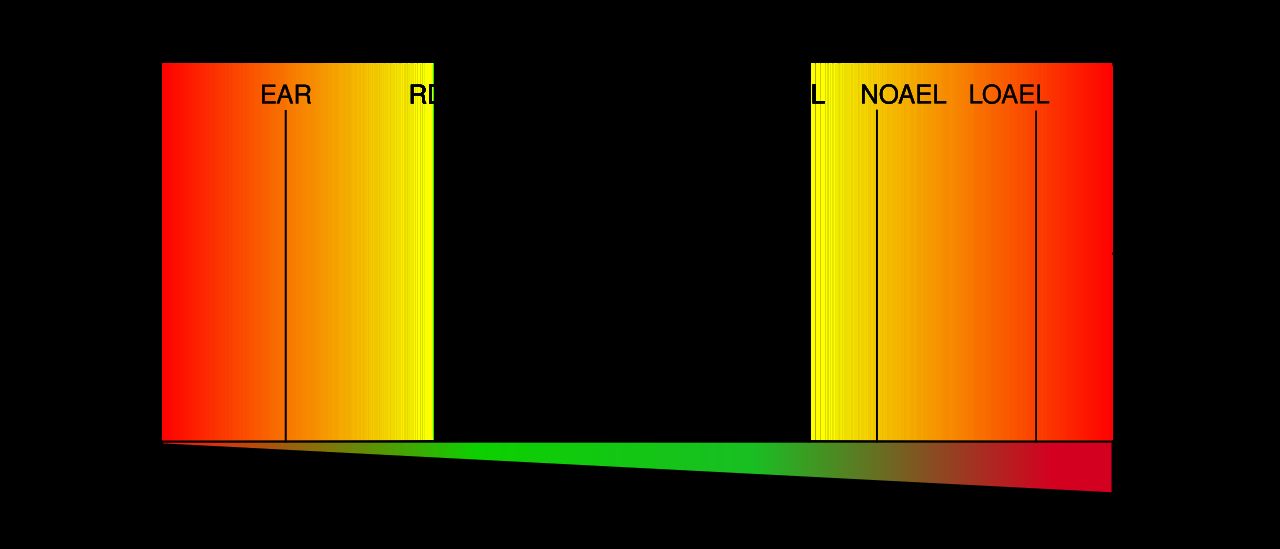
The Dietary Reference Intakes (DRIs) are a set of reference values for nutrient intake, developed by expert committees under the U.S. National Academies of Sciences, Engineering, and Medicine in partnership with Canadian authorities. They are not a single number per nutrient. They are a family of four related values — EAR, RDA, AI, and UL — each answering a different question, and each set separately for defined life-stage and sex groups: infants, children by age band, adolescent males and females, adult males and females by age band, pregnancy, and lactation.
Two structural points prevent most of the confusion. First, the DRIs describe healthy people; they are not treatment doses for disease. Second, the RDA and AI are goals for usual intake averaged over time, not targets to hit precisely at every meal or even every day. A person who eats no vitamin A on Tuesday and plenty on Wednesday is fine; the body's storage and turnover are what these values are built around.
EAR, RDA, AI, and UL — one at a time
The Estimated Average Requirement (EAR) is the intake estimated to meet the requirement of half the healthy individuals in a life-stage and sex group. Because half the group needs more than the EAR, it is a poor goal for an individual. Its real uses are two: assessing the adequacy of intakes in populations, and serving as the mathematical starting point for the RDA.
The Recommended Dietary Allowance (RDA) is the intake sufficient to meet the requirement of nearly all — about 97–98% — of healthy individuals in that group. It is derived from the EAR, conventionally as the EAR plus two standard deviations of the requirement. The RDA is the appropriate individual goal, and it is deliberately generous: most people need less than the RDA, and an intake below it is not by itself evidence of deficiency.
The Adequate Intake (AI) is used when the scientific evidence is too thin to establish an EAR, and therefore too thin to calculate an RDA. It is an observed or experimentally determined approximation of the intake of apparently healthy people. An AI is used the same way an RDA is used — as an individual goal — but it carries less certainty, and that difference in confidence is the entire reason for the separate label.
The Tolerable Upper Intake Level (UL) is the highest usual daily intake likely to pose no risk of adverse effects for almost all individuals in the group. Above the UL, risk of harm rises. Two cautions: the UL is not a recommended intake, and the absence of a UL for a nutrient means the data were insufficient to set one, not that unlimited intake is safe. For several nutrients the UL applies only to specific forms — the folate UL applies to synthetic folic acid from supplements and fortified foods, not to folate occurring naturally in food.
| Value | Covers | Use it for | Do not use it for |
|---|---|---|---|
| EAR | Meets the need of 50% of the group | Assessing group/population adequacy; deriving the RDA | An individual's daily goal |
| RDA | Meets the need of 97–98% of the group | An individual's daily intake goal | Assessing a population mean |
| AI | Best estimate when evidence cannot support an EAR | An individual goal, with lower confidence | Concluding that a lower intake is deficient |
| UL | Highest usual intake likely to carry no risk | A ceiling — a safety check on supplements and fortification | A target or a recommended amount |
The related Acceptable Macronutrient Distribution Ranges (AMDRs) work differently, expressing goals as a percentage of total energy for adults: carbohydrate 45–65%, fat 20–35%, and protein 10–35% of calories. There is also an Estimated Energy Requirement (EER) for calories — notably there is no RDA for energy, because setting an energy value that covers 97–98% of a group would systematically overshoot the average person's need.
Reading a real value: population, units, and life stage
A DRI value means nothing without its group and its units. Some worked examples, all for healthy people, all per day:
| Nutrient | Type and value | Group | How it shifts |
|---|---|---|---|
| Protein | RDA 0.8 g/kg body weight | Adults 19+, both sexes | Higher in pregnancy and lactation; higher per kg in infancy and childhood |
| Vitamin C | RDA 90 mg / 75 mg | Adult men / adult women 19+ | Add 35 mg/day for people who smoke; higher in pregnancy and lactation |
| Iron | RDA 8 mg / 18 mg | Men 19+; women 19–50 | Falls to 8 mg for women 51+; rises to 27 mg in pregnancy. UL 45 mg |
| Calcium | RDA 1,000 mg | Adults 19–50 | 1,200 mg for women 51+ and for everyone 71+. UL 2,500 mg (19–50) |
| Vitamin D | RDA 600 IU (15 µg) | Ages 1–70 | 800 IU (20 µg) at 71+. UL 4,000 IU (100 µg) for adults |
| Folate | RDA 400 µg DFE | Adults 19+ | 600 µg DFE in pregnancy. UL 1,000 µg/day of folic acid only |
| Fiber | AI 38 g / 25 g | Men / women 19–50 | An AI, not an RDA — scaled from about 14 g per 1,000 kcal |
| Total water | AI 3.7 L / 2.7 L | Adult men / adult women | Includes water from food and all beverages, not just plain water |
- The DRIs are a family of reference values for healthy people, set separately by life stage and sex.
- EAR covers 50% of a group — a population tool and the basis of the RDA.
- RDA covers 97–98% of a group — the appropriate individual goal.
- AI replaces the RDA when evidence is insufficient; it is used the same way but with lower confidence.
- UL is a safety ceiling, not a target; no UL means insufficient data, not proven safety.
- Always state the population and units with any value — iron is 8 mg/day for adult men but 18 mg/day for women 19–50 and 27 mg/day in pregnancy.
Section 5Dietary guidelines and nutrient density

From nutrient numbers to something you can eat
Nobody shops for 18 mg of iron. The DRIs are stated in nutrients, but people buy, cook, and eat foods, so a translation layer is required. That layer is the food-based dietary guideline, and most countries publish one. In the United States the Dietary Guidelines for Americans are revised on a five-year cycle by the Departments of Agriculture and Health and Human Services, accompanied by a consumer graphic — historically a pyramid, more recently the MyPlate plate icon. Other countries use their own imagery, from Canada's plate to Japan's spinning top, but the underlying nutrient science is broadly shared.
Recent editions of the U.S. guidelines converge on a few durable themes. Follow a healthy dietary pattern across every life stage rather than chasing individual nutrients. Make that pattern adaptable to personal preference, culture, tradition, and budget — a guideline that ignores cost or culture will not be followed, and an unfollowed guideline improves nothing. Meet nutrient needs primarily from nutrient-dense foods. And limit added sugars, saturated fat, sodium, and alcohol, with typical quantified targets of under 10% of calories from added sugars, under 10% of calories from saturated fat, and under 2,300 mg of sodium per day for adults. The MyPlate graphic renders this as proportions: roughly half the plate vegetables and fruit, about a quarter grains with at least half of those whole grains, about a quarter protein foods, plus dairy or a fortified alternative.
Nutrient density versus energy density
Nutrient density is the amount of beneficial nutrients a food provides relative to its energy content — nutrients per calorie. Energy density is a separate measure: calories per gram of food. The two vary independently, and confusing them causes real errors. Nuts are high in energy density and also high in nutrient density. A sugar-sweetened soft drink is low in nutrient density — appreciable energy with almost no accompanying nutrients — and, because it is roughly nine-tenths water, it is also low in energy density, only about 0.4 kcal per gram. That combination is exactly why beverages are easy to over-consume: a 12-ounce can is not calorie-dense per gram, yet it still delivers about 150 kcal in a form that requires no chewing and adds little fullness. Lettuce sits at a third corner: very low energy density, and because the calorie denominator is so small it rates well on nutrients per calorie, even though one serving supplies only small absolute amounts. Fortified breakfast cereal can be nutrient-dense for certain micronutrients while also carrying substantial added sugar. The concept is a comparison tool, not a ranking of foods into approved and forbidden.
Which brings us to empty calories, a phrase you will hear constantly. It refers to energy delivered with few accompanying nutrients — classically from added sugars, solid fats, and alcohol. It is a useful shorthand and an imprecise one, and current guidance has largely moved to naming the specific components (calories from added sugars, calories from saturated fat) rather than labeling whole foods "empty." That shift is deliberate, because in practice the label got applied to foods, and then to the people eating them. A more accurate framing: nearly every diet contains some foods eaten mainly for pleasure, celebration, or convenience, and the useful question is what the overall pattern looks like — not whether any single item earns approval.
| Idea | Definition | Units | Worth remembering |
|---|---|---|---|
| Nutrient density | Beneficial nutrients per calorie | Nutrients / kcal | Compares foods at equal energy; high here means more nutrition per calorie |
| Energy density | Energy per unit weight of food | kcal / g | Driven largely by fat and water content; independent of nutrient density |
| Added sugars | Sugars added during processing or preparation | g, or % of kcal | Common target: under 10% of total calories for adults |
| "Empty calories" | Informal term for energy with few accompanying nutrients | — | Imprecise; prefer naming added sugars, saturated fat, or alcohol directly |
| Dietary pattern | The overall combination of foods eaten over time | — | The unit at which the chronic-disease evidence is strongest |
How much confidence do the guidelines deserve?
Different pieces of the guidance rest on different foundations, and a careful reader separates them. The strongest support is for the nutrient standards themselves — the essentiality of each nutrient and the intakes that prevent deficiency, established through decades of depletion–repletion work. Also strong: folic acid fortification reducing neural tube defects, and reduced sodium intake lowering blood pressure. Good, mostly from cohort studies plus a limited set of randomized trials: dietary patterns emphasizing vegetables, fruits, legumes, whole grains, nuts, and unsaturated fats associate with lower cardiovascular risk. Weaker or contested: precise optimal percentages for individual macronutrients, and most claims that a single nutrient in supplement form prevents chronic disease.
None of this makes the guidelines arbitrary. It means they are a reasonable synthesis of evidence of mixed strength, aimed at populations, and they should be read that way — as a starting framework, not a prescription for any particular person. Individual recommendations belong with a qualified clinician or registered dietitian who knows the person's history, medications, laboratory values, resources, and preferences.
- Food-based dietary guidelines translate nutrient standards into foods, food groups, and proportions people can act on.
- Common quantified targets for adults: added sugars under 10% of calories, saturated fat under 10% of calories, sodium under 2,300 mg/day.
- MyPlate proportions: about half vegetables and fruit, a quarter grains (at least half whole), a quarter protein foods, plus dairy or a fortified alternative.
- Nutrient density is nutrients per calorie; energy density is calories per gram — they are independent measures.
- "Empty calories" is informal shorthand for energy with few nutrients; naming added sugars, saturated fat, or alcohol directly is more precise and less prone to misuse.
- The dietary pattern, not the individual food, is the level at which the chronic-disease evidence is strongest.
The chapter in one breath
- Nutrition studies how the body uses food; food is what is eaten and nutrients are the chemicals within it, with essential nutrients being those the body cannot make in adequate amounts.
- There are exactly six classes of nutrients: carbohydrate, lipid, protein, vitamin, mineral, and water.
- Macronutrients are required in grams (carbohydrate, lipid, protein, water); micronutrients in milligrams or micrograms (vitamins, minerals) — the labels describe quantity, not importance.
- Energy yields are carbohydrate 4, protein 4, fat 9, and alcohol 7 kcal/g; vitamins, minerals, and water yield none, and a label "Calorie" is a kilocalorie (1 kcal = 4.184 kJ).
- The DRIs set nutrient reference values for healthy people by life stage and sex: EAR covers 50% of a group, RDA covers 97–98%, AI substitutes when evidence is thin, and UL is a safety ceiling rather than a goal.
- Any cited value needs its population and units — iron is 8 mg/day for adult men, 18 mg/day for women 19–50, and 27 mg/day in pregnancy.
- Dietary guidelines convert nutrient standards into food-group proportions such as MyPlate, with typical limits on added sugars, saturated fat, sodium, and alcohol.
- Nutrient density (nutrients per calorie) is the more precise successor to "empty calories," and the dietary pattern over time — not any single food — is what the chronic-disease evidence actually addresses.
ReferenceWords worth knowing
A quick reference for the terms introduced in this chapter — skim it now, then come back whenever a word slows you down.
- Acceptable Macronutrient Distribution Range (AMDR)
- A DRI value giving a healthy range of intake for an energy-yielding macronutrient as a percentage of total calories; for adults, carbohydrate 45–65%, fat 20–35%, protein 10–35%.
- Adequate Intake (AI)
- A DRI used when evidence is insufficient to set an EAR and therefore an RDA; an observed or experimentally derived approximation of the intake of healthy people, used as an individual goal with lower confidence.
- Calorie (kilocalorie, kcal)
- The unit of food energy. One kilocalorie is the heat required to raise one kilogram of water by one degree Celsius, equals 1,000 small calories, and equals 4.184 kilojoules. The capital-C "Calorie" on a label is a kilocalorie.
- Carbohydrate
- A macronutrient class comprising sugars, starches, and fibers; digestible forms yield 4 kcal/g and serve as the body's most readily used fuel.
- Dietary Reference Intakes (DRIs)
- The umbrella set of nutrient reference values (EAR, RDA, AI, UL, and related figures) for healthy people, established by life-stage and sex group.
- Empty calories
- Informal term for energy supplied with few accompanying nutrients, typically from added sugars, solid fats, or alcohol; imprecise, and increasingly replaced by naming the specific component.
- Energy density
- The energy a food supplies per unit of weight, in kcal per gram; independent of nutrient density.
- Essential nutrient
- A nutrient the body cannot synthesize in adequate amounts, so the diet must supply it; its absence produces a characteristic deficiency that restoring the nutrient resolves.
- Estimated Average Requirement (EAR)
- The intake estimated to meet the requirement of 50% of healthy individuals in a life-stage and sex group; used for population assessment and to derive the RDA.
- Kilojoule (kJ)
- The SI unit of energy used on food labels in many countries; 1 kcal = 4.184 kJ.
- Lipid
- The macronutrient class that includes triglycerides, phospholipids, and sterols; yields 9 kcal/g, builds cell membranes, and carries the fat-soluble vitamins A, D, E, and K.
- Macronutrient
- A nutrient required in gram quantities each day: carbohydrate, lipid, protein, and (by convention) water.
- Micronutrient
- A nutrient required in milligram or microgram quantities each day: the vitamins and minerals.
- Mineral
- An inorganic element required in the diet; major minerals are needed at more than 100 mg/day, trace minerals in smaller amounts. Minerals supply no energy.
- Nutrient density
- The amount of beneficial nutrients a food supplies relative to its energy content — nutrients per calorie.
- Nutrition
- The science of how the body ingests, digests, absorbs, transports, uses, and excretes the substances in food, and how those processes affect health.
- Protein
- The macronutrient class made of amino acid chains; yields 4 kcal/g and supplies structure, enzymes, transporters, antibodies, and some hormones. Nine amino acids are essential.
- Recommended Dietary Allowance (RDA)
- The average daily intake sufficient to meet the requirement of about 97–98% of healthy individuals in a life-stage and sex group; the appropriate individual intake goal.
- Tolerable Upper Intake Level (UL)
- The highest average daily intake likely to pose no risk of adverse effects for almost all individuals in a group; a ceiling, never a target.
- Vitamin
- An organic compound required in small amounts to regulate metabolism; four are fat-soluble (A, D, E, K) and nine are water-soluble (vitamin C and eight B vitamins). Vitamins supply no energy.
- Water
- An essential nutrient making up roughly 50–70% of adult body weight; it serves as solvent, transport medium, temperature regulator, and chemical reactant, and supplies no energy.