Race & Ethnicity
Ask a biologist to draw the boundary between one human race and the next and she cannot do it — there is more genetic variation inside any so-called race than between one and another. Yet race is one of the most powerful forces shaping a person's life: where they live, what they earn, how long they live, whether a traffic stop turns dangerous. Sociology holds both truths at once. Race is a social construction, an invention of human societies rather than a fact of nature — and precisely because societies treat it as real, it produces real consequences. This chapter examines how race and ethnicity are built, how prejudice hardens into discrimination, how the major paradigms explain group inequality, and the long spectrum of ways dominant and minority groups have lived together, from genocide at one end to pluralism at the other.
By the end of this chapter you can
- Explain what it means to call race a social construction and distinguish it from ethnicity.
- Define a minority group in sociological terms and explain why it is about power, not numbers.
- Distinguish prejudice, stereotypes, and discrimination, and use Merton's typology to relate attitude to action.
- Contrast individual and institutional racism.
- Apply the functionalist, conflict, and symbolic interactionist paradigms to race relations.
- Order the spectrum of intergroup relations from genocide through expulsion, segregation, assimilation, amalgamation, and pluralism.
- Describe major patterns among U.S. racial and ethnic groups, including the model minority myth and symbolic ethnicity.
- Explain intersectionality and why single-axis thinking misses how inequality is lived.
Section 1Race, ethnicity, and minority groups
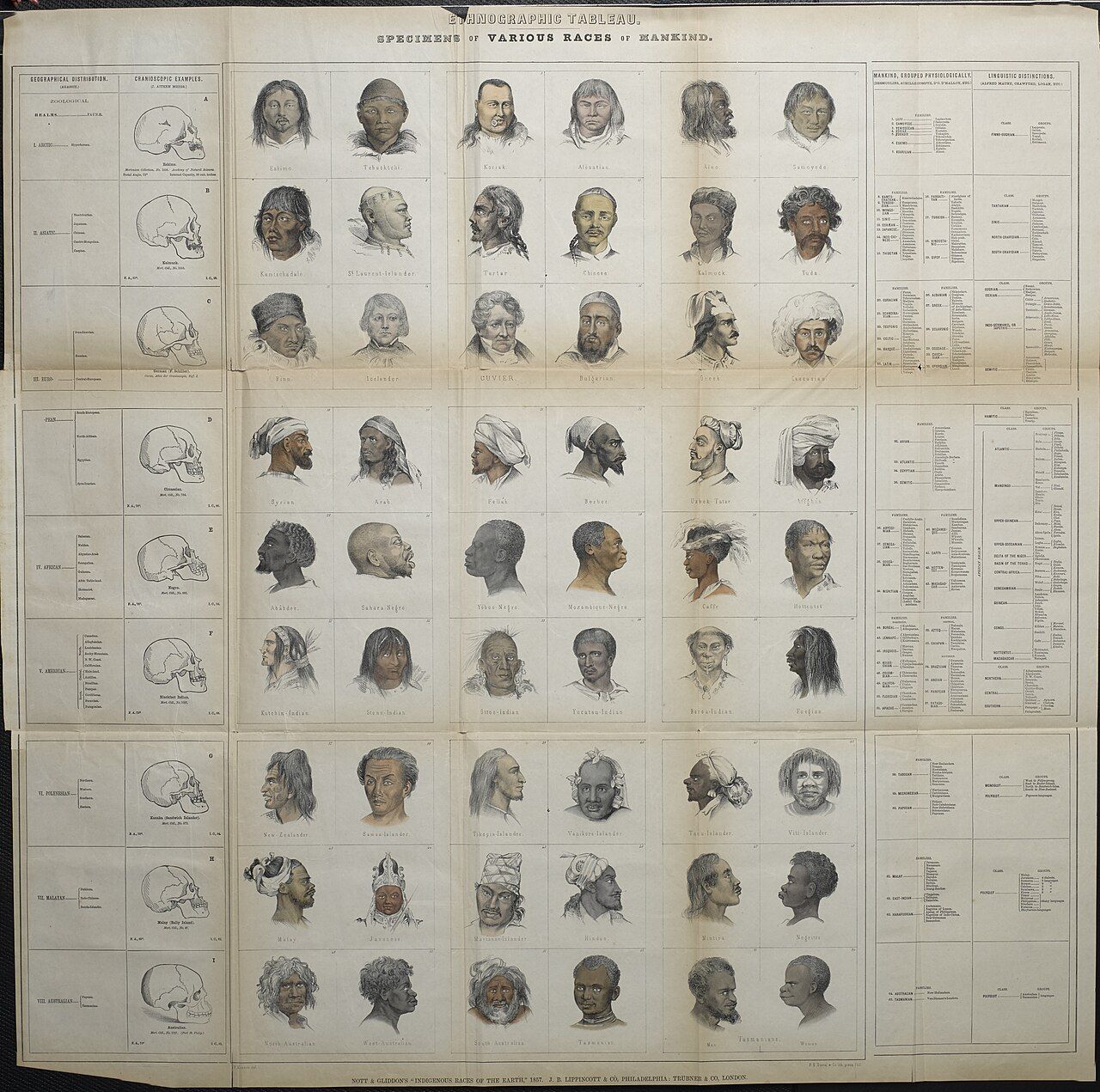
Race as a social construction
A race is a category of people who are treated as distinct because of physical characteristics — skin color, hair texture, facial features — that a society has decided to make socially significant. The key phrase is decided to make significant. Human beings vary continuously and the traits we sort by are superficial; geneticists find far more variation within any racial group than between groups, and no gene or set of genes marks the boundary of a race. Race, in other words, is a social construction: a real and consequential category, but one built by people, not discovered in nature.
Two kinds of evidence make the point. First, racial categories change across time and place. Groups treated a century ago in the United States as racially inferior and only conditionally white — the Irish, Italians, and Jews among them — saw the boundary of full “whiteness” gradually widen to include them. (They were classified as white on the census and were eligible to naturalize as “free white persons” throughout; what shifted was not their legal color but their standing within it. The naturalization cases that turned squarely on who counted as white — Ozawa and Thind in 1922–23 — were brought by Japanese and South Asian applicants, and both lost.) The U.S. Census has rewritten its own race questions in nearly every decade since 1790, adding, splitting, and deleting categories. A person classified as Black in the United States under the old “one-drop rule” might be classified as white or mixed in Brazil. If race were biological, it would not shift when you cross a border or turn a calendar page. Sociologists Michael Omi and Howard Winant call this ongoing process racial formation — the continual social and political work by which racial categories are created, inhabited, and transformed.
Ethnicity
Ethnicity refers to shared culture — language, religion, ancestry, national origin, food, and tradition — rather than perceived physical difference. Being Korean, Amish, Somali, or Italian-American is an ethnic identity. The line between race and ethnicity is not always clean (people often read culture off of appearance and vice versa), but the analytic distinction is worth holding: race is assigned largely on the basis of how a body is seen, while ethnicity is grounded in a way of life that can be practiced, emphasized, or set aside. That is why a single racial category can contain dozens of ethnicities — “Asian American” folds together Hmong, Filipino, Indian, and Japanese communities with little in common.
Minority groups
In everyday speech “minority” means smaller in number, but sociology defines it differently. Following Louis Wirth, a minority group is any group that is singled out for unequal treatment and that regards itself as an object of collective discrimination. What makes a group a minority is its lack of power, not its size. Black South Africans were the numerical majority under apartheid yet were the minority group; women are roughly half the population yet are treated as a minority in this sociological sense. The group that holds the power, prestige, and resources is the dominant group (sometimes loosely called the majority group). Minority groups typically share several features, summarized below.
| Feature of a minority group | What it means |
|---|---|
| Unequal treatment | Members have less power and receive less than their share of society's resources |
| Distinguishing traits | Physical or cultural traits the dominant group treats as marking the boundary |
| Ascribed status | Membership is usually assigned at birth, not chosen |
| Solidarity & identity | Shared experience of discrimination fosters a strong sense of group belonging |
| In-group marriage | Members tend to marry within the group, sometimes by choice, often by pressure |
- Race is a socially significant category based on perceived physical traits; it is a social construction, not a biological fact.
- Racial categories shift across time and place — evidence that society, not nature, draws the lines (racial formation).
- Ethnicity is shared culture; one racial category can hold many ethnicities.
- A minority group is defined by unequal treatment and lack of power, not by numbers.
Section 2Prejudice, discrimination, and racism
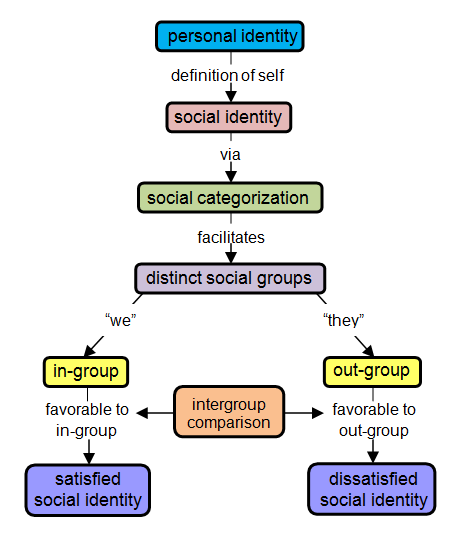
Prejudice and stereotypes
Prejudice is a prejudgment — an attitude, usually negative, held about the members of a group before you know anything about the individual in front of you. Because it lives in the head, prejudice is a matter of thought and feeling. Its raw material is the stereotype: an oversimplified, rigid generalization applied to every member of a group (“all X are lazy,” “all Y are good at math”). Stereotypes are sticky because they are cognitively cheap — they let us sort a complicated world quickly — and because they are learned early and reinforced everywhere, a saturation sociologists call the culture of prejudice. Note that a “positive” stereotype is still a stereotype: praising a group as naturally gifted still erases individuals and, as we will see, can be turned against them.
Discrimination
Where prejudice is an attitude, discrimination is an action — unequal treatment of people based on their group membership. The two often travel together, but not always, and Robert Merton mapped the four possible combinations. Someone can be prejudiced but not discriminate (a “timid bigot” held back by law or social pressure), or discriminate without being prejudiced (a “fair-weather liberal” who goes along with a discriminatory system for convenience). Recognizing that attitude and behavior can come apart matters, because it means you can reduce discrimination by changing rules and incentives even before you change hearts.
| Does not discriminate | Discriminates | |
|---|---|---|
| Not prejudiced | All-weather liberal — believes in equality and acts on it | Fair-weather liberal — goes along with discrimination for convenience |
| Prejudiced | Timid bigot — holds prejudice but is restrained by law or pressure | Active bigot — both believes in and practices unequal treatment |
Racism: individual and institutional
Racism is the belief that one race is inherently superior or inferior to another, together with the practices that flow from it. It operates at two levels. Individual racism is the prejudice and discrimination of one person against another. Institutional racism is discrimination built into the ordinary workings of a society's institutions — its banks, schools, courts, and housing markets — so that unequal outcomes are produced even when no single person intends them. The mid-century practice of redlining, in which lenders refused mortgages in Black neighborhoods, is a classic example: it locked wealth out of entire communities for generations and its effects persist in today's wealth gap. Scholars also describe colorblind racism, in which people disavow racial prejudice yet defend a status quo (“I don't see race”) that keeps existing inequalities in place.
- Prejudice is an attitude; a stereotype is its oversimplified content; discrimination is the action.
- Merton's typology shows attitude and action can come apart — you can discriminate without prejudice, or be prejudiced without discriminating.
- Individual racism is person-to-person; institutional racism is baked into how institutions operate.
- Redlining and colorblind racism show how unequal outcomes persist without overt intent.
Section 3Theories of race relations
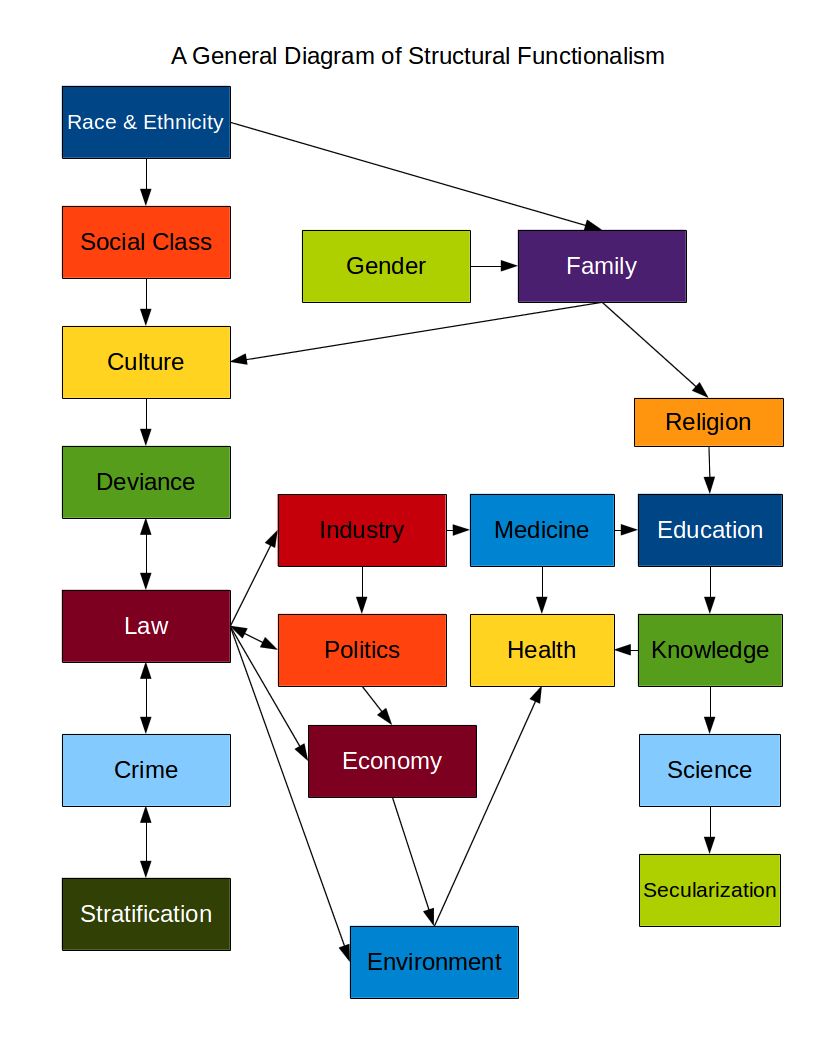
The functionalist lens
Structural functionalism asks what a social pattern does for the system as a whole. Applied to race, functionalists note that racial hierarchy, however unjust, can be functional for the dominant group: it supplies a low-wage labor pool, discourages workers from uniting across racial lines, and offers a psychological wage of superiority. But it is deeply dysfunctional for the society as a whole — it wastes the talents of excluded groups, breeds unrest, and fails Robert Merton's test of a healthy system by producing more strain than stability. In the functionalist reading, sustained discrimination is a form of social pathology that a well-integrated society will be pressured, over time, to resolve.
The conflict lens
Conflict theory, descended from Karl Marx, sees race relations as an arena of struggle over scarce resources and power. Racial divisions, in this view, are not accidents but tools: a dominant group uses them to justify exploitation and to keep subordinate groups — and potential rival workers — divided. The split labor market and scapegoat theories both belong here: elites benefit when a cheaper racialized workforce undercuts others, and dominant-group members frustrated by their own conditions are steered to blame a visible minority rather than the powerful. The pioneering sociologist W. E. B. Du Bois, whose concept of double consciousness named the split awareness of being both an American and a member of a despised group, anticipated much of this tradition; its contemporary heir is critical race theory.
The interactionist lens
Symbolic interactionism works at the level of everyday encounters and the meanings people attach to them. Race, for interactionists, is continually produced in interaction — in the labels we apply, the scripts we follow, and the way, as Charles Horton Cooley described with the looking-glass self, we come to see ourselves through others' eyes. This lens illuminates how children learn racial categories, how a stereotype can become a self-fulfilling prophecy, and how the role-taking George Herbert Mead described and the impression management Erving Goffman studied shape cross-racial encounters. It also grounds Gordon Allport's contact hypothesis: under the right conditions — equal status, common goals, cooperation, and institutional support — sustained contact between groups can erode prejudice.
| Paradigm | Level | How it explains race relations | Key idea |
|---|---|---|---|
| Functionalism | Macro | Racial hierarchy persists because it serves functions for the dominant group, but is dysfunctional for society as a whole | Function & dysfunction |
| Conflict theory | Macro | Dominant groups create and use race to control resources and divide workers; inequality is exploitation, not accident | Power & exploitation |
| Symbolic interactionism | Micro | Race is built and maintained in everyday interaction, labels, and self-concept; contact can reshape it | Meaning & interaction |
- Functionalism asks what racial hierarchy does for the system — functional for the dominant group, dysfunctional for society.
- Conflict theory (after Marx) treats race as a tool of exploitation and division; Du Bois and critical race theory extend it.
- Symbolic interactionism (drawing on Cooley, Mead, Goffman) shows race as produced in interaction; the contact hypothesis points to how prejudice can fall.
Section 4Intergroup relations: genocide to pluralism
A spectrum, not a switch
How dominant and minority groups live together is not a single condition but a range, running from the total destruction of a group at one end to genuine mutual respect at the other. Laying the possibilities on a spectrum makes the moral stakes visible and helps you locate any real society on the map.
| Pattern | What happens | Example |
|---|---|---|
| Genocide | Deliberate, systematic annihilation of a group | The Holocaust; Rwanda (1994); the Armenian genocide |
| Expulsion / population transfer | A group is forced to leave a territory | The Trail of Tears; forced relocation of Japanese Americans, 1942 |
| Segregation | Groups kept physically and socially separate | Jim Crow laws (de jure); today's residential segregation (de facto) |
| Assimilation | Minority absorbs the dominant culture, shedding its own | Pressure on immigrants to drop language and custom |
| Amalgamation | Groups blend into a new mixture (the “melting pot”) | Intermarriage producing a shared, mixed culture |
| Pluralism | Groups retain their cultures while sharing equally in society | The “salad bowl” ideal of multiculturalism |
The destructive end
Genocide — the deliberate extermination of a people — is the extreme case, and history offers too many: the Holocaust, the 1994 Rwandan genocide, the Armenian genocide, and the destruction of Indigenous peoples during colonization. Just short of it lies expulsion or population transfer, the forced removal of a group from its land, as in the Cherokee Trail of Tears or the wartime incarceration of Japanese Americans. Segregation keeps groups apart without removing them; it can be de jure (mandated by law, as under Jim Crow and apartheid) or de facto (produced in fact by housing, schooling, and income patterns even after the laws are gone).
The integrative end
Assimilation is the process by which a minority takes on the traits of the dominant culture — language, dress, values — often shedding its own along the way. The old “melting pot” image celebrated this, but assimilation is rarely neutral: it is usually the minority that is expected to change, and the price is frequently the loss of a heritage. Amalgamation goes further, blending groups through intermarriage into something genuinely new. Pluralism is the opposite of assimilation's demand: groups keep their distinct cultures and participate as equals, the “salad bowl” in which ingredients mix without dissolving. Switzerland's coexisting language communities are a frequently cited approximation, though no society reaches the ideal cleanly.
- Intergroup relations form a spectrum from genocide and expulsion through segregation to assimilation, amalgamation, and pluralism.
- Segregation may be de jure (by law) or de facto (in practice) — the second survives the first.
- Assimilation usually demands that the minority change; pluralism lets groups remain distinct while sharing equally.
Section 5Patterns among racial and ethnic groups
Different histories, patterned outcomes
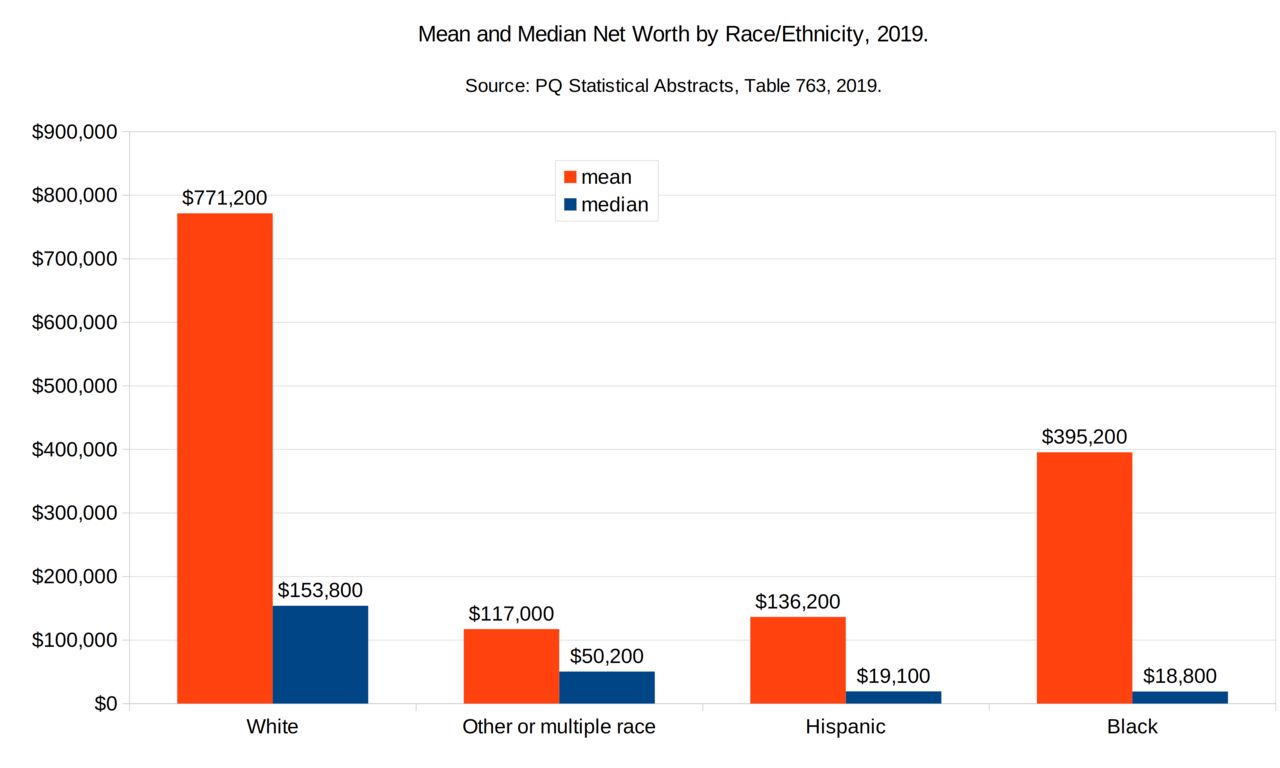
Each major U.S. racial and ethnic group carries a distinct history, and those histories leave measurable patterns. African Americans, whose ancestors were enslaved and then subjected to a century of Jim Crow, moved north in the Great Migration and won formal equality through the civil rights movement, yet still face the nation's widest wealth gap and disproportionate contact with the criminal-justice system. Native Americans survived genocide, forced removal, and coerced assimilation in boarding schools, and now contend with the poverty and health disparities concentrated on many reservations. Hispanic and Latino Americans — the country's largest minority — are an ethnic category spanning every race and many national origins, from Mexican to Cuban to Salvadoran. Asian Americans are equally diverse, from Hmong refugees to Indian engineers, a range the aggregate statistics obscure.
The model minority myth — and its mirror image
The model minority myth casts Asian Americans as uniformly successful, hard-working, and problem-free. It is a stereotype in flattering dress, and it does real harm: it erases the poverty within many Asian communities, denies individuals their individuality, and — most insidiously — is wielded as a wedge, holding up one group to imply that other minorities have only themselves to blame. At the other end, Herbert Gans described symbolic ethnicity among later-generation white ethnics — an Irish-American or Italian-American identity worn lightly on holidays, real enough to celebrate but costless to set aside. The contrast is the point: a white ethnic can choose when ethnicity is relevant, while a racial minority is rarely granted that option.
Inequality is intersectional
The wealth gap in the figure above is only one thread. Racial disparities run through income, health, life expectancy, schooling, and incarceration, and they compound rather than sit in isolation. The legal scholar Kimberlé Crenshaw named this intersectionality: a person stands at the crossing of race, class, gender, and other statuses at once, so that a Black woman's experience is not simply “race plus gender” but a distinct position that single-axis analysis misses. To understand any group's outcomes, sociologists insist, you have to see the whole intersection, not one street at a time.
| Group | Historical experience | Sociological pattern |
|---|---|---|
| African Americans | Slavery, Jim Crow, Great Migration, civil rights movement | Widest wealth gap; disproportionate incarceration |
| Native Americans | Genocide, forced removal, boarding-school assimilation | Concentrated poverty; health disparities |
| Hispanic / Latino Americans | Conquest, immigration from many nations | Largest minority; a pan-ethnic, multiracial category |
| Asian Americans | Exclusion laws, internment, later skilled migration | Burdened by the model minority myth that hides diversity |
| White ethnics | European immigration, gradual “whitening” | Symbolic ethnicity — identity that can be chosen or shelved |
- Each U.S. racial and ethnic group carries a distinct history that shows up as measurable patterns in wealth, health, and incarceration.
- The model minority myth is a harmful stereotype that hides diversity and is used against other groups.
- Symbolic ethnicity (Gans) is an optional identity available to white ethnics but rarely to racial minorities.
- Intersectionality (Crenshaw) shows that race, class, and gender compound; single-axis analysis misses lived inequality.
The chapter in one breath
- Race is a social construction based on perceived physical traits; ethnicity is shared culture; both are drawn by societies, not nature.
- A minority group is defined by unequal treatment and lack of power, not by numbers; the dominant group holds the resources.
- Prejudice is an attitude and discrimination is an action; Merton's typology shows the two can come apart.
- Racism operates individually and, more durably, institutionally — as in redlining and colorblind racism.
- The three paradigms read race as function/dysfunction (functionalism), power and exploitation (conflict, after Marx and Du Bois), and meaning built in interaction (interactionism, after Cooley, Mead, and Goffman).
- Intergroup relations run a spectrum from genocide and expulsion through segregation to assimilation, amalgamation, and pluralism.
- U.S. groups carry distinct histories that produce patterned inequality; the model minority myth and symbolic ethnicity illustrate how race and ethnicity work differently.
- Intersectionality insists that race, class, and gender be understood together, not one axis at a time.
ReferenceWords worth knowing
A quick reference for the terms in this chapter — skim it now, or circle back whenever a word trips you up.
- Amalgamation
- The blending of two or more groups into a new, mixed culture and population, often through intermarriage — the “melting pot.”
- Assimilation
- The process by which a minority group takes on the culture of the dominant group, frequently shedding its own.
- Colorblind racism
- Disavowing racial prejudice while defending a status quo (“I don't see race”) that keeps existing inequalities in place.
- Contact hypothesis
- Gordon Allport's idea that, under conditions of equal status and cooperation, sustained contact between groups reduces prejudice.
- Discrimination
- Unequal treatment (action) of people based on their group membership.
- Dominant group
- The group that holds the most power, prestige, and resources; sometimes loosely called the majority group.
- Ethnicity
- Shared culture — language, religion, ancestry, and tradition — rather than perceived physical difference.
- Expulsion
- The forced removal of a group from a territory; population transfer.
- Genocide
- The deliberate, systematic annihilation of a racial, ethnic, or national group.
- Institutional racism
- Discrimination embedded in the ordinary workings of institutions, producing unequal outcomes even without individual intent.
- Intersectionality
- Kimberlé Crenshaw's concept that race, class, gender, and other statuses cross and compound in a person's life.
- Minority group
- A group singled out for unequal treatment that sees itself as an object of collective discrimination; defined by power, not numbers.
- Model minority
- A stereotype casting a group (often Asian Americans) as uniformly successful; it hides diversity and is used against other groups.
- Pluralism
- An arrangement in which groups keep their distinct cultures while sharing equally in society — the “salad bowl.”
- Prejudice
- A prejudgment — an attitude (usually negative) held about members of a group.
- Race
- A socially constructed category treating people as distinct on the basis of perceived, socially significant physical traits.
- Racial formation
- Omi and Winant's term for the ongoing social and political process that creates and transforms racial categories.
- Racism
- The belief that one race is inherently superior or inferior, together with the practices that follow from it.
- Scapegoat theory
- The idea that a dominant group frustrated in its goals redirects aggression onto a relatively powerless minority.
- Segregation
- The physical and social separation of groups; de jure when required by law, de facto when produced in practice.
- Stereotype
- An oversimplified, rigid generalization applied to all members of a group.
- Symbolic ethnicity
- Herbert Gans's term for an ethnic identity worn lightly and optionally, typical of later-generation white ethnics.