Reformation and the Wars of Religion
In October 1517 an obscure professor of Bible in a small Saxon university town circulated a set of Latin debating points about indulgences. Within four years he had been excommunicated and outlawed; within a decade the Latin West had permanently split; within a century and a half the Holy Roman Empire had lost something close to a fifth of its people to the wars that followed. None of that was contained in the original document, and the work of this chapter is to explain how one led to the other without pretending the connection was simple or inevitable. We will look at what people actually believed and feared, at the printing shops and the credit markets, at princes who found theology useful and peasants who found it liberating, at the Catholic renewal that was not merely a reaction, and at the long, grinding wars that ended less in tolerance than in exhaustion. The Reformation is where religion, money, print and the modern state all collide.
By the end of this chapter you can
- Describe the condition of the late-medieval Church, distinguishing genuine grievances—simony, pluralism, absenteeism—from the assumption that popular piety was in decline.
- Explain the theology of purgatory and the treasury of merit, and show how the Albrecht of Mainz indulgence campaign turned doctrine into a financial instrument.
- State Luther’s core claims—justification by faith alone, sola scriptura, the priesthood of all believers—and trace his path from the Ninety-Five Theses (1517) to the Diet of Worms (1521).
- Assess the role of the printing press and vernacular Bibles in making this schism different from earlier ones.
- Compare the Lutheran, Reformed and Anabaptist movements on the Eucharist, church government and the use of force, using Zwingli, Calvin, Münster and the German Peasants’ War.
- Analyze the English Reformation as a sequence of state actions under Henry VIII, Edward VI, Mary I and Elizabeth I, including the Act of Supremacy and the Elizabethan Settlement.
- Evaluate the Catholic Reformation, the Council of Trent (1545–63) and the Society of Jesus, and explain why historians dispute the label “Counter-Reformation.”
- Explain the causes and settlements of the French Wars of Religion, the Dutch Revolt and the Thirty Years’ War, including the Edict of Nantes (1598) and the Peace of Westphalia (1648).
- Weigh the confessionalization thesis and the evidence on witch hunts, literacy and state power when judging what the Reformation actually changed.
Section 1A Church Under Strain, Not a Church in Decay
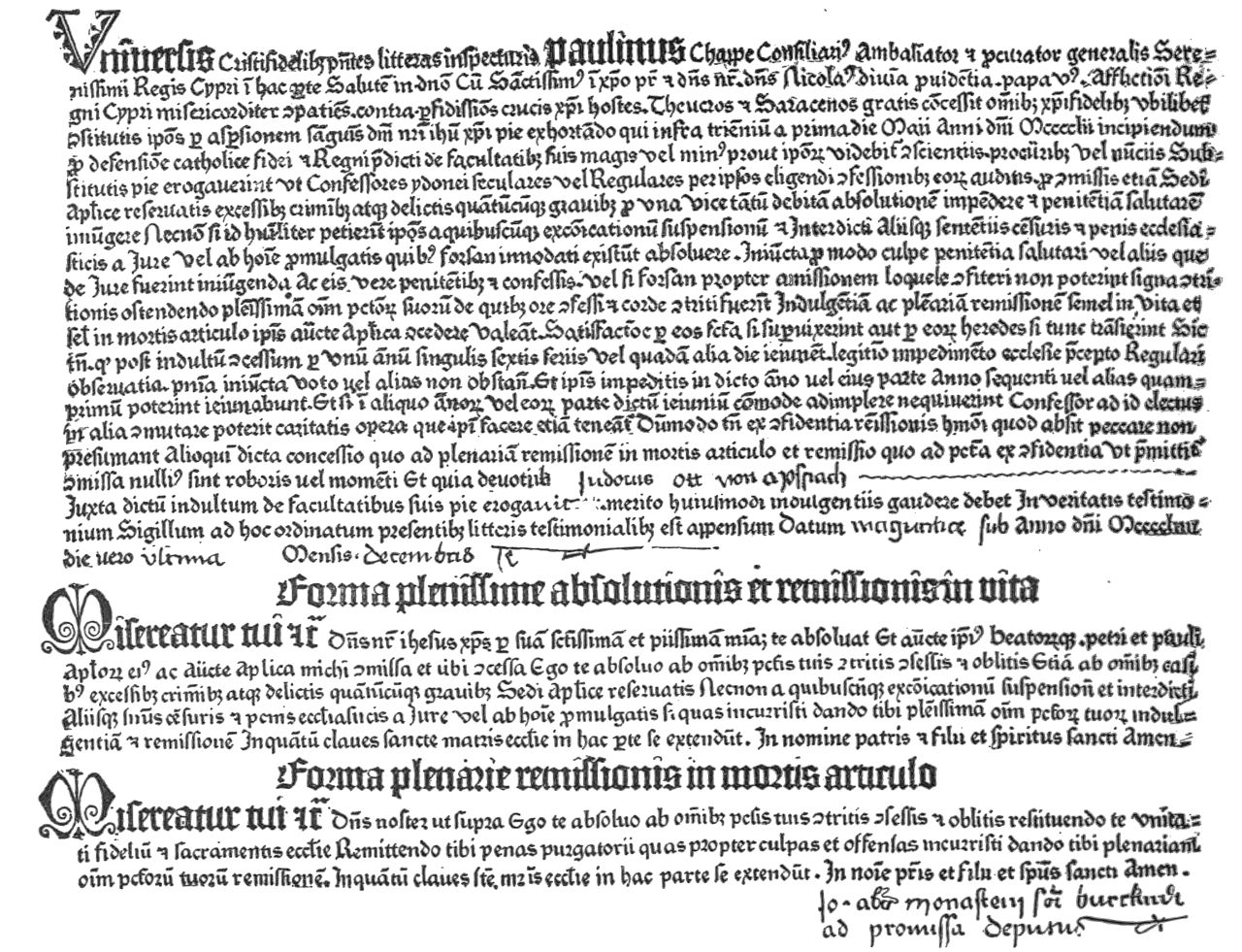
The vitality problem
Textbooks used to open this story with a corrupt, exhausted Church that a healthy reform movement swept away. Much of the evidence cuts against the first half. Around 1500 Europeans were building parish churches at a furious rate, endowing chantries, joining confraternities by the hundred thousand, walking to Compostela and Walsingham, and paying for more Masses than the clergy could physically say. Eamon Duffy’s The Stripping of the Altars (1992) argued from English parish records that traditional religion was flourishing right up to the moment the state dismantled it, and the book reset the field. It did not settle it. Critics answer that Duffy generalizes from unusually well-documented parishes, that endowments and bequests can record convention as easily as fervor, and that the anticlerical feeling evangelical pamphlets tapped so easily in the 1520s had to come from somewhere. Take the revisionist case as a strong challenge rather than a verdict. What both sides grant is the point that matters here: a dead institution collapsing explains nothing, and intense piety and intense anticlericalism are not opposites.
Structural grievances were concrete and long documented. Simony meant buying and selling church offices. Pluralism meant one man holding several benefices at once, and absenteeism meant he could not reside in all of them, so he hired an underpaid vicar to do the work. Clerical concubinage was widespread. Bishoprics in the Holy Roman Empire were dominated by noble families who treated them as property. German diets had been submitting formal complaints, the gravamina of the German nation, since the 1450s, and their central theme was money flowing across the Alps.
Purgatory, merit and the indulgence machine
To understand 1517 you must understand the doctrine it attacked, which was neither absurd nor a scam. Medieval theology distinguished the guilt of sin, forgiven through confession and absolution, from the temporal punishment still owed for it. Purgatory was where that debt was discharged after death. An indulgence remitted that punishment out of the treasury of merit—the superabundant merits of Christ and the saints, dispensed by papal authority. Given its public form in the Jubilee of 1300 and its doctrinal charter by Clement VI in 1343, the system had by 1500 travelled a long way from its origins: indulgences could be obtained without pilgrimage or hardship, applied to souls already in purgatory (an extension papally authorized in 1476), and printed by the thousand.
The campaign Luther attacked shows how theology and finance had fused. Albrecht of Brandenburg, aged twenty-three, already held two sees when the archbishopric of Mainz—the richest in Germany, carrying an electoral vote—fell vacant in 1514. The dispensation to hold three cost roughly 24,000 ducats, which he borrowed from the Fugger bank. Leo X, needing cash for St Peter’s, then licensed an eight-year indulgence campaign in Albrecht’s lands, proceeds split half to Rome and half to repay the Fuggers, a Fugger agent traveling along to guard the chest. The Dominican Johann Tetzel worked this circuit.
Reformers before the Reformation
Luther was not the first to say most of this aloud. The Oxford theologian John Wycliffe (c. 1328–84) attacked papal authority, questioned transubstantiation and promoted vernacular scripture; his followers, the Lollards, survived underground in England for a century. In Bohemia Jan Hus preached similar ideas, was granted an imperial safe-conduct to the Council of Constance, and was burned there in 1415 anyway—producing fifteen years of Hussite wars the empire could not win. That precedent mattered enormously in 1521, when Luther was offered a safe-conduct to Worms and everyone knew what had happened to the last man who took one. The Church, meanwhile, had spent the Great Schism (1378–1417) fighting itself, and fifteenth-century popes so thoroughly dismantled the conciliar movement that they left themselves no internal mechanism for reform.
Finally, the scholars. Lorenzo Valla proved in 1440 on linguistic grounds that the Donation of Constantine was a forgery. Erasmus of Rotterdam, the most famous intellectual in Europe, published the Novum Instrumentum in 1516: the Greek New Testament with a fresh Latin translation and notes, demonstrating that the Vulgate mistranslated key passages. Where the Vulgate had poenitentiam agite, “do penance,” the Greek said metanoeite, “change your mind,” or repent inwardly. That single philological point, which Valla had already raised and Erasmus buried in a scholarly annotation, quietly knocked away the main biblical proof-text for the sacramental system of penance. Luther’s first thesis in 1517 begins from it.
| Grievance | What it meant in practice | Who was harmed | Why it persisted |
|---|---|---|---|
| Simony | Offices bought and sold; entry fees (annates) paid to Rome on appointment | Able clergy without money or family; laity who got the buyer | Fees funded the papal court and princely dynasties alike |
| Pluralism and absenteeism | One man holding several benefices, resident in none, paying a substitute a fraction of the income | Parishes left with poorly trained vicars | Benefices were treated as property and family patrimony |
| Clerical ignorance | Many parish priests could recite the Mass but not explain it; few had university training | Laity seeking instruction and confession | No general system for training parish clergy existed until Trent ordered diocesan seminaries in 1563 |
| Indulgence sales | Commissioned preaching campaigns tied to building projects and bank debt | The poor, who paid on a sliding scale for the dead | Reliable revenue for popes, bishops and their creditors |
| Curial jurisdiction | Cases and appeals drawn to Rome, with fees at every stage | Local litigants; princes who wanted their own courts supreme | Canon law genuinely was a Europe-wide legal system |
Whatever else was wrong in 1517, the Church was not simply a corpse: late-medieval religion was demanding, expensive and, on the revisionist reading now dominant, intensely popular. What had failed was less belief than the institution’s capacity to reform itself.
Section 2Luther: From Debating Points to Schism
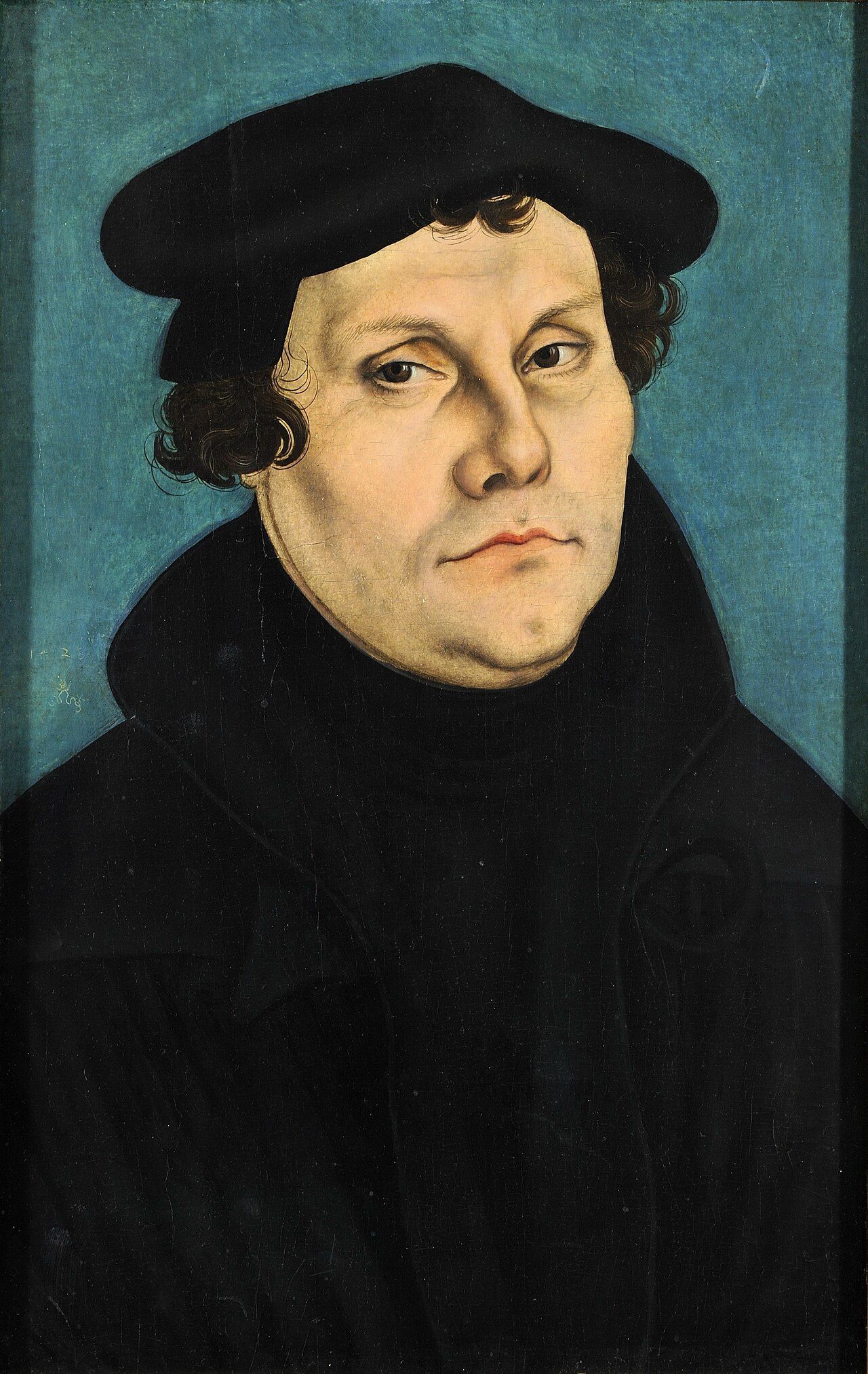
An anxious monk and a specific problem
Martin Luther was born in Eisleben in 1483, son of a copper-mining entrepreneur who wanted him to be a lawyer. He was studying law at Erfurt in July 1505 when a thunderstorm at Stotternheim knocked him down and he vowed to St Anne to become a monk. He entered the Augustinian friary two weeks later, was ordained in 1507, and by 1512 held a doctorate and the chair of biblical studies at Wittenberg, a provincial university founded by Frederick the Wise of Saxony in 1502.
What tormented him was not the corruption of Rome. It was the word righteousness. Luther had been trained in the via moderna, the late-medieval school associated with Gabriel Biel, which held that God accepts those who “do what is in them”—that a person who does his moral best will be granted grace. For a scrupulous man this was not comfort but terror, because there is no way to know whether you have done your best. Luther called these episodes Anfechtungen: assaults, spiritual panic attacks. He confessed for hours at a stretch; his superior Johann von Staupitz eventually told him to go and find a real sin to confess.
The resolution came out of lecturing on Psalms, Romans and Galatians between 1513 and 1518. Reading Romans 1:17—“the righteousness of God is revealed from faith to faith; the just shall live by faith”—Luther concluded that the phrase does not describe the standard by which God judges but the status God gives. Righteousness is not earned and then rewarded; it is imputed, received as a gift, and good works follow from it as fruit rather than producing it. This is justification by faith alone. He described the moment, decades later, as feeling that the gates of paradise had opened.
Historians argue about when this “tower experience” occurred and whether Luther’s retrospective account tidied a gradual development into a single flash. Heiko Oberman argued that Luther remained far more a late-medieval man—apocalyptic, devil-haunted, formed by nominalist categories—than the modern hero of private conscience that later admirers wanted him to be. That reading is now widely held but not universal, and it matters: on Oberman’s account the Reformation is the last great medieval reform movement rather than the first modern one.
1517 to 1521: how a faculty dispute became an outlawry
The Ninety-Five Theses, dated 31 October 1517, were Latin propositions for academics. They do not deny purgatory, reject the papacy outright, or mention justification by faith. They argue that indulgences breed false security, that the pope would empty purgatory out of love if he could, and that giving to the poor is better than buying a letter. Thesis 1 takes up Erasmus’s point that metanoeite means a whole life of repentance. Whether Luther nailed them to the Castle Church door is genuinely disputed. Erwin Iserloh argued in 1961 that the posting is a legend: no contemporary source mentions it, Luther never claimed it, and Melanchthon’s account was written after Luther was dead, by a man who had not yet arrived in Wittenberg in October 1517. Defenders reply that the door was simply the university notice board, that posting theses for a disputation was routine, and that a marginal note in the hand of Luther’s secretary Georg Rörer, found in 2006 in Rörer’s copy of the New Testament, supports it. What is certain is that on 31 October he sent the theses to Albrecht of Mainz and to his own bishop. What was also not routine was the speed—translated and reprinted in Nuremberg, Leipzig and Basel, they were read across the empire within two months.
Rome escalated in stages, and each stage radicalized him. Cardinal Cajetan interrogated him at Augsburg in October 1518 and demanded a bare recantation; Luther asked to be shown his error from scripture. At the Leipzig Disputation in the summer of 1519 the formidable Johann Eck maneuvered him into admitting that some of Hus’s condemned propositions were “most Christian and evangelical,” and therefore that a general council could err. That was the hinge. If popes can err and councils can err, then scripture alone stands as final authority—sola scriptura.
In 1520 Luther wrote three treatises that turned a quarrel about indulgences into a program. The bull Exsurge Domine that June condemned forty-one propositions and gave him sixty days to submit; on 10 December he burned it, along with volumes of canon law, outside Wittenberg’s Elster Gate. Excommunication followed in January 1521.
| Treatise (1520) | Audience and language | Central claim | Consequence |
|---|---|---|---|
| To the Christian Nobility of the German Nation | German princes, in German | The “three walls” Rome hides behind are false; all the baptized are priests, so laymen may summon a reforming council | Invited secular rulers to take charge of church reform |
| On the Babylonian Captivity of the Church | Theologians, in Latin | Of the seven sacraments only baptism and the Lord’s Supper survive the test of scripture, with penance folded back into baptism; the Mass is not a sacrifice offered by a priest | Dismantled the sacramental basis of clerical power; Erasmus said the breach was now irreparable |
| On the Freedom of a Christian | General readers, both languages | A Christian is a perfectly free lord, subject to none, and a perfectly dutiful servant, subject to all | Gave the movement its devotional heart—and a slogan peasants would soon read politically |
The Diet of Worms in April 1521 brought Luther before Charles V, a twenty-one-year-old ruling Spain, the Netherlands, Naples, the Austrian lands and the American conquests. Asked to recant, Luther took a day, then answered that unless convinced by scripture or plain reason he could not, since acting against conscience is neither safe nor honest. “Here I stand” appears in the printed version but not the earliest transcripts. The Edict of Worms made him an outlaw anyone might kill—but Charles left Germany within months for a decade of war with France and the Ottomans, and an emperor with no standing army and no bureaucracy inside the territories had no way to enforce the edict against a prince who declined to cooperate. Frederick the Wise staged a fake kidnapping and hid him in the Wartburg, where as “Junker Jörg” he turned Erasmus’s Greek New Testament into German in eleven weeks.
Print, vernacular scripture, and why this schism stuck
Wycliffe and Hus said comparable things and were contained. Luther was not, and the difference is the press. Movable type had been in Europe some sixty-five years by 1517, and the industry had spare capacity, distribution and an appetite for fast-selling titles. The Flugschrift—a quarto pamphlet of eight to thirty-two pages, printable in days, sold for about the price of a chicken—was the perfect vehicle. Treat figures as orders of magnitude, but German pamphlet output rose from a few hundred editions a year before 1517 into the thousands by the early 1520s, and Luther may have written a fifth of everything printed in German in that window.
Two further features mattered. Cranach’s woodcuts carried the argument to people who could not read, most brutally in the Passional Christi und Antichristi of 1521, which paired Christ washing feet with the pope having his kissed. And language: Luther’s German Bible—the September Testament of 1522, the complete Bible of 1534—was shaped, as he put it, by how the mother in the house and the common man in the marketplace actually spoke. It sold enormously and did more than any other book to standardize written German. Tyndale’s English New Testament followed in 1526, Olivetan’s French Bible in 1535, the Swedish Gustav Vasa Bible in 1541.
It is easy to overstate this. Print did not cause the Reformation; Catholic authors printed too, and simply chose Latin and scholarly formats for too long. Literacy across the empire was perhaps five to ten percent. But pamphlets were read aloud in workshops and marketplaces, so the audience always exceeded the readership. What print supplied was speed and irreversibility: by the time censorship responded, the ideas had entered a medium no bonfire could catch.
Luther’s breakthrough was personal and academic, but it survived where earlier reform movements were crushed because German princely politics shielded him and the printing press outran the Church’s capacity to suppress him.
Section 3The Reformation Multiplies: Peasants, Swiss, Radicals, Calvin
1525: the year the movement chose sides
Luther had said that a Christian is a perfectly free lord subject to no one. He meant it spiritually. Rural Germany, where serfdom was tightening, common woods and streams were being enclosed by lords, and new death duties were being invented, read it differently. Beginning in the summer of 1524 in the Black Forest and spreading across Swabia, Franconia, Thuringia and the Tyrol, the German Peasants’ War became the largest popular uprising in Europe before 1789, involving perhaps 300,000 people.
Its charter document, the Twelve Articles drafted at Memmingen in March 1525, is remarkable. It demands that each community elect and dismiss its own pastor, that the great tithe support that pastor and the poor while the small tithe be abolished, that serfdom end because Christ redeemed everyone, and that hunting, fishing and woodcutting rights be restored. Each demand is argued from cited scripture, and the document closes with an offer: show any of these articles to be contrary to the word of God and it will be withdrawn. Printed in some twenty-five editions within two months, it is among the first documents in European history to justify concrete social demands from the vernacular Bible.
Luther’s response destroyed his standing with the rural poor. An Admonition to Peace blamed the princes for provoking the revolt but denied that any Christian may take up the sword against authority. Then, as risings turned violent under the apocalyptic preacher Thomas Müntzer, he published Against the Robbing and Murdering Hordes of Peasants, urging rulers to stab, smite and slay. At Frankenhausen on 15 May 1525 Müntzer’s force of perhaps 8,000 was annihilated by professional cavalry and artillery in about an hour, at the cost of a handful of casualties on the princes’ side; he was tortured, then beheaded twelve days later. Estimates of the dead run from 70,000 to 100,000.
The consequences shaped everything after. The Reformation in the empire became magisterial—carried out by magistrates, princes and city councils, dependent on their protection, defined by their territorial borders. Luther’s two kingdoms doctrine, distinguishing the spiritual realm ruled by the gospel from the temporal realm ruled by the sword, hardened into a theology of obedience to constituted authority. How far that inheritance shaped later German politics is a genuinely open question; the once-popular straight line from Luther to twentieth-century authoritarianism is now rejected by most specialists as far too neat. And the socially radical strand of reform was driven underground, where it became something else entirely.
Zürich, Marburg, and the fracture over bread
The Swiss Reformation began independently. Huldrych Zwingli, people’s priest at the Grossmünster in Zürich from 1519, reached his positions through Erasmian humanism and preaching straight through the New Testament. Zürich was a republic, so reform proceeded by council vote: the “affair of the sausages” in Lent 1522, the Sixty-Seven Articles of 1523, images gone in 1524, the Mass in 1525, the organ silenced. Where Luther retained whatever the Bible did not forbid, the Reformed removed whatever it did not command—which is why a Saxon church still looks Catholic and a Genevan one is a whitewashed room with a pulpit.
The split became formal over the Eucharist. Luther, reading “this is my body” literally, held that Christ is truly and bodily present in, with and under the bread and wine—not transubstantiation, but real bodily presence. Zwingli read “is” as “signifies” and treated the Supper as a memorial. Philip of Hesse, wanting a united Protestant alliance, brought them together at the Marburg Colloquy in October 1529. They agreed on fourteen of fifteen articles and deadlocked on the fifteenth; Luther is said to have chalked hoc est corpus meum on the table and refused to move. Protestantism has had no single body since. Zwingli died two years later at Kappel, and the Catholic cantons quartered and burned his corpse.
The radicals: rebaptism, Münster, and the pacifist turn
In Zürich, some of Zwingli’s own students concluded he had stopped too soon. If the church consists of true believers, infant baptism is meaningless, because an infant cannot believe. On 21 January 1525 Conrad Grebel baptized Georg Blaurock in a private house, and the others followed. Opponents called them Anabaptists—rebaptizers—a name they rejected, since in their view the infant ceremony had never been a baptism. Rebaptism was capital under a Roman law of 529 still on the books, and Protestant and Catholic authorities alike used it: Felix Manz was drowned in the Limmat in 1527, an execution the magistrates found grimly witty.
The mainstream of the movement, defined by the Schleitheim Articles of February 1527, was radically separatist and non-violent: believers’ baptism, a gathered church disciplined by the ban, refusal of the oath, refusal of the magistracy, and complete withdrawal from the sword. Michael Sattler, who drafted them, had his tongue cut out and was burned three months later.
Then came Münster, which is why everyone remembers Anabaptists as fanatics. In 1534 apocalyptic preachers seized that Westphalian city, expelled or rebaptized the population and declared it the New Jerusalem. The tailor Jan van Leiden proclaimed himself king, abolished private property and imposed polygamy, taking sixteen wives and beheading one who objected. The prince-bishop retook the city in June 1535; in January 1536 the surviving leaders were publicly tortured to death and their bodies hung in iron cages from St Lambert’s tower, where the cages still hang. Afterward Menno Simons gathered survivors around a strictly pacifist discipline, giving us the Mennonites.
Calvin and Geneva
The second generation belongs to John Calvin, born at Noyon in Picardy in 1509, trained in law at Orléans and Bourges and in classics in Paris. After a “sudden conversion” he never described in detail, and after the Affair of the Placards in October 1534 made France unsafe for evangelicals, he fled to Basel and in March 1536 published the first edition of the Institutes of the Christian Religion—six chapters, pocket-sized, meant as a primer. He revised it for the rest of his life; the definitive Latin edition of 1559 runs to four books and eighty chapters. It is the most systematically organized theology of the Reformation, which is the main reason Calvinism traveled so well: it could be taught.
Detoured through Geneva in 1536, Calvin was browbeaten into staying by Guillaume Farel, expelled in 1538, and returned in 1541 on his own terms after three formative years in Strasbourg with Martin Bucer. The Ecclesiastical Ordinances established four offices—pastors, doctors, elders, deacons—and the Consistory, which summoned citizens for drunkenness, fornication, dancing and absence from sermons and could bar them from communion but not imprison them. Geneva was no theocracy in the strict sense; Calvin was a salaried employee, not a citizen until 1559. John Knox called it the most perfect school of Christ since the apostles. The hardest case is the anti-Trinitarian physician Michael Servetus, tried and burned in October 1553. The sentence was passed by Geneva’s Small Council, a body in which Calvin held no office and no vote; he supplied the evidence, argued the case against him, and asked without success that the man be beheaded rather than burned. Whether that makes Calvin the executioner, an accomplice or an expert witness in a trial he did not control is still argued, and the argument has been carried on for four centuries by people with a stake in the answer. What is not argued is the reception: Catholic and Protestant Europe alike approved, and the one loud dissent, Sebastian Castellio’s, observed that to kill a man is not to defend a doctrine but simply to kill a man.
Predestination is what Calvin is remembered for, though it is not where the Institutes begins. Since salvation is entirely God’s free gift, his choice must precede and cause faith rather than answer it; if some are chosen, the rest are passed over. Calvin called this a dreadful decree. What it did to the people who believed it is disputed. Max Weber argued in 1904–05 that it produced not fatalism but driving conscientiousness, as believers looked for evidence of election in disciplined, productive lives, and that this “Protestant ethic” helped make modern capitalism. The thesis has never stopped being contested: Catholic Antwerp, Augsburg and northern Italy had sophisticated capitalism first, pastors’ casebooks record as much anxiety as assurance, and economists have argued that the later Protestant economic advantage tracks Bible-driven literacy rather than any distinctive attitude to work.
| Position | Lord’s Supper | Church and state | Who governs the church | Baptism |
|---|---|---|---|---|
| Catholic | Transubstantiation; Mass is a sacrifice | Two swords; clergy exempt from lay courts | Pope and bishops | Infants; necessary for salvation |
| Lutheran | Real bodily presence in, with and under the elements | Two kingdoms; prince as emergency bishop | Prince and territorial superintendents | Infants |
| Reformed (Zwingli, Calvin) | Memorial (Zwingli) or spiritual feeding by the Spirit (Calvin) | Distinct spheres, mutually accountable; church disciplines its own | Pastors and lay elders in consistory and synod | Infants, as covenant sign |
| Anabaptist | Memorial meal of a gathered community | Total separation; refusal of oath, office and sword | The congregation | Believing adults only |
Meanwhile the empire settled its quarrel by force and then treaty. The Lutheran princes formed the Schmalkaldic League in 1531; Charles V crushed them at Mühlberg in 1547 and still could not impose uniformity, because the victory frightened the German princes of both confessions into seeing him as a threat to their own liberties: in 1552 Maurice of Saxony, the Lutheran ally whose defection had won him the war, switched sides again with subsidies from Catholic France and nearly captured him at Innsbruck. The Peace of Augsburg of 1555, summarized by later jurists as cuius regio, eius religio—a phrase that appears nowhere in the treaty itself—let each prince choose Lutheranism or Catholicism, dissenters free to emigrate. It made no provision for Calvinists, about to become the empire’s most dynamic confession. Augsburg did not end the German religious question; it postponed it for sixty-three years.
Once scripture alone was the authority, no one could control who read it: the movement split within a decade into princely Lutheranism, disciplined Reformed churches and persecuted radical congregations, and the 1555 compromise that froze the German split left out the group most likely to break it.
Section 4England’s Statutory Reformation and the Catholic Renewal
Henry VIII: a schism without a theology
The English Reformation began as a jurisdictional dispute, not a doctrinal one. Henry VIII had written—or at least signed—a defense of the seven sacraments against Luther in 1521, for which Leo X named him Defender of the Faith. His problem was dynastic. Catherine of Aragon had given him a surviving daughter, Mary, and no son; England’s only previous experiment with a female ruler had produced civil war. Henry wanted his marriage annulled on the grounds that Leviticus forbids marrying a brother’s widow, and that the dispensation Julius II had granted in 1503 was therefore invalid.
In ordinary times a king might have got this. But in 1527 imperial troops sacked Rome, leaving Clement VII in the power of Charles V—Catherine’s nephew. Wolsey fell in 1529 for failing to deliver. Thomas Cromwell then supplied a bolder solution: if Rome would not grant it, England would remove Rome by statute. The Act in Restraint of Appeals of 1533 declared that “this realm of England is an empire,” subject to no foreign jurisdiction, so Archbishop Thomas Cranmer could rule on the marriage himself. The Act of Supremacy of 1534 made the king Supreme Head of the Church of England; More and Fisher were beheaded in 1535.
The Dissolution of the Monasteries between 1536 and 1540 was the reign’s most consequential act, and its motives were substantially fiscal. Roughly 800 houses were closed and their lands—perhaps a sixth of England’s landed wealth—taken by the crown, which sold most within a decade to gentry and merchants, creating a propertied class with a direct stake in never restoring Catholicism. It also swept away in a single decade much of England’s hospital provision, schooling, library holdings and organized charity, though how much the monasteries had actually still been providing by the 1530s is one of the sharper disputes in the field. The Pilgrimage of Grace of 1536 put 30,000 northerners in the field; Henry negotiated, promised a parliament, then hanged the leaders. He died in 1547 head of a church Catholic in belief and papal-free in law.
Edward, Mary, Elizabeth: three settlements in eleven years
Under the boy king Edward VI (1547–53), Cranmer moved fast. Chantries were dissolved, images removed, clerical marriage permitted, and—his enduring achievement—the Book of Common Prayer appeared in English in 1549, revised in a markedly more Protestant direction in 1552. Its cadences shaped the language for four centuries. Its imposition also provoked the Western Rebellion of 1549 in Devon and Cornwall, where protesters complained the new service was “like a Christmas game” and where many spoke Cornish and found English no more intelligible than Latin.
Mary I (1553–58) reversed everything, restored papal obedience, and burned close to 285 Protestants, including Cranmer, Latimer and Ridley. By the standards of continental persecution the numbers are modest; the political effect was catastrophic for her cause, because John Foxe’s Acts and Monuments of 1563—the “Book of Martyrs,” chained in parish churches beside the Bible—fixed the identification of Catholicism with foreign cruelty in the English mind for centuries. Her marriage to Philip II of Spain and the loss of Calais compounded the damage.
Elizabeth I (1558–1603) built the settlement that lasted. The Acts of Supremacy and Uniformity of 1559 made her Supreme Governor rather than Head, restored a revised Prayer Book, and required parish attendance under a modest fine; the Thirty-Nine Articles of 1563 defined doctrine in broadly Reformed but carefully ambiguous terms. She is often credited with a deliberate via media, a phrase popularized by nineteenth-century Anglicans hunting a usable ancestry. Her settlement was less a principled middle way than a workable one—Protestant doctrine in a traditional shell, enforcing outward conformity while declining to make windows into men’s souls.
That tolerance was conditional, and politics ended it. Pius V’s bull Regnans in Excelsis of 1570 excommunicated Elizabeth and released her subjects from allegiance, turning every English Catholic into a potential traitor; after seminary priests arrived in 1574 and Jesuits in 1580, recusancy fines rose steeply and some 180 Catholics were executed. Puritans pressed from the other flank. Historians once called the English Reformation rapid and popular—A. G. Dickens in 1964—but revisionists led by Christopher Haigh and Eamon Duffy argue from wills and parish accounts that it was slow, resisted and imposed over generations. The debate is unsettled.
Catholic renewal: not simply a reaction
Calling everything Rome did after 1517 the “Counter-Reformation” makes it sound purely reactive. Much of it was not. The Spanish church had been overhauled by Cardinal Cisneros from the 1490s, with a reformed episcopate, a new university at Alcalá and the Complutensian Polyglot Bible. The Oratory of Divine Love, the Theatines of 1524, the Capuchin reform of 1528 and Angela Merici’s Ursulines of 1535—the first order of women dedicated to teaching girls—all grew from Catholic roots. Hubert Jedin proposed using both terms: Catholic Reformation for internal renewal, Counter-Reformation for the deliberate campaign against Protestantism. Most historians now use his double formula, and some prefer “early modern Catholicism” to escape the argument altogether.
The most consequential new order was the Society of Jesus. Íñigo López de Loyola was a Basque soldier whose leg was shattered at Pamplona in 1521; convalescing with nothing to read but a life of Christ and a book of saints, he resolved to compete with the saints as he had once competed with courtiers. A year at Manresa produced the Spiritual Exercises, a structured four-week retreat of guided imaginative meditation. He then spent eleven years acquiring an education, gathered six companions at Paris who took vows at Montmartre in 1534, and saw Paul III approve the Society in 1540.
The Jesuits were built differently from monastic orders: no choir office, no distinctive habit, mobility instead of enclosure, a fourth vow of obedience to the pope regarding missions, and a long, selective formation. They became Europe’s teachers, running roughly 200 colleges by 1600 under the standardized Ratio Studiorum of 1599 and educating Catholic elites largely free of charge. Francis Xavier reached Goa in 1542 and Japan in 1549; Matteo Ricci entered China in 1583 and mastered Confucian scholarship to argue Christianity in its own terms. Their record is genuinely mixed—brilliant intercultural adaptation alongside deep entanglement with colonial power—and Chapter 9 takes that up.
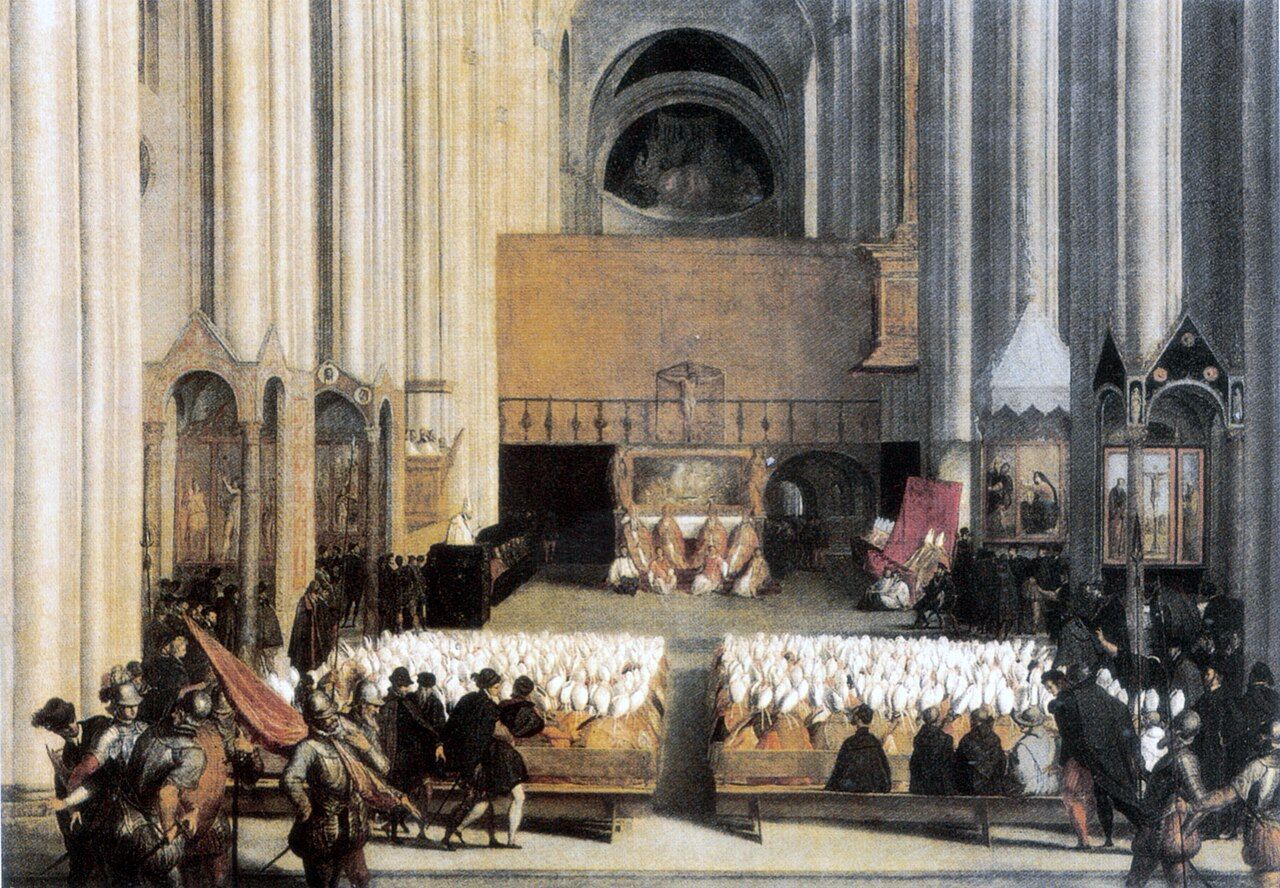
The Council of Trent
The Council of Trent met in three periods—1545–47, 1551–52 and 1562–63—delayed repeatedly by war, plague and the conflicting interests of pope, emperor and French king. It was small by conciliar standards; fewer than forty bishops attended some early sessions, and Italians dominated throughout. It did two distinct things.
Doctrinally, it closed every door Protestants had opened. Session 4 declared that revelation comes through scripture and unwritten apostolic tradition, and made the Vulgate the authentic text. Session 6, on justification, was the most carefully drafted: it affirmed that grace initiates salvation and that no one merits the first grace, but insisted that justification actually transforms the person rather than merely covering them, and that faith formed by love, cooperating freely, genuinely merits an increase of grace. Later sessions reaffirmed all seven sacraments, transubstantiation, the Mass as a true sacrifice, purgatory, indulgences and the veneration of saints and images—though Session 21 in 1562 abolished the office of the licensed indulgence-seller, the closing session of 1563 condemned all money-gains attached to indulgences, and Pius V in 1567 revoked every indulgence attached to a fee.
Disciplinarily, and arguably more importantly, it forced bishops to reside in their dioceses, ordered every diocese to found a seminary to train priests, required parish registers, mandated preaching and catechesis, and—through the Tametsi decree—required marriages to be contracted publicly before a parish priest and two witnesses, ending centuries of disputed clandestine marriages. Combined with the Roman Inquisition (1542), the Index of Prohibited Books (1559 and 1564), the Roman Catechism, and a revised Missal and Breviary, this produced a far more uniform, better-instructed and more tightly supervised church than the one Luther had attacked.
| Issue | Protestant position (broadly) | Trent’s definition |
|---|---|---|
| Authority | Scripture alone | Scripture and unwritten apostolic tradition, received with equal reverence |
| Justification | By faith alone; righteousness imputed | By grace, received in baptism, genuinely transforming; faith working through love truly merits increase |
| Sacraments | Two (baptism, Lord’s Supper) | Seven, instituted by Christ, conferring grace by the act performed |
| Eucharist | Memorial or spiritual or real presence, but not a sacrifice | Transubstantiation; the Mass is a true propitiatory sacrifice |
| Bible text and language | Original Hebrew and Greek; vernacular translation essential | Vulgate authentic; vernacular liturgy rejected, vernacular Bibles restricted |
| Clergy | Married, trained, the priesthood of all believers | Celibate, seminary-trained, resident, sacramentally distinct |
England broke with Rome by act of parliament for dynastic reasons and only gradually acquired a Protestant theology, while Rome answered the schism with a renewal that was partly older than Luther and that hardened Catholic identity as much as it reformed Catholic practice.
Section 5The Wars of Religion and the Peace of Exhaustion
France: eight wars, one massacre, one edict
France had perhaps two million Huguenots—French Calvinists—by 1562, under a tenth of the population but concentrated in southern and western towns and, decisively, among the nobility, where the proportion may have reached a third. Noble converts brought armed clienteles, so a religious minority became a military one. The crown, weakened by Henry II’s accidental death in a tournament in 1559 and a run of young kings, could not control three great houses—the Catholic Guise, the Protestant Bourbon, the wavering Montmorency—maneuvering around the queen mother Catherine de’ Medici.
The wars began in March 1562 when the duke of Guise’s men killed Huguenot worshippers in a barn at Vassy, and ran in eight rounds until 1598. The defining atrocity was the St Bartholomew’s Day massacre. In August 1572 Paris was full of Huguenot nobility for the wedding of Henry of Navarre to the king’s sister. After a botched attempt on Admiral Coligny, the court authorized a strike on the Huguenot leadership on the night of 23–24 August; a targeted killing became general slaughter as militia and crowds took over. Perhaps 2,000 to 3,000 died in the capital and thousands more as it spread to provincial cities.
The massacre changed Huguenot political thought. Writers called monarchomachs—Hotman, Beza, the anonymous Vindiciae contra tyrannos of 1579—argued that kings hold power under contract, that lesser magistrates may lawfully resist a tyrant, and that a ruler who breaks covenant may be deposed. These resistance theories reappear in the Dutch Act of Abjuration, the English Civil War and eventually 1776—an irony worth noting, since their authors wanted a godly kingdom, not a liberal one.
The same decades produced the politiques: Catholics such as the chancellor Michel de L’Hôpital and the jurist Jean Bodin who concluded that the survival of the state must take priority over religious uniformity. Bodin’s Six Books of the Commonwealth (1576) defined sovereignty as a single, indivisible, perpetual power to make law—the theoretical foundation of the absolutism of Chapter 10, and a direct product of civil war.
The knot was cut by heredity. When the last Valois king was assassinated in 1589 the heir was Henry of Navarre, a Protestant who could win battles but not take Paris. In July 1593 he converted—“Paris is worth a Mass” is almost certainly not his—and in April 1598 issued the Edict of Nantes. It is no declaration of religious freedom: Catholicism remained the state religion, while Huguenots got conscience everywhere, public worship only in named places, civil rights, mixed court chambers and, by the secret articles, roughly a hundred fortified places of safety, the most important of them garrisoned at royal expense. It was a treaty with an armed minority. Ravaillac stabbed Henry to death in 1610; Louis XIV revoked the edict in 1685.
The Dutch Revolt
The Netherlands were seventeen wealthy, urbanized, jealously privileged provinces that Charles V had inherited from his Burgundian ancestors and rounded out by conquest, and that Philip II then ruled through regents from Spain. Philip raised taxes, reorganized the bishoprics to tighten control, and enforced heresy laws against a growing Calvinist minority. In August 1566 the Beeldenstorm swept the country as crowds smashed images in hundreds of churches. Philip sent the duke of Alba with 10,000 troops and a tribunal, the Council of Troubles, which condemned over a thousand people; the counts of Egmont and Hoorn, both Catholic noblemen, were beheaded in 1568 for insufficient zeal, persuading many that this was an attack on Netherlandish liberties as such.
Revolt became viable when the Sea Beggars seized Brielle in April 1572 and Holland and Zeeland declared for William of Orange. Spain won most battles and lost the war to water, walls and money: the Dutch flooded polders to break sieges, and unpaid Spanish troops mutinied and sacked Antwerp in 1576. The revolt split along a military line—the Union of Arras reconciling the south, the Union of Utrecht binding the north, both 1579—and the Act of Abjuration of 1581 deposed Philip on the grounds that a prince who treats subjects as slaves forfeits his office. The republic survived William’s assassination in 1584, won a truce in 1609 and recognition in 1648.
The Thirty Years’ War
The Peace of Augsburg finally failed in Bohemia. In May 1618 Protestant nobles threw two royal governors and a secretary out of a window of Prague Castle—the Defenestration of Prague—after the guarantees of worship granted in Rudolf II’s Letter of Majesty of 1609 were withdrawn; they survived the fall, on a dung heap or by angelic intervention depending on the pamphlet. The nobles deposed the Habsburg Ferdinand as king of Bohemia and elected the Calvinist Elector Palatine, Frederick V. Since Bohemia carried an imperial electoral vote, this threatened a Protestant majority in the college that chose the emperor. Ferdinand crushed Frederick at the White Mountain in November 1620, executed twenty-seven leaders in the Old Town Square, confiscated half the land in Bohemia and re-Catholicized the kingdom by force.
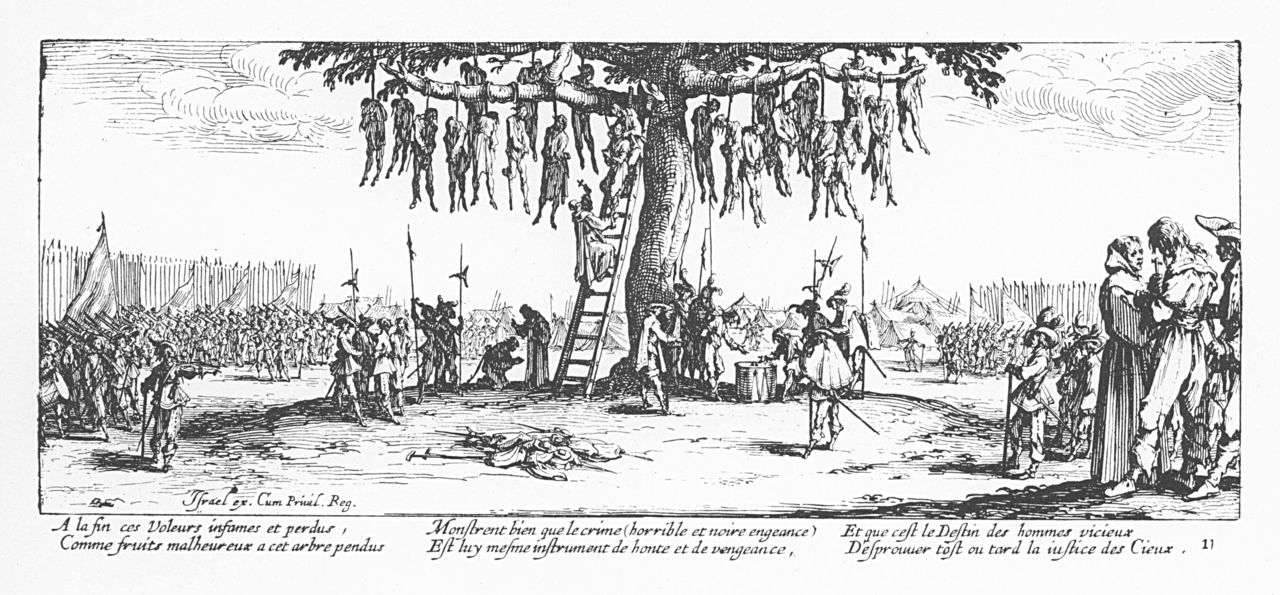
It should have ended there. Instead it widened phase by phase, as each defeated Protestant party was replaced by a larger foreign power afraid of Habsburg dominance. Two features made it uniquely destructive. Armies grew far beyond what any state could pay—Wallenstein raised 100,000 men and financed them by systematic “contributions” extracted from occupied territory, institutionalizing plunder. And unpaid troops living off the land spread famine and typhus far more efficiently than they fought battles. The sack of Magdeburg in May 1631 killed some 20,000 of 25,000 inhabitants and became the century’s byword for atrocity.
| Phase | Dates | Main challenger | Turning point | Outcome |
|---|---|---|---|---|
| Bohemian | 1618–25 | Bohemian estates, Frederick V | White Mountain, 1620 | Habsburg victory; Bohemia forcibly re-Catholicized |
| Danish | 1625–29 | Christian IV of Denmark | Wallenstein’s victories; Edict of Restitution, 1629 | Habsburg high-water mark; Catholic princes alarmed by imperial power |
| Swedish | 1630–35 | Gustavus Adolphus, subsidized by France | Breitenfeld 1631; Gustavus killed at Lützen 1632 | Protestant north saved; Sweden checked at Nördlingen 1634 |
| French | 1635–48 | France under Richelieu, then Mazarin | Rocroi, 1643 | Habsburg hegemony broken; negotiated settlement |
The French phase exposes what the war had become. Cardinal Richelieu, a prince of the Roman Church and first minister of the most populous Catholic kingdom in Europe, subsidized Lutheran Sweden from 1631 and declared war on Catholic Spain in 1635, because containing Habsburg power mattered more than confessional solidarity. That is raison d’état, and its open practice is one reason historians treat 1648 as a turning point.
The Peace of Westphalia was negotiated simultaneously at Catholic Münster and Protestant Osnabrück and signed in October 1648. It extended Augsburg to include Calvinists, set 1 January 1624 as the “normative year” fixing each territory’s legal confession, granted minorities private worship and rights of emigration, recognized Dutch and Swiss independence from the Empire, and let the imperial estates make their own alliances. The demographic cost was staggering, though smaller than the figure textbooks long repeated. Older accounts, following seventeenth-century chroniclers, said Germany lost a third or even half its people. Modern regional work in tax lists and parish registers has revised that down: the Empire’s population fell from roughly twenty million to about sixteen or seventeen, a loss near a fifth, distributed with brutal unevenness—Württemberg, Pomerania and Mecklenburg lost half or more, while parts of the northwest were barely touched.
Witches, literacy, and what the century actually produced
The great European witch hunts peaked between roughly 1560 and 1630, exactly overlapping the confessional wars. Careful modern estimates, built from surviving court records rather than from rhetoric, put the total at roughly 90,000 to 110,000 prosecutions and 40,000 to 60,000 executions across three centuries, perhaps half in the fragmented Holy Roman Empire, with 75 to 80 percent of victims women. The often-repeated figure of nine million traces back to Gottfried Christian Voigt, who in 1784 extrapolated from the records of one town to the whole of Europe; it has no evidentiary basis and was recycled first by nineteenth-century anticlericals and later by writers who found it useful.
Two corrections matter. This was not a medieval phenomenon: the Middle Ages generally treated belief in night-flying witches as superstition, and the great hunts belong to the early modern period, contemporary with the Scientific Revolution. Nor was it simply Catholic: Lutheran, Calvinist and Catholic jurisdictions all hunted, while the Roman and Spanish Inquisitions, with trained judges and strict evidentiary rules, were markedly more skeptical than local secular courts. The worst panics came where central judicial supervision was weakest and torture unregulated, in small prince-bishoprics such as Trier, Würzburg and Bamberg. Salem in 1692, with twenty executions, was tiny by these standards.
On the other side of the ledger, confessional competition drove a real educational revolution. Every church that told believers to read the Bible had to teach them to read, and every church that catechized had to print catechisms. Lutheran Sweden ran household reading examinations that produced near-universal reading literacy by about 1700; Scotland’s reformers called for a school in every parish in 1560; Jesuit colleges did the same work on the Catholic side. Poor relief was reorganized on a civic basis as monastic charity vanished, and parish registers gave states unprecedented information about their populations.
That last observation is the core of the confessionalization thesis of Heinz Schilling and Wolfgang Reinhard: that Lutheran, Reformed and Catholic states did structurally parallel things—imposed creeds, standardized liturgy, policed morals, took over education and welfare, kept records—and that this built the disciplinary apparatus of the early modern state. It is powerful and it has real critics, who argue that it mistakes official prescription for social reality, understates how far ordinary people ignored or blended confessions, and fits Germany better than France, Poland or the Dutch Republic. The honest position is that confessionalization describes what governments attempted, and that success varied enormously.
Finally, toleration. It is tempting to end with the Reformation giving birth to religious freedom. It did not, or not directly. Nantes, Augsburg and Westphalia were armistices between armed confessions, and each treated a person’s religion as their ruler’s business. But armistices harden into habits. Once several confessions had survived a century of maximum violence without any being eliminated, the claim that uniformity was achievable lost its evidence and the claim that coercion was worth its cost lost its constituency. The principled case—Castellio in 1554, Dutch practice, Locke in 1689—grew in ground cleared by exhaustion.
A century of confessional warfare ended not with anyone’s victory but with settlements that accepted permanent religious division, and the lasting products were stronger states, wider literacy, and a grudging, pragmatic toleration that principle would only later justify.
The chapter in one breath
A vigorous, expensive and badly governed Church met a scrupulous professor who concluded that salvation is a gift rather than a wage, and a printing industry that could put that conclusion in front of Europe in a matter of weeks. Luther’s protest against indulgences in 1517 became a rejection of papal authority by 1520 and an outlawry at Worms in 1521, and it survived because German princes found an independent church politically useful. Once scripture alone was the standard, the movement fractured immediately: peasants read liberation into it and were massacred, Zwingli and Luther could not agree what bread is, Anabaptists concluded that the church must be voluntary and were drowned for it, and Calvin built in Geneva the disciplined, exportable model that carried Reformed Christianity to France, Scotland and the Netherlands. Rome answered with a renewal partly older than the crisis, defining doctrine at Trent and rebuilding practice through seminaries and the Jesuits. Then Europe fought about it for ninety years—in France, in the Netherlands, and in the Empire until 1648—and stopped only when victory proved impossible. The wreckage left stronger states, more literate populations, permanently divided churches, and a toleration born of fatigue.
Words worth knowing
| Term | What it means |
|---|---|
| Indulgence | Remission of the temporal punishment due for sins already forgiven, drawn from the Church’s treasury of merit; by 1500 routinely obtained by a payment. |
| Purgatory | The state after death in which the remaining debt of temporal punishment is discharged; the doctrine that gave indulgences their market. |
| Simony | Buying and selling church offices or spiritual goods, named for Simon Magus in Acts 8. |
| Pluralism and absenteeism | Holding several benefices at once and residing in none, delegating the work to poorly paid substitutes. |
| Justification by faith alone | Luther’s claim that God declares sinners righteous as a free gift received by faith, so good works follow salvation rather than earning it. |
| Sola scriptura | The principle that scripture is the sole final authority in faith, above popes, councils and tradition. |
| Priesthood of all believers | The doctrine that all the baptized share equal spiritual standing, so clergy differ in function rather than sacred status. |
| Ninety-Five Theses | Luther’s Latin propositions of 31 October 1517 challenging indulgence preaching, translated and printed across Germany within weeks. |
| Diet of Worms | The 1521 imperial assembly where Luther refused to recant before Charles V and was declared an outlaw. |
| Two kingdoms | Luther’s distinction between the spiritual realm ruled by the gospel and the temporal realm ruled by the sword, used to require obedience to rulers. |
| Anabaptists | Radical reformers who baptized only believing adults and mostly refused oath, office and sword; persecuted by Catholics and Protestants alike. |
| Predestination | The doctrine, systematized by Calvin, that God eternally elects the saved, so salvation rests on divine choice rather than human merit. |
| Consistory | The Genevan board of pastors and lay elders that supervised belief and morals and could bar offenders from communion. |
| Cuius regio, eius religio | “Whose realm, his religion”—a lawyers’ shorthand coined a generation after 1555 and not found in the treaty text, summarizing the Peace of Augsburg’s rule that each German prince set his territory’s confession, Lutheran or Catholic only. |
| Act of Supremacy | The 1534 statute making the English monarch Supreme Head of the Church of England, turning a marriage dispute into a permanent break with Rome. |
| Council of Trent | The Catholic council of 1545–63 that defined doctrine against Protestant claims and ordered seminaries, resident bishops and parish registers. |
| Society of Jesus | The order founded by Ignatius Loyola and approved in 1540, marked by mobility, papal obedience, the Spiritual Exercises, colleges and global missions. |
| Edict of Nantes | Henry IV’s 1598 grant of conscience, limited worship, civil rights and fortified towns to the Huguenots; revoked in 1685. |
| Peace of Westphalia | The 1648 treaties ending the Thirty Years’ War, recognizing Calvinism, fixing 1624 as the normative year, and confirming Dutch and Swiss independence. |
| Confessionalization | The thesis that Lutheran, Reformed and Catholic states alike built discipline, education and record-keeping around an enforced creed, strengthening the state. |