Oral Communication
By Dr. Akash Garg, DC, MS Pharmacology, MEd, MBA · Updated October 20, 2026
Plan, build and deliver a talk. Free to read, practice and play, with no sign-up.
14chapters
70interactives
Study tools
Play
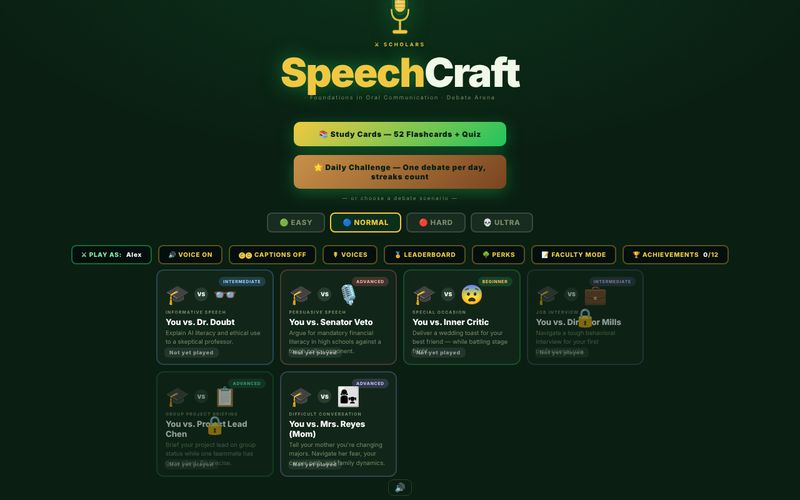 On the wayOral CommunicationSpeechCraftBuild a speech, then face the judges.
Advertisement
Chapters
- 1Foundations and Models of CommunicationWhat Communication Actually Is, Three Models, Three Ways to Diagnose a Breakdown, Contexts: From Self-Talk to the Public Stage
- 2ListeningHearing Is Not Listening, Listening on Purpose, Where Listening Breaks, The Moves: Active Listening You Can Perform
- 3Verbal and Nonverbal CommunicationWords Do Not Contain Meaning, Language That Does the Work, The Channels You Are Always Broadcasting On
- 4Self, Perception and Communication ConfidenceWhere a Self-Concept Comes From, Perception and Its Predictable Errors, Self-Presentation, Face and Disclosure
- 5Audience AnalysisThe Audience Is the Assignment, Three Lenses: Demographic, Psychographic, Situational, Gathering the Data Without Guessing
- 6Topic, Purpose and ThesisChoosing a Topic You Can Actually Deliver, General Purpose and Specific Purpose, Narrowing: Making the Topic Fit the Clock
- 7Research and Supporting MaterialFrom Thesis to Search Plan, Where the Good Material Lives, Deciding What to Trust
- 8Organizing and OutliningFrom Pile to Path: Finding Your Main Points, Patterns That Do Some of the Arguing for You, Connective Tissue: Saying the Seams Out Loud
Show all 14 chapters
- 9Introductions and ConclusionsWhat the First Ninety Seconds Have to Do, Openings That Earn Attention, Relevance, Credibility, and the Handoff
- 10Language and Style for the EarWriting for the Ear, Not the Eye, Clarity: Words That Land the First Time, Rhythm: Sentences the Mouth Can Say and the Ear Can Hold
- 11Delivery and Managing Speech AnxietyModes of Delivery and the Notes That Hold Them Up, The Voice: Rate, Pause, Pitch, and Precision, The Body: Eyes, Hands, Space, and the Camera
- 12Presentation AidsWhat an Aid Is For — and When to Cut It, Choosing the Right Aid for the Claim, Designing a Slide Somebody Can Actually Read
- 13Informative and Persuasive SpeakingInforming Is a Job, Not a Topic, Explaining Well — The Craft of Being Understood, Persuasion Starts With a Proposition and an Audience Position
- 14Interpersonal, Group and Workplace CommunicationThe Interpersonal Layer: Climate, Confirmation and Owning Your Message, Saying the Hard Thing: Assertiveness, Feedback and Repair, Working in Groups: Roles, Norms and Real Decisions

Written by Dr. Akash Garg
Doctor of Chiropractic, MS in Pharmacology, MEd and MBA. Teaching college science since 2007.