Nutrition & Physical Activity
Movement costs energy, and the body is remarkably good at paying that bill from several accounts at once. Which account it draws on — the tiny cash reserve of stored ATP, the checking account of glycogen, or the vast savings of body fat — depends almost entirely on how hard and how long you are working. This chapter walks through the fuel systems that power activity, then translates them into the practical questions people actually ask: how much carbohydrate, how much protein, how much fluid, and whether any of the products on the supplement shelf are worth the money. Along the way you will learn to separate claims backed by strong, replicated evidence from claims that rest on a single small study and a good marketing budget. Nothing here is individualized advice; it is the physiology and the evidence that sit underneath such advice.
By the end of this chapter you can
- Describe the three energy systems and predict which one dominates for a given intensity and duration.
- State the energy yields of carbohydrate, protein, fat, and alcohol and estimate the size of the body's fuel stores.
- Explain what glycogen is, why it runs out, and what carbohydrate loading does and does not accomplish.
- Apply evidence-based carbohydrate intake ranges by training load and by exercise duration.
- Compare the protein RDA with the higher intakes studied in active people, and specify the population and units for each value.
- Distinguish dehydration from exercise-associated hyponatremia and explain why the fix for one worsens the other.
- Sort common ergogenic aids into strong evidence, preliminary evidence, and no credible evidence.
- Recognize low energy availability and explain why underfueling is a performance and health problem.
Section 1Fueling activity

One currency, three ways to mint it
Every muscle contraction is paid for in ATP, and the amount of ATP sitting inside a muscle fiber at any moment is tiny — enough for roughly one to two seconds of maximal work. The body therefore does not store much energy as ATP; it stores energy as other molecules and regenerates ATP continuously from them. Three systems do that regenerating, and they are not sequential stages so much as three taps that are always open to different degrees.
The phosphagen system (also called the ATP–PCr system) uses phosphocreatine stored in the muscle to rephosphorylate ADP back to ATP almost instantly. It needs no oxygen and produces no acid, but the tank is small: maximal effort empties it in roughly ten seconds. Anaerobic glycolysis breaks glucose or muscle glycogen down to pyruvate without oxygen, yielding ATP quickly but in small amounts; when it outruns the ability of the mitochondria to accept pyruvate, lactate accumulates. This system carries efforts lasting roughly ten seconds to two minutes. The oxidative system — the mitochondria — then takes over for anything longer, completely combusting carbohydrate and fat with oxygen. It is slow to spin up but essentially unlimited in capacity.
| Energy system | Fuel used | Needs oxygen? | Dominates roughly | Everyday example |
|---|---|---|---|---|
| Phosphagen (ATP–PCr) | Stored ATP, phosphocreatine | No | 0–10 seconds, all-out | A single jump, a heavy lift, a short sprint |
| Anaerobic glycolysis | Muscle glycogen, blood glucose | No | ~10 seconds to ~2 minutes | Running up several flights of stairs |
| Oxidative — carbohydrate | Glycogen, blood glucose | Yes | Minutes to a few hours, moderate-to-hard | A tempo run or a hard group ride |
| Oxidative — fat | Adipose and intramuscular triglyceride | Yes | Rest through easy–moderate work | Sitting, walking, an easy hike |
Which fuel dominates, and why intensity is the switch
Once oxygen-dependent metabolism is in charge, the question becomes carbohydrate or fat. Both are always being burned; what changes is the mix. At rest and during easy work, fat supplies the majority of energy. As intensity climbs, the share from carbohydrate rises steadily and the share from fat falls — a pattern physiologists call the crossover. Around moderate intensity the two contribute roughly equally; at hard intensities carbohydrate supplies the large majority. The reason is mechanical: fat oxidation has more steps and depends on transport into the mitochondria, so it simply cannot deliver ATP fast enough for hard work, whereas carbohydrate can be broken down rapidly and is also the only fuel that can be used without oxygen.
The energy yields themselves are fixed and worth memorizing, because every calculation in sports nutrition rests on them. Carbohydrate yields 4 kcal per gram, protein 4 kcal per gram, fat 9 kcal per gram, and alcohol 7 kcal per gram. Notice what those numbers do to the size of the body's reserves. Carbohydrate is stored as glycogen, which is bound with roughly three grams of water per gram of glycogen, making it heavy and bulky — so the body keeps only a modest supply. Fat is stored anhydrously and yields more than twice as much energy per gram, so even a very lean person carries a reserve measured in tens of thousands of kilocalories.
| Fuel store | Typical amount in an adult | Approximate energy | Practical meaning |
|---|---|---|---|
| Circulating glucose | ~4–5 g | ~20 kcal | Minutes at most; defended tightly by the liver |
| Liver glycogen | ~80–110 g | ~320–440 kcal | Keeps blood glucose steady, including overnight |
| Muscle glycogen | ~300–500 g | ~1,200–2,000 kcal | The limiting fuel for prolonged hard exercise |
| Adipose triglyceride | Several kilograms | Tens of thousands of kcal | Effectively unlimited; never the limiting factor |
Protein is the fourth fuel, and it is a minor one. During most exercise, amino acid oxidation supplies only about five percent of the energy used, rising somewhat when muscle glycogen is low. That is a physiological argument for eating enough carbohydrate rather than an argument for eating more protein: adequate carbohydrate spares protein for the structural and enzymatic jobs it is better suited to.
Underfueling is not a training strategy. When habitual energy intake does not cover both training and basic physiological function, the body downregulates what it can — bone turnover, menstrual and reproductive hormones, immune function, thyroid activity, mood, and eventually performance itself. This state is described as low energy availability, and the broader syndrome is called Relative Energy Deficiency in Sport (RED-S). It occurs in people of every body size and in all sexes, it is frequently missed because the person may look and even perform well for a while, and it is a medical issue rather than a discipline issue. Eating enough is part of training, not a failure of it.
- Three systems regenerate ATP: phosphagen (seconds), anaerobic glycolysis (seconds to ~2 minutes), and oxidative (minutes to hours).
- Energy yields are carbohydrate 4, protein 4, fat 9, alcohol 7 kcal per gram.
- Intensity is the switch: fat dominates at rest and easy effort; carbohydrate dominates as intensity rises.
- Glycogen stores are small (~1,500–2,400 kcal) and limit long hard efforts; fat stores never do.
- Low energy availability harms bone, hormones, immunity, and performance — in every body and every sex.
Section 2Carbohydrate for performance
Glycogen: the tank that actually runs out
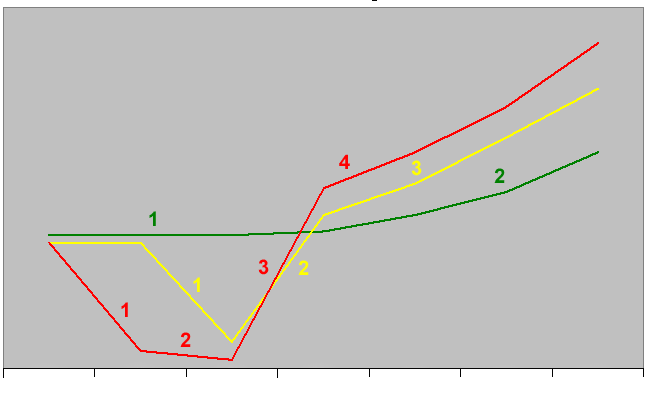
Glycogen is a large, highly branched polymer of glucose — the body's storage form of carbohydrate. Its branching matters: the many free ends let enzymes cleave glucose units off from dozens of points at once, which is exactly what a working muscle needs. Muscle glycogen is a private reserve; the muscle that stores it is the muscle that uses it, because skeletal muscle lacks the enzyme required to release free glucose back into the bloodstream. Liver glycogen is the public reserve, released as glucose to keep blood levels stable for the brain, the red blood cells, and any muscle that needs it.
When muscle glycogen falls low during prolonged hard exercise — typically somewhere past the ninety-minute mark at a demanding intensity — power output drops steeply. Endurance athletes call this hitting the wall, and it feels less like ordinary fatigue than like the legs having been swapped for someone else's. The body still has enormous fat reserves at that moment, but fat cannot be oxidized fast enough to sustain the pace. This is among the clearest and best-replicated findings in sports nutrition, established in controlled laboratory trials rather than inferred from observation: for exercise lasting more than roughly ninety minutes at intensity, carbohydrate availability limits performance.
| Training load | Typical daily carbohydrate | Comment |
|---|---|---|
| Light activity | ~3–5 g per kg body mass per day | Ordinary daily movement, low-intensity training |
| Moderate (about 1 h per day) | ~5–7 g per kg per day | Most recreationally active adults |
| Endurance (1–3 h per day, moderate to high) | ~6–10 g per kg per day | Serious endurance training |
| Very high (more than ~4–5 h per day) | ~8–12 g per kg per day | Stage racing, multi-session days |
These ranges come from joint sports-nutrition position statements and are expressed per kilogram of body mass so they scale to the individual. They are population guidance for generally healthy people, not prescriptions, and someone training an hour a day does not need the intake of someone training five.
Loading: what it does, and who it helps
Carbohydrate loading is the deliberate supercompensation of muscle glycogen before a long event. The original Scandinavian protocol from the 1960s required a brutal depletion phase — hard exhaustive exercise plus several low-carbohydrate days — before the loading days. That misery turned out to be unnecessary. Modern protocols simply combine a training taper with a high carbohydrate intake, on the order of 10–12 g per kg body mass per day, for the 36 to 48 hours before the event, and achieve the same elevated glycogen.
Two caveats keep loading honest. First, it only helps events that would otherwise deplete glycogen — roughly ninety minutes or longer of continuous demanding effort. For a 5 km race, a soccer match, or a gym session, there is nothing to gain, because glycogen was never the limiter. Second, because glycogen is stored with water, loading typically adds one to two kilograms of body mass. In a marathon that water is useful; in a weight-sensitive or short event it is dead freight.
Timing: before, during, and after
Timing is where carbohydrate advice gets oddly specific, and the specificity is earned — these numbers come from decades of controlled trials. Before prolonged exercise, a carbohydrate-containing meal one to four hours beforehand tops off liver glycogen, with roughly 1–4 g per kg body mass depending on how much time there is to digest. During exercise, the guidance depends almost entirely on duration. Below about 45 minutes, no carbohydrate is needed, and between roughly 45 and 75 minutes only small amounts — even a carbohydrate mouth rinse — appear to help. Between about one and two and a half hours, roughly 30–60 g per hour improves endurance performance. Beyond about two and a half to three hours, intakes up to about 90 g per hour have been shown to help — but only if the carbohydrate comes from multiple transportable carbohydrates, typically a glucose-plus-fructose blend. The reason is elegant: the intestinal glucose transporter SGLT1 saturates near 60 g per hour, while fructose enters by a separate transporter, GLUT5, so combining them raises the total absorbable rate. Higher hourly intakes are under active study and should be treated as preliminary.
Afterward, the urgency depends on when the next session is. If a second hard session is less than about eight hours away, aggressive refueling of roughly 1.0–1.2 g per kg body mass per hour for the first four hours restores glycogen fastest. If the next session is a day away, ordinary meals meeting the daily target restore glycogen fully within 24 hours, and no special window applies. Adding protein to a recovery meal is sensible for other reasons, but it does not speed glycogen resynthesis when carbohydrate intake is already adequate.
Train the gut, not just the legs. Absorbing 60–90 g of carbohydrate per hour while running hard is a skill the intestine has to practice. Athletes who attempt race-day intakes for the first time on race day frequently meet gastrointestinal distress instead of a personal best. Tolerance is trainable, which is why rehearsing fueling during training sessions is standard practice — and why no fueling plan should debut at the start line.
- Muscle glycogen is a local reserve; liver glycogen maintains blood glucose for the whole body.
- Carbohydrate availability limits performance in efforts beyond roughly 90 minutes at intensity.
- Daily carbohydrate scales with training load, roughly 3–12 g per kg body mass per day.
- Loading (about 10–12 g per kg per day for 36–48 h plus a taper) helps only long events, and adds 1–2 kg of water weight.
- During exercise: little or nothing needed under ~45–75 min; 30–60 g per hour for 1–2.5 h; up to ~90 g per hour beyond that using glucose plus fructose.
Section 3Protein and activity

What the numbers actually say
The RDA for protein is 0.8 g per kg body mass per day for healthy adults aged 19 and older, of both sexes. That figure is often misread. An RDA is set to meet the requirement of nearly all healthy individuals in a group — it is a floor for adequacy in a general population, derived largely from nitrogen balance studies in people who are not training hard. It was never intended to describe the intake that best supports adaptation to training.
Several other values differ by life stage, and quoting an RDA without its population is one of the most common errors in this field. For adolescents aged 14–18 the RDA is 0.85 g per kg per day. For pregnancy and lactation it rises to 1.1 g per kg per day (about 71 g per day for many pregnant adults). Older adults are frequently discussed as needing more than 0.8 g per kg because of anabolic resistance — a blunted muscle response to a given dose of protein — and expert groups commonly suggest 1.0–1.2 g per kg per day for this group, though this is guidance rather than a revised RDA.
For people training regularly, joint position statements from sports-nutrition and dietetics organizations describe a range of roughly 1.2–2.0 g per kg body mass per day, with the lower end suiting endurance training and the upper end suiting heavy resistance training, periods of rapid muscle gain, or phases of restricted energy intake where preserving lean mass matters. Evidence for benefit above roughly 2.0 g per kg per day in most people is weak; the dose–response curve flattens. This is a range, not a target to maximize.
| Population | Value | Units | Basis |
|---|---|---|---|
| Adults 19+, both sexes | 0.8 | g per kg body mass per day | RDA — adequacy for nearly all healthy adults |
| Adolescents 14–18 | 0.85 | g per kg per day | RDA — includes growth needs |
| Pregnancy and lactation | 1.1 | g per kg per day | RDA — supports tissue accretion and milk synthesis |
| Endurance training | ~1.2–1.6 | g per kg per day | Position-statement guidance, not an RDA |
| Resistance training / muscle gain | ~1.6–2.0 | g per kg per day | Position-statement guidance, not an RDA |
| Per eating occasion (adults) | ~0.25–0.3 | g per kg, or roughly 20–40 g | Dose that maximally stimulates muscle protein synthesis |
Timing, distribution, and the myth of the window
Muscle protein synthesis rises after a meal containing protein and after resistance exercise, and the two effects are additive. The rise is driven partly by total amino acids and partly by leucine, which acts as a signal; roughly 2–3 g of leucine per meal appears to be the threshold that triggers a full response in younger adults, with older adults often requiring more. Because the response to a single dose plateaus, spreading protein across three or four eating occasions produces a somewhat better daily result than concentrating it in one large evening meal.
The famous "anabolic window" — the claim that protein must be consumed within 30 to 60 minutes of training or the session is wasted — has not held up. Meta-analyses that controlled for total daily protein found that the apparent timing effect largely disappeared: studies showing a timing benefit had usually also given the timed group more protein overall. Post-exercise sensitivity to protein persists for many hours, so eating within a few hours is reasonable and eating within thirty minutes is not obligatory. Total daily intake and consistency dominate; timing is a fine adjustment.
| Common claim | What the evidence shows |
|---|---|
| "You must eat protein within 30 minutes." | Not supported. The window is hours wide; total daily protein matters far more. |
| "The body can only use 20–30 g at a time; the rest is wasted." | Oversimplified. The synthesis response plateaus, but larger doses are still digested and used for other purposes, and whole-food meals raise amino acids for longer. |
| "High protein damages the kidneys." | Not supported in people with healthy kidneys. Advice differs when kidney disease is present — a clinical matter, not a general one. |
| "Plant protein cannot build muscle." | Not supported. Plant sources are generally lower in leucine and slightly less digestible, so a modestly higher total and a variety of sources compensate. |
| "Athletes need protein powder." | Not supported as a requirement. Powders are a convenience food; typical mixed diets at normal energy intakes usually reach 1.2–2.0 g per kg. |
| "More protein always means more muscle." | Not supported. Beyond roughly 2.0 g per kg per day the curve flattens; the training stimulus becomes the limiter. |
Protein is a building material, not a magic one. Amino acids build muscle only in the presence of a training stimulus and adequate total energy. In an energy deficit large enough that the body is short on fuel, dietary protein gets diverted toward oxidation and gluconeogenesis instead of tissue building — which is why "eat more protein" cannot compensate for eating too little overall. Foods carrying protein are also carrying iron, zinc, B12, calcium, and fiber depending on the source, and none of those foods are good or bad in a moral sense.
- The protein RDA is 0.8 g per kg per day for adults 19+; 0.85 for ages 14–18; 1.1 for pregnancy and lactation.
- Active people are commonly guided toward 1.2–2.0 g per kg per day, with little added benefit above that.
- Roughly 0.25–0.3 g per kg (about 20–40 g) per meal maximizes the muscle protein synthesis response.
- The narrow "anabolic window" is not supported; total daily protein and distribution matter more.
- Most people meet elevated needs from food; supplements are convenience, not necessity.
Section 4Fluid and electrolytes

How much water, and how much is lost
Water is not a nutrient in the sense of supplying energy, but it is the medium in which everything else happens: blood volume, temperature regulation through sweating, nutrient transport, and waste removal all depend on it. The Adequate Intake (AI) for total water — from beverages and food, since roughly 20 percent arrives in food — is 3.7 L per day for men aged 19 and older and 2.7 L per day for women aged 19 and older. It rises to about 3.0 L per day in pregnancy and 3.8 L per day during lactation. An AI is a best estimate of typical adequate intake rather than a requirement each person must hit, and actual needs swing widely with body size, climate, and activity.
Sweat is where activity changes the arithmetic. Sweat rates commonly range from about 0.5 to 2.0 L per hour and can exceed that in hot, humid conditions or in large athletes working hard. Sweat is hypotonic — more dilute than plasma — but it is not pure water: sodium concentration typically falls somewhere between about 20 and 80 mmol per liter, varying several-fold between individuals, with smaller amounts of potassium, chloride, and magnesium. That variability is why blanket electrolyte prescriptions make little sense and why individual sweat testing exists.
Dehydration, and its mirror image
Losing fluid without replacing it reduces plasma volume, raises heart rate and core temperature at a given workload, and impairs endurance performance and cognition — effects that become reliably measurable once losses exceed about 2 percent of body mass, and that are amplified in the heat. Losses below that threshold are generally well tolerated. Practical monitoring is unglamorous and effective: body mass before and after a session estimates net fluid loss, and pale straw-colored urine generally indicates adequate hydration while persistently dark, concentrated urine suggests otherwise. Thirst is a real and reasonably good signal in most circumstances.
The mirror-image problem is exercise-associated hyponatremia (EAH), defined as a blood sodium concentration below 135 mmol per liter arising during or shortly after prolonged exercise. Its principal cause is drinking hypotonic fluid — plain water or sports drink — in excess of sweat losses, usually compounded by non-osmotic release of antidiuretic hormone, which prevents the kidneys from excreting the surplus. The result is dilutional: total body sodium may be normal while its concentration falls, water shifts into cells, and the brain swells inside a fixed skull. Early symptoms — nausea, headache, bloating, puffiness, confusion — overlap almost perfectly with dehydration, which is the danger, because the instinctive response of drinking more makes hyponatremia rapidly worse. Severe EAH causes seizures, cerebral and pulmonary edema, and death, and it is a medical emergency requiring immediate professional care.
| Feature | Dehydration | Exercise-associated hyponatremia |
|---|---|---|
| Underlying problem | Fluid loss exceeds intake | Hypotonic fluid intake exceeds losses; blood sodium is diluted |
| Blood sodium | Normal or high | Below 135 mmol/L |
| Body mass during event | Decreased | Unchanged or increased |
| Typical setting | Hot conditions, limited fluid access | Events longer than ~4 h, slower finishers, abundant fluid stations |
| Overlapping symptoms | Headache, nausea, fatigue, confusion | Headache, nausea, bloating, confusion |
| Distinguishing clue | Weight loss, dark concentrated urine, thirst | Weight gain, puffy hands or face, drinking far beyond thirst |
| Effect of drinking more water | Helps | Makes it worse |
Because the two conditions look alike and the treatments diverge, the prevailing guidance from expert consensus panels has shifted away from rigid drinking schedules and toward drinking to thirst, with the added rule that gaining weight during an endurance event is a warning sign rather than an accomplishment. Sodium-containing drinks help replace sweat sodium and encourage drinking, but they do not prevent EAH, because they too are dilute relative to plasma. After exercise, when full rehydration is the goal, consuming roughly 1.25–1.5 L of fluid per kilogram of body mass lost, along with sodium from drinks or food, accounts for ongoing urine losses.
You cannot tell them apart by symptoms alone. A collapsed endurance athlete with headache, nausea, and confusion could be dehydrated or hyponatremic, and the correct response differs entirely. This is precisely why on-site sodium measurement is standard at long endurance events, and why a general-education chapter can teach you to recognize the pattern but cannot substitute for medical evaluation of an actual person.
- Total water AI: 3.7 L per day for men 19+, 2.7 L per day for women 19+; about 20 percent comes from food.
- Sweat rates run roughly 0.5–2.0 L per hour; sweat sodium varies widely (~20–80 mmol/L).
- Performance and cognition decline reliably once fluid loss exceeds about 2 percent of body mass.
- EAH is dilutional hyponatremia (sodium below 135 mmol/L) from overdrinking; it mimics dehydration and is a medical emergency.
- Drinking to thirst and avoiding weight gain during long events is the current consensus approach.
Section 5Supplements and ergogenic aids
A very short list has strong evidence
An ergogenic aid is anything taken with the intention of enhancing performance. The category is enormous, the marketing is relentless, and the number of substances with genuinely strong evidence is remarkably small. Expert consensus reviews converge on roughly five: caffeine, creatine monohydrate, dietary nitrate, beta-alanine, and sodium bicarbonate — plus sports foods such as drinks, gels, and bars, which are useful chiefly because they deliver carbohydrate and fluid conveniently rather than because of any special property.
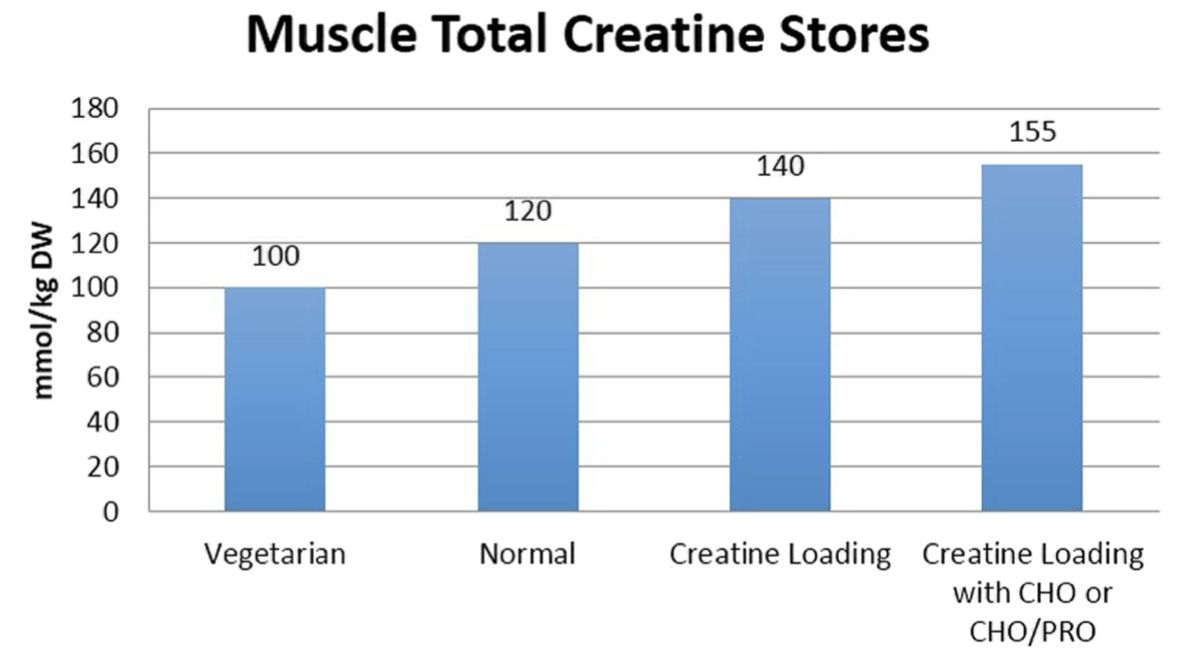
Creatine monohydrate is the most studied dietary supplement in sport. It raises muscle phosphocreatine, which enlarges the phosphagen tank described in Section 1, and consistently improves performance in repeated short, high-intensity efforts and in gains of lean mass and strength when combined with resistance training. It has been studied extensively in healthy adults over years of use. Two honest caveats: a portion of users are non-responders, typically because their muscle creatine is already near saturation, and an early gain of one to two kilograms is largely intracellular water. Caffeine has robust evidence for endurance and some high-intensity performance, studied mainly in the range of about 3–6 mg per kg body mass taken roughly an hour before exercise — that is the range trials have used, not a recommendation — with no further benefit and more side effects at higher intakes; sensitivity varies genetically, and sleep disruption can easily erase the gain. Beta-alanine raises muscle carnosine, an intracellular buffer, and helps efforts lasting roughly 30 seconds to 10 minutes; harmless skin tingling is common. Sodium bicarbonate buffers acid outside the cell and helps similar durations, at a real cost in gastrointestinal distress. Dietary nitrate, usually from beetroot juice, improves exercise economy, though the effect is smaller and less consistent in highly trained athletes.
| Substance | Evidence | Plausible effect | Caveats |
|---|---|---|---|
| Creatine monohydrate | Strong | Repeated high-intensity efforts; lean mass and strength with training | Non-responders exist; early water-weight gain of 1–2 kg |
| Caffeine | Strong | Endurance and some high-intensity performance | Wide individual sensitivity; can impair sleep and recovery |
| Beta-alanine | Strong | Efforts of ~30 s to ~10 min | Skin tingling; requires weeks of loading to raise carnosine |
| Sodium bicarbonate | Strong | High-intensity efforts of ~1–7 min | Frequent gastrointestinal distress |
| Dietary nitrate (beetroot) | Strong, but smaller | Improved exercise economy | Effect diminished in highly trained athletes |
| Iron, vitamin D | Only when deficient — strong for iron, weaker for vitamin D | Correcting documented iron deficiency restores endurance capacity; correcting vitamin D deficiency supports bone and muscle health, with performance effects less certain | No ergogenic effect in people who are already replete; deficiency is diagnosed by testing, not guessed at |
| HMB, ketone esters, tart cherry, probiotics | Preliminary or mixed | Possible small effects in specific contexts | Small studies, inconsistent replication |
| BCAAs, glutamine, "testosterone boosters," most fat burners | No credible evidence | — | BCAAs are inferior to complete protein as an amino acid source; the others rest largely on marketing |
Reading claims, and the contamination problem
Two habits protect you from most supplement nonsense. The first is asking what the evidence actually consists of: how many participants, were they trained or untrained, was there a placebo group, was the outcome a real performance measure or a surrogate such as a blood marker, and has the finding replicated in independent laboratories? A single small trial in untrained volunteers is a reason to be curious, not a reason to be convinced. The second habit is distrusting single-nutrient causal claims. Nutrients act within diets and within physiological systems; the confident sentence "compound X boosts metabolism" almost always compresses a small, context-dependent laboratory observation into a promise it cannot keep.
There is also a regulatory reality worth understanding. In the United States, dietary supplements are regulated more like foods than like drugs: manufacturers are responsible for safety and labeling, and products are not reviewed or approved for efficacy before they reach the shelf. Enforcement is largely after the fact. Independent analyses have repeatedly found products containing substances not on the label, including stimulants and anabolic agents, and mismatches between labeled and actual doses. For competitive athletes subject to anti-doping rules, this is not a theoretical risk, since responsibility for a positive test rests with the athlete regardless of intent. Third-party certification programs that test individual production lots are the standard mitigation, and they reduce risk rather than eliminating it.
Supplements sit on top of a diet, not in place of one. The performance return on adequate energy, sufficient carbohydrate around training, enough total protein, decent sleep, and consistent training dwarfs anything on the supplement shelf — and none of the well-supported aids work well in someone who is underfueled. When the fundamentals are genuinely in place, a small number of aids can add a small, real margin. That is the honest size of the effect.
- Only a short list has strong evidence: creatine, caffeine, beta-alanine, sodium bicarbonate, and dietary nitrate.
- Iron and vitamin D improve performance only by correcting a documented deficiency, not as boosters.
- Most other products have preliminary, mixed, or no credible evidence; BCAAs are inferior to complete protein.
- Supplements are regulated as foods, not drugs, and contamination with undeclared substances is documented; third-party lot testing reduces risk.
- Judge claims by replication, placebo control, and real performance outcomes — not by mechanism stories.
The chapter in one breath
- ATP is regenerated by three systems — phosphagen (seconds), anaerobic glycolysis (seconds to ~2 min), and oxidative (minutes to hours) — and intensity decides which dominates.
- Energy yields are fixed: carbohydrate 4, protein 4, fat 9, alcohol 7 kcal per gram; fat stores are effectively unlimited while glycogen stores are only ~1,500–2,400 kcal.
- Glycogen availability limits hard efforts beyond roughly 90 minutes; daily carbohydrate scales with training load at about 3–12 g per kg per day.
- Carbohydrate loading helps only long events, and during exercise the targets are ~30–60 g per hour, rising toward ~90 g per hour with glucose-plus-fructose blends.
- The protein RDA is 0.8 g per kg per day for adults 19+ (0.85 for ages 14–18; 1.1 in pregnancy and lactation), while active people are guided toward 1.2–2.0 g per kg per day.
- The narrow anabolic window is a myth; total daily protein, sensible distribution, and adequate energy do the work.
- Fluid losses past about 2 percent of body mass impair performance, while overdrinking causes exercise-associated hyponatremia — a mimic of dehydration that drinking makes worse.
- Only a handful of ergogenic aids have strong evidence, supplements are regulated as foods rather than drugs, and none of them substitute for adequate fueling.
ReferenceWords worth knowing
A quick reference for the terms in this chapter — skim it now, or circle back whenever a word trips you up.
- Anabolic window
- The popular claim that protein must be eaten within roughly 30–60 minutes after training; controlled trials show the sensitive period lasts hours and that total daily protein matters far more.
- Anaerobic glycolysis
- Breakdown of glucose or glycogen to pyruvate without oxygen, producing ATP rapidly but briefly; supports efforts of about 10 seconds to 2 minutes.
- Beta-alanine
- An amino acid that raises muscle carnosine, an intracellular buffer; strong evidence for efforts lasting roughly 30 seconds to 10 minutes.
- Carbohydrate loading
- Deliberately supercompensating muscle glycogen before a long event by combining a training taper with a high carbohydrate intake for 36–48 hours.
- Creatine monohydrate
- The most studied sport supplement; raises muscle phosphocreatine and improves repeated high-intensity efforts and training-driven gains in lean mass and strength.
- Dehydration
- A body-water deficit from losses exceeding intake; performance and cognition decline reliably once losses exceed about 2 percent of body mass.
- Energy availability
- Dietary energy remaining to support basic physiological function after the energy cost of exercise is subtracted, expressed per kilogram of fat-free mass.
- Ergogenic aid
- Any substance or practice taken with the intention of improving performance; only a small number have strong supporting evidence.
- Euhydration
- A normal, balanced state of body water — neither depleted nor overloaded.
- Exercise-associated hyponatremia (EAH)
- Blood sodium below 135 mmol per liter arising during or after prolonged exercise, usually from drinking hypotonic fluid in excess of losses; a medical emergency that mimics dehydration.
- Gluconeogenesis
- Synthesis of glucose from non-carbohydrate precursors such as amino acids, glycerol, and lactate, chiefly in the liver.
- Glycogen
- The branched storage polymer of glucose held in liver and muscle; muscle glycogen fuels the muscle that stores it, while liver glycogen maintains blood glucose.
- Leucine threshold
- The approximate amount of the amino acid leucine per meal (about 2–3 g in younger adults, often more in older adults) that triggers a full muscle protein synthesis response.
- Multiple transportable carbohydrates
- A glucose-plus-fructose blend that uses two intestinal transporters (SGLT1 and GLUT5), raising the absorbable carbohydrate rate above the roughly 60 g per hour ceiling for glucose alone.
- Muscle protein synthesis
- The building of new muscle protein, stimulated additively by dietary protein and by resistance exercise.
- Osmolality
- The concentration of dissolved particles in a fluid; sweat is hypotonic to plasma, which is why heavy sweating plus plain water can dilute blood sodium.
- Oxidative (aerobic) system
- Mitochondrial energy production using oxygen to fully combust carbohydrate and fat; slow to engage but effectively unlimited in capacity.
- Phosphagen system
- The immediate ATP–phosphocreatine system that powers all-out efforts lasting roughly 10 seconds, requiring no oxygen and producing no acid.
- Phosphocreatine
- A high-energy compound stored in muscle that donates a phosphate to regenerate ATP from ADP almost instantly.
- Relative Energy Deficiency in Sport (RED-S)
- A syndrome of impaired bone, endocrine, immune, metabolic, and psychological function caused by sustained low energy availability; occurs in all sexes and body sizes.
- Sweat rate
- Fluid lost through sweating per unit time, commonly 0.5–2.0 L per hour and highly variable with heat, humidity, intensity, and body size.
- Third-party certification
- Independent testing of individual supplement production lots for undeclared substances; reduces but does not eliminate contamination risk.