Audience Analysis
Every speech has two authors. You supply the words; the people in the chairs supply the meaning, and they build it out of knowledge, worries and loyalties you did not put there. Audience analysis is the disciplined habit of finding out who those people are — what they already know, what they value, why they showed up, and what would have to be true before they would act — and then letting the answers drive real choices: which example, which word, which claim, which order. It is not flattery, and it is not guesswork dressed up as insight. This chapter treats it as a craft with steps you can practice: three lenses for describing a group, four honest ways to collect information, a method for converting findings into sentence-level decisions, and a short list of live cues you can read while you are still talking. Weak versions and improved versions sit side by side throughout, because the difference is usually a matter of a few concrete words.
By the end of this chapter you can
- Contrast speaker-centered and audience-centered versions of the same passage and name exactly what changed.
- Apply the three lenses of demographic analysis, psychographic analysis and situational analysis to one specific speaking occasion.
- Distinguish a defensible inference about an audience from a stereotype, and repair a stereotyped assumption in writing.
- Write fixed-alternative, scale and open-ended survey items, and revise a leading question into a neutral one.
- Classify an audience’s disposition and calibrate a claim to its latitude of acceptance rather than overshooting into a boomerang effect.
- Translate jargon-heavy technical material for a lay audience without losing accuracy, defeating the curse of knowledge.
- Build common ground with an audience and explain why that is not pandering.
- Interpret audience feedback mid-speech, execute one of four rehearsed adjustments, and run a post-speech analysis afterward.
Section 1The Audience Is the Assignment
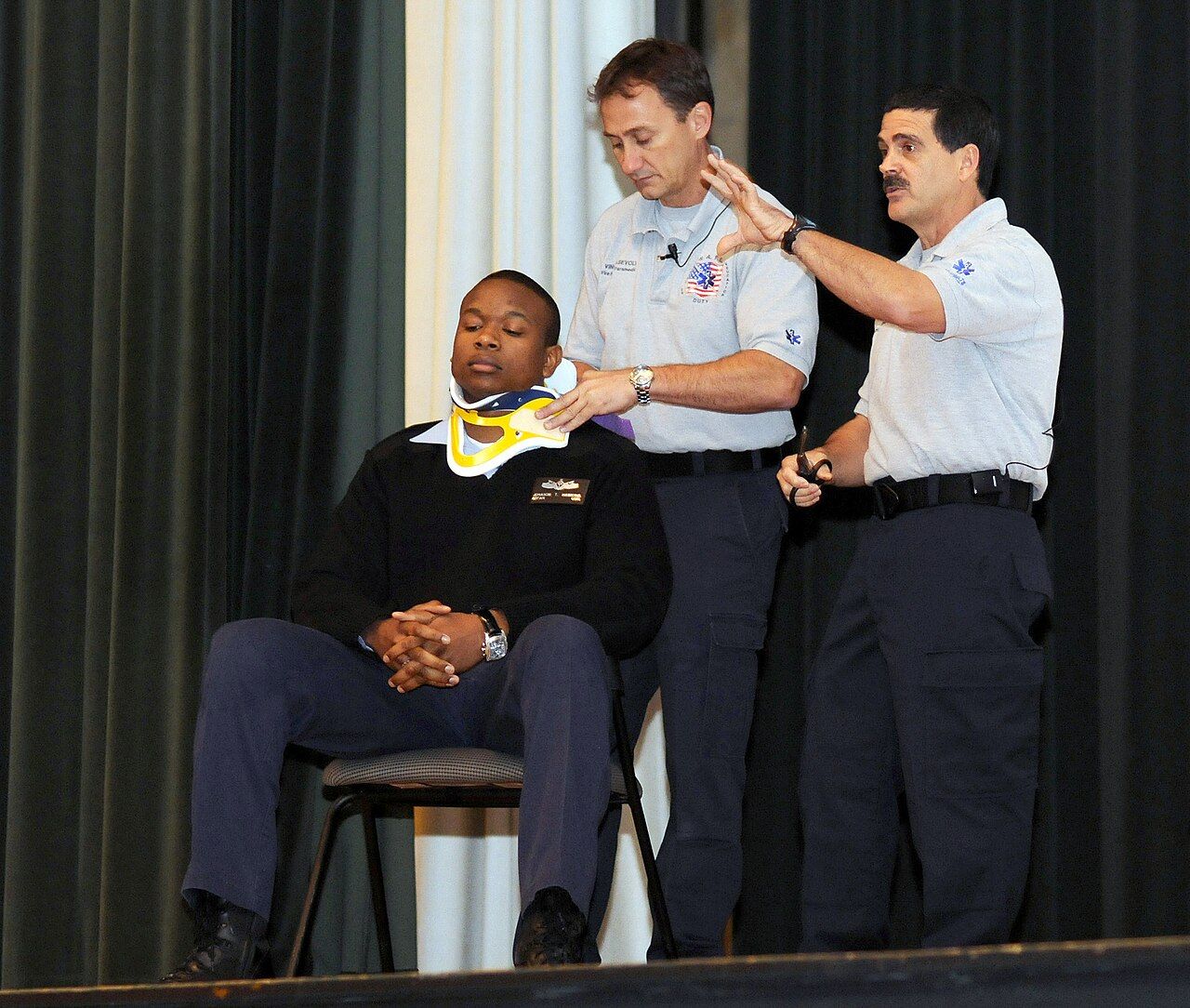
Speaker-centered versus audience-centered
A speaker-centered talk is organized around what the speaker knows, found interesting, or worked hard to gather. It sounds like a report of the preparation process. An audience-centered talk is organized around what a specific group needs to do, decide or understand when they leave the room. The two can contain identical facts and land completely differently, because the audience-centered version answers a question the speaker-centered version never asks: so what, for you, by Monday?
This is not a matter of charm. It is a matter of sequencing and selection. Audience-centered speakers cut good material that does not serve the room, put the useful thing early instead of saving it, and choose the example that matches the listener’s job rather than the one that impressed the speaker. Communication scholars sometimes describe the underlying failure as egocentrism: the ordinary human difficulty of modeling a mind that does not contain what your mind contains. It is not arrogance. Most speakers who bury the useful part are simply following the order in which they learned it.
Look at how small the edits are. In the table below, nothing was researched again. The same speaker with the same notes made five decisions differently.
| Decision | Speaker-centered version | Audience-centered version |
|---|---|---|
| Opening line | “Today I am going to talk about sepsis screening. It is a topic I find fascinating.” | “Sometime this rotation you will have about ninety seconds to decide whether the patient in bed four is septic. Here is how to spend them.” |
| Order of material | History of the protocol, then definitions, then the screening tool. | The screening tool first, then the two definitions you need to use it, then thirty seconds of history. |
| Amount of evidence | “I found seventeen studies, so let me walk through them.” | “Two studies changed what we do at the bedside. Here they are, and here is what changed.” |
| Word choice | “Hyperkalemia-induced dysrhythmia is the primary concern.” | “A potassium level high enough to throw the heart’s rhythm off — hyperkalemia — is the thing that kills people first.” |
| Closing line | “That is all I have. Any questions?” | “Before your next shift, do two things: bookmark the tool, and ask your preceptor who calls the rapid response on your unit.” |
What listeners are doing while you talk
Listeners are not passively receiving. They are running a continuous, mostly unconscious triage on three questions: Do I already know this? Does it apply to me? Is it worth the effort of following? A yes on all three buys you attention. A no on any of them and the listener begins doing something else with the same ears — rehearsing a reply, checking a schedule, drifting. Chapter 2 treats listening as a skill the audience owes you. Audience analysis is the other half of the bargain: the work you owe them so that listening is worth doing.
This is why audience analysis matters just as much for informative speaking as for persuasion. A common misconception is that you only need to study an audience when you are trying to change minds. In practice, unwanted information is ignored just as reliably as unwanted arguments. A perfectly accurate explanation delivered at the wrong altitude — too basic for experts, too dense for beginners — fails as completely as a bad argument, and it fails more quietly, because nobody objects to a talk they stopped following.
Adaptation is not pandering
Students often hear “adapt to your audience” and reasonably ask whether that means telling people what they want to hear. It does not, and the line between the two is clear enough to state as a test. Adaptation changes the route to the truth: your examples, vocabulary, order, emphasis, and the size of the request you make. Pandering changes the destination: you soften or abandon a claim you believe is true in order to be liked. A useful working standard is the two-room test — if both audiences were in the room at once, would you be embarrassed by what you told the other one? Different words are fine. Different facts are not.
An audience-centered speech contains the same facts as a speaker-centered one but selects, orders and words them around what a specific room needs to do next.
Section 2Three Lenses: Demographic, Psychographic, Situational
Lens one: the demographic facts
Demographic analysis catalogs the observable, reportable characteristics of a group: age range, education level, occupation and training, cultural and linguistic background, group membership, and the shared roles that brought them together. These are the easiest facts to obtain and the easiest to misuse. Their proper job is to generate questions, not conclusions. “Two-thirds of this room has been in practice more than fifteen years” does not tell you what they believe. It tells you to ask whether they were trained before the guideline changed, and whether an explanation aimed at new graduates will feel insulting.
Occupation is usually the highest-yield demographic fact for a working-adult audience, because it predicts vocabulary, time pressure and what counts as proof. Education level predicts comfort with abstraction more than intelligence. Age predicts shared reference points — not values. A speaker who assumes that everyone over sixty distrusts technology and everyone under twenty-five lives on a phone will be wrong often enough to lose the room in the first minute.
Lens two: what they believe and value
Psychographic analysis reaches past the visible facts to the internal ones: values, beliefs and attitudes. The three are frequently blurred in ordinary speech, and separating them is one of the most practical moves in this chapter. Values are enduring judgments about what is worth pursuing — fairness, safety, independence, family, thrift. Beliefs are what a person holds to be factually true. Attitudes are settled favorable or unfavorable orientations toward something specific. Values are the most stable and the hardest to change in one speech; attitudes are the most specific and the most movable.
Stack them for a single topic and the strategy writes itself. Suppose you are speaking about mandatory continuing-education hours. Value: “Patients deserve a competent nurse.” Belief: “Most refresher courses are box-checking that teaches nothing.” Attitude: “I resent the annual requirement.” Notice that the attitude you are fighting rests on a belief, and that belief sits on a value you share. Arguing against the value is hopeless and unnecessary. Arguing against the belief — with evidence about which formats actually change practice — is a speech you can give in ten minutes.
Lens three: the situation around the speech
Situational analysis covers everything true about the occasion rather than the people: size of the group, time of day, length of your slot, what happens immediately before and after you, the physical room, whether attendance is voluntary or required, and the reason the event exists at all. A captive audience — required to attend for credit, compliance or employment — behaves differently from a voluntary one. Captive listeners begin at neutral or mildly resentful, and they are exquisitely sensitive to any sign that you are wasting their required time. The single best adaptation is to say, early and specifically, what they will get out of being there.
Situational facts have blunt consequences. A twenty-minute slot at 4:30 p.m. after three other speakers is not the place for your longest example. A room of two hundred kills the discussion questions you planned. Speaking right after a layoff announcement changes what any sentence containing the word “efficiency” will sound like. None of this is deep theory; it is the difference between a plan that survives contact with the room and one that does not.
| Lens | What you are looking for | A question it forces you to answer | What it usually changes in the speech |
|---|---|---|---|
| Demographic | Age spread, training, occupation, language, group membership, role | “What vocabulary can I assume, and what will feel condescending?” | Word choice, level of detail, choice of examples |
| Psychographic | Values, beliefs, attitudes toward your specific topic; prior exposure | “What do they already believe that helps me, and what belief is in my way?” | The size of your claim, which objection you answer first |
| Situational | Size, time, length, order, room, voluntary or captive, occasion | “Why are these people here at this hour, and what did they give up to come?” | Length, interactivity, opening, use of aids |
Inference or stereotype?
The distinction is testable. An inference is a tentative, falsifiable statement about a group with a stated basis, and it points to something you will verify. A stereotype is a fixed attribution of traits to individuals because of a category, and it is treated as settled. Compare: “Because most of this audience trained before 2015, some may have learned the older screening criteria, so I will state both and mark which changed” (inference — based on a fact, hedged, produces a specific adaptation) versus “Older nurses resist new protocols, so I will keep it simple” (stereotype — unfalsifiable, insulting, produces a worse speech).
Three habits keep you on the right side of that line. State the evidence for any audience claim you make. Write it with a hedge you actually mean — some, many, roughly half — not as a universal. And build the adaptation so it helps the listener who does not fit the pattern. Marking which criteria changed helps the veteran and the new graduate equally; “keeping it simple” helps nobody.
Describe an audience through all three lenses — who they are, what they believe, and why they are in this room today — and treat every demographic fact as a question to verify rather than an answer.
Section 3Gathering the Data Without Guessing
Ask the person who invited you
The fastest source of audience information is the human being who arranged the event — the instructor, unit educator, program chair or committee secretary. Call this person your contact, and treat the conversation as a structured interview rather than logistics. Ten minutes here routinely beats an hour of speculation. The questions that pay are specific and slightly awkward: “Who exactly is required to be there?” “What did the last speaker on this topic do that did not work?” “What does this group already believe about it?” “What is the one thing you personally want them to walk out with?” “Is there anything I should not step on?”
The last question is the one that saves speeches. Contacts know the political weather — a recent staffing dispute, a failed rollout of the very software you were going to praise, the fact that the department director will be sitting in the second row. None of it appears in the event description, and all of it changes your speech. Take notes during the call and read the notable answers back for confirmation, because contacts sometimes describe the audience they wish they had.
Surveys that actually tell you something
When you have access to the group in advance — a classmate audience, a staff meeting, a course roster — a short questionnaire beats intuition. Three item types cover almost everything. Fixed-alternative questions force a choice among stated options and are fast to tally. Scale questions measure intensity, usually on a five- or seven-point range, which matters because a mildly negative room and a furious room require different speeches. Open-ended questions return language you can quote and objections you did not anticipate; they take the longest to analyze and are usually the most useful.
The most common survey error is not length — it is a leading question that encodes the answer you are hoping for. A leading item does not merely produce bad data; it produces confident bad data, which is worse than no data at all. The second most common error is asking what people want to hear rather than what they already believe, do or fear. Preferences are cheap and unreliable. Behavior and belief are what you have to plan around.
| Item type | Weak version | Improved version | Why it is better |
|---|---|---|---|
| Fixed-alternative | “Do you agree that hand-hygiene audits are important?” (Yes / No) | “In the past month, how were you told about your unit’s hand-hygiene score? (Email / Huddle / Posted chart / I was not told)” | Asks about an event that happened, not an opinion nobody will admit to holding |
| Scale | “How much do you like this topic?” (1–5) | “Before today, how confident were you that you could explain this to a patient? 1 = not at all, 5 = completely.” | Measures a specific, useful capability instead of vague enthusiasm |
| Open-ended | “Any thoughts on the topic?” | “What is the one thing about this that still does not make sense to you?” | Names the gap you should build the speech around, in the audience’s own words |
| Leading item | “Do you support the obviously overdue update to our outdated policy?” | “What is your view of the proposed policy change? (Support / Oppose / Not enough information)” | Removes the loaded adjectives that guarantee agreement and destroy the data |
| Double-barreled item | “Do you find the training useful and well scheduled?” | Split into two items: usefulness, then scheduling. | A single answer to two questions cannot be interpreted |
Observation, context and the limits of small samples
Direct observation is free and underused. Arrive early. Watch who sits with whom, whether people are in scrubs or business clothes, whether the room is set in rows or circles, how many are eating lunch at their seats, and how many arrive late enough that they will miss your first two minutes. Read whatever the group already reads — the unit newsletter, the last three meeting agendas, the syllabus, the organization’s public mission statement. Documents reveal priorities and vocabulary, and quoting one accurately in your opening signals that you did the work.
Be honest about what small data can support. Eleven responses from a class of thirty tell you what those eleven think, and the people who answer voluntary surveys are systematically more interested than the people who do not. Say so in your own head, and where relevant, say so aloud: “About a third of you answered my survey, and of those, most had never seen the form — so I am going to start there, and stop me if that is old news.” That sentence costs six seconds, is honest about uncertainty, and gives the room a way to correct you.
Gather audience information the way you would gather evidence for any claim — from the contact who booked you, from short unbiased survey items, and from your own eyes — and stay honest about how thin the sample is.
Section 4Turning Analysis Into Choices
Calibrate the size of your claim
Analysis is worthless until it changes a sentence. The first sentence it should change is your central claim. Sort the room by disposition toward your topic — favorable, neutral or apathetic, uninformed, opposed but open, or committed against — and then set a goal that group could plausibly reach in the time you have. A useful frame here comes from social judgment theory, associated with Muzafer Sherif and colleagues: around any position a person holds, there is a latitude of acceptance (positions they can live with), a latitude of noncommitment, and a latitude of rejection. A claim that lands inside the latitude of rejection can trigger a boomerang effect, in which the listener ends up further from you than when you started. The theory has its critics — the latitudes are hard to measure precisely and the research base is older than most of the textbooks citing it — but the practical instruction it yields is sound and widely echoed: with a resistant audience, ask for one notch of movement, not conversion.
| Disposition | What they are thinking | Realistic goal for one speech | Sample calibrated claim (topic: registering as an organ donor) |
|---|---|---|---|
| Favorable | “I agree. What do you want from me?” | Convert agreement into a specific act | “You already believe in this. Today I want your name on the registry before you leave — the form is on the back table and it takes ninety seconds.” |
| Neutral or apathetic | “Fine, but not my problem today.” | Make it personally relevant and lower the cost | “This is one checkbox at the license counter. Here is the four-minute version of why that box matters to a family you have never met.” |
| Uninformed | “I do not know enough to have a view.” | Correct the specific misinformation, then invite a first step | “Most of what circulates about how donors are treated in the emergency department is wrong. Here are the three rules that actually govern it.” |
| Opposed but open | “I have a reason, and you have not heard it.” | Name their objection accurately, then move them one notch | “I am not asking you to register today. I am asking you to read the one paragraph on the form that answers the objection most people in this room have.” |
| Committed against | “This speaker is the opposition.” | Establish shared values and correct one factual point | “You and I want the same thing: no family pressured at the worst hour of their lives. Let us look at what the law actually requires, and where I think it fails.” |
Translate the vocabulary — but do not delete it
Once you know a field well, you lose the ability to remember not knowing it. Researchers call this the curse of knowledge, and it is the single most reliable cause of a technically excellent presentation that nobody follows. Jargon is not the enemy; unexplained jargon is. The professional move is to define a term the first time you use it, in words the listener already owns, and then keep using the term — because your audience of students or patients will meet that vocabulary again and needs it. Stripping a working term out entirely is its own kind of condescension. The exception is language that carries no information: buzzwords the listener will never encounter on a chart or an order do not need defining, they need cutting.
| Before (as written by the expert) | After (for this room) | The move |
|---|---|---|
| “The patient is NPO after midnight.” | “Nothing to eat or drink after midnight — on the chart that is written NPO.” | Define, then keep the term |
| “We are titrating the drip to MAP.” | “We adjust the medicine minute by minute to keep the average pressure high enough to feed the kidneys and brain. That average is the MAP.” | Define, then keep the term |
| “Ambulate the patient TID and reassess.” | “Walk her three times a day — that is what ambulate TID means — and look again after each walk.” | Define, then keep the term |
| “The reduction was statistically significant at p below .05.” | “If nothing but chance were at work, a drop this large would turn up less than five times in a hundred — that is what statistically significant claims. It does not tell you the odds that the program worked, and it does not tell you whether the drop is big enough to matter.” | Define, keep the term, and name what it does not mean |
| “This is an evidence-based, patient-centered, multidisciplinary quality initiative.” | “Three departments built this together, and we tested it on our own unit for six weeks.” | Cut — these words carry no information the sentence needs |
One message, three audiences
Here is the same content — a hospital is replacing its fall-prevention program — written for three different rooms. The facts do not move. Everything else does.
Version A · Night-shift nursing assistants (captive, tired, 15 minutes at shift change). “Starting the fourteenth, the yellow socks are gone and the door magnets change color. Three things change for you: you screen at handoff instead of at admission, you document in one place instead of two, and if the magnet is red you do not leave that room without eyes on the patient. That is the whole change. I will show you the magnet, then you can go.”
Version B · The finance committee (voluntary, skeptical, 10 minutes with slides). “We had forty-one patient falls last year, six with injury. The average injurious fall adds several days of stay that we are not reimbursed for. The program we are proposing costs about eleven thousand dollars in supplies and training in year one. If it prevents two injurious falls, it pays for itself. Here is the evidence that it prevents more than two, and here is what I am not sure about.”
Version C · A community group of adult children of older patients (voluntary, anxious, 20 minutes plus questions). “If your mother is admitted next month, you will see a red magnet on her door and you may wonder whether something is wrong. It means the staff have flagged her as high risk — at eighty-two she is more likely to fall, and on a blood thinner a fall is more likely to do serious damage. Tonight I want you to leave with two questions you can ask any nurse on that unit, and the reason a fall matters more at eighty-two than it did at fifty.”
Notice what did not change: what the program is, how it works, and the refusal to promise more than the evidence supports. Notice what moved: the opening, the unit of value (time, money, a mother), the length, the ending. That is adaptation. If Version B had claimed the program was proven to eliminate falls, that would have been pandering — a different destination, not a different route.
Build common ground
The rhetorician Kenneth Burke argued that persuasion depends on identification — the audience recognizing that your interests, experiences or values overlap with theirs. In practice, common ground is built with specifics, not declarations. “I know how hard your job is” is an assertion about yourself that the room has no reason to credit. “I have stood at that med cart at 3 a.m. with two call lights going” is evidence. Weak common ground flatters; strong common ground demonstrates.
Common ground also has a failure mode worth naming: ethnocentrism, the assumption that your own group’s norms are the neutral default. It shows up in small ways — a holiday reference that assumes one tradition, a family example that assumes one structure, an idiom that only makes sense to native speakers of one dialect. The repair is not to sand every example down to nothing. It is to check whether the example requires membership in your group to work, and if it does, either explain it in one clause or choose a different one.
Adaptation means changing the route — claim size, vocabulary, examples, common ground — while the destination, the truth of what you are saying, stays fixed.
Section 5Reading the Room and Adapting Live

Cues are data, not verdicts
Audience feedback during a speech — posture, eye contact, note-taking, phones, murmurs, laughter, the sound of a room going still — is genuinely informative and genuinely ambiguous. Research on nonverbal decoding, discussed further in Chapter 3, consistently finds that people are far less accurate at reading others than they believe, and that confidence and accuracy are only loosely related. So read cues in patterns, across the room, over time. One folded pair of arms is a cold room. Fifteen pairs of arms folding during the same ninety seconds is a message.
| What you see or hear | It might mean | It might just as easily mean | A move you can make out loud |
|---|---|---|---|
| Phones come up in several rows at once | You lost the thread two minutes ago | They are looking up the statistic you cited, or the break is at 3:00 | “Let me get to the part you can actually use on Monday.” |
| Heavy note-taking stops abruptly | The material stopped being useful | They already know this part | “Quick check — is this review for most of you?” |
| Neighbors turn and talk to each other | Confusion is spreading | Recognition — “that happened on our unit” | “I heard that. What did I skip?” |
| One person frowns hard and leans forward | Disagreement | Concentration, or they cannot hear you | Say the point again a second way; do not confront the face. |
| The room goes completely still | You lost them | You have them — stillness is often full attention | Slow down and let the silence work instead of filling it. |
| Dead silence when you invite questions | Nothing landed | Nobody wants to ask first, or they need ten seconds | “The question I usually get first is …” then answer it and wait. |
Four adjustments worth rehearsing
Reading the room is useless without a rehearsed response, because mid-speech is a terrible time to invent one. Four moves cover nearly every situation, and each should be practiced until it comes out in a full sentence rather than a stammer. Compress: skip to the payoff. “I am going to leave the background in the handout and go straight to the three steps.” Concretize: replace an abstraction with a case. “Here is what that looked like with an actual patient last March.” Check: buy information with one question. “Show of hands — how many of you have already used the new form?” Reframe: restate the relevance you assumed was obvious. “The reason this matters to you specifically is that you are the one who signs it.”
Build the raw material for these moves into your preparation. Mark one section of your outline as cuttable, keep one vivid example in reserve, and write your check-in question in advance. A speaker who has pre-decided what to drop can lose four minutes gracefully; a speaker who has not will either race through everything at double speed or run over. Both read as panic.
Captive, hostile and mixed rooms
For a captive audience, acknowledge the situation once, briefly and without complaint, and then buy their attention with utility: “I know this is required and I know it is the end of your shift. I have twelve minutes of material and one thing that will save you a phone call. Here it is first.” Never apologize twice, never joke about how boring the topic is, and never announce that you will “try to make this quick” and then not.
For a hostile question, the sequence that works is restate, concede, answer, and stop. “You are asking why we are spending money on this when we are short-staffed — and you are right that the staffing problem is bigger. Here is why this particular spend does not come out of that budget line. Does that answer it?” Restating slows you down and confirms you heard the question. Conceding the true part costs you nothing and buys credibility. Stopping is the part most speakers skip, and it is where arguments start.
Mixed rooms — experts and beginners together — are the most common real-world case and the least discussed. Two techniques help. Signpost the level so people can self-select: “The next two minutes are for anyone who has not used the form; if you have, this is a good moment to look at question three on the handout.” And layer the example: give the plain version first and the technical qualifier second, so beginners get a complete thought before the specialists get their footnote.
Analyze after, not just before
The post-speech analysis is the pass most speakers skip, and it is the cheapest improvement available. Do it within a day, in writing, and keep it to four questions. What did people ask? Questions map the gap between what you said and what they needed, and they are far more reliable than compliments. What did people repeat back to you afterward in their own words — and was it your main point? Where did the room go quiet or restless, and what was I saying at that moment? What would I cut if I had to give this in half the time?
Treat applause and hallway praise as weak evidence. People are kind, and “that was great” tells you about their manners, not your speech. Behavioral traces are stronger: how many people took the handout, how many actually signed up, whether the questions were about your topic or about something you never mentioned. Over a semester, this file becomes the most accurate audience analysis you own, because it is built from the audiences you have actually faced.
Live cues are ambiguous evidence, so read them in patterns and respond with one of four rehearsed moves — then analyze the audience again afterward, when the data is best.
The chapter in one breath
Audience analysis converts a speech about a topic into a speech for people. It begins with a shift in posture — from reporting what you found to serving what a specific room needs — and it becomes concrete through three lenses: the demographic facts you can observe, the psychographic values, beliefs and attitudes underneath them, and the situational reality of why these people are in this room at this hour. Those lenses generate questions, not conclusions, and the discipline that separates analysis from stereotyping is insisting on evidence, hedges, and adaptations that help the listener who does not fit the pattern. You gather the evidence by interviewing whoever invited you, by writing short survey items free of leading and double-barreled wording, and by arriving early enough to look around. Then the analysis has to change sentences: the size of your claim calibrated to the room’s disposition, jargon defined and kept rather than dumped or deleted, examples chosen for this audience’s work, common ground built from specifics. During the speech you read patterns of feedback and deploy one of four rehearsed moves. Afterward you ask what they asked. Adaptation changes the route; it never changes the destination.
Words worth knowing
| Term | What it means |
|---|---|
| Audience analysis | The systematic study of a specific audience’s characteristics, beliefs and circumstances in order to make better choices about a message. |
| Audience-centered | Organized around what listeners need to understand, decide or do, rather than around what the speaker prepared. |
| Speaker-centered | Organized around the speaker’s own interests and preparation process; the default failure mode of a well-researched talk. |
| Egocentrism | The ordinary difficulty of modeling a mind that lacks what your mind contains; the root of most audience misjudgments. |
| Demographic analysis | Study of observable audience characteristics: age, education, occupation, cultural background, group membership, role. |
| Psychographic analysis | Study of an audience’s internal orientations — values, beliefs and attitudes — especially toward your topic. |
| Situational analysis | Study of the occasion itself: size, time, length, order of speakers, physical room, and whether attendance is voluntary. |
| Values | Enduring judgments about what is worth pursuing; the most stable and hardest to change in a single speech. |
| Beliefs | What a listener holds to be factually true, whether or not it is. |
| Attitudes | Settled favorable or unfavorable orientations toward a specific object, person or proposal; the most movable of the three. |
| Inference | A tentative, evidence-based, falsifiable statement about an audience that leads to a specific adaptation. |
| Stereotype | A fixed set of traits attributed to individuals because of category membership and treated as settled fact. |
| Captive audience | Listeners required to attend; they start near neutral or mildly resentful and are highly sensitive to wasted time. |
| Fixed-alternative question | A survey item offering a set list of answers; fast to tally, limited to options you thought of. |
| Scale question | A survey item measuring intensity along a numbered range, useful for telling mild opposition from strong opposition. |
| Open-ended question | A survey item inviting the respondent’s own words; slowest to analyze, richest in unanticipated objections. |
| Leading question | An item whose wording encodes the desired answer, producing confident but worthless data. |
| Disposition | An audience’s standing orientation toward your topic: favorable, neutral, uninformed, opposed but open, or committed against. |
| Latitude of acceptance | In social judgment theory, the range of positions a listener can tolerate; a claim that lands instead in the latitude of rejection can push them further away. |
| Boomerang effect | The outcome in which a persuasive attempt moves listeners toward the opposite of the advocated position. |
| Curse of knowledge | The inability of an expert to recall what it was like not to know; the leading cause of unfollowable technical talks. |
| Identification (common ground) | Kenneth Burke’s term for the audience’s recognition of shared interests, experiences or values with the speaker. |
| Ethnocentrism | Treating your own group’s norms as the neutral default, so examples and idioms quietly require membership to work. |
| Adaptation | Changing the route to a claim — examples, vocabulary, order, emphasis, size of the request — while the claim itself holds. |
| Pandering | Changing what you claim is true in order to be liked, as opposed to changing how you explain it. |
| Audience feedback | The posture, attention, questions and restlessness a room produces while you speak; ambiguous singly, informative in patterns. |
| Post-speech analysis | A short written review after speaking — questions asked, points repeated back, restless moments, what to cut. |