Lipids
Fat has spent decades as the most misunderstood molecule on the plate — first blamed for everything, then declared harmless, and now understood as something more interesting than either story. Lipids are a chemically diverse family united by one shared trait: they do not dissolve in water. That single property explains almost everything about them — why they store more energy per gram than any other nutrient, why your cell membranes are built from them, why four vitamins cannot be absorbed without them, and why your body has to build tiny protein-wrapped delivery vehicles just to move them through your bloodstream. This chapter takes lipids apart structurally, follows them from the fork to the cell, and then looks honestly at what the evidence does and does not say about fat and cardiovascular health.
By the end of this chapter you can
- Describe the structure and dietary role of triglycerides, phospholipids, and sterols.
- Classify fatty acids by chain length, degree of saturation, and geometry (cis vs trans).
- Name the two essential fatty acids, give their Adequate Intakes with population and units, and describe deficiency.
- Trace lipid digestion from emulsification by bile through micelle formation to chylomicron release into lymph.
- Rank the major lipoprotein classes by density and lipid cargo, and explain what each one delivers.
- Explain fat's roles in energy storage, insulation and protection, and fat-soluble vitamin absorption.
- Distinguish what is strongly established about LDL and cardiovascular risk from what is still preliminary.
- State current population-level intake recommendations for total fat, saturated fat, and trans fat.
Section 1Types of lipids

What makes something a lipid
Carbohydrates are defined by their chemistry and proteins by their building blocks, but lipids are defined by a behavior: they are the biological molecules that dissolve poorly in water and readily in organic solvents. That is a loose definition, and deliberately so — it gathers together molecules that look nothing alike. A stick of butter, the membrane around every one of your cells, the cholesterol in your bloodstream, vitamin D, and the estrogen and testosterone circulating right now are all lipids. What they share is a chemical backbone dominated by carbon and hydrogen with very little oxygen, which is exactly why they are water-repellent (hydrophobic) and, as we will see, why they carry so much energy.
Three families matter most nutritionally. Triglycerides are what people mean when they say "fat" — roughly 95% of the lipid you eat and nearly all of what your body stores. Phospholipids are the structural lipids that build membranes. Sterols are the ring-shaped lipids, of which cholesterol is the famous example. Learn these three shapes and the rest of the chapter falls into place.
Triglycerides: the storage and dietary form
A triglyceride (also called a triacylglycerol) is built from a three-carbon glycerol backbone with three fatty acids attached, one to each carbon, by ester bonds. Think of a capital E: the spine is glycerol, the three arms are fatty acids. The three fatty acids on a single triglyceride are usually not identical, and it is their identity — how long they are, how saturated they are — that determines whether the resulting fat is a firm solid at room temperature or a pourable oil.
This is why terminology in the kitchen and the laboratory differ. Chemically, a fat is a triglyceride that is solid at room temperature and an oil is one that is liquid, but both are triglycerides and both yield 9 kcal per gram — more than double the 4 kcal per gram from carbohydrate or protein. Nothing about being liquid or solid changes the energy content. When triglycerides are broken down for fuel, the glycerol can enter glucose metabolism and the fatty acids are oxidized for energy.
Phospholipids and sterols
A phospholipid is a triglyceride with an edit: one fatty acid is swapped for a phosphate-containing group. The result is a molecule with a split personality — a hydrophilic (water-loving) phosphate head and two hydrophobic fatty acid tails. Drop enough of these into water and they spontaneously arrange themselves tails-inward, heads-outward, forming the lipid bilayer that is the basis of every cell membrane in your body. That same dual nature makes phospholipids excellent emulsifiers, molecules that let fat and water mix; lecithin (phosphatidylcholine), found in egg yolks and soybeans, is the classic food example and is why an egg yolk holds mayonnaise together. Your liver makes all the phospholipid you need, so none of them are dietary essentials.
Sterols look entirely different: four fused carbon rings, flat and rigid, with assorted side groups. Cholesterol is the principal animal sterol. It appears only in animal-source foods — there is no cholesterol in any plant oil, no matter what the label boasts — but you do not need to eat it, because your body synthesizes roughly 800 to 1,000 mg of it daily — much of that in the liver, though nearly every cell can make some — considerably more than most people consume. Cholesterol is structurally indispensable: it stiffens and stabilizes membranes, and it is the raw material for bile acids, vitamin D, cortisol, aldosterone, estrogen, and testosterone. Plants make their own versions, phytosterols, which compete with cholesterol for absorption in the gut.
| Lipid class | Structure | Share of dietary lipid | Main role | Food examples |
|---|---|---|---|---|
| Triglycerides | Glycerol + 3 fatty acids | ≈95% | Energy supply and storage | Oils, butter, meat fat, nuts, avocado |
| Phospholipids | Glycerol + 2 fatty acids + phosphate head | ≈4–5% | Cell membranes; emulsification | Egg yolk, soybeans, liver (lecithin) |
| Sterols | Four fused carbon rings | <1% | Membrane rigidity; precursor to bile acids, vitamin D, steroid hormones | Cholesterol: egg yolk, shellfish, organ meats, dairy fat |
| Phytosterols | Plant sterols/stanols | Trace | Compete with cholesterol for absorption | Vegetable oils, nuts, seeds, fortified spreads |
- Lipids are defined by being hydrophobic, not by a shared structure; the nutritional families are triglycerides, phospholipids, and sterols.
- A triglyceride is glycerol plus three fatty acids and supplies 9 kcal/g, versus 4 kcal/g for carbohydrate and protein and 7 kcal/g for alcohol.
- Phospholipids have a water-loving head and water-fearing tails, which builds membranes and makes them natural emulsifiers.
- Cholesterol occurs only in animal foods, is made in ample quantity by the liver, and is the precursor to bile acids, vitamin D, and steroid hormones.
Section 2Fatty acids

Chain length and saturation
A fatty acid is a chain of carbon atoms with hydrogens attached along its length and an acid (carboxyl) group at one end. Two variables describe any fatty acid you will meet. The first is chain length: short-chain fatty acids have fewer than 6 carbons, medium-chain 6 to 12, and long-chain more than 12. Most fatty acids in food are long-chain, typically 16 or 18 carbons. (Cut-points vary slightly between sources, so expect to see 14 rather than 12 used as the long-chain threshold in some texts.) Chain length is not trivia — it changes the absorption route entirely, as Section 3 shows.
The second variable is saturation, meaning how many hydrogens the chain carries relative to the maximum. A saturated fatty acid has every available carbon bonded to hydrogen and no carbon–carbon double bonds. The chain is straight, so molecules pack together tightly, which is why saturated fats such as butter, coconut oil, and beef fat are solid at room temperature. A monounsaturated fatty acid (MUFA) has exactly one double bond; oleic acid in olive oil is the standard example. A polyunsaturated fatty acid (PUFA) has two or more. Each double bond in the natural cis configuration puts a rigid kink in the chain, so the molecules cannot stack neatly — hence the liquid, pourable character of most plant and fish oils. Double bonds are also chemically reactive, which is why polyunsaturated oils go rancid faster than saturated ones.
The trans problem
Nearly all naturally occurring unsaturated fatty acids are in the cis form, with both hydrogens on the same side of the double bond — the arrangement that creates the kink. In the trans form, the hydrogens sit on opposite sides and the chain straightens out, behaving much more like a saturated fat despite technically being unsaturated.
Small amounts of trans fat occur naturally in dairy and beef from ruminant animals. The large historical source, however, was partial hydrogenation — an industrial process that bubbles hydrogen through liquid oil to firm it up and extend shelf life, converting some cis bonds to trans along the way. This is one of the few places in nutrition where the evidence is genuinely one-directional and strong: industrially produced trans fat raises LDL cholesterol, lowers HDL cholesterol, and is associated with increased coronary heart disease risk in large cohort studies. The regulatory response was decisive. The U.S. Food and Drug Administration withdrew the "generally recognized as safe" status of partially hydrogenated oils, with compliance phased in through 2020–2021, and the World Health Organization has pushed for global elimination of industrial trans fat. Naturally occurring ruminant trans fats occur at far lower intakes and the evidence about them is much less clear — a useful reminder that dose and source matter.
The two essential fatty acids
Your body can synthesize almost every fatty acid it needs, but human enzymes cannot place a double bond past the ninth carbon counting from the acid (carboxyl) end — that is, nowhere in the stretch of chain closest to the methyl end. We can make an omega-9 fatty acid such as oleic acid; we cannot make an omega-6 or an omega-3. That single enzymatic gap makes exactly two fatty acids essential — they must come from food:
- Linoleic acid (18:2, an omega-6 fatty acid) — abundant in soybean, corn, sunflower, and safflower oils, and in nuts and seeds. It is the parent of arachidonic acid and of many signaling compounds.
- Alpha-linolenic acid or ALA (18:3, an omega-3 fatty acid) — found in flaxseed, chia, walnuts, canola oil, and soybean oil. The body converts ALA into the longer-chain omega-3s EPA and DHA, but the conversion is inefficient, which is why preformed EPA and DHA from fatty fish and algae are treated separately.
The "omega" number simply counts carbons from the methyl (omega) end of the chain to the first double bond. Because no true RDA could be established, the Food and Nutrition Board set Adequate Intakes (AI) instead, and these differ by sex, age, and reproductive status — always cite the population along with the number.
| Essential fatty acid | Population | Adequate Intake | AMDR (% of energy) |
|---|---|---|---|
| Linoleic acid (omega-6) | Men 19–50 y | 17 g/day | 5–10% |
| Linoleic acid (omega-6) | Men 51+ y | 14 g/day | |
| Linoleic acid (omega-6) | Women 19–50 y | 12 g/day | |
| Linoleic acid (omega-6) | Women 51+ y | 11 g/day | |
| Linoleic acid (omega-6) | Pregnancy | 13 g/day | |
| Linoleic acid (omega-6) | Lactation | 13 g/day | |
| Alpha-linolenic acid (omega-3) | Men 19+ y | 1.6 g/day | 0.6–1.2% |
| Alpha-linolenic acid (omega-3) | Women 19+ y | 1.1 g/day | |
| Alpha-linolenic acid (omega-3) | Pregnancy | 1.4 g/day | |
| Alpha-linolenic acid (omega-3) | Lactation | 1.3 g/day |
Essential fatty acid deficiency is genuinely rare in people eating ordinary mixed diets, because linoleic acid is so widespread in the food supply. It appears in specific clinical circumstances: prolonged fat-free intravenous nutrition, severe fat malabsorption, or very-low-fat regimens sustained over months. The classic presentation is a scaly, flaking dermatitis, hair loss, impaired wound healing, and — in infants — growth failure. The biochemical marker is a rising triene-to-tetraene ratio, reflecting the substitution of an unusual fatty acid where arachidonic acid should be.
- Fatty acids differ by chain length (short, medium, long) and by saturation (saturated, monounsaturated, polyunsaturated).
- Cis double bonds kink the chain and keep oils liquid; trans double bonds straighten it, so trans fats behave like saturated fats.
- Industrial trans fat raises LDL, lowers HDL, and is linked to coronary risk — this evidence is strong, and partially hydrogenated oils have been removed from the U.S. food supply.
- The only essential fatty acids are linoleic acid (omega-6) and alpha-linolenic acid (omega-3); AIs differ by sex, age, pregnancy, and lactation.
Section 3Digestion, absorption, and transport
The problem with digesting fat
Every other macronutrient dissolves in the watery contents of the gut. Fat does not, and that creates a real engineering problem: the enzymes that break down triglycerides are water-soluble proteins that can only work at the surface of a fat droplet. A single large globule of fat has almost no surface area relative to its volume, so digestion would be hopelessly slow. The entire architecture of lipid digestion is a solution to this one problem — increase surface area, then shuttle the water-insoluble products to the absorbing cell.
Digestion begins modestly. Lingual lipase from the mouth and gastric lipase in the stomach start clipping a small fraction of the triglycerides, and the churning of the stomach breaks the fat into coarse droplets. Gastric lipase is relatively more important in infants, whose pancreatic function is still maturing and whose diet is high in milk fat.
Bile, micelles, and the enterocyte
The decisive step happens in the small intestine. Fat entering the duodenum triggers the release of the hormone cholecystokinin (CCK), which does two things at once: it tells the gallbladder to contract and squeeze out stored bile, and it signals the pancreas to release digestive enzymes. Bile is made continuously by the liver from cholesterol and concentrated in the gallbladder between meals. It contains no enzymes at all — bile is a detergent, not a digestant. Its bile salts break the coarse fat droplets into a fine suspension of tiny ones, a process called emulsification, which multiplies the available surface area enormously.
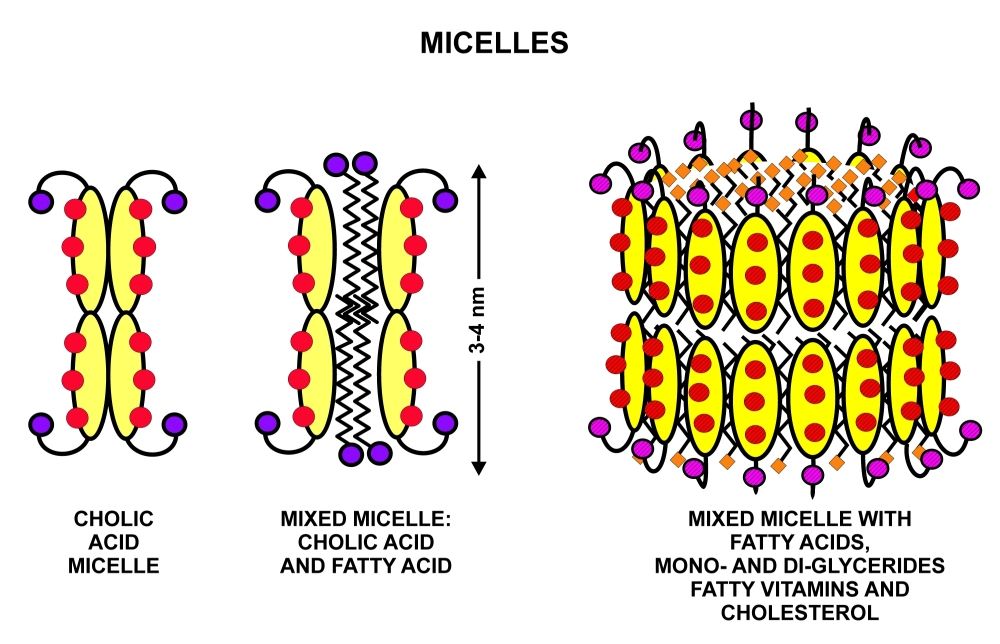
Now pancreatic lipase, working with its helper protein colipase, can do its job efficiently, cleaving triglycerides into monoglycerides and free fatty acids. Pancreatic phospholipase and cholesterol esterase handle the phospholipids and cholesterol esters. These products are still water-insoluble, so bile salts wrap around them to form micelles — microscopic spheres with the lipid cargo tucked inside and the water-friendly surfaces of the bile salts facing out. The micelle ferries its passengers across the watery layer next to the intestinal wall and delivers them to the brush border of the enterocyte, where they diffuse in. The bile salts themselves are not absorbed here; most are reclaimed further downstream in the ileum and recycled back to the liver through the enterohepatic circulation, a thrifty loop that reuses each bile salt many times.
Chylomicrons and the lipoprotein fleet
Inside the enterocyte, the route splits based on chain length. Short- and medium-chain fatty acids are water-soluble enough to pass straight into the capillaries of the portal vein bound to albumin and travel directly to the liver — fast and simple. Long-chain fatty acids, which are the bulk of dietary fat, take the long way. They are reassembled into triglycerides inside the enterocyte and packaged with cholesterol, phospholipids, and proteins into a chylomicron.
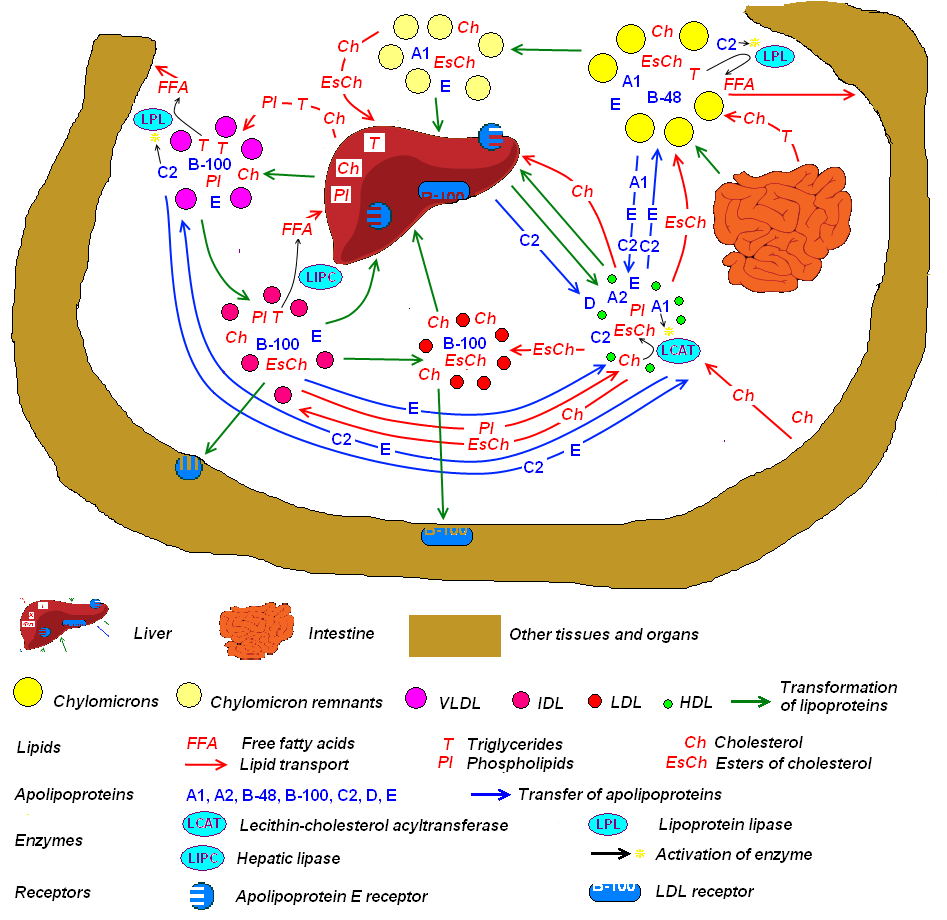
A chylomicron is the first of the lipoproteins — spherical transport vehicles with a hydrophobic lipid core and a shell of phospholipids, cholesterol, and apolipoproteins that faces the water. Chylomicrons are too large to enter blood capillaries, so they exit into a lacteal, a lymphatic vessel inside each intestinal villus, and travel through the lymphatic system to the thoracic duct, finally entering the bloodstream near the left subclavian vein. This is why fat, uniquely among nutrients, bypasses the liver's first pass. As chylomicrons circulate, the enzyme lipoprotein lipase anchored to capillary walls in muscle and adipose tissue strips out their triglycerides, and the shrunken remnant is cleared by the liver.
The liver then assembles its own vehicles, and the family is named by density — the more lipid and the less protein, the less dense the particle.
| Lipoprotein | Made by | Density | Main cargo | Job |
|---|---|---|---|---|
| Chylomicron | Small intestine | Lowest | Dietary triglyceride | Carries absorbed dietary fat from gut to tissues via lymph |
| VLDL | Liver | Very low | Liver-made triglyceride | Delivers triglyceride from liver to muscle and adipose tissue |
| IDL | From VLDL in circulation | Intermediate | Triglyceride + cholesterol | Transitional particle; becomes LDL or is cleared |
| LDL | From IDL in circulation | Low | Cholesterol | Delivers cholesterol to peripheral tissues |
| HDL | Liver and intestine | Highest (most protein) | Cholesterol + protein | Reverse cholesterol transport — returns cholesterol to the liver |
- Fat digestion is a surface-area problem; bile solves it by emulsifying fat, and bile contains no enzymes.
- CCK triggers gallbladder contraction and pancreatic enzyme release; pancreatic lipase with colipase does most of the work.
- Micelles ferry monoglycerides and fatty acids to the enterocyte; bile salts are recycled via the enterohepatic circulation.
- Short- and medium-chain fatty acids go directly to the portal vein; long-chain fatty acids are packaged into chylomicrons and enter the lymph.
Section 4Functions of fat
The densest fuel and the deepest reserve
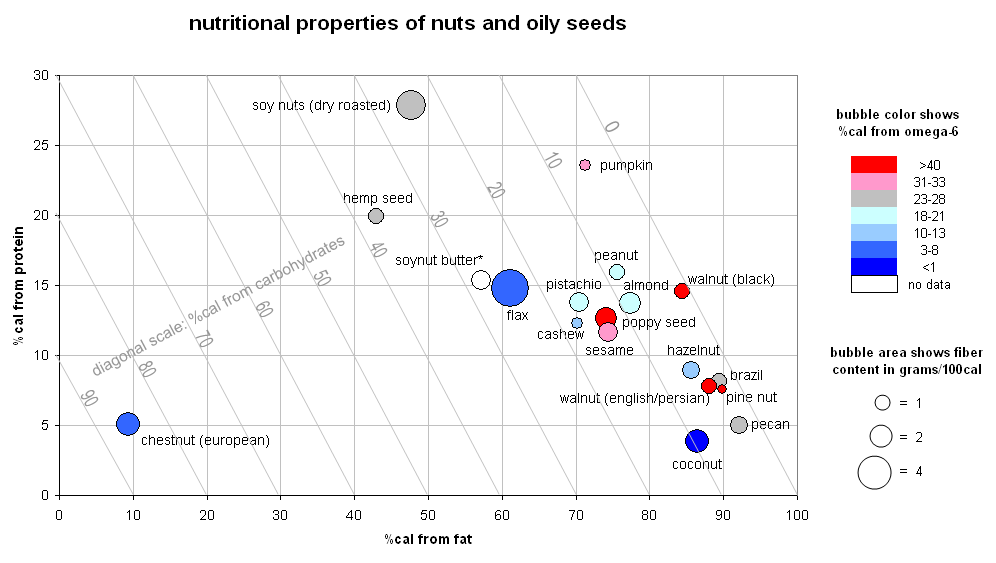
Fat yields 9 kcal per gram, more than twice the 4 kcal per gram from carbohydrate or protein and well above alcohol's 7 kcal per gram. The reason is chemical: fatty acid chains are almost pure carbon and hydrogen with very little oxygen already attached, so there is far more left to oxidize. That density is a feature, not a flaw. It lets the body bank a great deal of energy in a small mass.
The advantage is even larger than the per-gram number suggests. Glycogen, the carbohydrate store, is hydrophilic and holds roughly three to four grams of water for every gram of glycogen, so its effective energy density is a small fraction of fat's. Adipose tissue stores triglyceride almost anhydrously. A typical adult carries perhaps 1,500 to 2,000 kcal of glycogen but tens of thousands of kilocalories in adipose tissue — the difference between a day's reserve and a season's. Fat is also the dominant fuel at rest and during prolonged low-to-moderate intensity activity, with carbohydrate taking over as intensity climbs.
Two practical notes follow. Because fat is energy-dense, small volumes of fat-rich food carry a lot of energy — useful when appetite is poor, energy needs are high, or a person is trying to gain weight, and simply a fact of composition otherwise. And because fat slows gastric emptying and stimulates CCK, meals containing fat leave the stomach more slowly. Whether that translates into feeling fuller for longer is less settled than it is often stated: per calorie, fat generally tests as no more satiating than carbohydrate and clearly less satiating than protein, and short-term appetite studies disagree with one another. Treat the gastric-emptying mechanism as established and the satiety payoff as preliminary.
Insulation, protection, and structure
Nutritionists distinguish storage fat, the adipose tissue that expands and contracts with energy balance, from essential fat, the lipid built into cell membranes, nerve tissue, bone marrow, and organs, which is not expendable. Both do structural work. Subcutaneous adipose tissue under the skin is a thermal insulator, slowing heat loss to the environment. Visceral adipose tissue packed around the kidneys, heart, and other organs provides mechanical cushioning against impact. Adipose tissue is also an endocrine organ in its own right, secreting hormones including leptin and adiponectin that participate in appetite and metabolic signaling.
Lipids build structures beyond storage as well. Every cell membrane is a phospholipid bilayer stabilized by cholesterol. The myelin sheath insulating nerve fibers is lipid-rich, which is one reason infants and toddlers need proportionally more fat than adults — the AMDR for fat is 30–40% of energy for ages 1–3 years and 25–35% for ages 4–18, compared with 20–35% for adults. And fatty acids are the raw material for eicosanoids, local signaling compounds involved in inflammation, clotting, and blood vessel tone.
Fat-soluble vitamin absorption
Vitamins A, D, E, and K are lipids themselves, which means they dissolve in dietary fat, ride in the same micelles, and are packaged into the same chylomicrons. Eat them without any fat and absorption falls substantially — a salad of carrots and dark greens dressed with an oil-based vinaigrette delivers meaningfully more carotenoid than the same salad dry. Fat also carries the flavor compounds and provides the texture that makes many vegetables palatable in the first place, which is a nutritional argument in its own right.
Because these vitamins are stored in liver and adipose tissue rather than excreted freely in urine, deficiency develops slowly — but excess from concentrated supplements can also accumulate. The values below are for adults; requirements differ for children, during pregnancy, and during lactation.
| Vitamin | Adult reference intake | Upper limit (adults) | Deficiency syndrome | Excess |
|---|---|---|---|---|
| A | RDA 900 µg RAE/day men; 700 µg RAE/day women | UL 3,000 µg/day preformed retinol | Night blindness, xerophthalmia | Hypervitaminosis A; preformed retinol is teratogenic in pregnancy |
| D | RDA 15 µg (600 IU)/day ages 1–70; 20 µg (800 IU)/day ages 71+ | UL 100 µg (4,000 IU)/day | Rickets in children; osteomalacia in adults | Hypercalcemia |
| E | RDA 15 mg alpha-tocopherol/day | UL 1,000 mg/day from supplements | Rare; neuropathy and hemolysis, chiefly with fat malabsorption or in preterm infants | May interfere with clotting at high supplemental doses |
| K | AI 120 µg/day men; 90 µg/day women | No UL established | Impaired clotting, bleeding | No established toxicity from food forms |
- Fat supplies 9 kcal/g and stores energy almost water-free, giving adipose tissue a far larger reserve than glycogen.
- Subcutaneous fat insulates, visceral fat cushions organs, and adipose tissue also acts as an endocrine organ.
- Lipids build cell membranes and myelin, and children need proportionally more fat (AMDR 30–40% at ages 1–3) than adults (20–35%).
- Vitamins A, D, E, and K require dietary fat for absorption, so fat malabsorption predicts their deficiency.
Section 5Lipids and health
LDL, HDL, and what a lipid panel actually measures
A standard lipid panel reports total cholesterol, LDL cholesterol, HDL cholesterol, and triglycerides. It is worth being precise about what those labels mean: LDL cholesterol is not a type of cholesterol but a measure of how much cholesterol is being carried inside low-density lipoprotein particles. Cholesterol is one molecule; the particles carrying it are what differ.
LDL particles deliver cholesterol out to the tissues. When they are present in excess, they can lodge in the arterial wall, become oxidized, and initiate the inflammatory process of atherosclerosis — the plaque that narrows arteries and can rupture to cause a heart attack or ischemic stroke. The evidence that LDL is causally involved in atherosclerotic cardiovascular disease is about as strong as nutrition-adjacent science gets: it converges from prospective cohorts, from genetic studies of people who inherit lifelong high or low LDL, and from randomized trials showing that lowering LDL by several different mechanisms lowers event rates proportionally.
HDL particles run the other direction, collecting cholesterol from tissues and returning it to the liver — reverse cholesterol transport. Low HDL cholesterol reliably predicts higher cardiovascular risk. But here the story diverges in an instructive way, and the distinction is worth holding onto: the observation that HDL is a strong risk marker is well established, while the idea that raising HDL causes lower risk is not supported — multiple large trials of drugs that substantially raised HDL cholesterol failed to reduce cardiovascular events. A marker of risk and a cause of risk are different things, and conflating them is one of the most common errors in nutrition reasoning.
What dietary fat does to blood lipids
The most consistently replicated dietary finding is a replacement effect: what matters is less "how much saturated fat" in isolation than "what replaces it." Controlled feeding trials show consistently that replacing saturated fat with polyunsaturated fat lowers LDL cholesterol, and pooled analyses of randomized clinical trials find a modest reduction in coronary heart disease events alongside it — the LDL effect is the better-established of the two, and the event data come from a relatively small set of older trials. Replacing saturated fat with refined carbohydrate, by contrast, produces little or no benefit. This is why a low-fat product loaded with refined starch is not automatically an improvement, and why the framing "swap toward unsaturated sources" is more useful than "avoid fat."
Several other points deserve calibration. Dietary cholesterol was long assumed to drive blood cholesterol, but for most people the effect is modest, because the liver reduces its own synthesis when intake rises; U.S. dietary guidance dropped the specific 300 mg/day cap and now advises keeping intake as low as practical without compromising a nutritionally adequate diet. There is meaningful individual variation in this response. Omega-3 supplements are a case where enthusiasm has outrun the trial data: eating fish is consistently associated with lower cardiovascular risk in cohort studies, but large randomized trials of omega-3 supplements in general populations have shown little to no reduction in events, and results in specific high-triglyceride populations have been inconsistent between trials. Call that preliminary and contested, not settled. Coconut oil raises LDL cholesterol much as other highly saturated fats do; claims of a unique metabolic advantage are not supported by controlled trials.
Current recommendations, and how to hold them
These are population-level guidelines for general education. They are not individualized medical advice, and they are not treatment for any diagnosed condition — anyone managing a lipid disorder, cardiovascular disease, or a malabsorption syndrome needs care from their own clinician and a registered dietitian.
| Target | Recommendation | On a 2,000 kcal day | Strength of evidence |
|---|---|---|---|
| Total fat | AMDR 20–35% of energy (adults); 25–35% ages 4–18; 30–40% ages 1–3 | ≈44–78 g/day for adults | Consensus range, not a hard threshold |
| Saturated fat | Less than 10% of calories, ages 2 and older (Dietary Guidelines for Americans) | Under ≈22 g/day | Strong for the replacement effect with unsaturated fat |
| Trans fat | As low as possible; partially hydrogenated oils removed from the U.S. food supply | Effectively near zero | Strong |
| Linoleic acid | AMDR 5–10% of energy | ≈11–22 g/day | Established as essential |
| Alpha-linolenic acid | AMDR 0.6–1.2% of energy | ≈1.3–2.7 g/day | Established as essential |
| Seafood | About 8 oz (two servings) per week for adults | — | Moderate; based largely on cohort data |
| Dietary cholesterol | No numeric limit; keep as low as practical within an adequate diet | — | Effect on blood lipids modest and variable |
One last framing note. Fats are not moral categories, and neither are the people who eat them. Butter is not a sin and olive oil is not a virtue; they are different mixtures of fatty acids with different measurable effects on blood lipids, eaten in the context of an entire dietary pattern, a body, a budget, a culture, and a life. The most defensible summary the evidence supports is unglamorous: overall eating patterns that lean toward unsaturated fats from liquid plant oils, nuts, seeds, and fish — and that include plenty of vegetables, fruits, legumes, and whole grains — are associated with lower cardiovascular risk than patterns that do not. No single food, and no single fatty acid, carries that outcome by itself.
- LDL delivers cholesterol to tissues and is causally linked to atherosclerotic cardiovascular disease — a strongly supported conclusion.
- HDL performs reverse cholesterol transport and is a good risk marker, but raising it with drugs has not lowered event rates — marker ≠ cause.
- The key dietary finding is a replacement effect: swapping saturated for polyunsaturated fat lowers LDL and events; swapping for refined carbohydrate does not.
- Population guidance: total fat 20–35% of energy for adults, saturated fat under 10%, trans fat as low as possible.
The chapter in one breath
- Lipids are hydrophobic molecules in three nutritional families — triglycerides (about 95% of dietary fat), phospholipids (membranes and emulsification), and sterols (cholesterol and its hormone descendants).
- Fat supplies 9 kcal/g, against 4 for carbohydrate, 4 for protein, and 7 for alcohol.
- Fatty acids differ by chain length and saturation; cis double bonds kink chains and keep oils liquid, while industrial trans fat straightens them and clearly raises cardiovascular risk.
- Only two fatty acids are essential: linoleic acid (omega-6) and alpha-linolenic acid (omega-3), with Adequate Intakes that vary by sex, age, pregnancy, and lactation.
- Bile emulsifies fat without any enzyme activity, pancreatic lipase cleaves it, micelles ferry the products to the enterocyte, and chylomicrons carry long-chain fat out through the lymph.
- The lipoprotein fleet runs from chylomicron to VLDL to IDL to LDL to HDL, growing denser and more protein-rich as it goes.
- Fat is the body's densest energy reserve, insulates and cushions, builds membranes and myelin, and is required for absorbing vitamins A, D, E, and K.
- LDL is causally tied to atherosclerosis; HDL is a risk marker but not a proven target; the strongest dietary lever is replacing saturated fat with unsaturated fat rather than with refined carbohydrate.
ReferenceWords worth knowing
A quick reference for the terms in this chapter — skim it now, or circle back whenever a word trips you up.
- Adequate Intake (AI)
- A recommended average daily intake used when the evidence is insufficient to set an RDA; the essential fatty acids have AIs, not RDAs.
- Alpha-linolenic acid (ALA)
- The essential omega-3 fatty acid (18:3), found in flaxseed, chia, walnuts, canola, and soybean oil; the precursor the body converts, inefficiently, to EPA and DHA.
- AMDR
- Acceptable Macronutrient Distribution Range — the share of total energy a macronutrient should supply; 20–35% from fat for adults.
- Atherosclerosis
- The progressive build-up of cholesterol-rich, inflamed plaque within artery walls; the underlying process in most heart attacks and ischemic strokes.
- Bile
- A liver-made, gallbladder-stored fluid containing bile salts derived from cholesterol; it emulsifies fat and contains no digestive enzymes.
- Cholecystokinin (CCK)
- The hormone released when fat and protein reach the duodenum; it triggers gallbladder contraction and pancreatic enzyme release.
- Cholesterol
- The principal animal sterol; a membrane component and the precursor to bile acids, vitamin D, and the steroid hormones. Made by the liver and found only in animal-source foods.
- Chylomicron
- The lipoprotein assembled in the enterocyte to carry absorbed dietary triglyceride out through the lymphatic system.
- Cis fatty acid
- An unsaturated fatty acid with both hydrogens on the same side of the double bond, producing a kinked chain; the form found in nature.
- Emulsification
- Breaking large fat globules into a fine suspension of small droplets, vastly increasing the surface area available to lipase.
- Enterohepatic circulation
- The recycling loop in which bile salts are reabsorbed in the ileum and returned to the liver for reuse.
- Essential fatty acid
- A fatty acid the body cannot synthesize and must obtain from food: linoleic acid and alpha-linolenic acid.
- HDL (high-density lipoprotein)
- The protein-rich lipoprotein that performs reverse cholesterol transport; a strong risk marker whose causal role has not been demonstrated.
- Hydrogenation
- Adding hydrogen across double bonds to firm up a liquid oil; partial hydrogenation was the main industrial source of trans fat.
- LDL (low-density lipoprotein)
- The cholesterol-carrying lipoprotein that delivers cholesterol to tissues; causally linked to atherosclerotic cardiovascular disease.
- Linoleic acid
- The essential omega-6 fatty acid (18:2), abundant in soybean, corn, sunflower, and safflower oils, nuts, and seeds.
- Lipoprotein
- A spherical particle with a lipid core and a phospholipid-and-protein shell that transports water-insoluble lipids through blood or lymph.
- Micelle
- A bile-salt sphere that encloses monoglycerides, fatty acids, cholesterol, and fat-soluble vitamins and ferries them to the intestinal brush border.
- Phospholipid
- A lipid with a phosphate head and two fatty acid tails; the structural basis of cell membranes and a natural emulsifier.
- Sterol
- A lipid built on four fused carbon rings; cholesterol in animals, phytosterols in plants.
- Trans fatty acid
- An unsaturated fatty acid whose hydrogens sit on opposite sides of the double bond, straightening the chain so it behaves like a saturated fat.
- Triglyceride
- Glycerol plus three fatty acids; the dominant dietary and storage lipid, supplying 9 kcal per gram.